Loft Conversion Cost Manchester 2026: What Loft Conversions Cost in Greater Manchester
Greater Manchester is one of the UK's most active loft conversion markets outside London. The region's dominant housing stock — Victorian and Edwardian terraces and semis across Didsbury, Chorlton, Withington, Stretford, Stockport and the wider city — is ideally suited to rear dormer and L-shaped dormer conversions. The trade market is strong, competitive and broadly at the national average, though South Manchester (Didsbury, Chorlton, Hale, Altrincham) commands premium rates that put it meaningfully above the Greater Manchester norm.
This guide covers real 2026 cost ranges for every main loft conversion type in Greater Manchester, with specific data on South Manchester premium pricing, party wall considerations on the region's dense terrace stock, and a clear view of which of the ten Greater Manchester planning authorities you'll be dealing with depending on where your property sits.
Manchester Loft Conversion Cost — Quick Answer
Loft conversion costs in Manchester 2026 range from £20,000–£38,000 for a Velux conversion, £35,000–£62,000 for a rear dormer, and £45,000–£75,000 for an L-shaped dormer. Greater Manchester pricing sits near the national average, with South Manchester (Didsbury, Chorlton, Hale) commanding trade rates up to 20% above the city average.
Manchester Loft Conversion Prices 2026
The table below shows cost ranges for each main loft conversion type across Greater Manchester. South Manchester premium areas are shown separately due to the meaningful price differential.
| Conversion Type | Greater Manchester (General) | South Manchester Premium | Notes |
|---|---|---|---|
| Velux (rooflight only) | £20,000–£32,000 | £28,000–£38,000 | Only viable with sufficient ridge height |
| Rear dormer | £35,000–£52,000 | £44,000–£62,000 | Most common type on terrace and semi stock |
| L-shaped dormer | £45,000–£62,000 | £55,000–£75,000 | Ideal for Victorian terraces with rear outrigger |
| Hip-to-gable | £40,000–£58,000 | £50,000–£68,000 | Common on Edwardian semis; may need planning |
| Hip-to-gable plus rear dormer | £50,000–£70,000 | £60,000–£82,000 | Maximum space gain on Edwardian semi |
These figures include structural work, Building Control fees, architect's drawings, stairs, insulation, fire doors, electrics and plastering. They do not include party wall surveyor fees (typically £600–£1,500 per neighbour in Greater Manchester) or VAT at 20%.
Victorian and Edwardian Housing Stock in Manchester
Manchester's inner suburbs were built rapidly during the Victorian and Edwardian periods to house the workers of the industrial city. The result is a large, dense stock of terraced and semi-detached properties that dominate areas like Didsbury, Chorlton, Withington, Whalley Range, Levenshulme, Gorton, Fallowfield, Stretford and Salford.
Victorian Terraces
Victorian terraces (typically 1870–1900) are the dominant property type in inner South Manchester. They have pitched roofs with ridge heights that comfortably accommodate a rear dormer and, where a rear outrigger exists, an L-shaped dormer that combines the main rear slope with the outrigger. The L-shaped dormer is highly popular in Didsbury, Chorlton and Levenshulme because it extracts the maximum floor area from properties where every square metre counts for resale value.
A typical L-shaped dormer on a Didsbury Victorian terrace adds a full master bedroom with en suite and typically increases the property value by more than the build cost — one of the strongest value-add arguments for a loft conversion anywhere in the UK outside London.
Edwardian Semi-Detached
Edwardian semis (1900–1914) are common in outer South Manchester — Cheadle, Gatley, Sale, Altrincham and parts of Stockport. Many have hipped roof ends, making hip-to-gable conversion relevant. The hip-to-gable combined with a rear dormer on an Edwardian South Manchester semi is a common, well-understood project type that most established Greater Manchester loft conversion companies have completed many times. This familiarity helps with pricing certainty — you're unlikely to encounter significant surprises if your property is a typical hipped-end Edwardian semi in a standard condition.
Post-War and 1930s Properties
Parts of Greater Manchester — particularly Bury, Bolton, Wigan, Oldham and Tameside — have significant stocks of 1920s–1950s semi-detached properties with shallower roof pitches. These can be more challenging for loft conversions: the lower roof pitch often means insufficient headroom without a dormer, and the dormer itself costs the same regardless of the lower property values in these areas. Always have a structural survey to confirm the ridge height before committing to a loft conversion on a shallow-pitched inter-war or post-war property.
South Manchester: The Premium Loft Conversion Market
South Manchester — broadly the area south of the city centre taking in Didsbury, West Didsbury, Chorlton, Withington, Fallowfield, Hale, Altrincham and parts of Trafford — operates as a distinct, premium sub-market for building work. Trade rates in this area run 15–20% above the Greater Manchester average, driven by strong demand from the high concentration of professional households, high property values relative to the rest of Greater Manchester, and a willingness to pay for quality finish.
Why South Manchester Costs More
Demand consistently outstrips supply for reliable, quality loft conversion contractors in South Manchester. The most reputable companies are booked 4–6 months in advance. Higher demand allows these companies to maintain higher day rates. The area also tends to attract higher-specification projects — homeowners in Didsbury and Chorlton are more likely to specify aluminium-framed windows, natural slate and bespoke joinery than the standard uPVC-and-plasterboard specification that's common elsewhere in Greater Manchester.
| Area | Rear Dormer Cost Range | L-Shaped Dormer Cost Range |
|---|---|---|
| Didsbury, West Didsbury, Chorlton | £48,000–£62,000 | £60,000–£75,000 |
| Hale, Altrincham (Trafford) | £46,000–£60,000 | £58,000–£72,000 |
| Withington, Fallowfield, Levenshulme | £40,000–£55,000 | £50,000–£65,000 |
| Salford, Stretford, Eccles | £36,000–£50,000 | £46,000–£60,000 |
| North Manchester, Bury, Oldham | £35,000–£48,000 | £44,000–£58,000 |
Party Wall Considerations in Manchester
The Party Wall etc. Act 1996 applies in Manchester exactly as it does nationally. On terraced properties — the dominant housing type in South Manchester — structural work to a loft conversion almost always affects the party wall. Floor joist strengthening, steel beam installation and dormer construction all trigger party wall obligations.
The Notice Process
You must serve a Party Wall Notice at least two months before starting structural work. In practice, most Manchester homeowners appoint a party wall surveyor to handle the notice service and, if required, the Award preparation. An agreed surveyor (appointed jointly by both neighbours) is the most cost-effective approach — one surveyor acting for both parties keeps costs down. If neighbours appoint their own surveyors, costs increase.
Budget £600–£1,500 per neighbour for party wall surveyor fees in Greater Manchester. On a mid-terrace with two adjoining neighbours, total party wall costs of £1,200–£3,000 are realistic. These are not optional costs — skipping the party wall process and causing damage to a neighbour's property without a Schedule of Condition in place is a significant legal and financial risk.
Manchester Terraces: Common Party Wall Issues
Older Manchester terraces often share party walls that are in mixed condition — some well-maintained, others showing movement cracks or damp penetration. The Schedule of Condition photographs taken by the party wall surveyor before work starts are essential on these older properties. If a pre-existing crack opens during your loft conversion, without a Schedule of Condition you may be liable for remediation costs even if your work didn't cause the movement. Get the paperwork right.
Greater Manchester Planning Authorities
Greater Manchester has ten separate local planning authorities, each with their own planning policies and conservation area designations. Unlike London's borough system, these are full district-level councils covering both urban and suburban areas. Knowing which council covers your property matters because planning policies and conservation area coverage differ meaningfully across the conurbation.
| Authority | Key Areas for Loft Conversions | Notable Conservation Areas |
|---|---|---|
| Manchester City Council | Didsbury, Chorlton, Withington, Fallowfield | Didsbury Village, Chorlton Green |
| Trafford Council | Hale, Altrincham, Sale, Stretford | Altrincham town centre, Hale Village |
| Stockport Council | Heaton Moor, Heaton Mersey, Cheadle | Heaton Moor, Bramhall |
| Salford City Council | Eccles, Worsley, Swinton | Worsley Village |
| Bury Council | Bury, Radcliffe, Ramsbottom | Ramsbottom |
Most rear dormer and Velux loft conversions across Greater Manchester fall within permitted development rights, subject to the standard volume limits (40m3 for terraced, 50m3 for semi-detached and detached). Conservation areas do exist — Didsbury Village, Chorlton Green, Heaton Moor — and these require planning permission for external alterations. Check with your specific council's planning portal before assuming permitted development applies. A Lawful Development Certificate costs £234 (England, 2026) and is always worth obtaining before starting work.
For planning applications across Greater Manchester, the Greater Manchester Combined Authority's planning portal provides contact details and online submission for all ten authorities. Response times in Greater Manchester are generally 8–10 weeks for householder planning applications — faster than the London average.
Full Cost Breakdown — Rear Dormer, Manchester 2026
The table below shows a detailed breakdown for a standard rear dormer loft conversion on a Victorian terrace in South Manchester, with en suite bathroom. This is the most common loft conversion project type in the area.
| Element | Cost Range | Notes |
|---|---|---|
| Architect's drawings and structural engineer | £1,800–£3,500 | Full Plans required for Building Control |
| Party wall surveyor fees (one or two neighbours) | £800–£2,000 | Near-universal on Manchester terraces |
| Building Control — Full Plans application | £700–£1,400 | Full Plans gives written plan approval |
| Scaffolding — supply and erection | £1,200–£2,800 | Easier access than inner London; lower cost |
| Structural steels (RSJs) | £1,800–£4,500 | Depends on span and loading |
| Dormer structure — timber frame and roof | £7,000–£13,000 | GRP flat roof standard; lead optional on higher spec |
| Floor joist strengthening | £2,000–£4,500 | Existing ceiling joists rarely adequate |
| Roof insulation | £2,000–£4,000 | PIR between and below rafters to meet U-value |
| New staircase | £2,500–£6,000 | Space-saving stairs common on tight Victorian plans |
| Fire doors (FD30) throughout | £800–£2,000 | All rooms off protected staircase |
| Mains-wired smoke detection | £350–£700 | Interlinked across all floors |
| First-fix and second-fix electrics | £1,500–£3,000 | Lighting, sockets, extractor for en suite |
| En suite plumbing — first and second fix | £3,500–£6,500 | WC, basin, shower enclosure including waste runs |
| Boarding, plastering and finishing | £3,000–£5,500 | Boarding rafters, ceilings and walls; skim coat |
| Tiling — en suite walls and floor | £700–£1,800 | Standard porcelain tile; more for natural stone |
| Flooring, decoration and skirting | £1,500–£3,500 | Carpet or LVT; emulsion throughout |
| Total — bedroom plus en suite | £44,000–£62,000 | South Manchester, mid-specification, 2026 |
Frequently Asked Questions — Loft Conversion Cost Manchester
How much does a loft conversion cost in Manchester in 2026?
Loft conversion costs in Manchester 2026 range from £20,000–£38,000 for a Velux conversion, £35,000–£62,000 for a rear dormer, and £45,000–£75,000 for an L-shaped dormer. Greater Manchester pricing sits near the national average. South Manchester areas — Didsbury, Chorlton, Hale — command trade rates 15–20% above the city average. North Manchester and Salford typically come in at or below the national average.
Do I need a party wall agreement for a loft conversion in Manchester?
Party wall agreements are required whenever structural work affects a shared party wall. In Manchester, this applies to the vast majority of Victorian and Edwardian terraced properties. You must serve a Party Wall Notice at least two months before starting structural work. Budget £600–£1,500 per neighbour for party wall surveyor fees — lower than London but still a real cost to plan for on mid-terrace properties.
What planning authority covers my area in Greater Manchester?
Greater Manchester has ten separate local planning authorities: Manchester City Council, Salford, Trafford, Stockport, Tameside, Oldham, Rochdale, Bury, Bolton and Wigan. Most rear dormer loft conversions fall within permitted development rights subject to national volume limits, but check with your specific local authority — Trafford and Stockport have conservation areas in popular loft conversion suburbs including Hale and Heaton Moor.
Are loft conversions popular in South Manchester?
Yes — South Manchester (Didsbury, Chorlton, Withington, West Didsbury, Hale, Altrincham) is one of the most active loft conversion markets outside London. The Victorian and Edwardian housing stock is ideal for rear dormer and L-shaped dormer conversions. South Manchester trades charge 15–20% above the Greater Manchester average, and demand for specialist loft conversion companies is high. Plan lead times of 3–6 months for reputable South Manchester contractors.
How long does a loft conversion take in Manchester?
A Velux loft conversion in Manchester typically takes 4–6 weeks on site. A rear dormer takes 8–12 weeks. An L-shaped dormer takes 10–14 weeks. These are consistent with national norms. Pre-start lead times — party wall process, architect's drawings, Building Control application — add 8–16 weeks before on-site work begins. Total programme from decision to completion is typically 6–9 months including all pre-start work.
Ready to Budget Your Manchester Loft Conversion?
Greater Manchester's Victorian and Edwardian housing stock is one of the best-suited in the UK for loft conversions — the property types, roof pitches and layouts are well understood by local trades, and the value-add on a well-executed conversion in South Manchester is strong. The cost ranges in this guide are based on 2026 Greater Manchester trade pricing and cover every element from structural steels to second-fix finish.
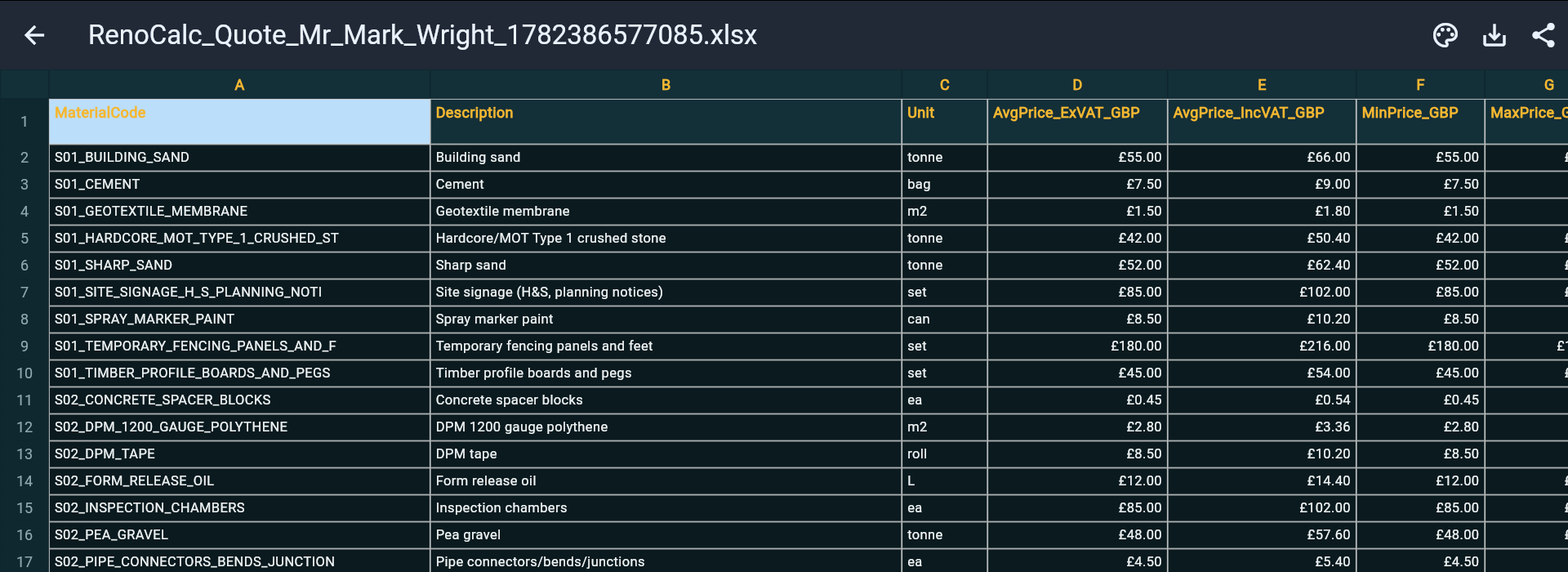
Use these figures to build your pre-tender budget, allowing for party wall costs and the South Manchester premium if relevant to your location. For a faster starting point, try RenoCalc free — upload your floor plan and get a working loft conversion estimate in minutes, calibrated to Greater Manchester trade rates.
Get a Manchester Loft Conversion Estimate in Under 3 Minutes
RenoCalc turns your floor plan into a full loft conversion quote — structural work, roofing, stairs, insulation, electrics, plumbing and finish — calibrated to Greater Manchester trade rates.
Start Your Free Estimate