Loft Conversion Cost Birmingham 2026: What Loft Conversions Cost in the Midlands
Birmingham and the wider West Midlands offer some of the most competitive loft conversion pricing in England. The regional trade market is strong and well-supplied, labour rates sit at or slightly below the national average across most of the conurbation, and the dominant inter-war and Edwardian housing stock provides a wide range of suitable properties for conversion. The exception is the premium sub-markets — Solihull, Sutton Coldfield and Edgbaston — where trade rates and specifications track closer to the South Manchester premium market than to typical Birmingham city pricing.
This guide covers real 2026 cost ranges for every main loft conversion type across Birmingham and the West Midlands, with specific data on the Solihull and Sutton Coldfield premium, the challenges of inter-war and trussed-roof properties, and which planning authority covers your area.
Birmingham Loft Conversion Cost — Quick Answer
Loft conversion costs in Birmingham 2026 range from £18,000–£35,000 for a Velux conversion, £32,000–£58,000 for a rear dormer, and £42,000–£68,000 for an L-shaped dormer. Birmingham and the wider West Midlands offer competitive trade rates, particularly outside the Solihull and Sutton Coldfield premium areas.
Birmingham Loft Conversion Prices 2026
The table below shows cost ranges for each main loft conversion type across Birmingham and the West Midlands. The figures reflect 2026 West Midlands trade rates and include structural work, Building Control fees, architect's drawings, stairs, insulation, fire doors, electrics and plastering. They do not include party wall surveyor fees or VAT at 20%.
| Conversion Type | Birmingham City | Solihull / Sutton Coldfield | Notes |
|---|---|---|---|
| Velux (rooflight only) | £18,000–£28,000 | £24,000–£35,000 | Only viable with sufficient ridge height |
| Rear dormer | £32,000–£48,000 | £40,000–£58,000 | Most popular type across both areas |
| L-shaped dormer | £42,000–£58,000 | £52,000–£68,000 | Suits Victorian terraces with rear outrigger |
| Hip-to-gable | £38,000–£55,000 | £46,000–£64,000 | Applies to hipped-end semis; may need planning |
| Hip-to-gable plus rear dormer | £48,000–£65,000 | £58,000–£75,000 | Maximum space on inter-war or Edwardian semi |
Birmingham city trade rates are among the most competitive in England for loft conversion work. The region has a large pool of experienced building contractors, structural engineers and specialist loft conversion companies — demand is healthy but supply is sufficient to keep pricing competitive. This is one of the genuine advantages of commissioning a loft conversion in the West Midlands versus London or South Manchester.
West Midlands Housing Stock: What This Means for Loft Conversions
Birmingham and the wider West Midlands has a more varied housing stock than London or Manchester, spanning Victorian terraces, Edwardian semis, substantial inter-war development (1920s–1940s), and significant post-war construction. Each era presents different characteristics for loft conversion suitability and cost.
Victorian and Edwardian Properties (pre-1914)
Victorian terraces and Edwardian semis are concentrated in the inner and middle suburbs — Moseley, Kings Heath, Handsworth, Erdington, Harborne, Bournville and parts of Solihull. These properties have pitched roofs with ridge heights generally adequate for dormer or Velux conversions, and where a rear outrigger exists (common on Victorian terraces) an L-shaped dormer extracts the maximum floor area. This is the easiest stock to work with from a structural perspective and produces the strongest value-add on conversion.
Inter-War Semi-Detached (1920s–1940s)
Inter-war semis are the dominant property type across large parts of Birmingham's suburban ring — Hall Green, Acocks Green, Shirley, Northfield, Great Barr, Kingstanding, Weoley Castle and similar areas. These properties vary significantly in their loft conversion suitability. Many have adequate ridge heights for a rear dormer conversion. Some have shallower pitches that require careful survey before committing to a design. The hip-to-gable conversion is frequently relevant on inter-war semis because the period's typical hipped roof end can be reconstructed as a gable to increase usable floor area.
A structural survey before committing to the design is essential on any inter-war property. The survey will confirm ridge height, the condition of the existing roof structure, and whether new floor joists are required or whether strengthening the existing structure is viable.
Post-War and Trussed Roof Properties (post-1960s)
Post-war properties built from approximately the 1960s onwards often use trussed rafter roof construction — prefabricated timber roof trusses that are structurally efficient but leave little usable loft space and cannot simply have a dormer cut into them without significant structural redesign. A trussed roof loft conversion requires replacing the truss structure entirely or installing a new structural frame within it, which adds £8,000–£15,000 to the project cost compared to a traditional cut-rafter roof.
If your property was built after approximately 1965, check whether it has a traditional cut-rafter roof or a trussed rafter roof before assuming a standard loft conversion is straightforward. A roofing contractor or structural engineer can confirm this with a brief inspection. Trussed roof conversions are possible but significantly more expensive and complex.
Planning in Birmingham and the West Midlands
The West Midlands is covered by multiple planning authorities, each with their own policies. Understanding which authority covers your property is the first step — don't assume Birmingham City Council covers everything in the area.
| Authority | Area Covered | Key Conservation Areas |
|---|---|---|
| Birmingham City Council | Birmingham city including Sutton Coldfield, Edgbaston, Harborne, Moseley | Bournville, Harborne High Street, parts of Edgbaston |
| Solihull MBC | Solihull, Shirley, Knowle, Dorridge, Hale | Solihull town centre, Knowle village |
| Wolverhampton City Council | Wolverhampton city and suburbs | Tettenhall, Chapel Ash |
| Sandwell MBC | West Bromwich, Smethwick, Oldbury, Halesowen | Limited conservation area coverage |
| Walsall Council | Walsall, Aldridge, Bloxwich, Brownhills | Walsall town centre fringe |
Permitted Development Across the West Midlands
Most rear dormer and Velux loft conversions across the West Midlands fall within permitted development rights. The standard national conditions apply: volume limits of 40m3 (terraced) or 50m3 (semi-detached and detached), no raised ridge height, no balconies, materials similar in appearance to the existing house. Conservation areas in parts of Edgbaston, Harborne, Moseley, Solihull and Wolverhampton require planning permission for external alterations.
Birmingham City Council's planning portal provides an interactive map of conservation area designations — check your specific address before assuming permitted development applies. A Lawful Development Certificate (£234, England 2026) confirms your permitted development status and protects you at the point of sale.
Solihull MBC's planning department has a reputation for thorough householder planning responses. If your property is in a Solihull conservation area, budget a full planning application (drawings, fee of £258, 8–10 week determination) before starting work. Pre-application advice from Solihull's planning department is available for a fee and can save time by confirming the authority's approach before full drawings are prepared.
Full Cost Breakdown — Rear Dormer, Birmingham 2026
The table below shows a detailed element-by-element breakdown for a standard rear dormer loft conversion on a typical Birmingham semi-detached property, including en suite bathroom. The figures reflect mid-specification, mid-area Birmingham pricing for 2026.
| Element | Cost Range | Notes |
|---|---|---|
| Architect's drawings and structural engineer | £1,500–£3,000 | Full Plans required for Building Control |
| Party wall surveyor fees (if applicable) | £500–£1,200 | Required on terraced and semi-detached properties |
| Building Control — Full Plans application | £650–£1,300 | Covers inspections from foundation to completion |
| Scaffolding — supply and erection | £1,000–£2,200 | Straightforward access in most Birmingham suburbs |
| Structural steels (RSJs) | £1,500–£4,000 | One or two beams typically required |
| Dormer structure — timber frame and roof | £6,500–£11,000 | GRP flat roof; pitched alternative costs more |
| Floor joist strengthening or replacement | £1,800–£4,000 | Existing ceiling joists rarely adequate for habitable room |
| Roof insulation | £1,800–£3,800 | PIR between and below rafters |
| New staircase | £2,200–£5,500 | Straight or dog-leg depending on layout |
| Fire doors (FD30) throughout | £700–£1,800 | All rooms off protected staircase |
| Mains-wired smoke detection | £300–£650 | Interlinked across all floors |
| First-fix and second-fix electrics | £1,400–£2,800 | Lighting, sockets, extractor fan for en suite |
| En suite plumbing — first and second fix | £3,000–£6,000 | WC, basin, shower; waste runs to existing stack |
| Boarding, plastering and finishing | £2,800–£5,000 | Boarding rafters, ceilings, walls; skim coat |
| Tiling — en suite | £600–£1,500 | Standard porcelain tile specification |
| Flooring, decoration and skirting | £1,500–£3,000 | Carpet or LVT; emulsion throughout |
| Total — bedroom plus en suite | £32,000–£48,000 | Birmingham city, mid-specification, 2026 |
For a Solihull or Sutton Coldfield equivalent project, add 10–20% to the above figures to reflect the area's premium trade rates and typical specification uplift.
The West Midlands Trade Market in 2026
Birmingham and the West Midlands has a well-established construction trade sector with a large pool of experienced builders, specialist loft conversion companies, structural engineers and architectural technicians. The region benefits from strong training infrastructure — Birmingham City University, Wolverhampton, Aston — and a long tradition of construction and manufacturing skills.
Trade availability is generally better here than in London or South Manchester. Lead times for good loft conversion contractors in Birmingham are typically 2–4 months rather than the 4–6 months common in South Manchester or the 6+ months common in inner London. This means the total programme from decision to completion is shorter in Birmingham than in the premium city markets.
Finding Good Contractors
The West Midlands has a number of established specialist loft conversion companies — businesses that do nothing but loft conversions and have refined their pricing, programme management and subcontractor relationships accordingly. These tend to produce more predictable outcomes and fewer surprises than general builders who take on an occasional loft conversion alongside other work. The trade-off is that specialist companies may carry a small premium over a general builder's price, but the certainty of programme and finish is generally worth it for a project of this scale.
When getting quotes in Birmingham, ask for references from completed projects in your area. Any established loft conversion company should be able to provide three or more recent local references with contact details — if they can't, look elsewhere.
Frequently Asked Questions — Loft Conversion Cost Birmingham
How much does a loft conversion cost in Birmingham in 2026?
Loft conversion costs in Birmingham 2026 range from £18,000–£35,000 for a Velux conversion, £32,000–£58,000 for a rear dormer, and £42,000–£68,000 for an L-shaped dormer. Birmingham and the wider West Midlands offer competitive trade rates below the national average in most areas. Premium areas — Solihull, Sutton Coldfield, Edgbaston — command rates 10–20% above the Birmingham city average but remain well below London and South Manchester pricing.
Is there a difference in loft conversion cost between Birmingham and Solihull?
Yes. Solihull and Sutton Coldfield are distinct premium sub-markets. Solihull is a separate metropolitan borough with higher average property values and trade rates 10–20% above Birmingham city. A rear dormer that costs £38,000–£48,000 in a Birmingham suburb may be priced at £45,000–£58,000 in Solihull for an equivalent specification. Sutton Coldfield (within Birmingham City Council boundaries) sits in a similar premium bracket.
What planning authority covers Birmingham loft conversions?
Birmingham City Council is the planning authority for the city itself, including Sutton Coldfield, Edgbaston, Harborne and Moseley. Solihull Metropolitan Borough Council covers Solihull, Shirley, Knowle, Dorridge and Hale. Sandwell, Wolverhampton, Walsall and Dudley each have their own councils. Most rear dormer and Velux loft conversions fall within permitted development rights across the West Midlands — confirm your position with a Lawful Development Certificate before starting work.
Are inter-war properties in Birmingham suitable for loft conversions?
Many inter-war properties (1920s–1940s) across Birmingham are suitable for loft conversions, but a structural survey is essential before committing to a design. Ridge heights vary on this era of property — some have adequate headroom, others require a dormer to create a usable room. Post-1965 properties with trussed rafter roof construction present a different challenge: trussed roof conversions add £8,000–£15,000 to the project cost and require a different structural design approach.
Do Birmingham loft conversions need planning permission?
Most rear dormer and Velux loft conversions in Birmingham fall within permitted development rights and do not require planning permission, subject to standard volume limits. Conservation areas in parts of Edgbaston, Harborne, Solihull and Sutton Coldfield may require planning permission for external alterations. Always confirm your permitted development status with your local authority and obtain a Lawful Development Certificate (£234 in England, 2026) before starting work.
Ready to Budget Your Birmingham Loft Conversion?
Birmingham and the West Midlands offer genuinely competitive loft conversion pricing with a well-supplied trade market and shorter lead times than the major premium city markets. The region's diverse housing stock — Victorian terraces, Edwardian semis, inter-war properties — provides a wide range of conversion opportunities, and the value-add on a well-executed conversion is strong across most of the area.
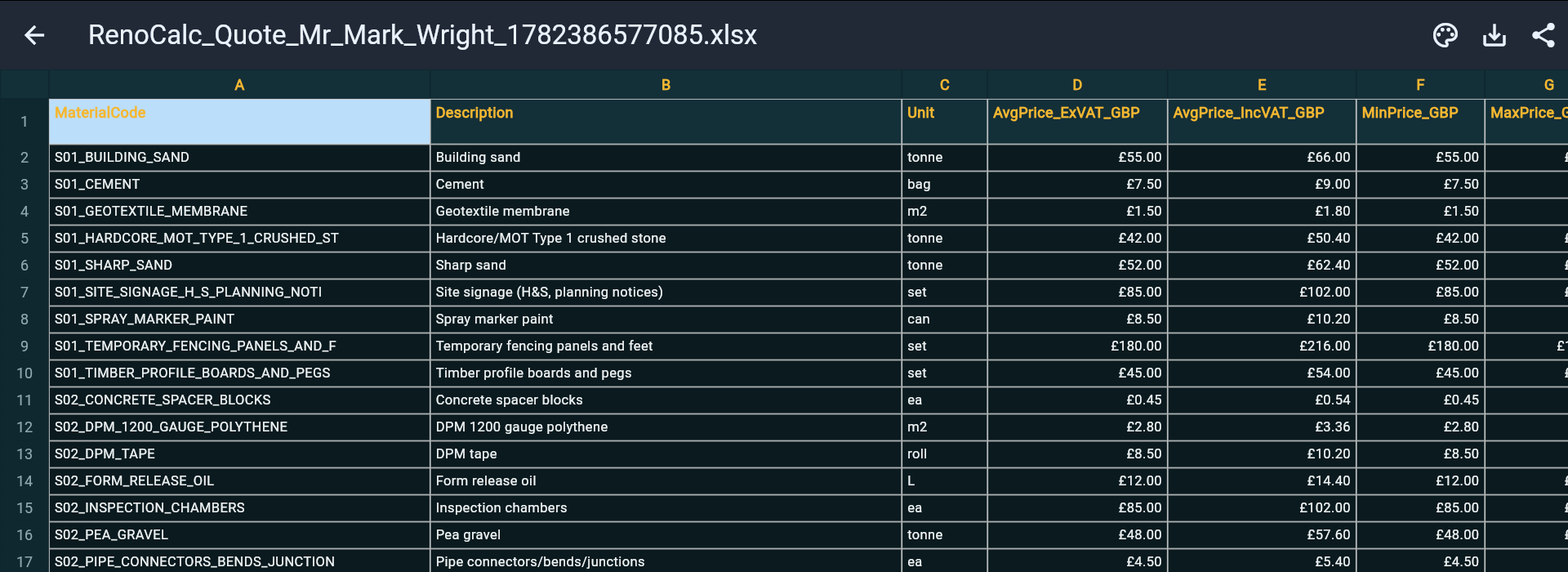
Use the cost tables in this guide to build your pre-tender budget, allowing for the Solihull or Sutton Coldfield premium if relevant to your location, and for the additional survey work needed on inter-war or post-war properties. For a faster starting point, try RenoCalc free — upload your floor plan and get a full loft conversion estimate in minutes, calibrated to West Midlands trade rates.
Get a Birmingham Loft Conversion Estimate in Under 3 Minutes
RenoCalc turns your floor plan into a full loft conversion quote — structural work, roofing, stairs, insulation, electrics, plumbing and finish — calibrated to West Midlands trade rates. Built for UK builders and property investors.
Start Your Free Estimate