Loft Conversion Cost UK 2026: Dormer vs Velux vs Hip-to-Gable
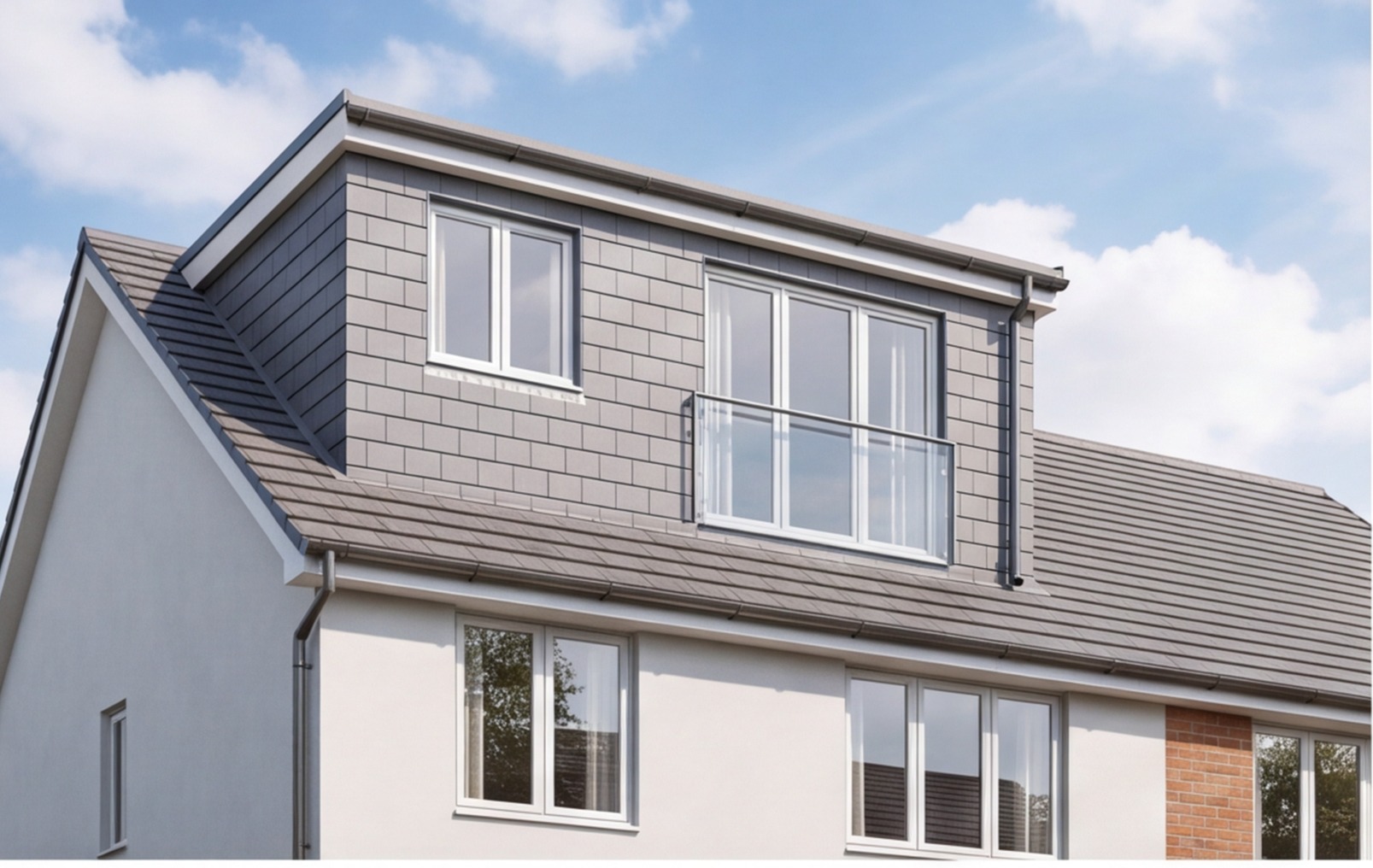
A loft conversion is one of the best-value ways to add a bedroom — and often a bathroom — to a UK property without touching the garden or the ground floor footprint. Loft conversion cost UK in 2026 starts at around £18,000 for a simple Velux conversion and runs to £60,000–£85,000 for a large dormer with an en suite and full finish.
I've managed loft conversions across the Midlands and beyond for decades. The cost varies significantly depending on which type you're building, whether you need planning permission, what the structural condition of the roof is, and what trades the finish requires. This guide covers all three main types — Velux, dormer and hip-to-gable — with real cost breakdowns for each element: structural steels, roofing, stairs, insulation, fire doors, electrics, plumbing and Building Control.
If you're in the planning stage, these figures will help you build a realistic budget before you invite builders to quote.
Three Loft Conversion Types Compared
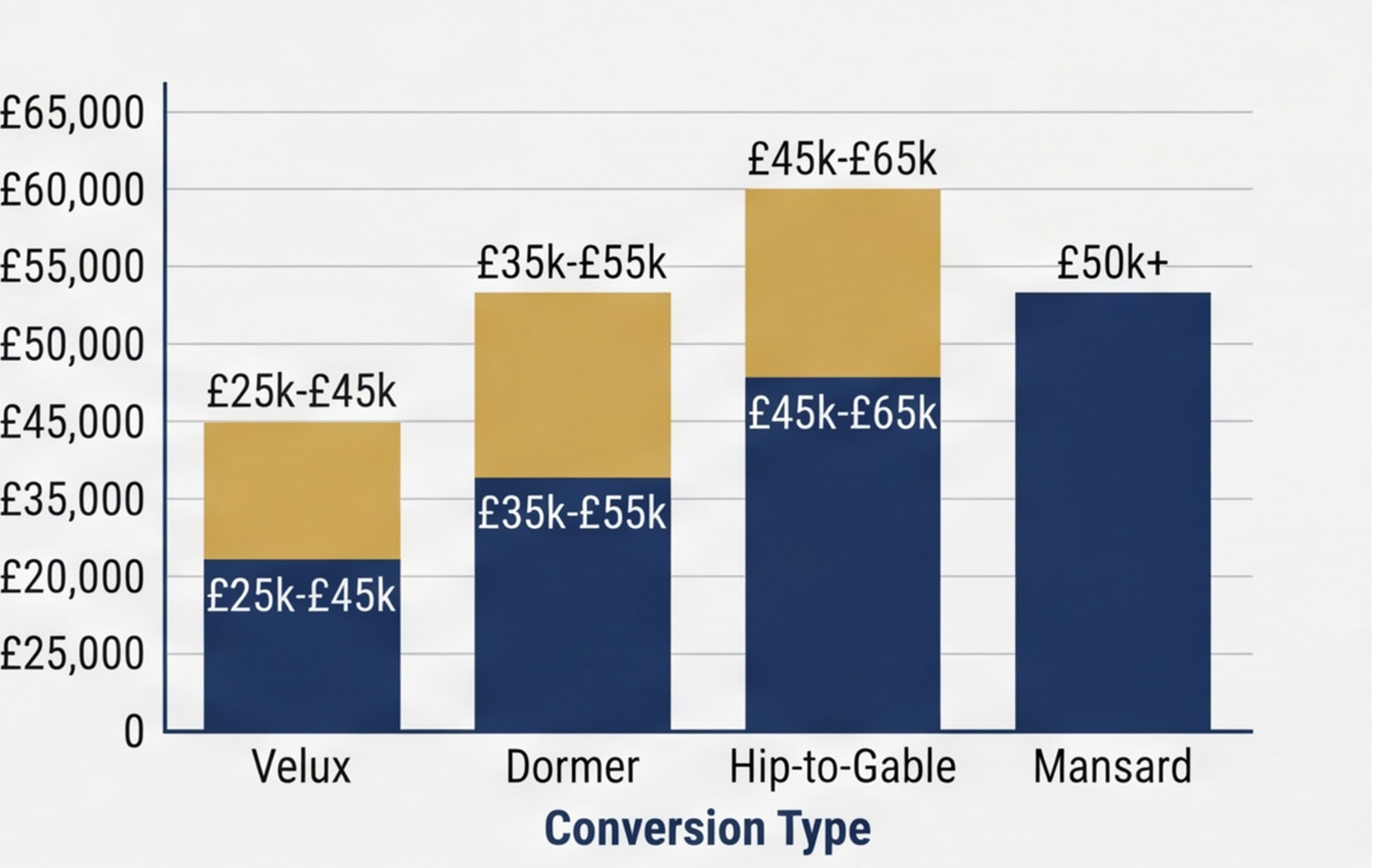
Before committing to a loft conversion, you need to know which type suits your property and your budget. The wrong choice on a property that can't support it wastes money on design fees and planning applications that won't succeed. Here's the quick comparison.
| Type | Cost Range | Planning Permission | Best For |
|---|---|---|---|
| Velux (rooflight only) | £18,000–£30,000 | Usually not required | Lofts with existing headroom (2.2m+ at ridge) |
| Rear dormer | £35,000–£55,000 | Permitted development in most cases | 3-bed semis and terraces — most common type |
| L-shaped dormer | £45,000–£65,000 | Usually permitted development | Victorian terraces with rear outrigger roof |
| Hip-to-gable | £40,000–£65,000 | Often requires planning permission | Detached and semi-detached with hipped roof ends |
| Mansard | £55,000–£85,000+ | Usually requires planning permission | Maximum volume gain; inner London terraces |
All loft conversions — regardless of type — require Building Regulations approval. This is non-negotiable and separate from planning permission. A completion certificate from Building Control is required when you sell the property, so don't skip it.
Velux Loft Conversion — Costs and Considerations
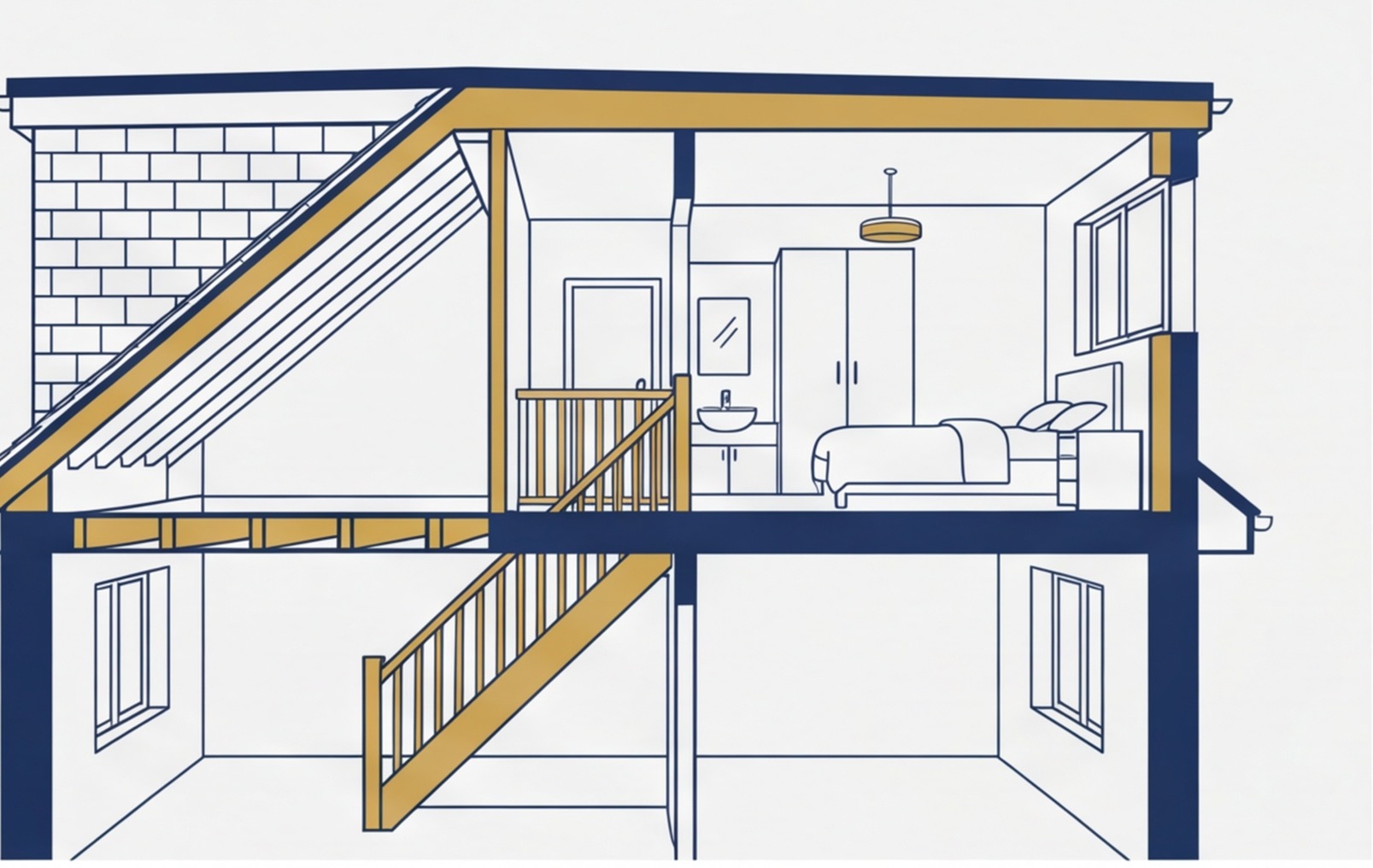
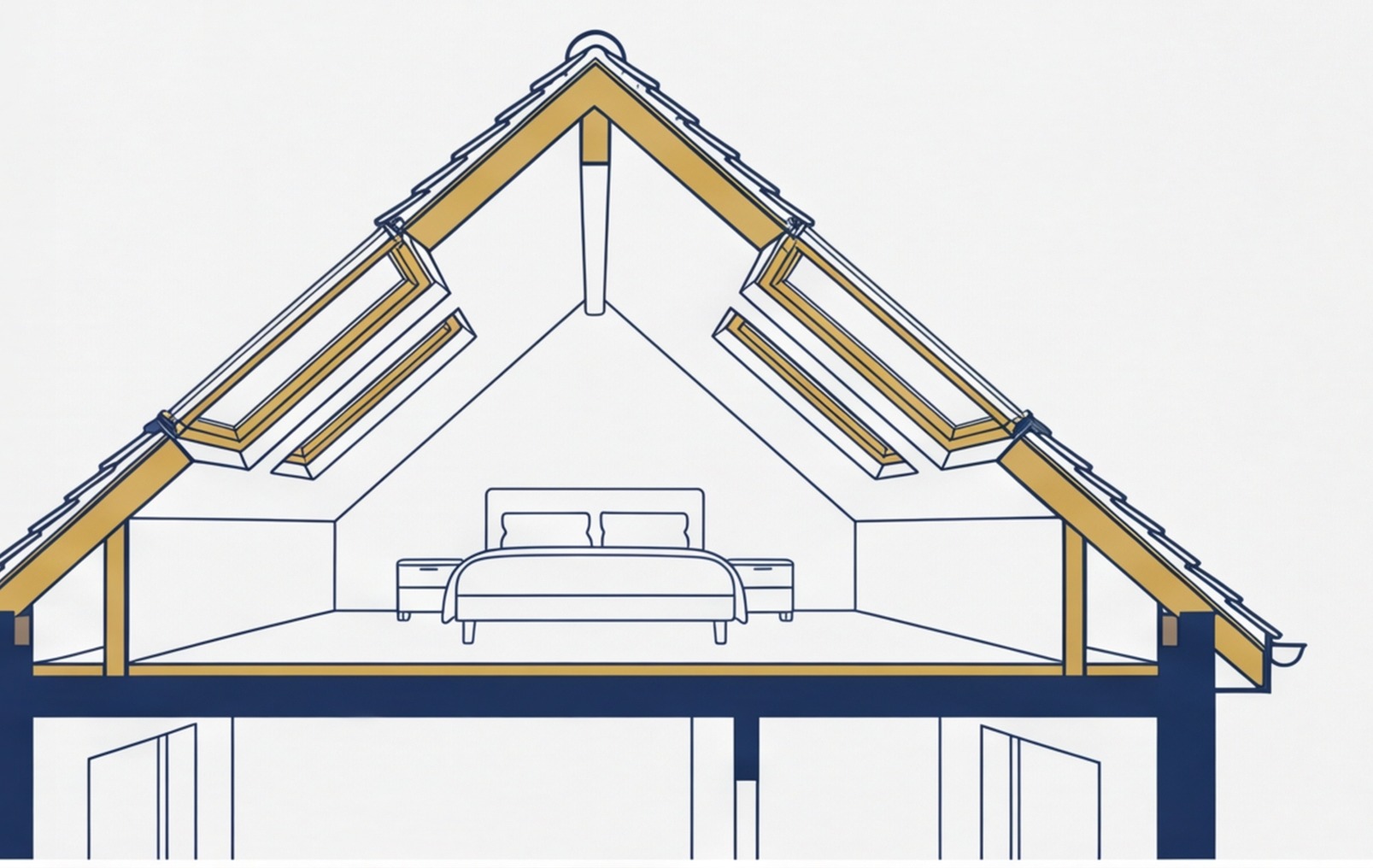
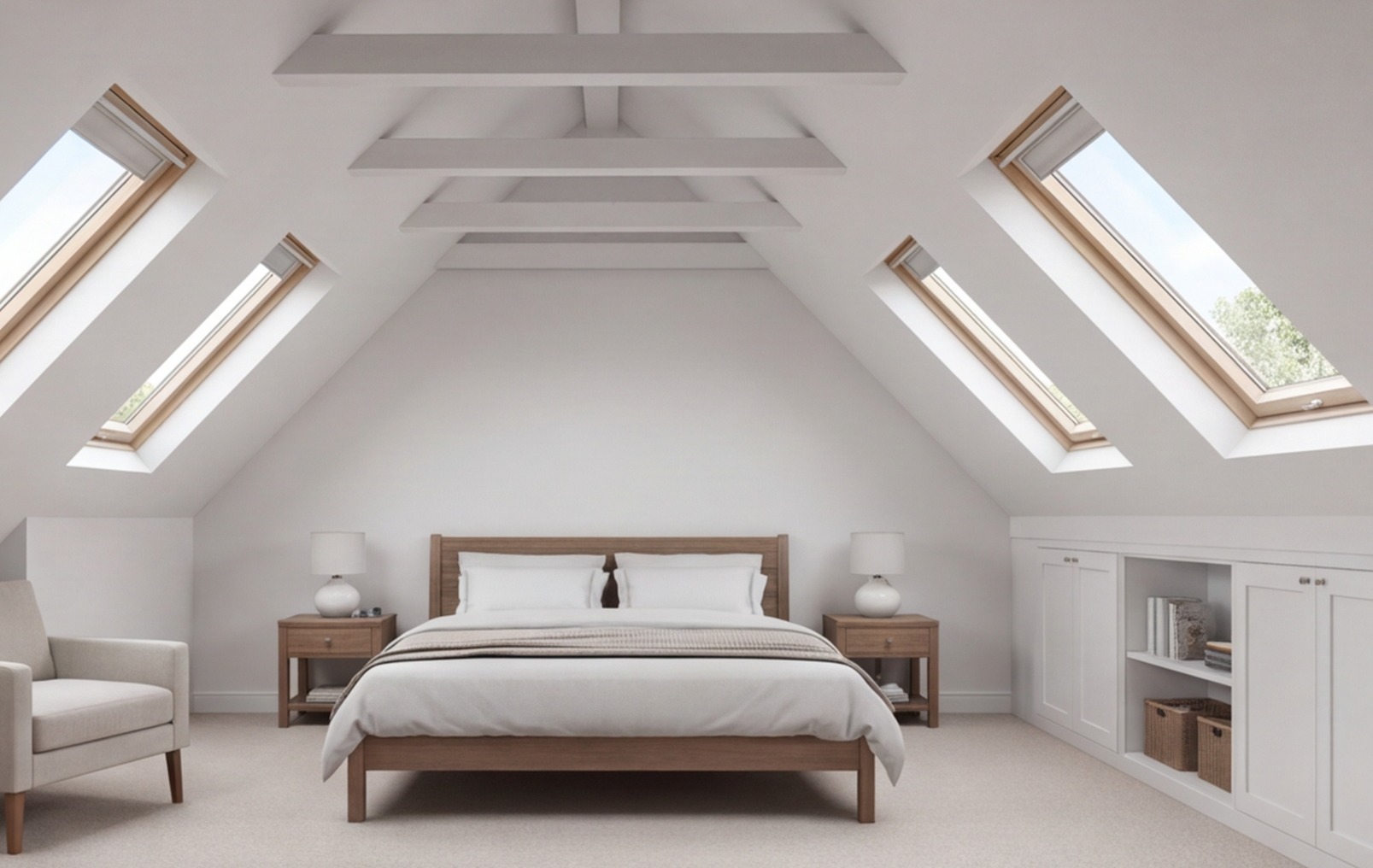
A Velux conversion (also called a rooflight conversion) doesn't change the shape of the roof at all. You're adding roof windows — typically two or three — and converting the existing loft space into a habitable room. No dormer structure, no raised ridge, no change to the roofline as seen from the street.
This is the cheapest route and the least disruptive in terms of planning. But it's only viable if the loft already has enough headroom: you need at least 2.2 metres at the ridge to create a usable room, and ideally 2.4m or more for a comfortable bedroom. On many 1930s–1970s semis, the ridge isn't high enough without a dormer — a surveyor will confirm this during the initial assessment.
Velux Conversion Cost Breakdown
| Element | Cost Range |
|---|---|
| Structural work — strengthening floor joists | £2,500–£5,000 |
| Velux windows — supply and fit (2–3 windows) | £1,500–£3,500 |
| Roof insulation (between and below rafters) | £2,000–£4,000 |
| New staircase | £2,500–£5,000 |
| Fire doors and fire protection | £500–£1,500 |
| Electrics — first and second fix | £1,500–£2,500 |
| Boarding, plastering and finishing | £2,500–£5,000 |
| Flooring, decoration and skirting | £1,500–£3,000 |
| Building Control fees and drawings | £1,000–£2,000 |
| Total | £18,000–£30,000 |
Velux conversions don't typically include an en suite (there's usually not enough floor area to justify it), which keeps plumbing costs out of the equation. If you want a Velux conversion with a WC or shower, that's possible but adds £3,500–£6,000 and significantly reduces the floor space available for the bedroom.
Dormer Loft Conversion — Full Cost Breakdown
The rear dormer is the UK's most popular loft conversion type. It creates a box-like extension out of the rear slope of the roof, dramatically increasing the usable floor area and headroom, and typically allowing for a full bedroom plus an en suite bathroom. On a standard 3-bedroom semi-detached, it transforms an unusable loft into a proper additional bedroom — effectively adding a fourth bedroom to the house.
Most rear dormers fall within permitted development rights in England, meaning no planning permission is needed, subject to volume limits and material restrictions. This makes them relatively straightforward from a consent perspective, though Building Regulations are always required.
Dormer Loft Conversion Cost — Full Breakdown
| Element | Budget Range | Notes |
|---|---|---|
| Architect's drawings and structural engineer | £1,500–£3,500 | Full plans required for Building Control |
| Building Control application and inspections | £700–£1,500 | Full Plans application recommended |
| Scaffolding | £1,000–£2,500 | Required for dormer roof structure |
| Structural steels (RSJs / beams) | £1,500–£4,000 | Depends on span and number required |
| Dormer structure — timber frame and roof | £6,000–£12,000 | Includes flat roof or pitched dormer roof |
| Flat roof covering (GRP or EPDM) | £1,500–£3,000 | GRP preferred for longevity |
| Dormer windows — supply and fit | £1,500–£3,500 | uPVC or timber depending on spec |
| Floor joist strengthening | £2,000–£4,500 | New timber or steel floor joists |
| Roof insulation | £2,000–£4,000 | Between and below rafters; thermal performance critical |
| New staircase | £2,500–£6,000 | Space-saving stairs common in loft conversions |
| Fire doors throughout (Building Regs requirement) | £800–£2,500 | FD30 doors on all rooms from staircase to each floor |
| Mains-wired smoke detection | £400–£800 | Interlinked across all floors |
| First-fix electrics | £1,000–£2,000 | Lighting circuits, sockets, extractor if en suite |
| En suite plumbing — first and second fix | £3,500–£7,000 | WC, basin, shower; includes waste runs down |
| Boarding, plastering and finishing | £3,000–£6,000 | Boarding rafters, ceiling and walls; skim coat |
| Tiling — en suite | £800–£2,000 | Walls and floor |
| Second-fix electrics and sanitaryware | £1,500–£3,000 | Lights, heated towel rail, sockets, bathroom fittings |
| Flooring, decoration, skirting and doors | £2,000–£4,500 | Carpet or LVT; paint throughout |
| Total — bedroom only | £32,000–£50,000 | Without en suite |
| Total — bedroom plus en suite | £38,000–£60,000 | With full en suite bathroom |
The en suite is often the most significant optional cost item on a dormer conversion. If budget is tight, it's entirely reasonable to put in the pipework rough-in during the loft conversion and add the en suite fit-out later — this avoids the disruption and cost of a second round of plumbing work down the line.
If you want to estimate your loft conversion before going to builders, RenoCalc's floor plan estimator covers loft conversions as part of the full property quote — upload your drawings and get a working cost breakdown quickly.
Hip-to-Gable Conversion — Costs and Structural Work
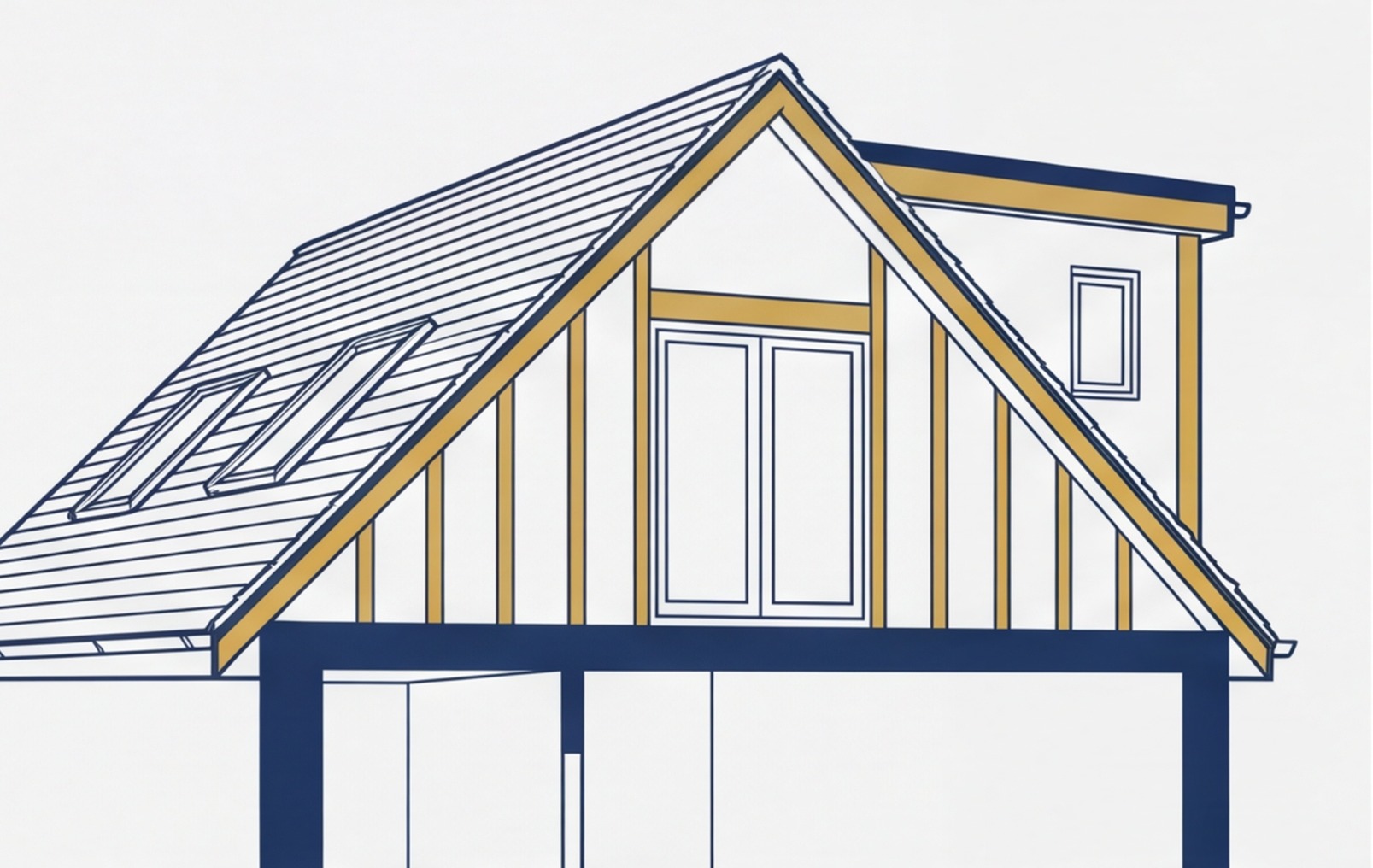
A hip-to-gable conversion applies to houses with hipped roofs — where the roof slopes on all four sides rather than ending in a gable wall. By rebuilding the hipped end as a vertical gable, you gain significant additional floor area and headroom at that end of the loft.
Hip-to-gable conversions are more complex than rear dormers because they involve reconstructing a significant portion of the roof structure. They're also more likely to need planning permission, as the change to the roofline can be visible from the street or side elevation.
Hip-to-Gable Cost Breakdown
| Element | Cost Range |
|---|---|
| Architect's drawings, structural engineer and planning application (if required) | £2,500–£5,000 |
| Planning fee (if applicable) | £258 (England, 2026) |
| Building Control — Full Plans application | £800–£1,500 |
| Scaffolding | £2,000–£4,000 |
| Hip-to-gable structural work — rebuilding roof end | £5,000–£10,000 |
| Structural steels (RSJs) | £2,000–£5,000 |
| New gable brickwork or blockwork | £2,000–£4,500 |
| Roofing — new tiles to match existing | £1,500–£3,500 |
| Dormer addition (often combined) | £5,000–£10,000 |
| Internal works — joists, insulation, electrics, plastering, stairs, fire doors | £18,000–£30,000 |
| Total | £40,000–£65,000 |
Hip-to-gable conversions are often done in combination with a rear dormer to maximise the usable floor area. If you're doing both, the combined cost runs £50,000–£75,000 but the result is typically a large master bedroom with en suite — genuinely the best use of the space and often the highest-value addition you can make to a semi-detached property.
Element-by-Element Cost Guide
Regardless of which conversion type you're doing, certain elements are common to all of them. Here's what each costs on its own, which helps you sense-check the quotes you receive and understand where the money is going.
Structural Steels
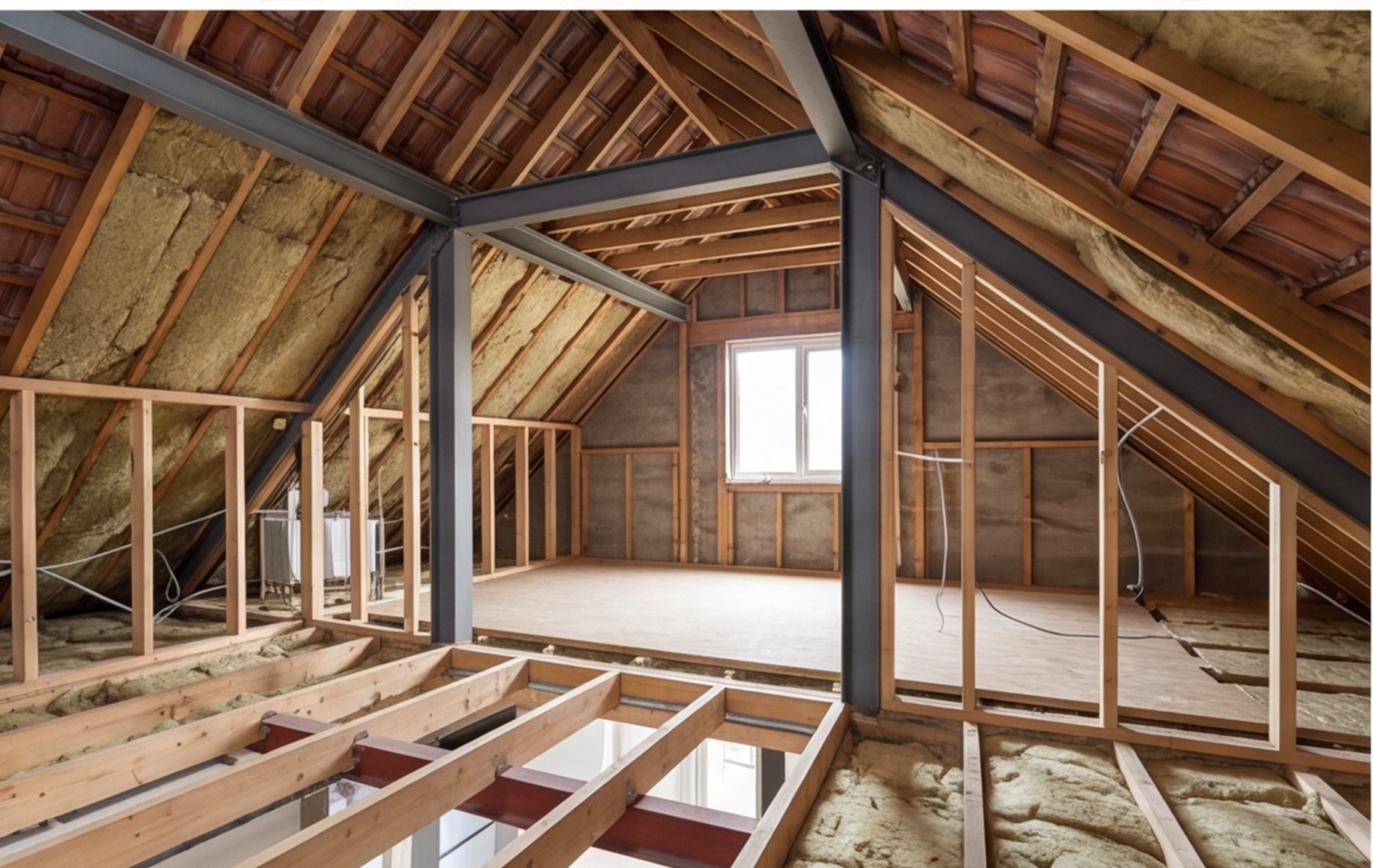
Almost all loft conversions require structural steel beams to support the new floor — the existing ceiling joists aren't designed to carry floor loading. The size and number of steels depends on the span and the load they need to carry. On a standard 3-bed semi, you're typically looking at one or two RSJs (rolled steel joists) at £1,500–£4,000 supply and install. A structural engineer's calculations are required before the steel sizes can be specified.
New Staircase
The new loft staircase must comply with Building Regulations for rise, going, width and headroom — not as simple as it sounds in a tight loft conversion. Space-saving stairs (alternating tread stairs) are allowed in some cases where space is restricted, but standard-pitch stairs are preferred by Building Control. Budget £2,500–£6,000 for a new loft staircase including fitting, with the higher end for bespoke joinery or complex runs.
Insulation
Loft insulation must meet current Building Regulations standards — for a habitable room, this means insulating between and below the rafters to achieve the required U-value (currently 0.18 W/m²K for roof construction). Rigid insulation boards are typically used: PIR (polyisocyanurate) boards between the rafters and a continuous layer below. Don't use old-style glass fibre or mineral wool in a loft conversion — it doesn't achieve the required thermal performance in the limited rafter depth available.
Budget £2,000–£4,500 for loft insulation depending on the roof area and the insulation system specified.
Fire Doors and Fire Safety
Building Regulations require FD30 fire doors throughout a loft conversion — on every room that opens onto the protected staircase from the loft floor down to the ground floor. This typically means replacing all internal doors on the first and ground floor as well as the loft level. Budget £800–£2,500 for the doors alone, with fitting additional. Mains-wired interlinked smoke detection is also required and must be installed by a qualified electrician.
The New Staircase — Making It Work Architecturally
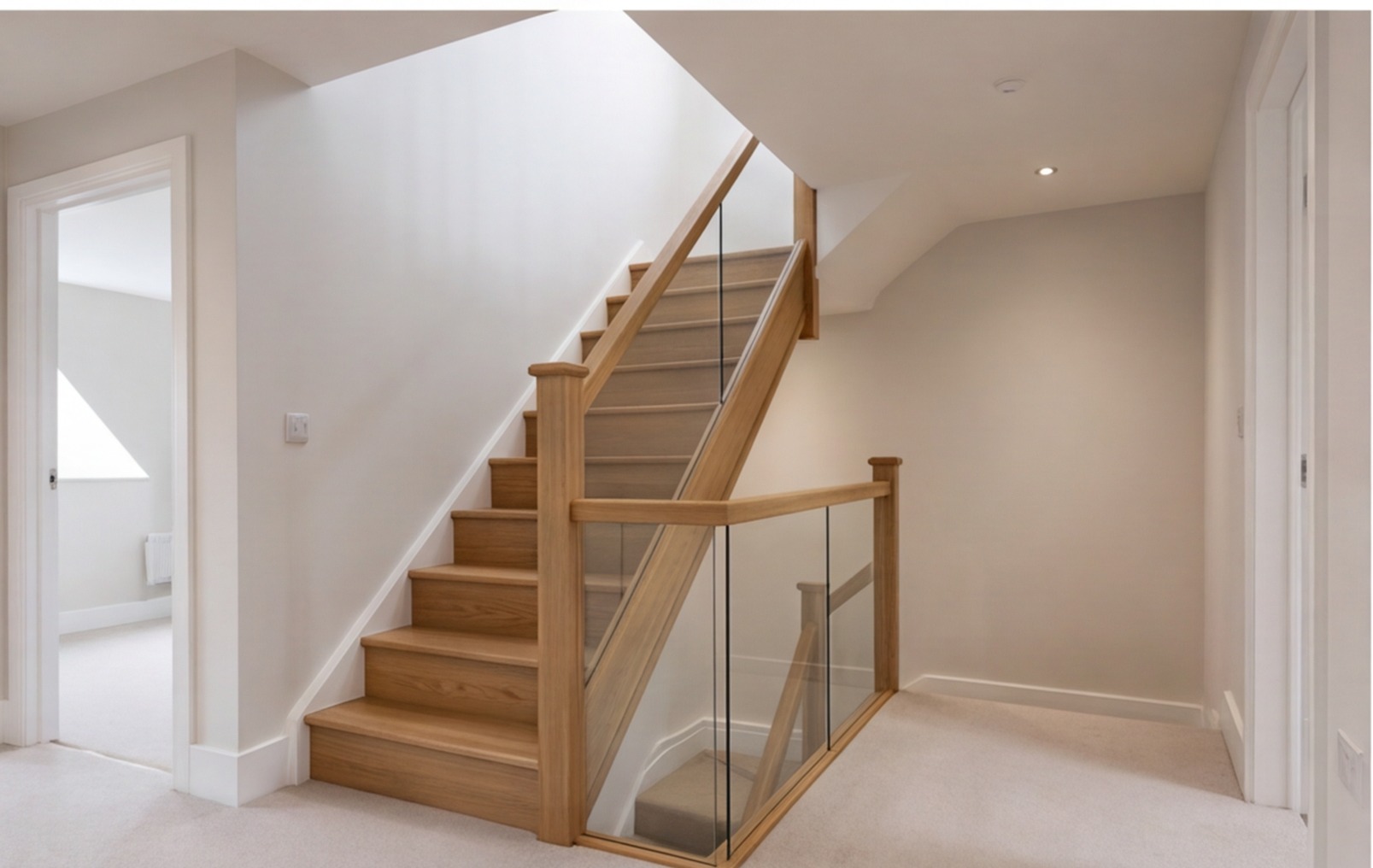
One element that's worth spending on is the staircase design. A loft staircase that's squeezed awkwardly into a landing or cuts through a bedroom door opening makes the whole loft feel like an afterthought. A well-designed staircase — even a simple one — makes the loft feel like a proper part of the house. I've seen loft conversions with beautiful finishes that are let down by a poorly positioned or poorly designed staircase. Get this right in the design stage.
Planning Permission and Building Control
These are two separate processes and both matter. Confusing them is a common mistake that causes problems down the line.
Planning Permission
Most rear dormer loft conversions in England fall within permitted development rights and don't require a planning application. The main conditions: the additional volume must not exceed 40 m³ (terraced houses) or 50 m³ (semi-detached and detached), the ridge height must not be raised, and no balconies or verandas are permitted. Materials must be similar in appearance to the existing house. Permitted development rights are removed in conservation areas and for listed buildings, and some properties have had their PD rights removed by a planning condition — always check before assuming.
Hip-to-gable conversions frequently need planning permission because the gable wall changes the roofline as seen from the side elevation. Budget £1,000–£2,500 for the planning application drawings and £258 for the planning fee (England 2026).
Building Regulations
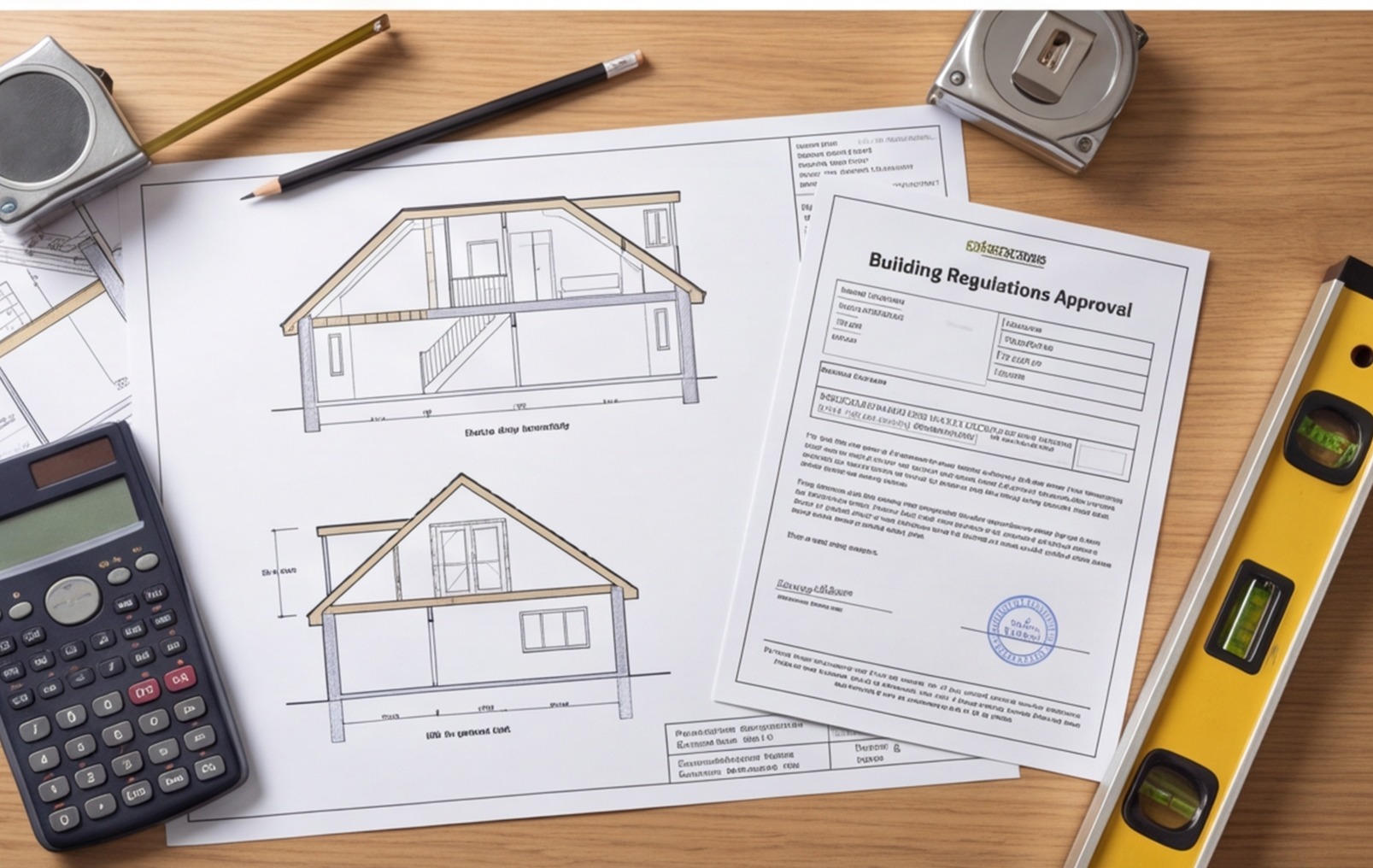
Building Regulations approval is mandatory for all loft conversions. It covers: structural safety (steels, joists, floor construction), thermal performance (insulation to meet current U-values), fire safety (fire doors, escape windows, smoke detection, protected staircase), and electrical safety (new circuits notified under Part P).
Submit a Full Plans application — not a Building Notice — for a loft conversion. Full Plans approval gives you written confirmation that the plans are compliant before work starts, which protects you if there are disputes later. Building Control will make staged inspection visits throughout the build. Budget £700–£1,500 for Building Control fees.
For a full run-through of how to price a loft conversion project before going to tender, see our guide to construction estimating software — including how RenoCalc handles loft conversions in its quoting system.
Frequently Asked Questions
How much does a loft conversion cost in the UK?
Loft conversion cost UK in 2026 ranges from £18,000–£30,000 for a basic Velux conversion up to £60,000–£85,000 for a large L-shaped dormer with en suite and full finish. A standard rear dormer on a 3-bedroom semi — the most common type — typically costs £35,000–£55,000 including structural work, steels, stairs, insulation, electrics, plumbing for an en suite, plastering, flooring and decoration. Building Control fees and architect's drawings add £2,000–£4,000 on top.
What type of loft conversion is cheapest?
A Velux (rooflight) loft conversion is the cheapest type because it doesn't alter the roofline — no dormer structure, no planning permission in most cases, costs starting around £18,000–£30,000. It's only viable if the loft already has sufficient headroom (2.2m minimum at the ridge). On many 1930s–1970s UK semis, the ridge isn't high enough without a dormer — a surveyor will confirm this during an initial assessment of the property.
Do I need planning permission for a loft conversion?
Most loft conversions in England fall within permitted development rights and don't require planning permission, subject to volume limits (40 m³ for terraced houses, 50 m³ for detached and semi-detached) and restrictions on materials and ridge height. Hip-to-gable conversions often require planning permission because they change the roofline significantly. Properties in conservation areas, national parks, or listed buildings will need planning consent for any external alterations. Always check with your local planning authority before starting — permitted development rights can be removed for individual properties.
Do loft conversions always need Building Regulations approval?
Yes — all loft conversions require Building Regulations approval regardless of whether planning permission is needed. Building Control will inspect structural work, fire safety provisions (fire doors, escape windows, smoke detection), insulation standards, staircase construction and electrical installation. You'll need a Building Regulations completion certificate on completion, which is required when you sell the property. Don't start a loft conversion without submitting a Full Plans application or Building Notice to your local Building Control department.
How long does a loft conversion take?
A Velux loft conversion typically takes 4–6 weeks. A standard dormer conversion runs 8–12 weeks. A hip-to-gable conversion takes 10–14 weeks or more. These timelines assume a well-organised site with trades properly sequenced: structural steels, then roofing, then first-fix electrics and plumbing, then insulation, then boarding, then plastering, then second-fix and finishing. Building Control inspection visits also affect the programme — allow time for these in your project plan.
What is the average cost of a dormer loft conversion?
A standard rear dormer loft conversion on a UK 3-bedroom semi costs £35,000–£55,000 in 2026, including structural steels, dormer structure and roofing, insulation, new staircase, fire doors, first and second-fix electrics, plastering, flooring and decoration. Adding an en suite bathroom costs an additional £5,000–£9,000. Architect's drawings, structural engineer's calculations and Building Control fees add another £2,000–£4,000. In London and the South East, add 20–35% for comparable work.
Planning a Loft Conversion? Build Your Budget Now
A loft conversion is a significant investment — but when it's done well, it adds a full bedroom (and often a bathroom) to your property without losing garden space or ground floor living area. The cost breakdowns in this guide are based on real UK trade pricing in 2026, covering all three main conversion types from start to finish.
Use these figures to build your budget before you invite builders to quote. And if you want a faster starting point, try RenoCalc free — upload your floor plan and get a working loft conversion estimate in minutes, covering every trade and every element from steels to skirting.
Get a Loft Conversion Estimate in Under 3 Minutes
RenoCalc turns your floor plan into a full loft conversion quote — structural work, roofing, stairs, insulation, electrics, plumbing and finish. Built for UK builders and property investors.
Start Your Free Estimate