How Much Does It Cost to Renovate a 3-Bedroom House UK (2026)
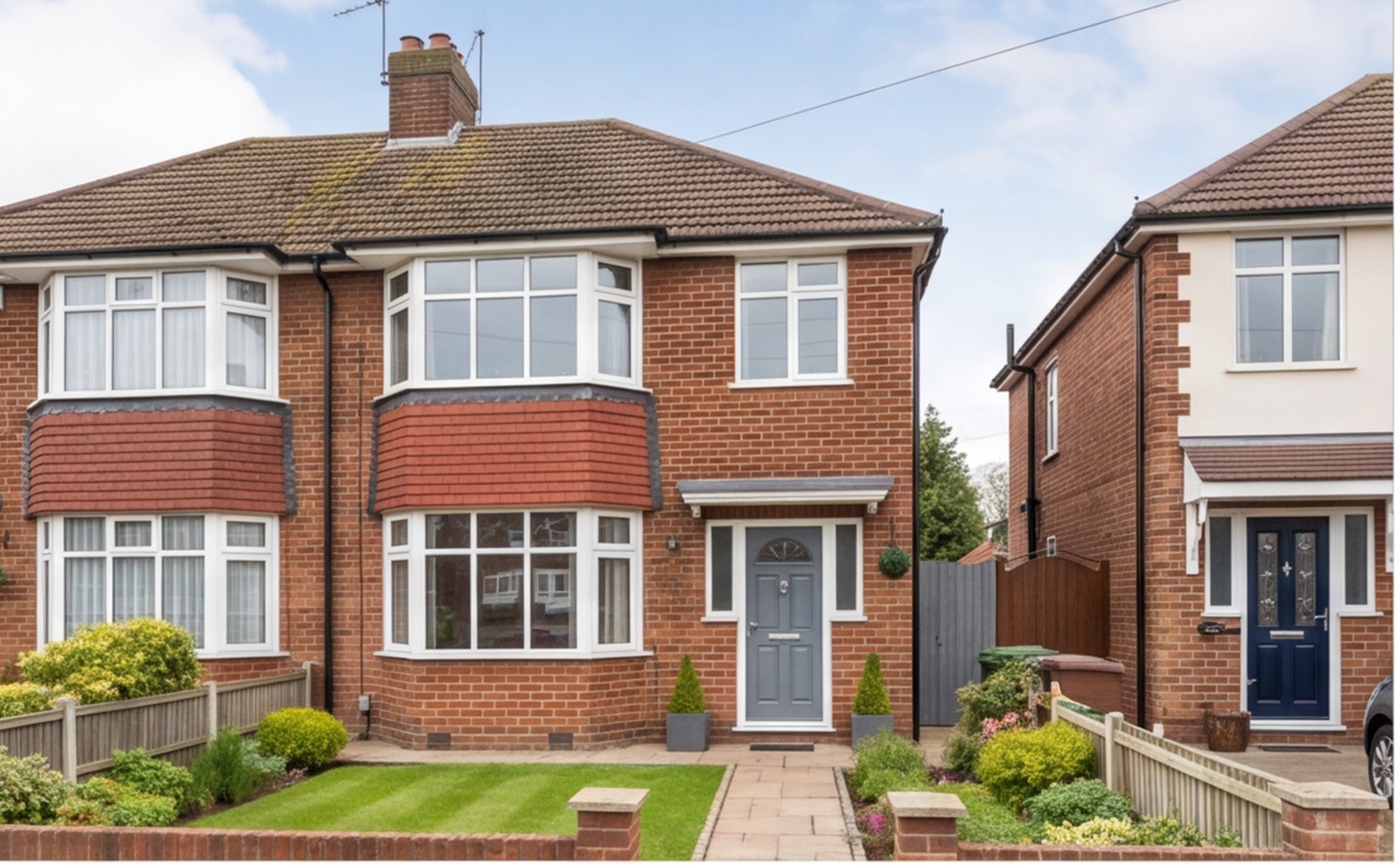
If you're pricing up a 3-bedroom house renovation — whether you're the builder doing the work or the client commissioning it — the first question is always the same: how much is this going to cost?
The honest answer is that the cost to renovate a 3 bedroom house UK varies enormously depending on how deep you go. A cosmetic tidy-up is a completely different job from a full gut-out renovation. In 2026, I'm seeing prices range from around £8,000 for a basic light refurb right up to £150,000 or more for a full structural renovation including new services throughout.
I've been in the building trade for over 30 years and I've priced all three levels more times than I can count. This guide breaks it down properly — by renovation level, trade, and room — so you've got real numbers to work with before anyone picks up a hammer.
The Three Renovation Levels Explained
Every 3-bedroom house renovation falls into one of three categories. The price difference between them isn't just big — it's the difference between a few weekends' work and a six-month site programme. Before you do anything else, work out which category you're actually in.
Level 1: Light Refurbishment — £8,000 to £20,000
A light refurb means cosmetic work only. You're not moving walls, not rerouting plumbing, not opening the ceilings. You're refreshing what's already there: new flooring, fresh plaster or paint, updated kitchen units without touching the layout, a new bathroom suite swapped into the existing position.
This is typically what landlords do between tenants, or what buyers do when they've got a property that's tired but structurally sound. The trades involved are decorators, a kitchen fitter, a bathroom fitter, and maybe a tiler. The work is clean and relatively fast — four to eight weeks if it's organised properly.
What's included at this level:
- Full redecoration throughout — walls, ceilings, woodwork
- New floor coverings in all rooms (carpet, LVT or laminate)
- Replacement kitchen units in existing positions — no plumbing moves
- Swap-out bathroom suite — same layout, new sanitaryware
- Minor electrical work — new sockets, light fittings
Budget range: £8,000–£20,000 depending on property size, specification and how much of the decorating you do yourself.
Level 2: Mid-Range Renovation — £35,000 to £65,000
A mid-range renovation is where the majority of residential renovation projects sit. Here you're dealing with a full kitchen renovation (new layout, new plumbing positions, new electrics), a full bathroom renovation, and usually a new boiler plus radiators. You might also be looking at a full rewire, new windows, or first-fix plastering throughout.
This is the level I spend most of my time working at. The trades multiply — you've got electricians, plumbers, plasterers, tilers, kitchen fitters, bathroom fitters, and decorators all needing to work in sequence. Coordination matters. Get the sequence wrong and you'll pay twice.
Typical scope at this level:
- Full kitchen renovation including new layout, units, worktops, splashback, appliances
- Full bathroom renovation including new suite, tiling, extractor
- New gas boiler and radiator system
- Partial or full rewire with new consumer unit
- Plastering to walls and ceilings throughout
- New windows and external doors (optional but common at this level)
- Full flooring replacement throughout
- Full internal decoration
Budget range: £35,000–£65,000. If you're adding a bathroom en suite to one of the bedrooms, add £4,000–£8,000 to that.
Level 3: Full Gut-Out Renovation — £60,000 to £150,000+
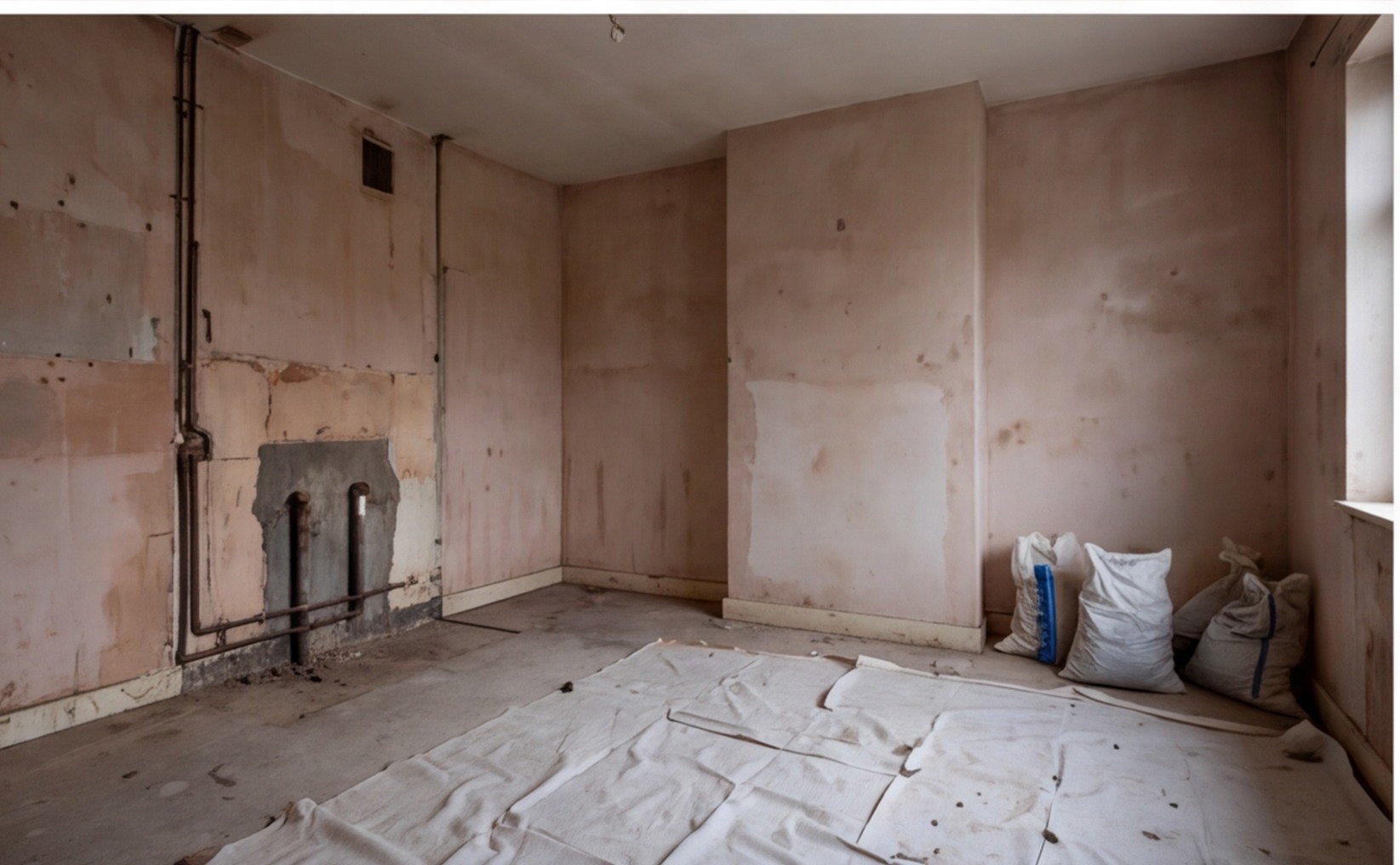
A gut-out is exactly what it sounds like. You strip the property back — sometimes to the bare masonry — and start again. This is typically required for older properties with serious issues: damp, outdated wiring, failing roof structure, rotted joists, poor insulation, or a layout that simply doesn't work.
At this level, you're often adding structural changes too: removing walls, installing steel beams, creating open-plan living spaces, or adding a loft room. The trades are the same as level two, but the scope on each is dramatically larger, and you're often adding structural engineers, Building Control, and specialist damp or timber contractors into the mix.
Budget range: £60,000–£150,000+. For high-specification gut-outs in London and the South East, six-figure sums are common. In the Midlands and North, you can often do a very solid gut-out renovation for £70,000–£100,000 on a standard 3-bed semi.
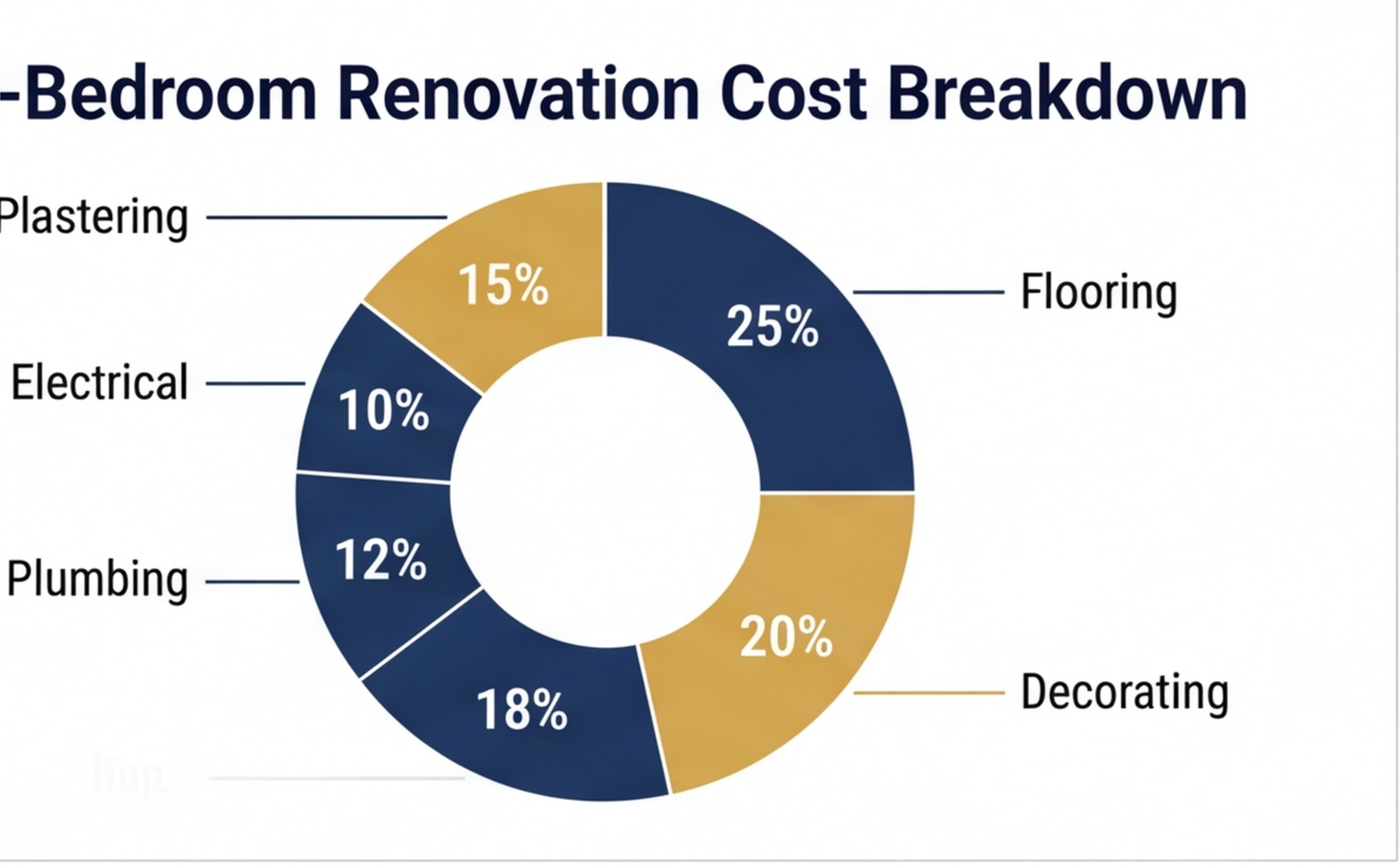
Trade-by-Trade Cost Breakdown
Here's where it gets practical. The table below gives you real trade costs for a 3-bedroom semi-detached or terraced house in 2026. These are supply-and-fit prices — labour and materials combined — at competitive but not rock-bottom rates. Prices assume a competent, qualified trade contractor. Expect regional variation of ±15–25%.
| Trade / Work Package | Light Refurb | Mid-Range Renovation | Full Gut-Out |
|---|---|---|---|
| Plastering (walls and ceilings throughout) | — | £3,500–£6,000 | £5,000–£9,000 |
| Electrics — full rewire with new consumer unit | — | £5,000–£9,500 | £6,000–£12,000 |
| Gas boiler replacement (boiler only) | £2,000–£3,500 | £2,500–£4,000 | £2,500–£4,500 |
| Full heating system — boiler + radiators | — | £4,000–£7,000 | £5,000–£10,000 |
| Plumbing — full repipe | — | £3,000–£6,000 | £5,000–£10,000 |
| Kitchen — supply and fit (mid-range units) | £3,500–£7,000 | £8,000–£18,000 | £12,000–£28,000 |
| Bathroom — full renovation (1 bathroom) | £2,000–£4,000 | £4,500–£8,500 | £5,500–£12,000 |
| En suite addition (new room) | — | £4,000–£8,000 | £5,000–£10,000 |
| Tiling (kitchen and bathroom) | £800–£2,000 | £2,000–£4,500 | £3,000–£6,500 |
| Flooring — all rooms (carpet / LVT) | £2,500–£5,000 | £3,500–£7,000 | £4,500–£9,000 |
| Internal decoration throughout | £3,000–£6,000 | £4,000–£8,000 | £5,000–£10,000 |
| Windows and external doors (full replacement) | — | £4,000–£10,000 | £8,000–£18,000 |
| Structural work / steels / RSJs | — | — | £5,000–£20,000+ |
| Roof repairs or partial reroofing | — | £2,000–£6,000 | £6,000–£18,000 |
| Damp treatment / DPC injection | — | £1,500–£4,000 | £3,000–£8,000 |
These figures don't include skip hire, scaffolding (if needed), Building Control fees, architect or structural engineer fees, or VAT on any applicable trades. Budget an additional 10–15% on top of your trade costs to cover these extras. They're not optional; they're part of the job.
If you want to generate a working estimate quickly, try RenoCalc free — you upload your floor plan and it produces a room-by-room breakdown in under three minutes.
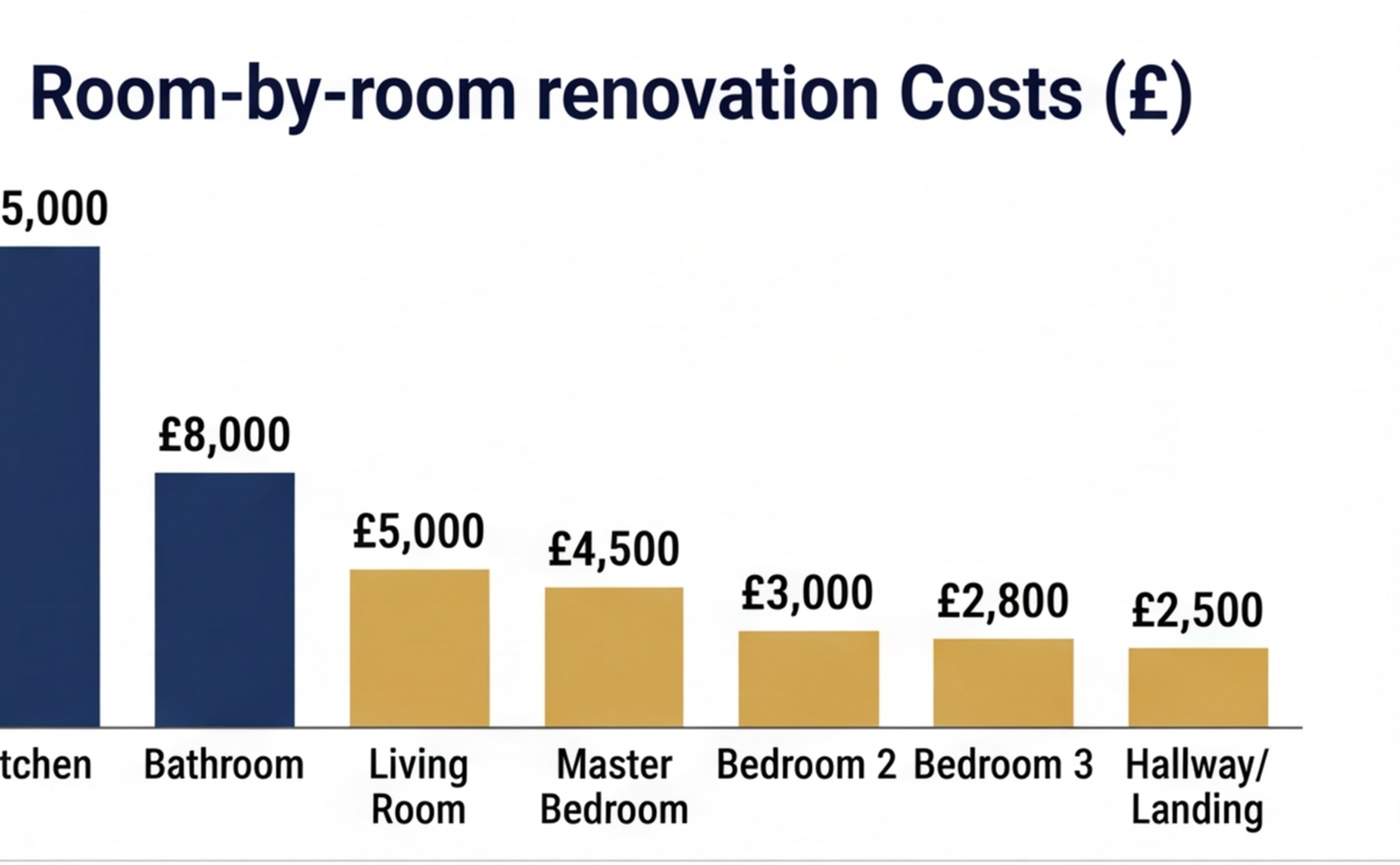
Room-by-Room Cost Guide
If you're working out your budget room by room rather than by trade, this table gives you a realistic picture. These are total room renovation costs — all trades combined — for three finish levels.
| Room | Budget Finish | Mid-Range | High Spec |
|---|---|---|---|
| Kitchen (4–6 m²) | £5,000–£10,000 | £12,000–£20,000 | £22,000–£45,000+ |
| Main bathroom (4–6 m²) | £3,000–£5,500 | £5,500–£9,000 | £9,000–£18,000 |
| En suite (2–4 m²) | £2,500–£4,500 | £4,500–£7,500 | £7,500–£14,000 |
| Living room | £1,200–£2,500 | £2,500–£5,000 | £5,000–£10,000 |
| Master bedroom | £800–£1,500 | £1,500–£3,000 | £3,000–£6,000 |
| Bedroom 2 / Bedroom 3 | £600–£1,200 | £1,200–£2,500 | £2,500–£5,000 |
| Hallway and stairs | £1,000–£2,000 | £2,000–£4,000 | £4,000–£8,000 |
The kitchen and bathrooms will always dominate your renovation budget. On a typical 3-bed semi with one bathroom and no en suite, the kitchen and bathroom together often account for 40–55% of the total renovation spend — especially at mid-range and above.
If you're thinking about adding a bathroom or extending the kitchen footprint, see our full guides: bathroom renovation cost UK and kitchen renovation cost UK for detailed breakdowns by room size and specification.
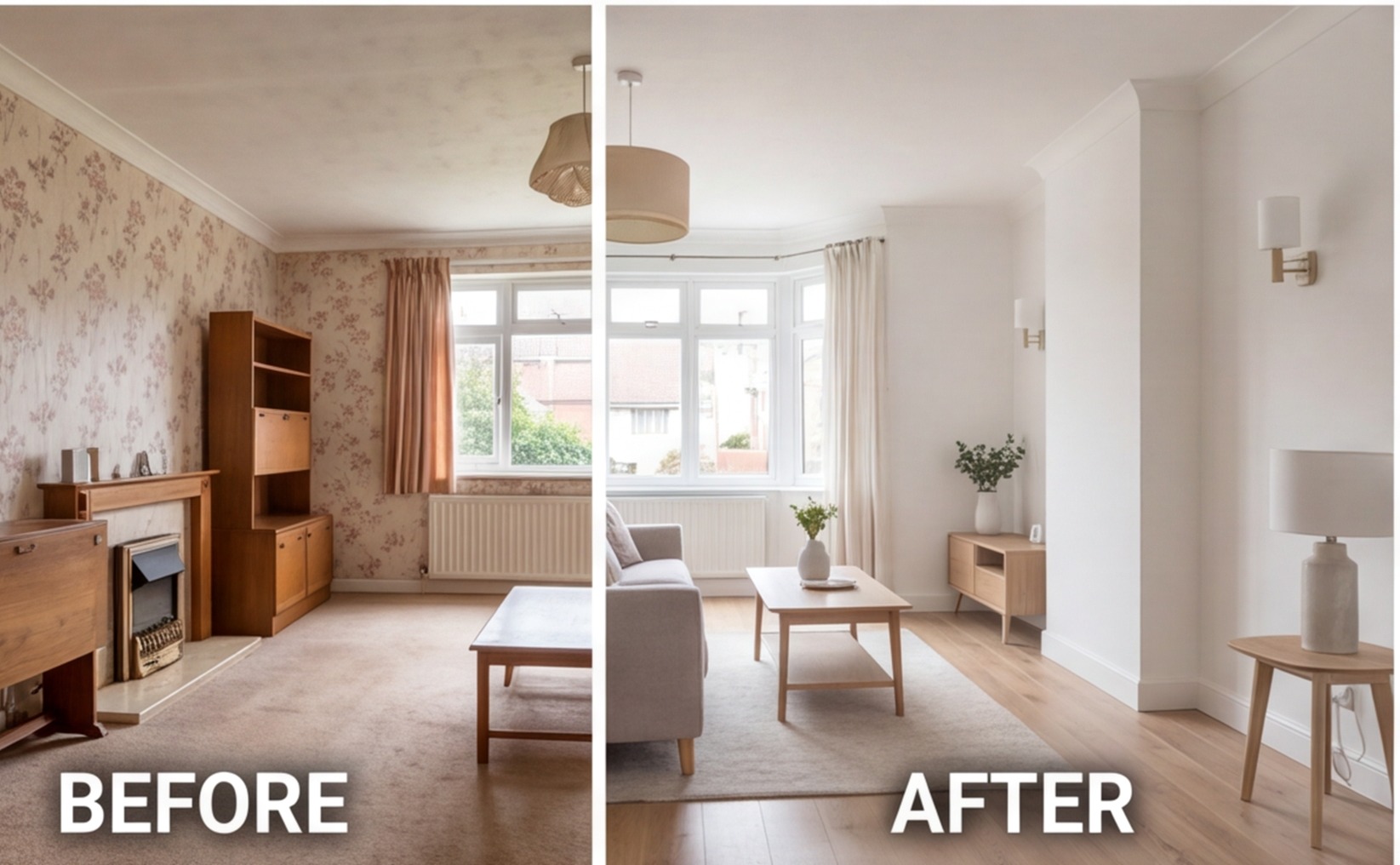
What Makes a 3-Bed Renovation More Expensive
Two houses on the same street, same size, same age — and one renovation can cost twice as much as the other. Here's why.
The Condition of the Property When You Start
This is the biggest variable of all. A 3-bed semi that's been well maintained for 30 years is a completely different job from one that's sat empty for five. Hidden problems — rot in the joists, damp behind the plasterboard, outdated wiring that fails inspection, a boiler condemned on day one — can add £10,000–£30,000 to your costs without changing the visible scope at all.
Always get a full structural survey before you budget, not after. I've seen property investors base their numbers on a drive-by view and end up seriously out of pocket when the walls came down. A survey costs £400–£800. Not getting one can cost you far more.
Scope Creep Once Work Begins
Scope creep is the silent budget killer on renovation projects. You open a wall to run a cable and find the timbers are rotten. You lift the bathroom floor to re-tile and find the subfloor needs replacing. You strip the kitchen and find the electrics haven't been touched since the 1970s.
I'd always recommend building a contingency of at least 15–20% into your renovation budget. On a £50,000 renovation, that's £7,500–£10,000 set aside for problems you didn't know about when you signed the contracts. If you don't need it, it sits in your account. If you do need it, it's there.
Specification and Material Choices
The structure of the job is often similar regardless of specification. What changes the price significantly is the materials: cheap ceramic tiles or large-format porcelain; laminate worktops or solid quartz; contractor-grade sanitaryware or designer brands. On a full kitchen renovation alone, the material cost difference between budget and high-specification choices can be £8,000–£15,000 for the same physical job.
Who You Use and How You Manage It
Hiring a main contractor to manage the whole project — who then subcontracts the trades — costs more than directly managing each trade yourself. You're paying for the contractor's time, expertise and the margin they need to run the programme. On a large renovation, that management overhead can run to £5,000–£15,000. It's often worth it: a well-run site finishes faster and with fewer mistakes. But if you have building experience and time to manage trades directly, you can save that cost.
Does Location Affect the Price?
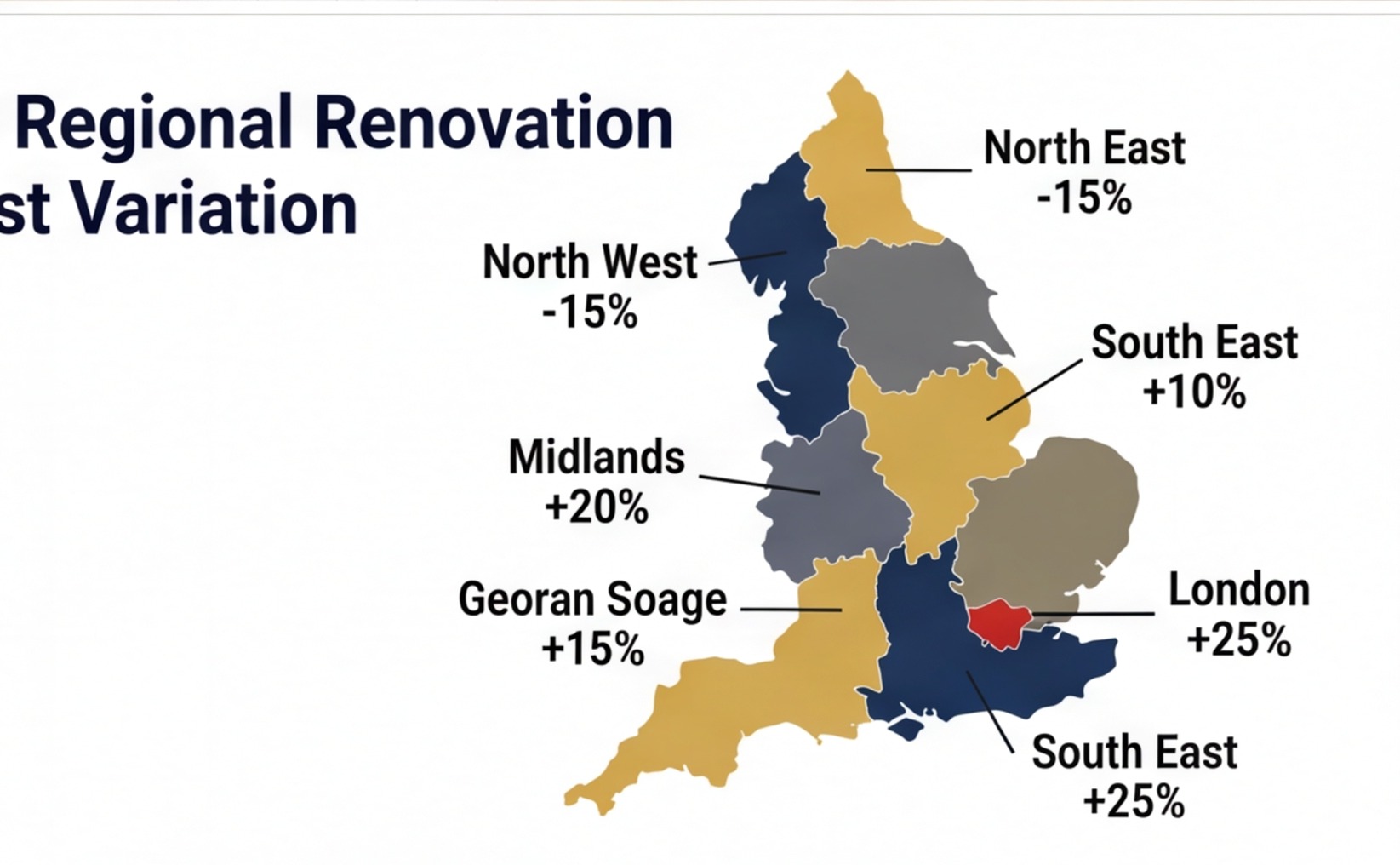
Yes — significantly. Trade labour rates vary by region, and in some parts of the UK that difference can be 30–40% on the same job. Materials are broadly similar nationwide (with some transport cost variation for bulky items), so the regional difference is almost entirely in the labour element.
| Region | Approximate Cost Range | vs. UK Average |
|---|---|---|
| London (inner) | £65,000–£130,000+ | +35–50% |
| London (outer) / South East | £55,000–£95,000 | +20–35% |
| South West / Home Counties | £48,000–£80,000 | +10–20% |
| East of England | £45,000–£75,000 | +5–15% |
| Midlands (West and East) | £38,000–£65,000 | UK average |
| North West / Yorkshire | £35,000–£60,000 | −5–10% |
| North East | £30,000–£55,000 | −10–20% |
| Scotland | £35,000–£65,000 | −5–10% |
| Wales | £32,000–£58,000 | −10–15% |
These are rough guides, not guarantees. Local market conditions, trade availability, and property type all affect the final figure. A Victorian terraced house with lime plaster walls will cost more to renovate than a 1970s semi with stud walls, regardless of region. Always get local quotes.
I'm based in Coventry, and across the West Midlands we tend to sit right around the UK average for trade rates. That makes it a useful reference point: if something costs £50,000 here, it'll cost roughly £65,000–£70,000 in London, and maybe £42,000–£45,000 in parts of the North East. The work is the same — only the day rates change.
How to Get a Quote That Holds Up
Getting a quote is the easy part. Getting a quote that actually holds up once the work starts — that's the bit most people get wrong. Here's what I'd recommend.
Write a Detailed Scope Before You Ask for Prices
The quality of your quote depends entirely on the quality of your brief. If you ask three builders to "renovate a 3-bedroom house", you'll get three different quotes covering three different things. You need to specify: which rooms, which trades, which materials, which elements stay and which go. The more specific your scope, the more comparable your quotes will be — and the fewer nasty surprises when the work begins.
Get Three Quotes, Not One
Three quotes minimum. Not because the cheapest is always best — it isn't — but because three quotes tells you what the market rate is and flags outliers in both directions. A quote that's 40% below the other two is a warning sign, not a bargain. Either something's been missed, or the contractor is planning to price the variations when the job's already started.
Build in a Contingency
15–20% contingency on any renovation involving an older property. Non-negotiable. I've run plenty of projects where the contingency never got touched. I've also run projects where we needed every penny of it — and more. The contingency isn't pessimism; it's good project management.
Use a Floor Plan to Generate a Working Estimate First
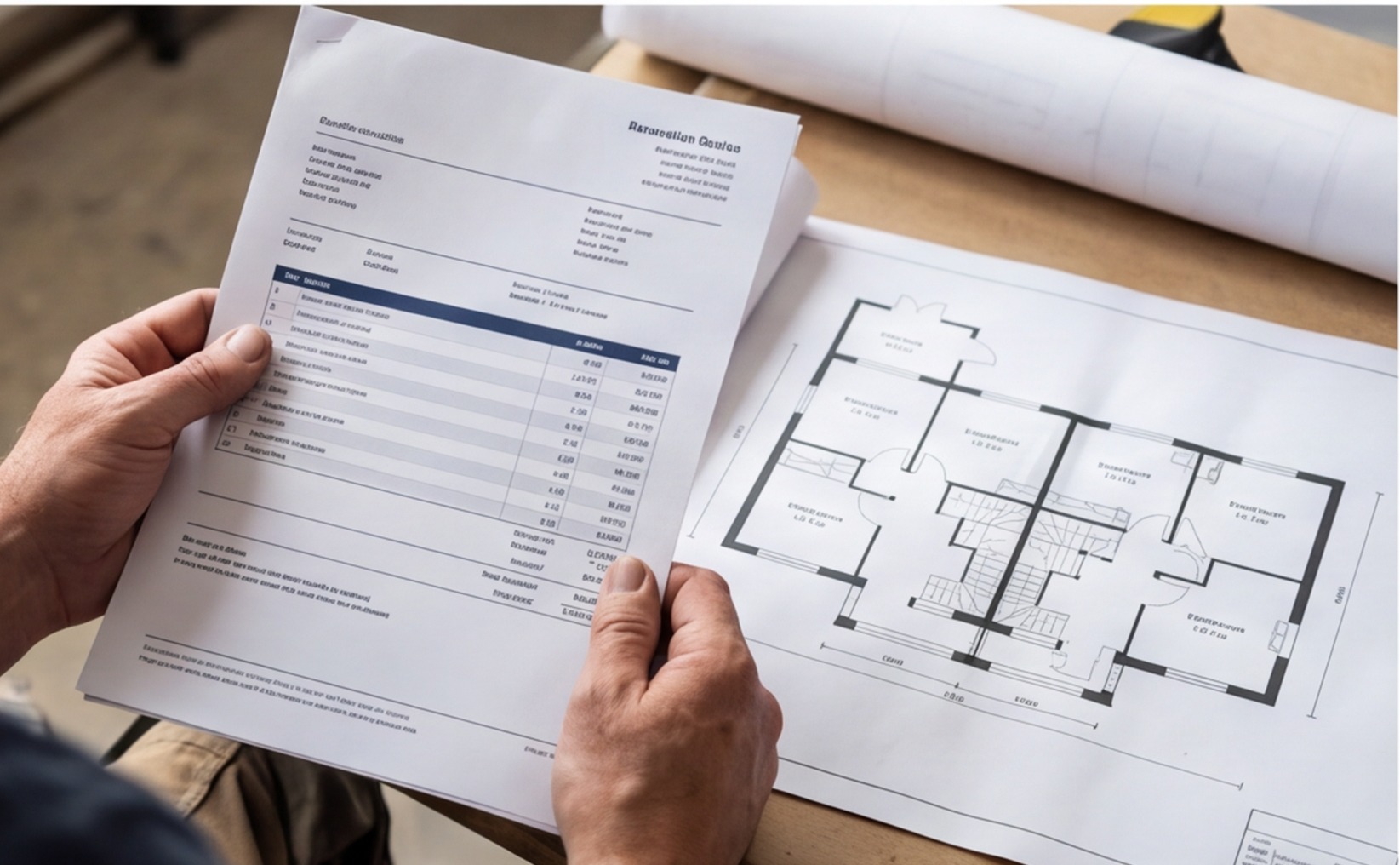
Before you invite builders in, it helps to have a working budget figure you've generated yourself. That way you walk into the conversation knowing roughly what the job should cost, which means you can spot outliers and ask better questions. RenoCalc's floor plan cost estimator lets you upload a floor plan and generate a room-by-room estimate in minutes — a useful starting point before the formal quote process begins.

Frequently Asked Questions
How much does it cost to renovate a 3-bedroom house in the UK?
The cost to renovate a 3 bedroom house UK depends on how deep the scope goes. A light cosmetic refurbishment runs £8,000–£20,000. A mid-range renovation covering kitchen, bathroom, rewire and new heating runs £35,000–£65,000. A full gut-out renovation — stripping the property back to the structure — costs £60,000–£150,000 or more. These are builder-to-client prices including materials and labour. Always get at least three quotes from local builders before committing to a budget figure.
What is the cheapest way to renovate a 3-bedroom house?
Do the cosmetic work yourself where you legally can — painting, tiling, fitting flooring — and leave regulated trades (gas, electrics, structural) to qualified contractors. Buy materials direct from trade merchants like Jewson or Travis Perkins rather than retail. Phase the work over 12–24 months to spread the cost. Avoid structural changes you don't genuinely need, because opening walls and moving load-bearing elements adds cost fast. Get quotes early, before demolition starts, so you know exactly what you're facing.
How long does a full renovation of a 3-bedroom house take?
A light refurbishment can be completed in 4–8 weeks with organised trades and materials on site. A mid-range renovation typically takes 8–16 weeks. A full gut-out — involving structural work, new services throughout and full replastering — runs 16–32 weeks or longer. The biggest delays aren't usually the physical work; they're waiting on materials, Building Control visits and trades not booked far enough in advance. Plan your trade sequence before you start and get your first fix contractors booked early.
Do I need planning permission to renovate a 3-bedroom house?
Internal renovations generally don't require planning permission. You can rewire, replumb, replaster, redecorate and fit a new kitchen without planning consent. Where you will need it: structural extensions, loft conversions that alter the roofline beyond permitted development limits, and listed buildings where even internal work may need consent. Building Regulations approval is a separate requirement for structural work, new electrical circuits, boiler replacements and other notifiable work — this is your Building Control application, not planning permission. Always check with your local authority if in doubt.
Should I get a structural survey before renovating a 3-bedroom house?
Yes — don't skip it to save money. A full structural survey costs £400–£800 but can save you tens of thousands by identifying hidden problems: roof structure failures, foundation movement, penetrating damp, or outdated wiring needing a full rewire. I've walked onto sites where the scope quadrupled once we opened walls and found rot nobody knew about. A structural survey gives you a realistic budget before you commit, and makes the quotes you receive from builders far more accurate. Survey first, then price.
Can RenoCalc help me estimate a 3-bedroom house renovation?
Yes. RenoCalc is an AI quoting tool built for UK builders and property investors. You upload a floor plan — or sketch one out — and the system generates a full job estimate room by room in under three minutes, covering kitchen, bathrooms, electrics, plumbing, plastering and flooring. If you're planning a 3-bedroom house renovation, it gives you a solid working budget before you get quotes in from contractors. Start free at RenoCalc — no subscription needed to get your first estimate.
Ready to Price Your 3-Bedroom House Renovation?
Whether you're a builder quoting a job or an investor working out your numbers, you need a reliable starting figure before anyone picks up a tool. The cost ranges in this guide reflect real-world UK trade pricing in 2026 — not optimistic estimates, not padding for profit. Use them as a framework, get your three quotes, and always carry a contingency.
If you want a faster way to generate a room-by-room cost breakdown, try RenoCalc free. Upload your floor plan, add the scope, and get a working estimate in minutes — built for builders, usable by anyone doing renovation maths.
Get a Room-by-Room Renovation Estimate in Under 3 Minutes
RenoCalc turns your floor plan into a full renovation quote — kitchen, bathrooms, electrics, plumbing and more. Built by a builder, for builders and property investors.
Start Your Free Estimate