Bathroom Renovation Cost UK: Full Breakdown by Room Size
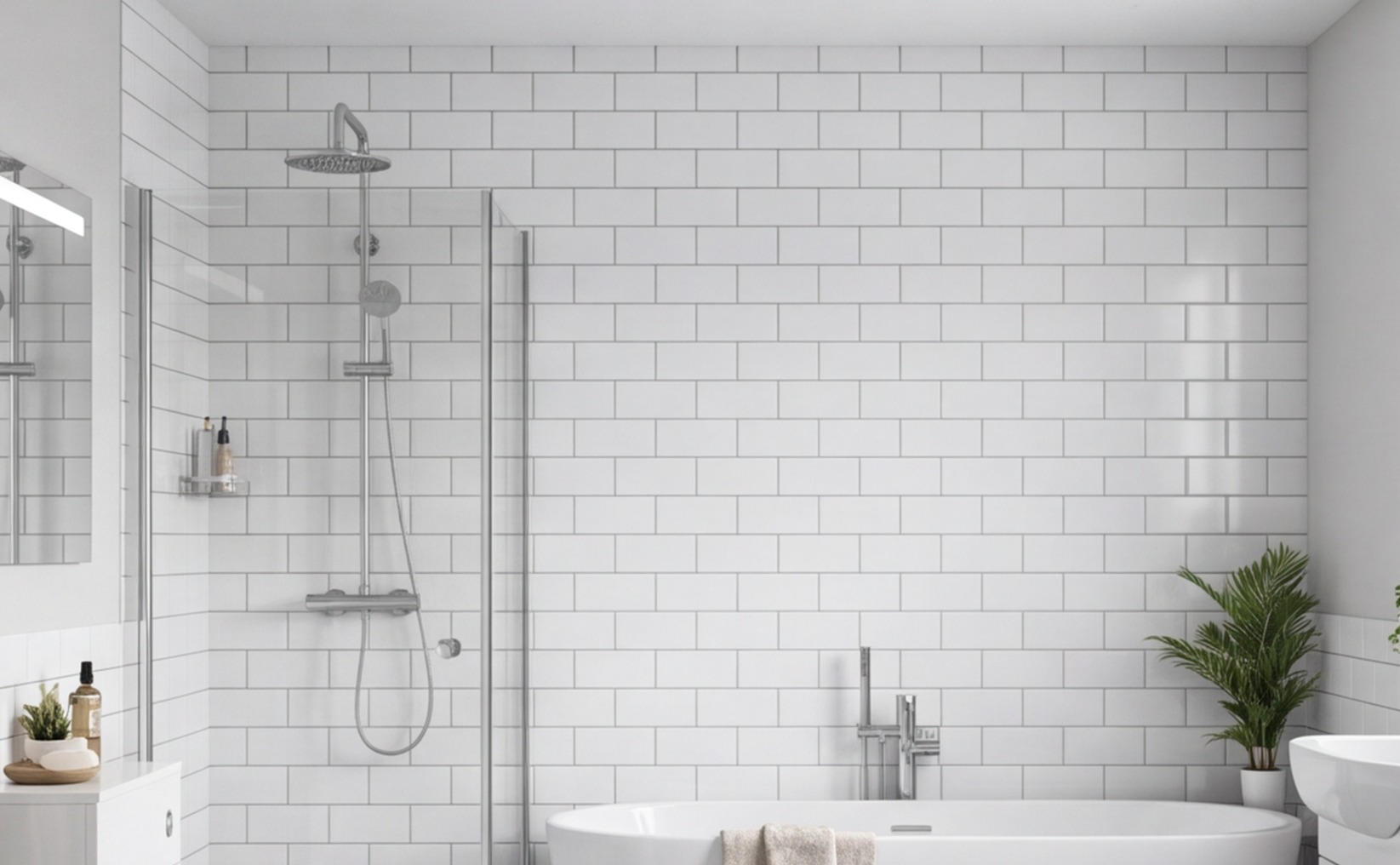
Bathroom renovation cost UK is one of those questions where the answer genuinely depends on what you're working with. I get asked it constantly — from landlords doing a quick freshen-up to homeowners going for a full wet room conversion — and the honest answer is that it ranges from around £3,500 for a small basic refurb to well over £15,000 for a large, high-spec bathroom done properly.
What I'm going to do in this guide is break it down properly — by room size, by individual trade and by the specific elements that drive the cost up or down. These are real UK builder prices for 2026, not figures plucked from a website that hasn't been updated since 2021.
Whether you're pricing a job, managing a renovation or working out how much budget you need before you commission a builder, this guide gives you the numbers you actually need.
Bathroom Renovation Cost by Room Size
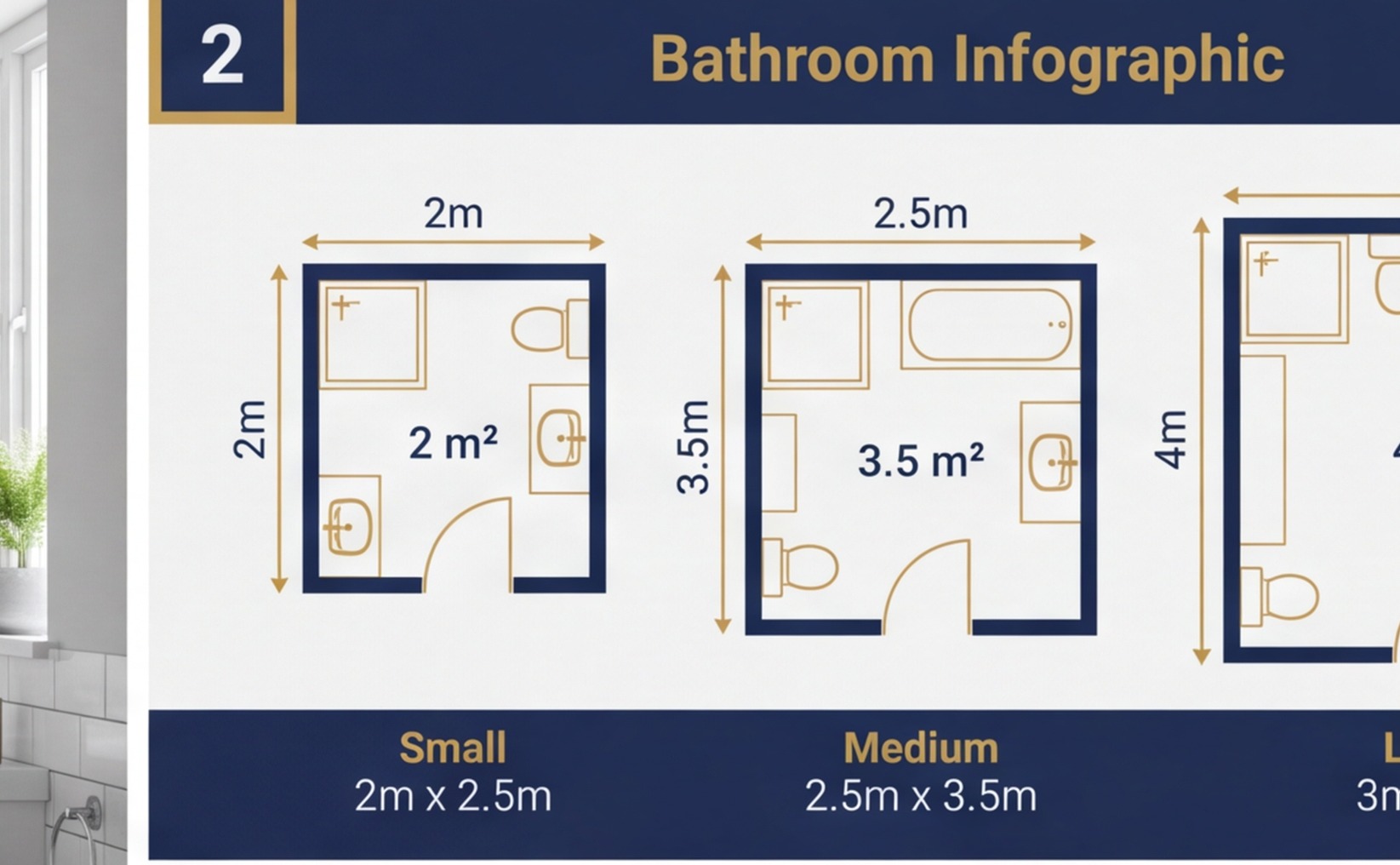
Before getting into the detail, here's a summary table. These are total project costs — all trades, all materials, labour included — for a full renovation: strip out, replumb, retile, new suite, new shower, electrics and decoration. Not a cosmetic refresh.
| Bathroom Type | Approximate Size | Budget Finish | Mid-Range | High Spec |
|---|---|---|---|---|
| Cloakroom / WC | 1–2 m² | £1,500–£2,500 | £2,500–£4,000 | £4,000–£7,000 |
| Small en suite | 2–4 m² | £2,500–£4,000 | £4,000–£6,500 | £6,500–£11,000 |
| Standard bathroom | 4–6 m² | £3,500–£5,500 | £5,500–£9,000 | £9,000–£15,000 |
| Large / master bathroom | 6–10 m² | £5,000–£8,000 | £8,000–£14,000 | £14,000–£25,000+ |
These ranges assume a standard UK terraced or semi-detached property with accessible pipework above a ground-floor bathroom or in a first-floor bathroom with joists below. Victorian properties with solid stone or concrete floors, or properties with complex drainage layouts, can cost significantly more once groundwork is involved.
Cost by Element — Labour and Materials
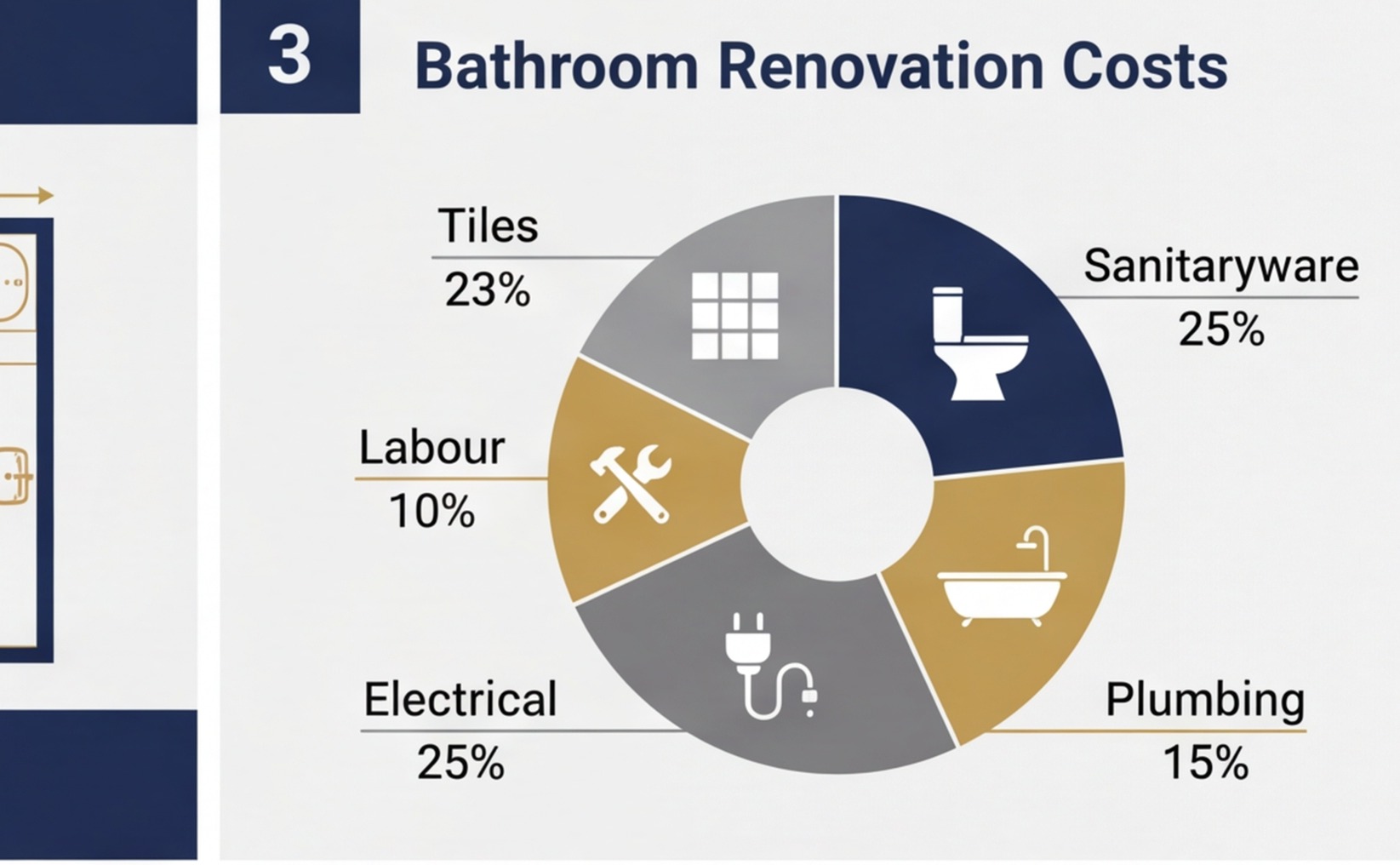
Understanding how the cost breaks down by element helps you prioritise when the budget is tight. Here's what each part of a bathroom renovation actually costs in 2026, covering both materials and labour.
| Element | Budget | Mid-Range | High Spec | Notes |
|---|---|---|---|---|
| Strip-out and disposal | £300–£500 | £400–£700 | £500–£900 | Includes skip or van clearance |
| First-fix plumbing (pipework runs) | £400–£700 | £600–£1,200 | £800–£2,000 | Higher if positions moved |
| First-fix electrics | £200–£400 | £350–£600 | £500–£900 | Includes new extractor circuit |
| Boarding / preparation | £250–£500 | £400–£800 | £600–£1,200 | Tile backer board or wet area boarding |
| Waterproofing / tanking | — | £200–£500 | £400–£900 | Recommended in shower areas |
| Floor tiling (supply and fit) | £400–£800 | £700–£1,400 | £1,200–£3,000 | Varies significantly by tile format |
| Wall tiling (supply and fit) | £600–£1,200 | £1,000–£2,200 | £1,800–£4,500 | Full-height tiling costs more |
| Sanitaryware — WC, basin, bath | £350–£700 | £700–£1,800 | £1,800–£6,000+ | Wide range from basic to designer |
| Shower enclosure and tray / wet room | £400–£800 | £800–£2,000 | £2,000–£6,000 | Wet room drain + screen adds cost |
| Second-fix plumbing (fitting out) | £400–£700 | £600–£1,000 | £800–£1,500 | Bath, basin, WC, shower fitting |
| Second-fix electrics | £200–£350 | £300–£500 | £400–£800 | Lights, extractor, heated towel rail circuit |
| Decoration and finishing | £200–£400 | £300–£600 | £400–£900 | Painting non-tiled areas, silicone sealing |
You'll notice there's no single line that dominates on its own. Bathroom renovations are expensive because you're combining four trades in a small space — plumbing, electrics, tiling and fitting — each requiring specialist skill and each taking time to do properly. Cutting corners on any one of them tends to show up within 12 months.
If you want to generate a working bathroom estimate from your floor plan, RenoCalc does this in minutes — room dimensions in, full trade breakdown out.
Small Bathroom and En Suite — What to Expect
A small bathroom or en suite typically runs 2–4 m² — that's a shower enclosure or bath, a WC and a small basin, often with limited natural light and tight plumbing access. These rooms are deceptively expensive per square metre. You're paying for four trades regardless of the floor area, and fitting out a small room takes almost as long as a standard one.
Typical En Suite Renovation Costs
- Basic refresh: £2,500–£4,000 — new suite in existing positions, basic tiling, repaint
- Full renovation: £4,500–£7,000 — full strip-out, new shower system, full tiling, new electrics
- High spec: £7,500–£12,000 — designer sanitaryware, large-format tiles, wet room, underfloor heating
Underfloor heating is worth considering in en suites because the room area is small and the material cost is low. An electric mat system for a 3 m² en suite typically adds £300–£600 to the cost — one of the better value upgrades available at this scale.
Adding an en suite from scratch — where there wasn't one before — is a different job. You're partitioning part of a bedroom, adding new drainage and creating new pipework runs. Budget for £5,000–£10,000 for a new en suite creation, depending on how far the new drainage needs to travel and whether the floor structure allows for it without major disruption.
Standard Family Bathroom — Full Cost Guide
The standard UK family bathroom — typically 4–6 m² — is the most common renovation job I quote. These are the bathrooms in 1930s–1990s semi-detached and terraced houses: a bath, a separate shower (or shower over bath), a WC and a pedestal or vanity basin.
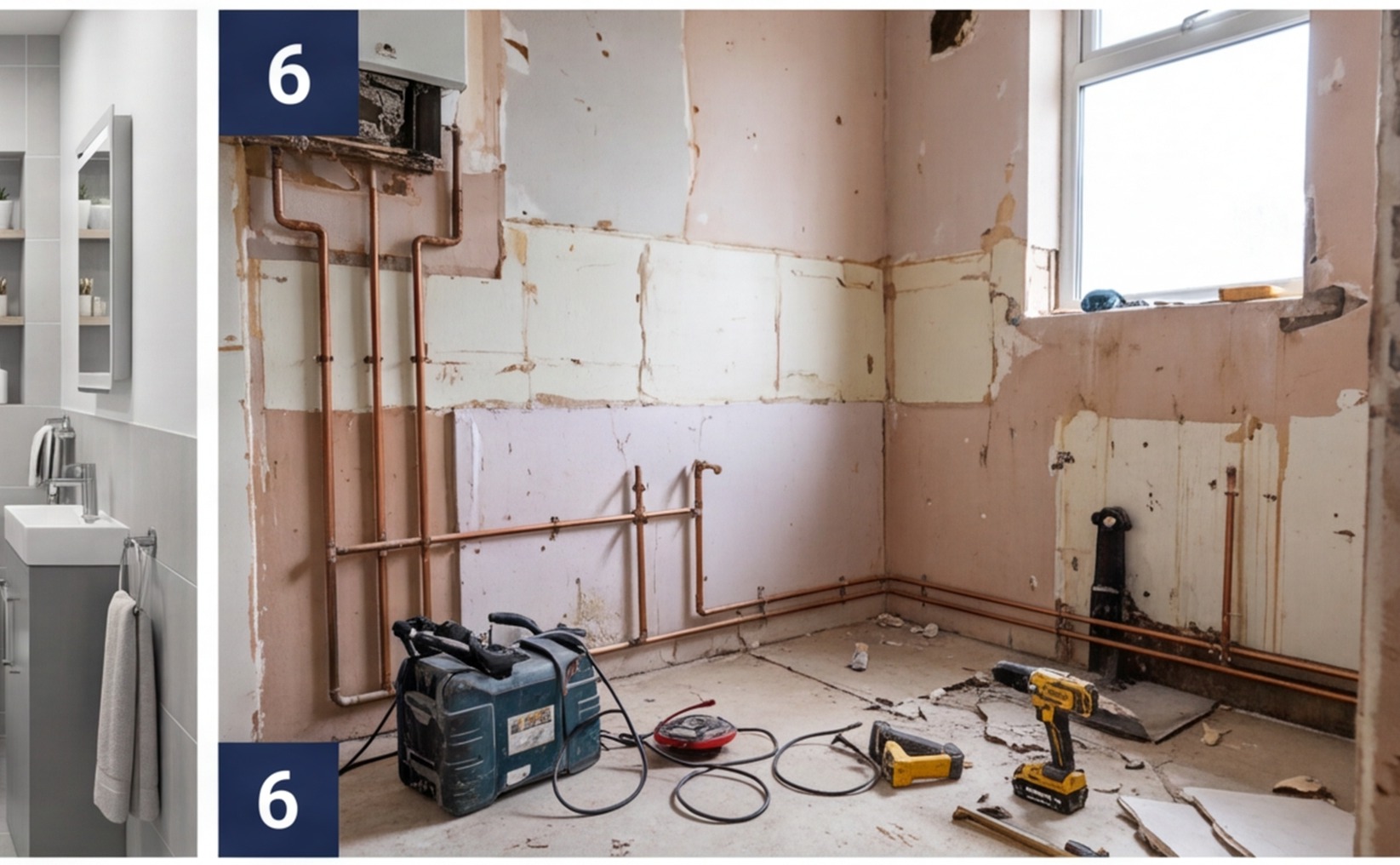
What a Standard Bathroom Renovation Involves
- Strip-out: Remove existing suite, tiles and flooring. Check condition of floor and walls. Replace any damaged substrate.
- First-fix plumbing: Reposition waste runs if needed. Lay in pipework for new bath position, basin and WC.
- First-fix electrics: Add or upgrade extractor circuit. Add heated towel rail circuit. Zone-appropriate lighting.
- Boarding: Tile backer board to shower area and wet zones. Ensures tiles won't delaminate from moisture.
- Waterproofing: Tanking compound to shower area minimum. Full-room tanking on ground floors or rooms over living spaces.
- Tiling: Floor first, then walls. Grout and seal on completion.
- Second-fix plumbing: Fit bath, basin, WC, shower system, taps, waste fittings.
- Second-fix electrics: Fit lights, extractor, heated towel rail, shaver socket.
- Decoration: Paint non-tiled surfaces, silicone seal all joints, fit accessories.
That's nine distinct work stages, often requiring three or four separate trades making multiple visits. Good sequencing matters — a plumber who turns up before the boarding is done wastes everyone's time and your money.
For a standard 4–6 m² bathroom at mid-range specification, the budget range is £5,500–£9,000. Add 20–30% for high-specification sanitaryware, large-format tiles or bespoke shower systems.
Larger Bathroom and Wet Room — Costs and Considerations
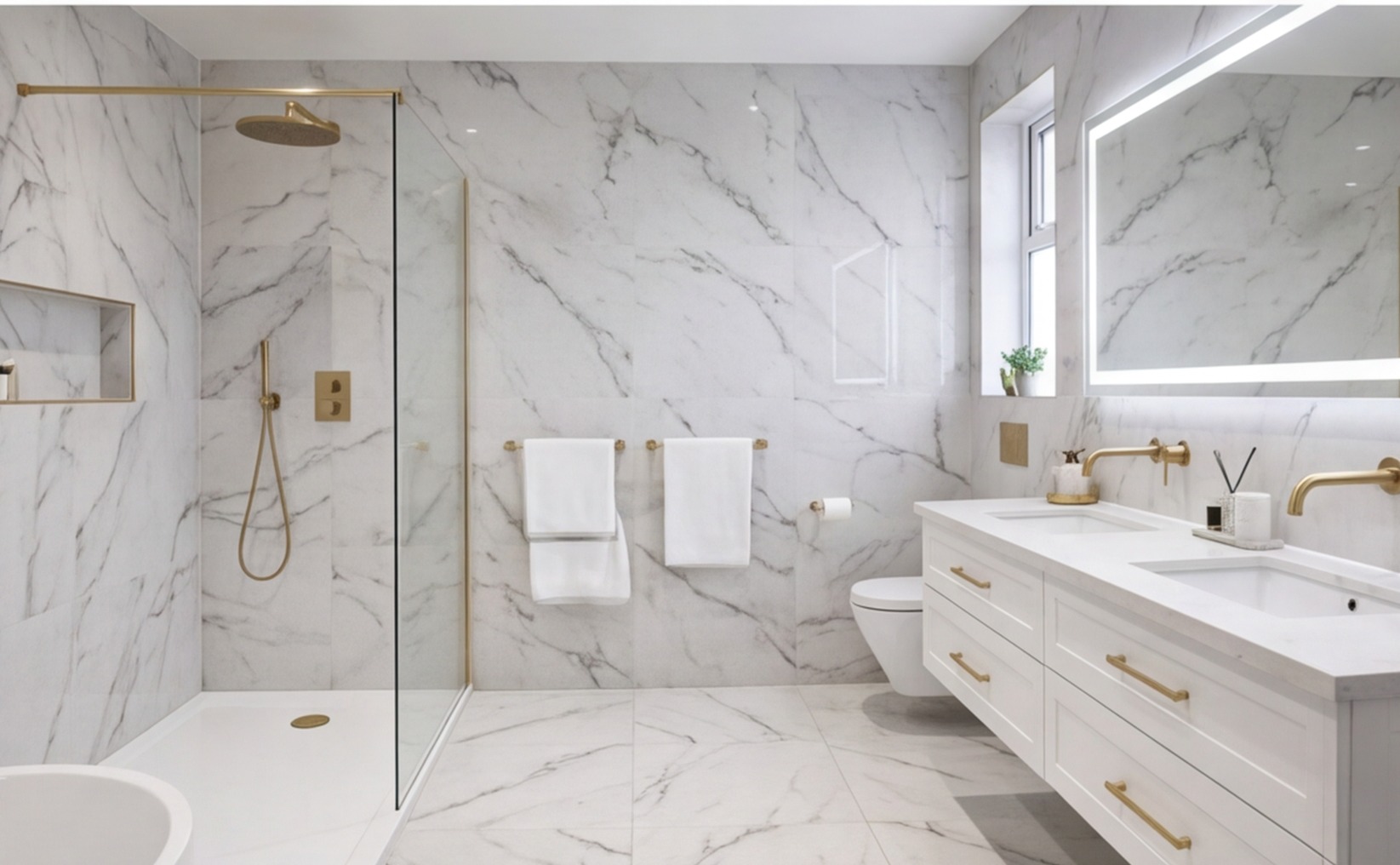
Larger bathrooms — 6 m² and above — introduce new possibilities and new costs. Wet rooms, freestanding baths, double vanity units, and underfloor heating all become practical at this scale. The trade costs scale broadly with floor area, but some elements — like the shower system and sanitaryware — don't scale proportionally, so the cost-per-square-metre often comes down slightly at larger sizes.
Wet Room Costs
A wet room conversion — removing the shower tray and converting the shower area to a fully tanked, level-access wet area — is popular in larger bathrooms and for accessibility requirements. It adds cost in three areas: structural floor preparation (the floor often needs to be lowered or built up to create the fall to the drain), linear drains which cost more than standard shower trays, and full-room tanking rather than just the shower zone.
Budget an additional £800–£2,500 on top of a standard shower renovation cost to convert to a wet room, depending on the floor construction and the drain system chosen.
Underfloor Heating in Bathrooms
Electric underfloor heating mats are the standard in bathroom renovations — wet (hydronic) underfloor heating is rarely specified in existing bathrooms because it requires significant floor build-up. An electric system for a 5–8 m² bathroom typically adds £500–£1,000 all-in. It's the upgrade most clients are glad they did and rarely regret. The mat goes in under the tiles, the thermostat and timer go on the wall, and the electrician connects it during second fix.
Tile Format and Its Effect on Cost
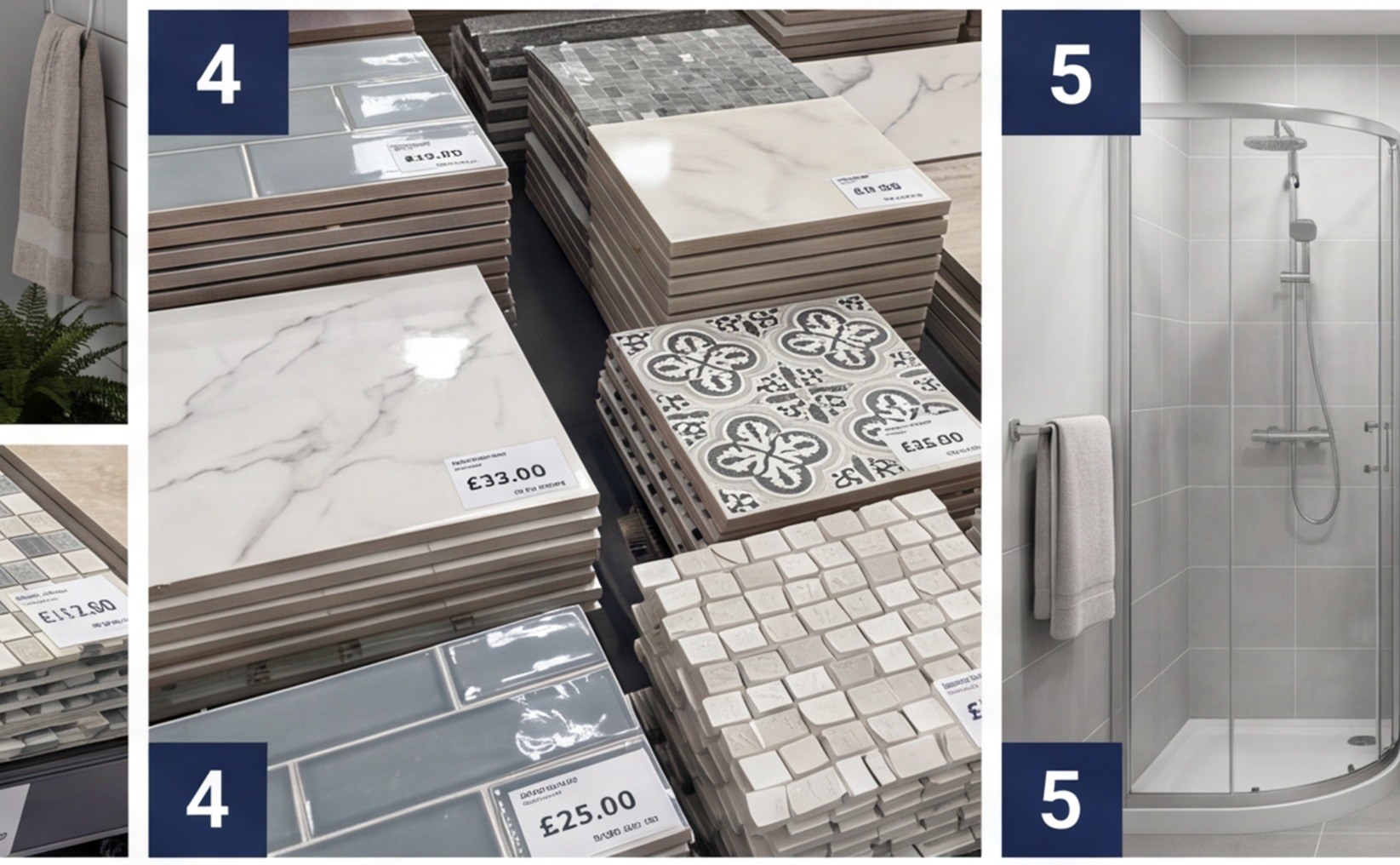
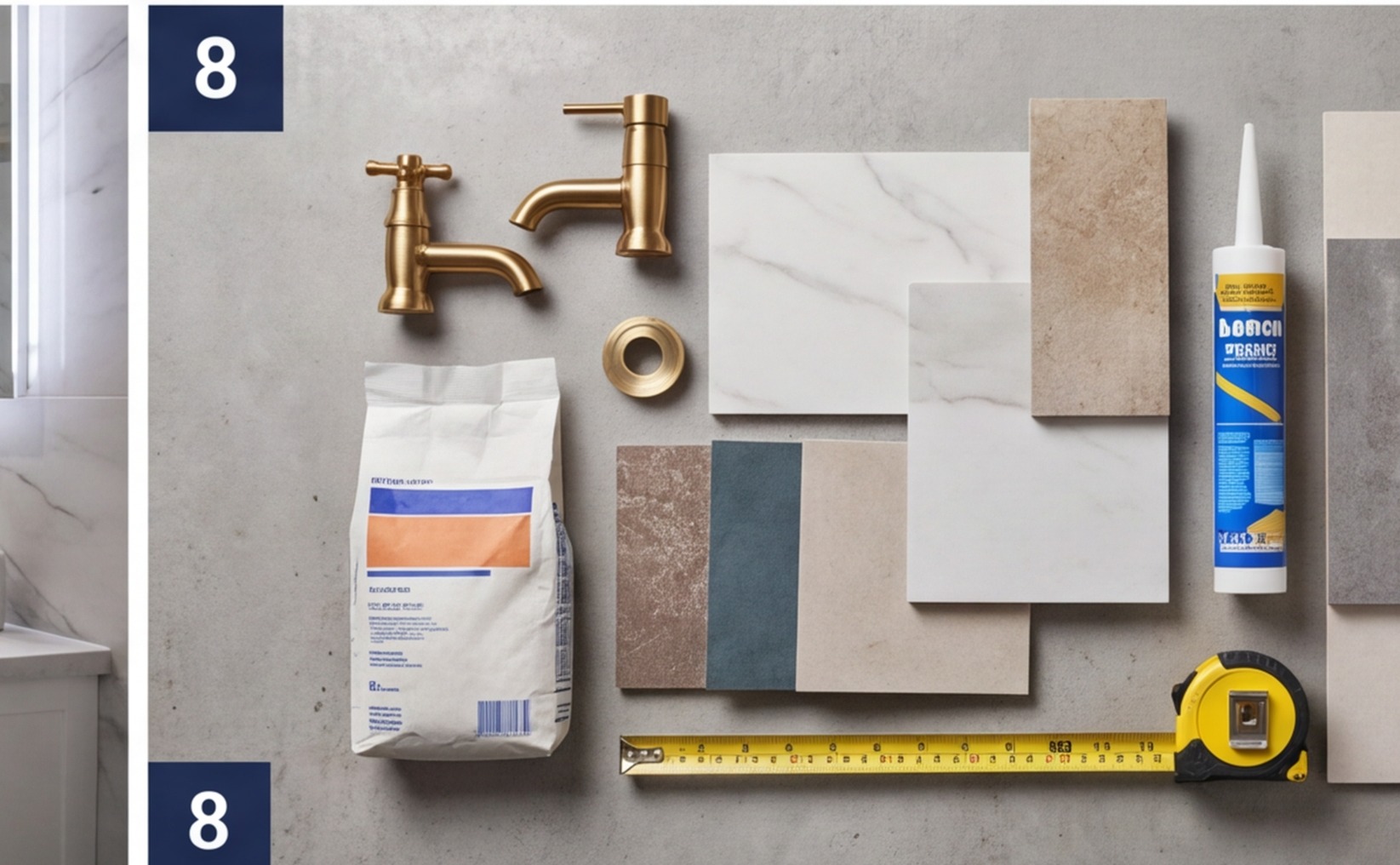
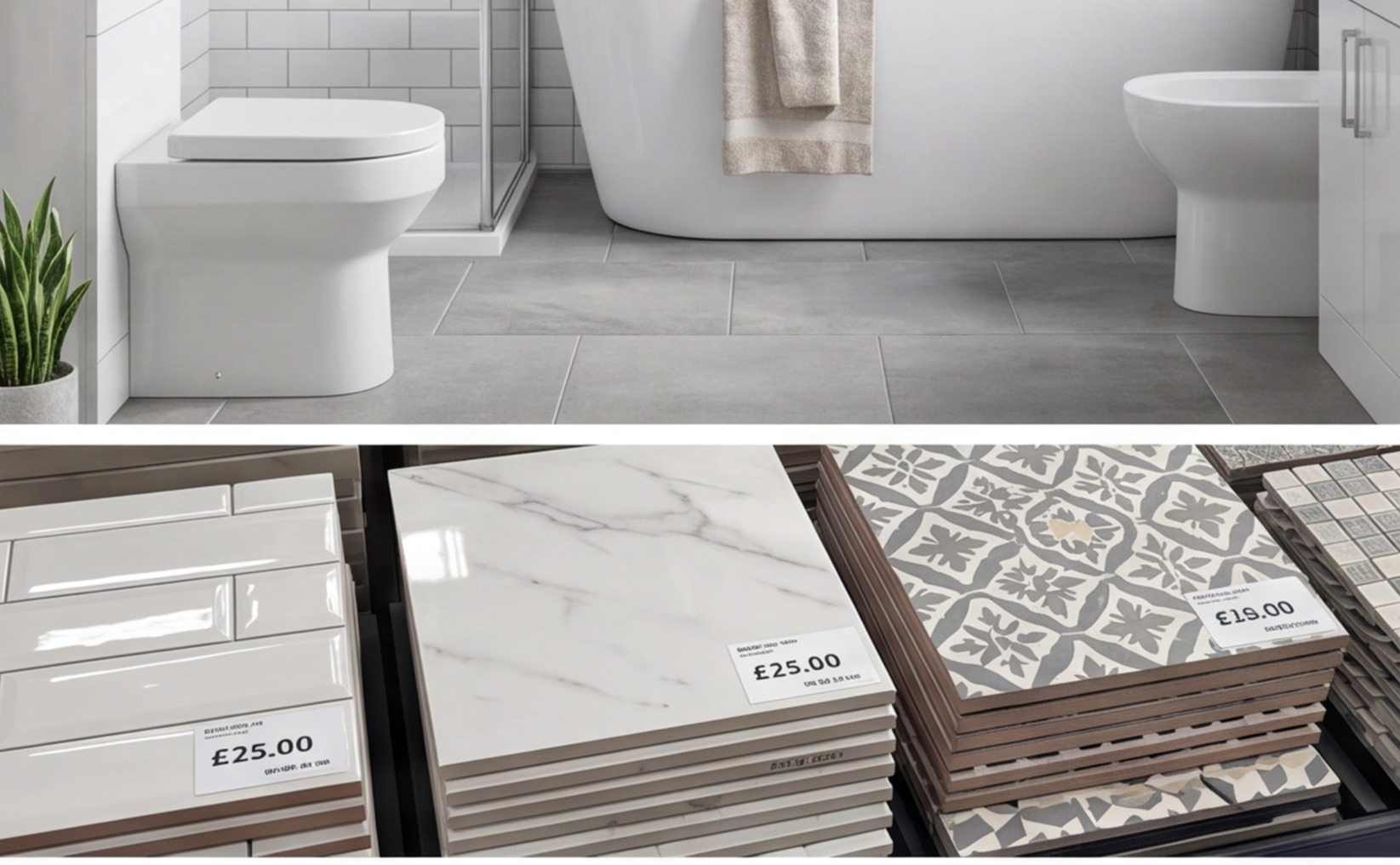
Tile choice has a massive effect on both material and labour cost. Large-format tiles (600×600mm and above) cost more to supply and take longer to cut and lay — they require more adhesive and specialist tools. Patterned or handmade tiles require careful layout planning and slower fitting rates. The difference between fitting basic 300×300mm ceramic tiles and 1200×600mm porcelain slabs can be £20–£35 per square metre in labour alone.
| Tile Type | Material Cost / m² | Labour to Lay / m² | Total / m² |
|---|---|---|---|
| Basic ceramic (300×300mm) | £12–£25 | £25–£35 | £37–£60 |
| Mid-range porcelain (600×300mm) | £25–£50 | £30–£45 | £55–£95 |
| Large-format porcelain (600×600mm+) | £40–£90 | £45–£65 | £85–£155 |
| Marble / natural stone | £60–£200+ | £55–£80 | £115–£280+ |
| Metro / handmade ceramic | £20–£60 | £35–£55 | £55–£115 |
What Adds Cost to a Bathroom Renovation
In my experience, there are four things that reliably push bathroom renovation costs beyond the initial estimate. Worth knowing about before you start.
Moving Plumbing Positions
Leaving the bath, WC and basin in their existing positions keeps plumbing costs to a minimum — you're swapping like-for-like and the existing waste runs stay where they are. The moment you decide to move the bath to the opposite wall, or put the WC where the bath was, the plumber has to extend or re-run the waste pipes, potentially cutting into the floor structure. This can add £400–£1,500 to the plumbing cost depending on the floor construction and how far the waste needs to travel.
Floor Structure Problems Found at Strip-Out
It's common, particularly in older bathrooms, to find damaged or rotten floor joists once the old flooring comes up. Decades of minor leaks around the bath, WC and basin can silently rot the timber beneath. Replacing damaged joists adds £300–£800 to the project — not catastrophic, but it delays the tiling by a day and needs to be dried out properly before boarding.
Wall Condition Behind Old Tiles
Old bathrooms — particularly those tiled on plasterboard rather than cement board — often have damaged, mouldy or delaminated boards behind the tiles. These can't be retiled over. The wall needs to be stripped to the studs or masonry and re-boarded with appropriate tile backer. Budget £200–£600 for re-boarding if this is found, which is a frequent discovery on pre-2000 bathrooms.
Access to Drainage — Ground Floors and Concrete Slabs
If the bathroom is on a solid concrete ground floor and you need to reposition the WC or shower waste, you're cutting into concrete. This requires specialist tools, creates significant mess, and the concrete needs to be reinstated after. Add £500–£1,500 to the plumbing cost for any waste relocation on a solid floor compared to a suspended timber floor where access is from below.
Frequently Asked Questions
How much does a bathroom renovation cost in the UK?
Bathroom renovation cost UK ranges from £3,500 for a basic small bathroom refurb up to £15,000 or more for a large, high-specification bathroom. A standard family bathroom renovation — new suite, full tiling, new shower, electrics and plumbing — typically costs £5,500–£9,000 in 2026. The biggest cost drivers are room size, whether plumbing positions are being moved, the quality of tiles and sanitaryware, and whether a new extractor circuit is needed. Always include a 15% contingency for hidden problems found at strip-out.
How long does a bathroom renovation take?
Most bathroom renovations take 5–10 working days once the right trades are booked and materials are on site. A small en suite or cloakroom can be done in 3–5 days. A large bathroom with complex tiling and bespoke features can run to 2–3 weeks. The main delays are waiting on materials — especially tiles ordered from abroad — drainage alterations needing Building Control sign-off, or trades not properly sequenced. Book your plumber and electrician well in advance of the start date.
Do I need planning permission for a bathroom renovation?
In most cases, no. Internal bathroom renovations don't require planning permission. You can replace the suite, retile, fit a new shower enclosure and redecorate without any consent needed. You will need a Part P Building Regulations notification if a qualified electrician adds or alters electrical circuits — this is done by the electrician themselves as notifiable work. If you're adding a bathroom in a room that was previously used for something else, you may need Building Regulations approval for the drainage work.
What is the most expensive part of a bathroom renovation?
Tiling is usually the largest single cost item when you include both materials and labour. Wall and floor tiling for a standard bathroom can run to £1,500–£3,500 depending on tile size, format and layout complexity. Plumbing comes second — especially if you're repositioning the bath, WC or basin, which requires cutting the floor and repositioning waste runs. Sanitaryware (bath, WC, basin and shower tray) typically costs £500–£2,500 for mid-range products, rising sharply for designer brands.
Can I save money by supplying my own bathroom materials?
Yes, and many clients do. Buying your own sanitaryware, tiles and accessories removes the contractor's material margin, which can be 15–25% on top of trade price. However, there are risks: if something arrives damaged or the wrong size, you're responsible for resolving it. Tiles especially should be ordered with a 10–15% overage for cuts and breakages. Confirm with your fitter which products they're happy to install before purchasing — some contractors are reluctant to fit customer-supplied goods they can't warranty.
How do I get an accurate bathroom renovation quote?
Start with a detailed schedule of works covering every element: strip-out, first-fix plumbing, first-fix electrics, boarding, waterproofing, tiling, second-fix plumbing, second-fix electrics and decoration. Supply material specifications where possible — the tile reference, the sanitaryware model, the shower system. The more specific your brief, the more comparable your quotes will be. You can also use RenoCalc to generate a working estimate from your floor plan before inviting contractors in. See our guide on how to quote a bathroom renovation for a full walkthrough.
Pricing a Bathroom Renovation? Start With the Numbers
The bathroom renovation cost figures in this guide are based on real 2026 UK trade pricing across the full range — from a basic cloakroom refresh to a high-specification large bathroom. Use them to build your budget before you invite quotes, so you go into those conversations knowing what to expect and what to push back on.
If you want a faster way to generate a working estimate specific to your room size and spec, try RenoCalc free. Upload your floor plan, select your specification level, and get a full element-by-element breakdown — built for builders, useful for anyone managing a renovation.
Get Your Bathroom Renovation Estimate in Minutes
RenoCalc turns your bathroom floor plan into a full cost breakdown — plumbing, tiling, electrics, sanitaryware and more. Built by a builder, for builders and property investors.
Start Your Free Estimate