How to Calculate Plastering Costs Per Square Metre UK
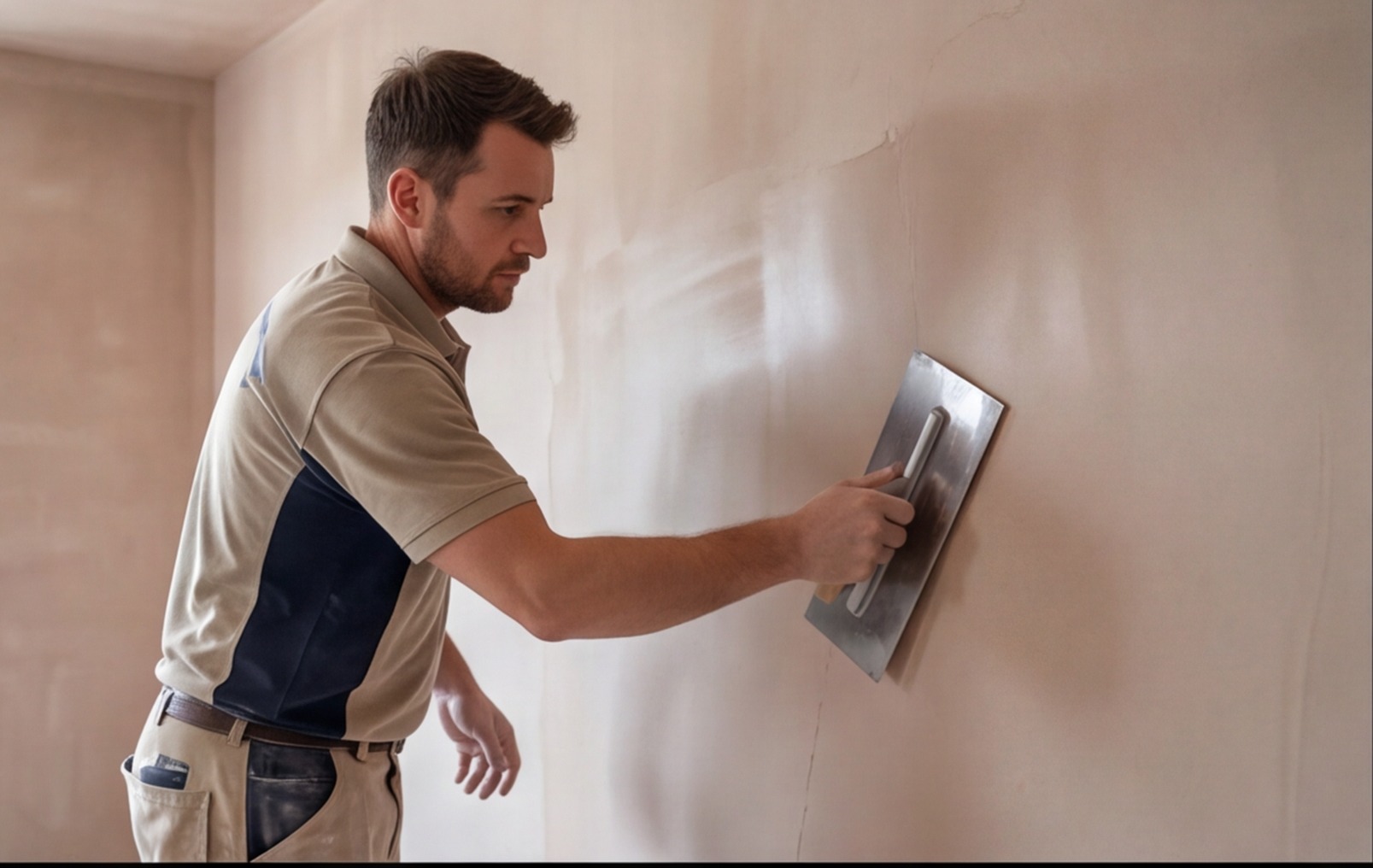
Plastering cost per square metre UK is one of the most searched questions among builders and project managers trying to check whether their plasterer's quote is fair — or whether they have under-priced the plastering element on their own quote. The honest answer is: it depends. Substrate condition, access, ceiling height, number of coats and regional labour rates all shift the number significantly. This guide gives you the real ranges and the method for calculating plastering costs accurately, room by room.
Types of Plastering Work and What They Cost
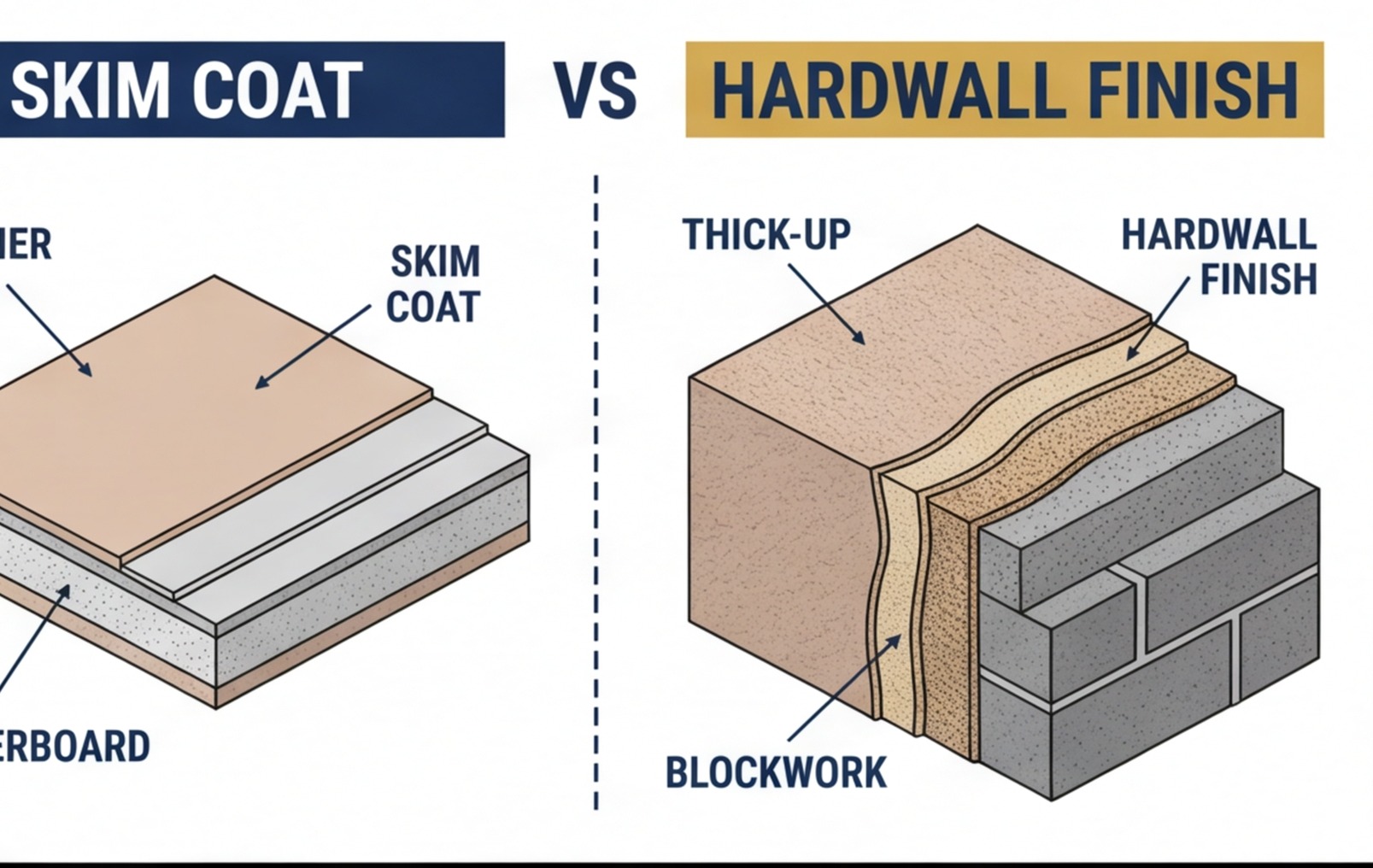
Not all plastering is equal. The cost per m² changes significantly depending on which type of plaster system you are specifying or pricing.
| Plastering type | When used | Approximate cost (labour + materials) |
|---|---|---|
| Skim coat over plasterboard | New build, post-board renovation | £12–£20 per m² |
| Skim coat over existing plaster (re-skim) | Refreshing sound but tired surfaces | £8–£15 per m² |
| Hardwall + skim (two coat) | Bare masonry, hacked-off walls | £18–£28 per m² |
| Sand and cement render + skim | External walls, damp-resistant areas | £22–£35 per m² |
| Patch repair (per patch) | Small damaged areas, hole filling | £80–£200 per patch depending on size |
These ranges cover typical mid-market work. Specialist heritage lime plastering on period properties costs considerably more — lime work requires specialist knowledge, curing time and different materials — and should always be quoted separately by a plasterer experienced in heritage methods. See also GOV.UK planning guidance if internal works form part of a listed building application where specific plastering specifications may be required by consent.
Walls vs Ceilings: Why the Rate Differs
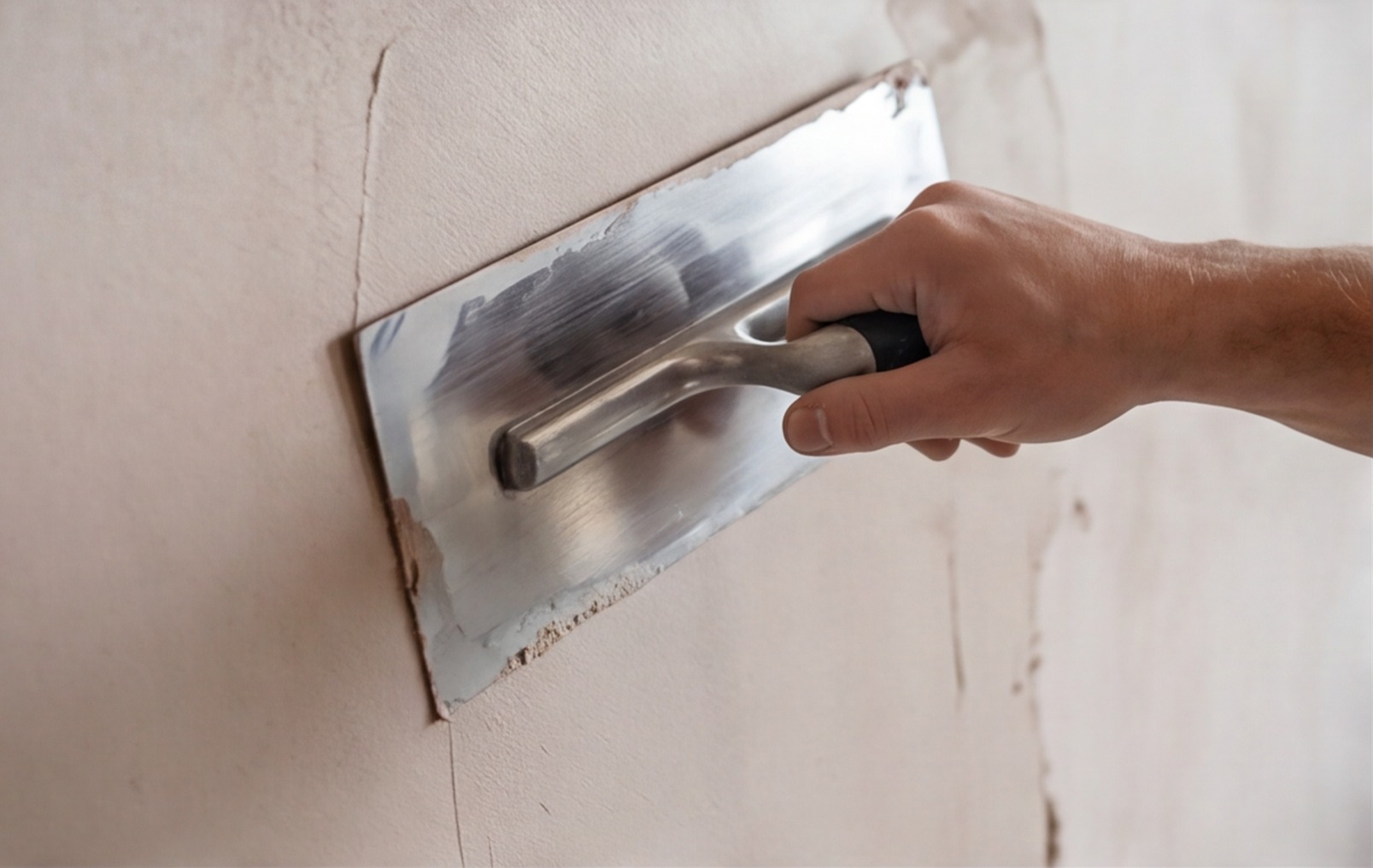
Ceilings consistently cost more per m² than walls. The reasons are physical — working overhead is slower, more tiring and requires scaffold boards or a platform — but also technical. Ceiling plaster is more prone to sagging if mixed incorrectly or applied too thick, so plasterers have to work quickly and accurately.
Ceiling Rate Uplift
- Standard ceiling (up to 2.7m): add 20–30% over the wall rate
- High ceiling (2.7–3.5m): add 35–50% — scaffold or podium required
- Above 3.5m: quote individually — full scaffolding likely required
- Vaulted or sloping ceilings: quote individually — angled application is significantly slower
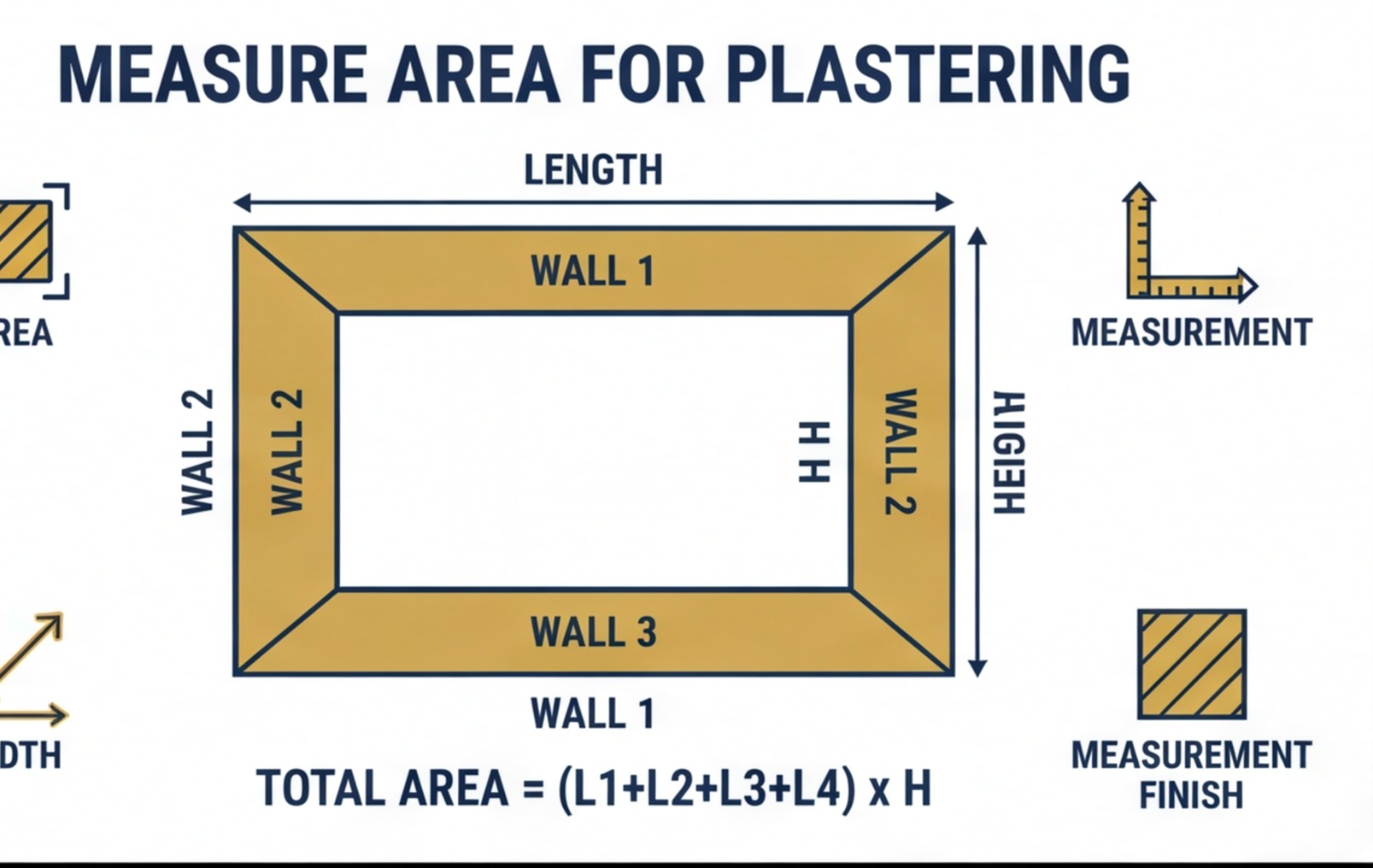
When building a project plastering estimate, always measure walls and ceilings separately and apply different rates. Blending them into a single average rate hides the true cost of ceiling work and leads to under-priced plaster packages.
Boarding and Skimming Costs
When plasterboard must be supplied and fixed before skimming, you have additional costs: the board itself, fixings (screws or adhesive), and the boarding labour on top of the skimming labour.
Boarding and Skimming Cost Breakdown
| Element | Approximate cost per m² | Notes |
|---|---|---|
| 12.5mm plasterboard supply | £4–£7 | Standard grade; fire-rated board costs more |
| Plasterboard fixings and jointing tape | £0.50–£1 | — |
| Boarding labour (screw-fixed to studs) | £5–£10 | Dot-and-dab to masonry typically £7–£14 |
| Skim coat labour and materials | £8–£14 | — |
| Total: board and skim supply and fix | £18–£32 | Dot-and-dab to masonry tends toward the higher end |
Dot-and-dab boarding — fixing plasterboard to masonry walls with adhesive dabs rather than timber studs — is common on solid-wall properties. It is faster than building a stud frame but leaves a cavity between the board and the wall that has implications for fixing and airtightness.
Patching, Repair and Spot Plastering
Patch plastering is notoriously difficult to price per m² because small patches carry a minimum mobilisation cost regardless of size. A plasterer cannot travel to a job, set up, mix plaster and pack away for a 0.5m² patch at the same rate per m² as a full room.
Patch Repair Pricing Logic
- Minimum call-out for patch plastering: £80–£150 regardless of patch size
- Small patch (up to 0.25m²): £80–£200
- Medium patch (0.25–1m²): £150–£350
- Large patch (1–3m²): often cheaper to re-skim the whole wall
- Coving repairs and plaster detail repairs: priced per linear metre or per detail
On a refurbishment where there are multiple patching requirements, it is almost always better value to skim the whole room rather than patch. The finish will be consistent and the total cost is often not much higher than multiple patch call-outs. Group your patching work into full-room skims wherever possible.
Materials, Labour and Access
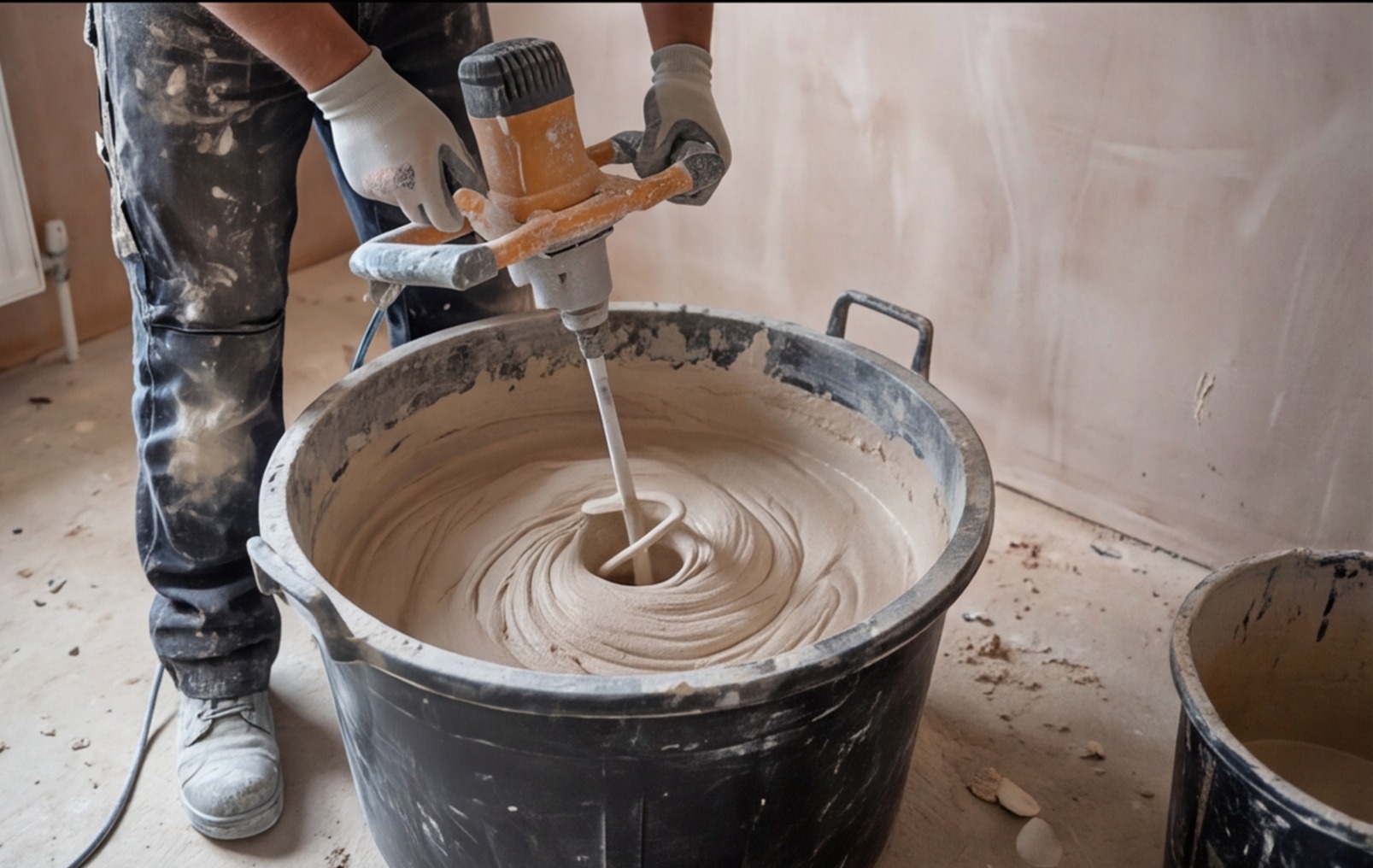
Labour makes up the majority of a plastering quote — typically 60–70% on a standard skim job. Materials — plaster bags, scrim tape, bonding agent, primer — make up the remainder. Waste on a well-run plastering job should be around 10%; a poor mix leading to a rejected batch can push waste much higher, which is why experienced plasterers always quote by the job, not the hour.
Access and Scaffold Allowances
| Ceiling height | Access method | Typical access cost |
|---|---|---|
| Up to 2.7m | Hop-up or standard steps | No additional cost |
| 2.7m–3.5m | Tower scaffold or podium | £80–£200 per week hire |
| 3.5m–6m | Scaffold boards on trestles | £200–£500 depending on area |
| Above 6m | Erected scaffold or MEWP | Quoted individually |
For full project quotes using RenoCalc, plastering is priced by m² within the automated take-off, saving you from manually calculating every wall and ceiling area on each job.
Regional Price Variation
Plastering rates vary across the UK. London and the South East carry a significant premium over Midlands and Northern England rates, reflecting both higher living costs for tradespeople and higher demand for available plasterers.
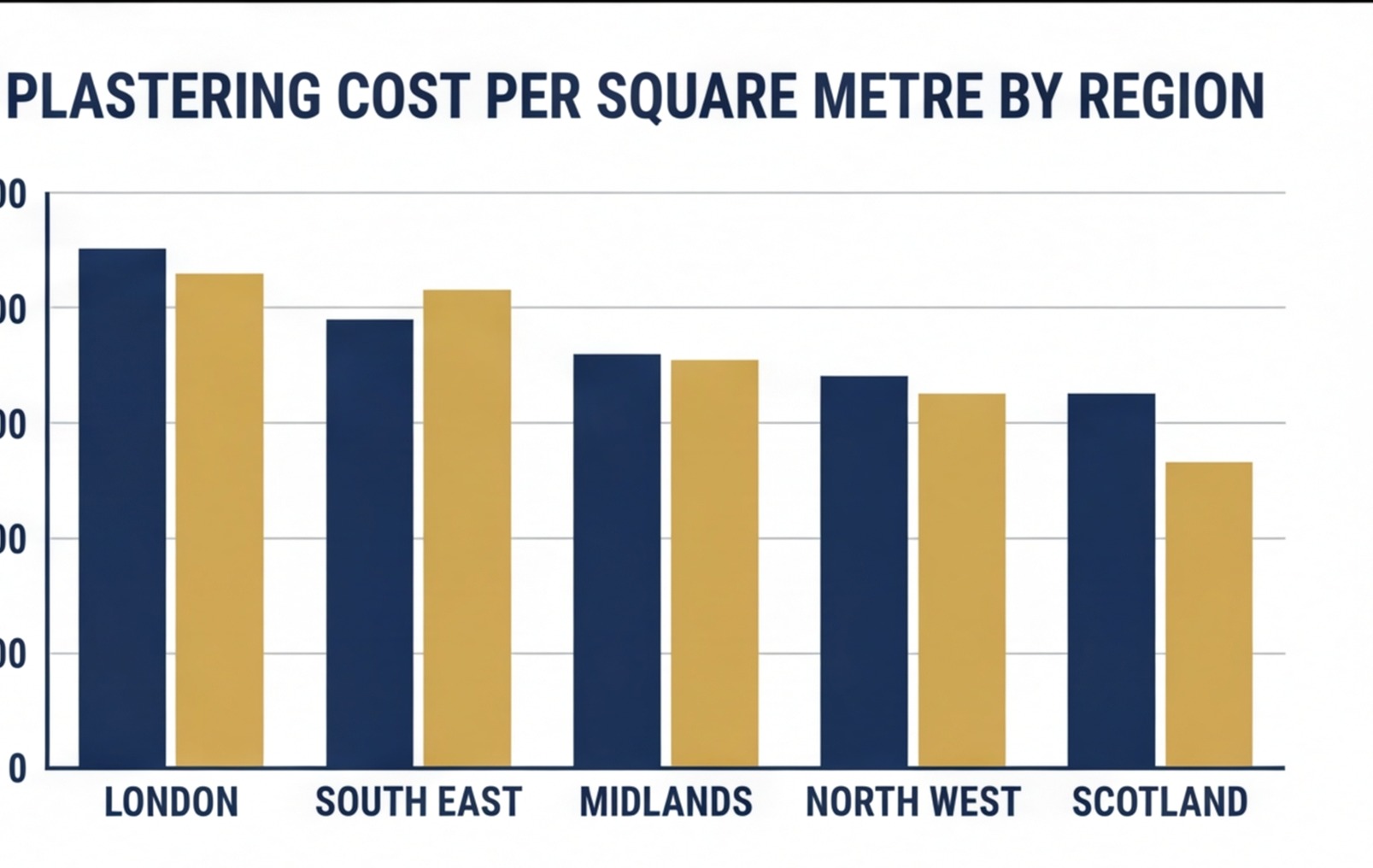
| Region | Skim coat (labour only) per m² | Full plaster (supply and apply) per m² |
|---|---|---|
| London / South East | £15–£25 | £28–£45 |
| South West / East Anglia | £12–£20 | £22–£36 |
| Midlands (including Coventry, Birmingham) | £10–£16 | £18–£30 |
| North West / Yorkshire | £9–£15 | £16–£28 |
| North East | £8–£14 | £14–£25 |
| Scotland | £9–£16 | £16–£28 |
These are indicative ranges for 2024–2026. Actual quotes from plasterers in your area may sit outside these bands depending on their workload, the job size and the substrate complexity. Use these ranges to sanity-check a quote, not to negotiate a plasterer down to the bone — that is how you get a poor finish.
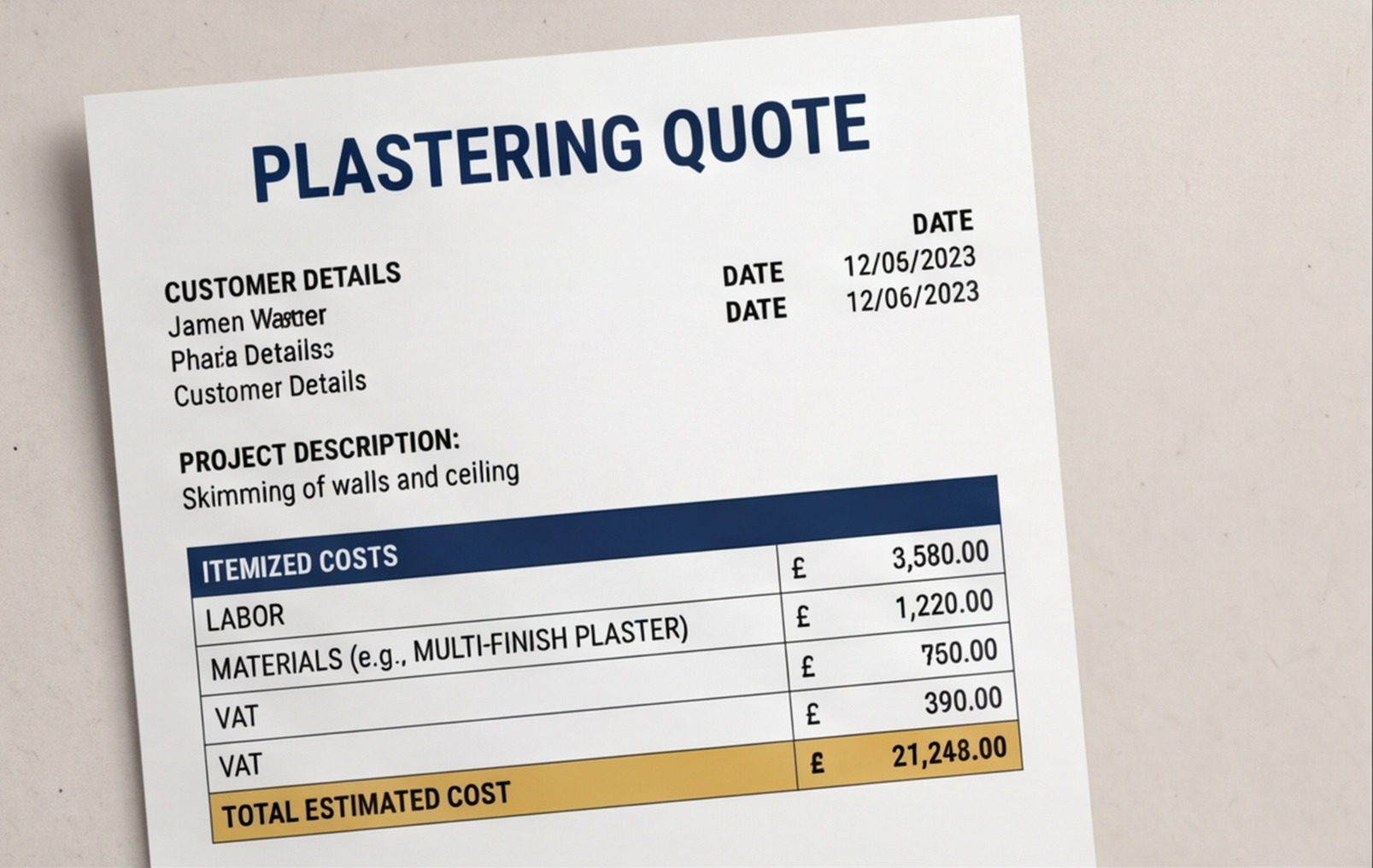
If you are including plastering in a larger renovation quote, RenoCalc calculates plastering areas automatically from the floor plan — walls, ceilings and any additional areas — so you are not spending half a day measuring before you can price the job. You can also read our related guide on how to quote a stud partition wall — partition walls are often the biggest driver of additional plastering area on a refurbishment.
For a full cost picture across an entire renovation, see our guide to full house refurbishment costs UK.
Frequently Asked Questions
What is the average plastering cost per square metre in the UK?
For a standard skim coat on plasterboard, plastering costs typically run at £8–£14 per m² for labour only, or £12–£20 per m² supply and apply, depending on region and access. For two-coat sand-and-cement render followed by a finish skim on solid masonry walls, expect £18–£30 per m² or more on difficult substrates. Ceilings typically cost 20–30% more than walls per m² because of the access requirements and the physical difficulty of working overhead. These are trade-facing indicative ranges for 2024–2026 — actual prices vary by location, plasterer and job size.
What is the difference between a skim coat and a full plaster?
A skim coat is a thin finish coat (typically 2–3mm) applied over a suitable background such as plasterboard, existing plaster or SBR-bonded surfaces. It creates the smooth finish that decorators paint over. A full plaster involves applying a background coat — hardwall, browning or sand-and-cement — to bring the wall to a flat and level surface, then applying a finish skim coat on top. Full plaster is needed on bare masonry, after hacking off old plaster, or on uneven walls that need building up. Full plaster is more expensive per m² because it involves more coats and more material.
How much does it cost to plaster a typical bedroom?
A typical double bedroom in a UK semi-detached house — roughly 12m² floor area — might have 28–35m² of wall area depending on ceiling height, plus approximately 12m² of ceiling. For a skim coat throughout (new build or post-board scenario), expect total costs in the range of £450–£800 for labour and materials. For a full sand-and-cement plus skim approach on a Victorian terrace with stripped walls, that figure could rise to £800–£1,400 or more. These are indicative figures — always get a price based on the specific room, substrate condition and access.
How long does plaster take to dry before painting?
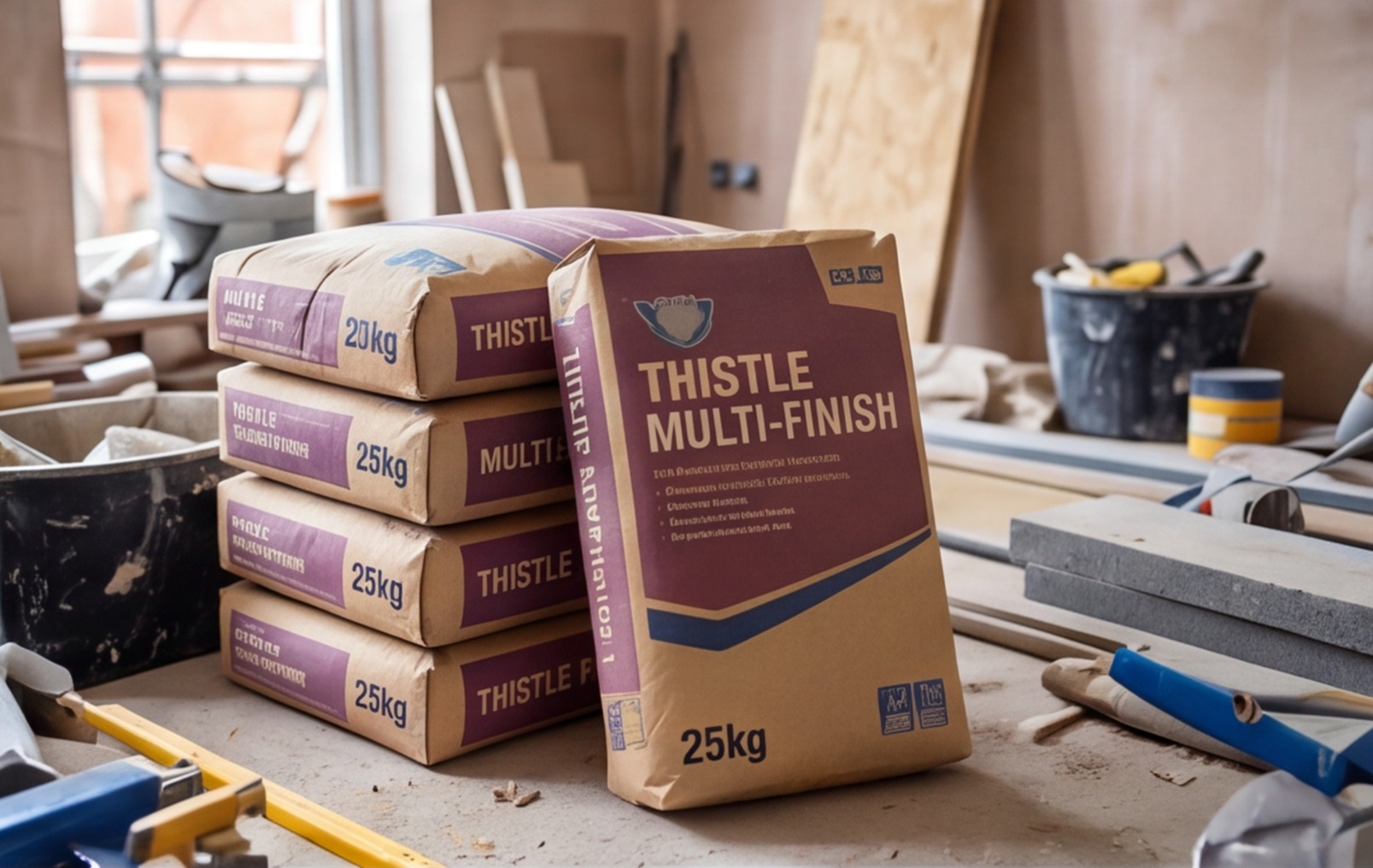
Freshly applied gypsum plaster — the standard Thistle Multi-Finish or similar — needs a minimum of 4–6 weeks to dry fully in normal UK conditions before it is ready for full decoration. In colder months or poorly ventilated rooms, this can extend to 8–12 weeks. The plaster will turn from its wet pink colour to an even, pale cream when it is ready. Painting too early traps moisture and causes adhesion failures and efflorescence. Many decorators apply a mist coat (heavily diluted emulsion) first to seal the surface before the full first coat — this is good practice even on fully dry plaster.
Should I plasterboard before plastering or plaster direct to masonry?
It depends on the wall condition. On a reasonably flat masonry wall in good condition, plastering direct (two-coat sand-and-cement render plus skim) is often faster than boarding and skimming. On walls that are very uneven, cold-bridging, damp-prone or where you want to add insulation, dot-and-dab plasterboard followed by a skim coat is usually the better solution. Boarding and skimming is also common when speed is the priority — a competent plasterer can board and skim a room significantly faster than a full sand-and-cement render on a cold masonry wall. Get a price for both options on problematic walls.
Does plastering include making good around sockets, pipes and architraves?
Not always — this is a common point of dispute between builders and plasterers. Clarify in your quote or your plasterer's quote exactly what making good covers. Typically, a plasterer will skim up to and around electrical back boxes, pipe clips and existing architraves, but will not re-run cables or reposition boxes. Making good to chased cable runs is usually included if the chase is flushed to background level before the plasterer arrives. Deep or wide chases that still need background filling are generally the builder's or electrician's responsibility before the finish skim starts.

Calculate Plastering Areas Automatically
Stop manually calculating wall and ceiling areas on every job. RenoCalc takes your floor plan and generates a complete plastering take-off — walls, ceilings and partitions — so your plastering estimate is accurate from the start.
Try RenoCalc Free