How to Quote a Stud Partition Wall: Timber, Plasterboard and Skim

Knowing how to quote a stud wall properly is one of those skills that separates builders who make money from ones who wonder where their margin went. A stud partition looks simple — a frame, some board, a skim — but the costs stack up across timber, fixings, plasterboard, insulation, jointing compound, tape, beads and finishing labour. Miss any of them and you are working for free. This guide walks through every element of a stud wall quote, for both timber CLS and metal stud systems.
Measure First: What You Need to Know
Before you can price a stud partition, you need four things: the total wall length, the floor-to-ceiling height, the number and size of any door openings, and whether insulation is required.
Key Measurements for the Take-Off
- Wall length (m): measured along the floor line
- Wall height (m): floor to underside of ceiling or soffit
- Wall area (m²): length × height (both sides will need boarding)
- Door opening count and size: standard single door 826 × 2040mm, wider doors or double doors priced separately
- Acoustic or fire specification: drives board type and insulation specification
The wall area is the key number. You will use it to calculate plasterboard quantities (both faces), insulation quantities (one face), and to sense-check your labour time allowance.
Timber vs Metal Stud: Which to Price
The two dominant partition systems in domestic and commercial renovation are CLS timber stud and metal stud (sometimes called drywall or Metsec stud). Each has different material costs, labour rates and appropriate applications.

| System | Typical use | Advantages | Disadvantages |
|---|---|---|---|
| CLS timber stud (63mm or 89mm) | Domestic partitions, load-bearing elements | Easy to fix into, familiar to all trades, accepts standard fixings | Subject to movement as timber dries; slightly more material cost |
| Metal stud (C-section 70mm or 100mm) | Commercial and domestic, non-load-bearing only | Does not shrink or warp; faster to build; better acoustic performance with correct detail | Cannot carry heavy loads without specialist fixings; less familiar to some trades |
On domestic refurbishments, CLS timber is the default unless the client or specification requires metal stud. On commercial conversions — HMOs, flats, offices — metal stud is often specified for acoustic and fire-rating reasons. If you are working on an HMO conversion, check our related guide on HMO conversion costs UK for the full partition scope typical on those projects.
Frame Materials and Quantities
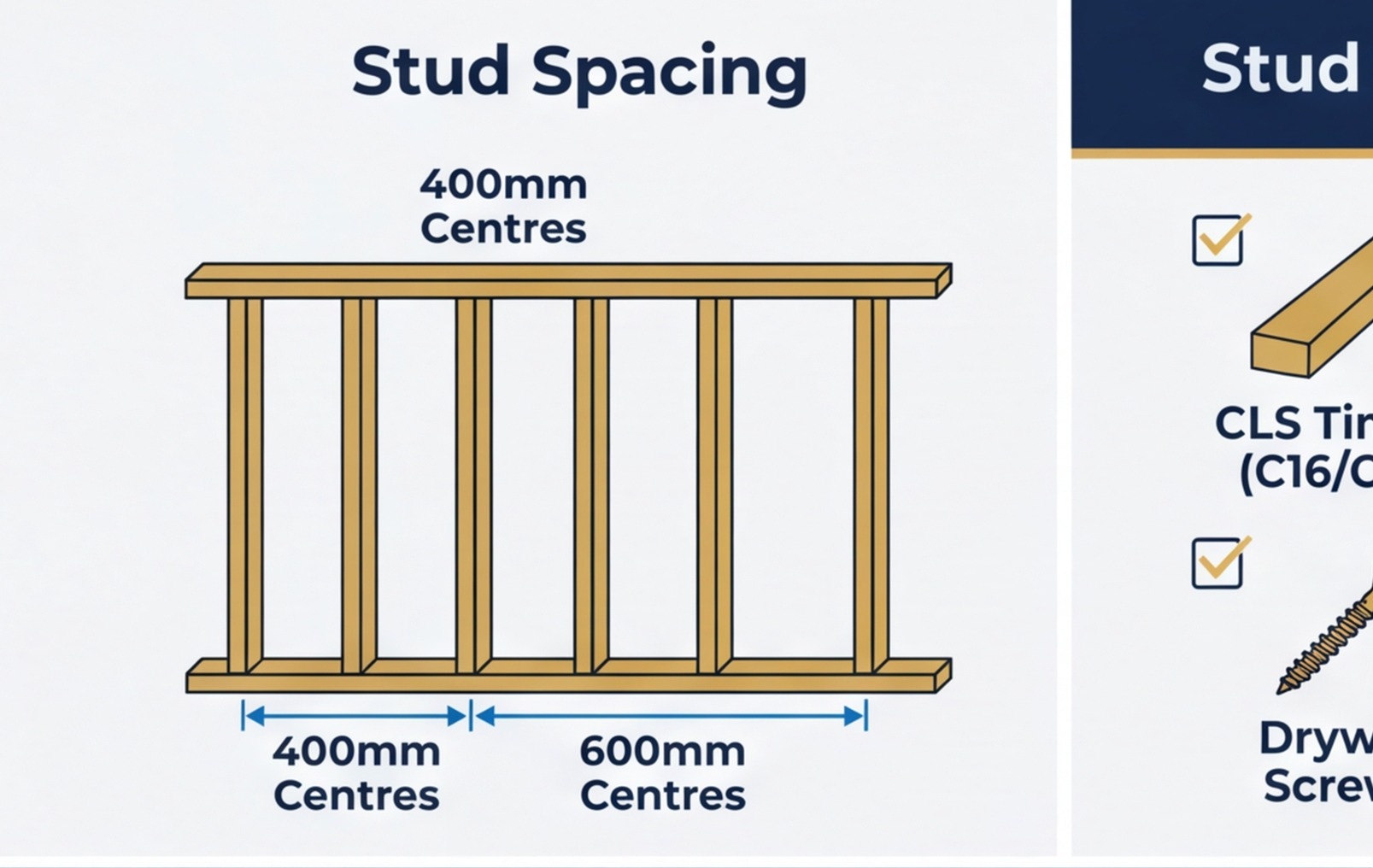
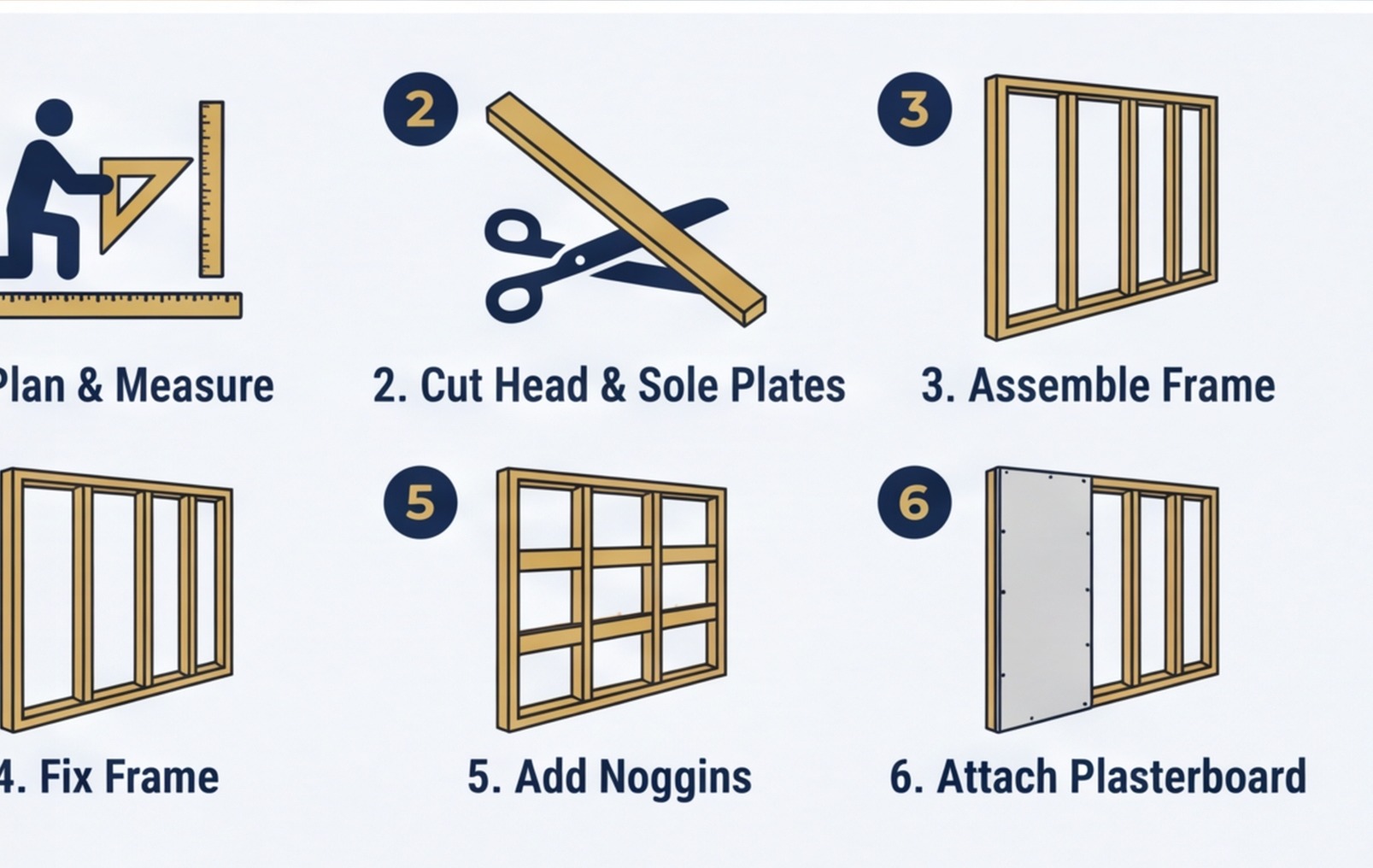
Stud frame quantities are calculated from the wall dimensions. A standard timber stud partition at 400mm centres uses the following framing elements:
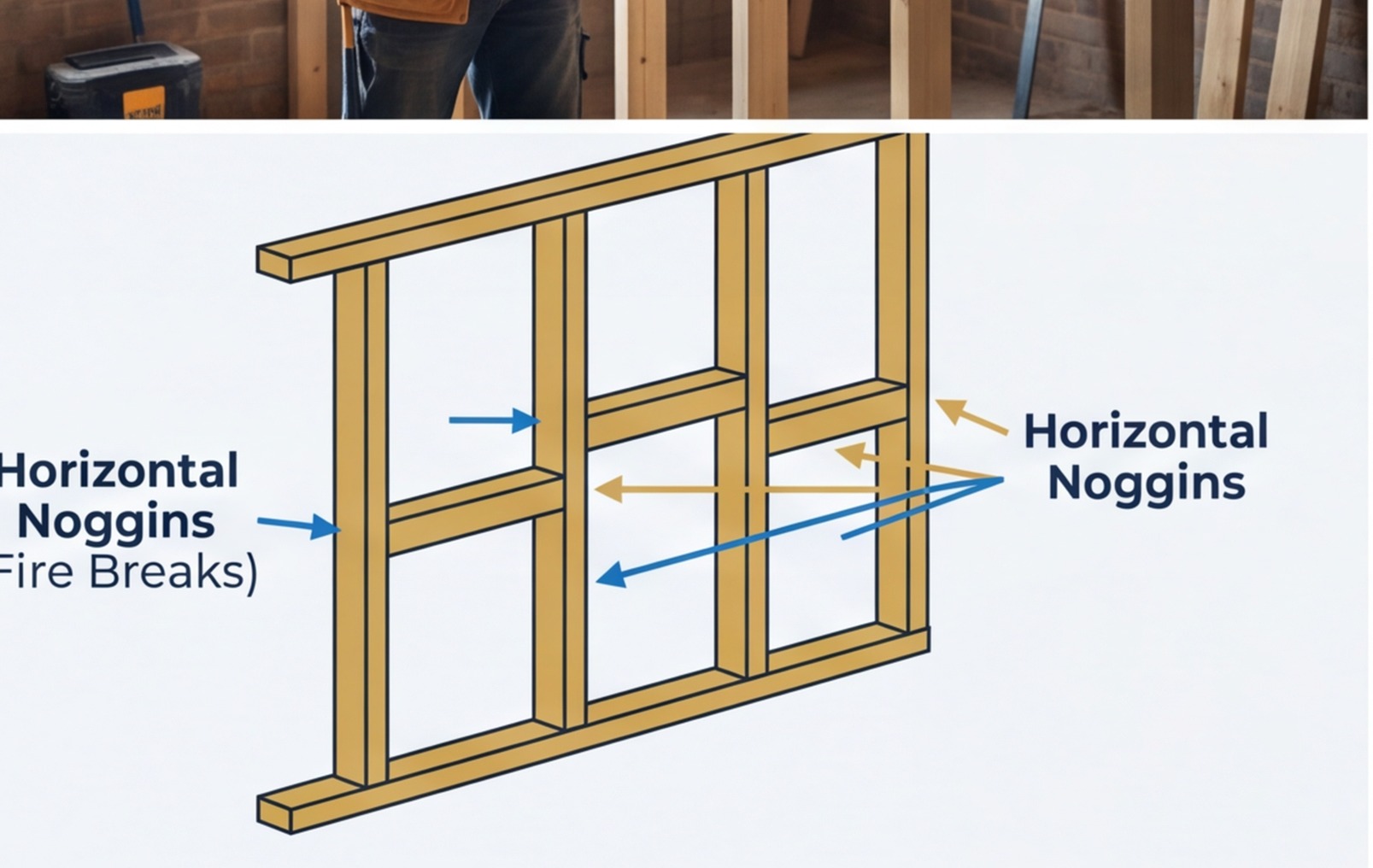
Timber Take-Off for a Standard Partition
| Element | Quantity formula | Standard section |
|---|---|---|
| Head plate (top) | Wall length (m) + 10% waste | 63 × 38mm CLS |
| Sole plate (bottom) | Wall length (m) + 10% waste | 63 × 38mm CLS |
| Vertical studs at 400mm centres | (Wall length ÷ 0.4) + 1, × height + 15% waste | 63 × 38mm CLS |
| Noggins at mid-height | Stud count × noggin length (approx 400mm each) + 10% | 63 × 38mm CLS |
| Screws / nails | Allow 1kg of 75mm screws per 10 linear metres of wall | 75mm C4 screws |
For a 5m long, 2.4m high partition at 400mm centres with no door opening, a quick frame take-off looks like this:
- Head and sole plate: 2 × 5m = 10m CLS (plus 10% waste = 11m)
- Vertical studs: (5 ÷ 0.4) + 1 = 14 studs × 2.4m = 33.6m CLS (plus 15% = 38.7m)
- Noggins: 13 × 0.4m = 5.2m CLS (plus 10% = 5.7m)
- Total CLS timber: approximately 55–60 linear metres
At current trade prices for 63 × 38mm CLS, budget around £0.80–£1.20 per linear metre. For the above example, that is approximately £45–£70 in timber for the frame alone.
Plasterboard and Insulation
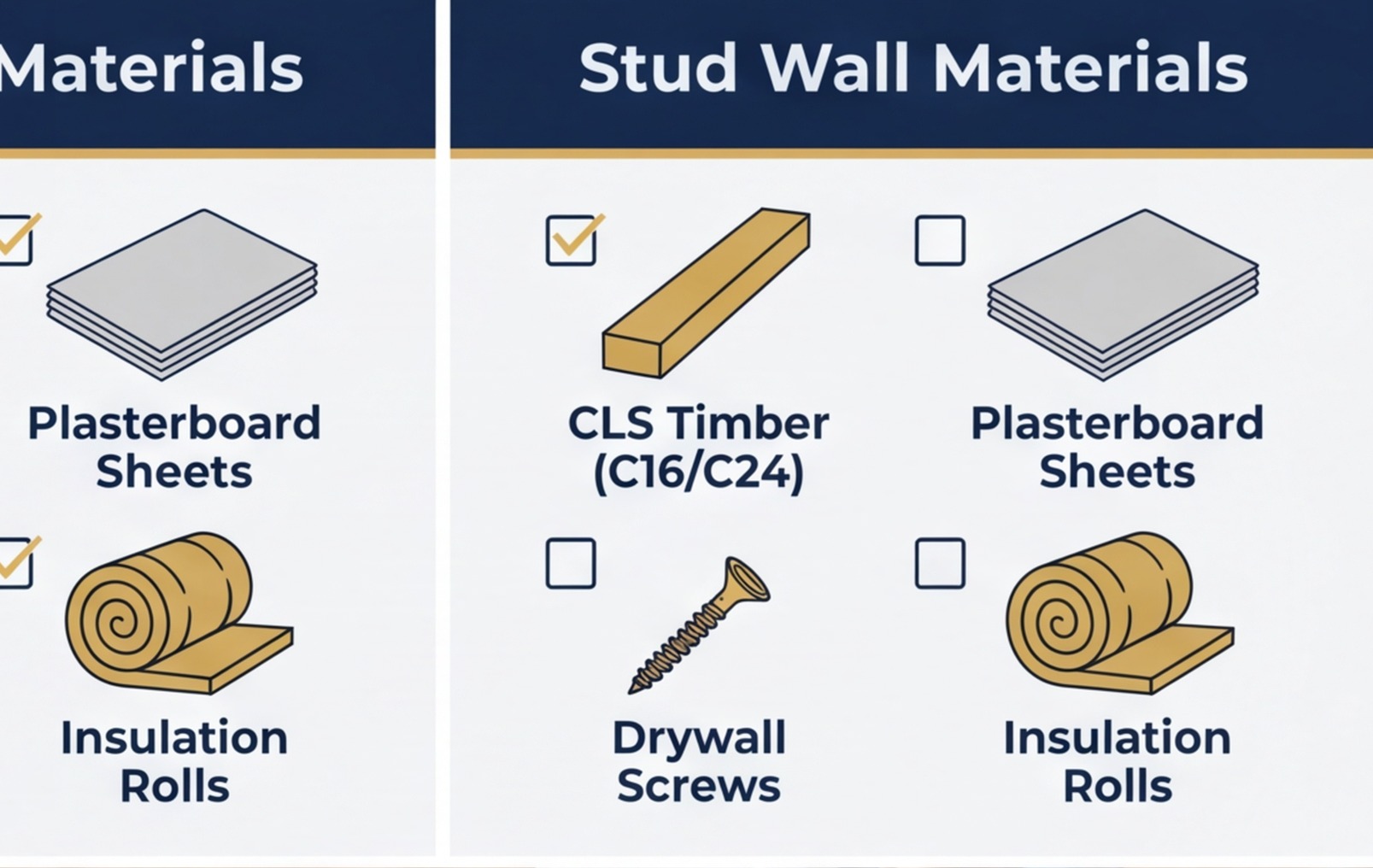
Both faces of the partition need plasterboard. Standard domestic partition spec is 12.5mm square-edge plasterboard for taped-and-jointed finishes, or tapered-edge board where a skim coat is applied.
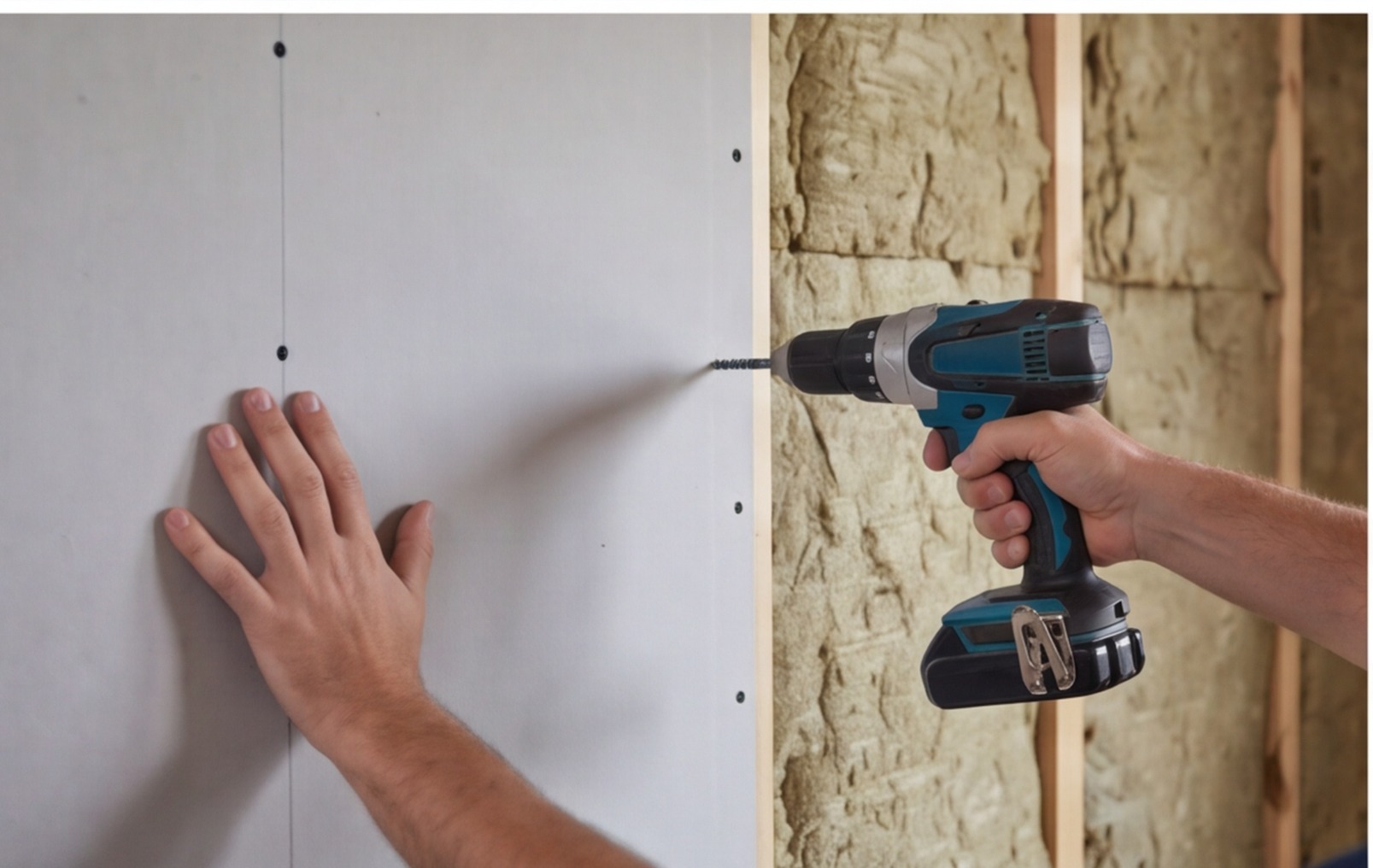
Plasterboard Quantities
- Calculate the wall area: length × height = m²
- Both sides of the partition: wall area × 2
- Add 10–15% for waste and cuts
- Convert to board count: standard board is 2400 × 1200mm = 2.88m²
For our 5m × 2.4m example: 5 × 2.4 × 2 = 24m² × 1.12 (waste) = 26.9m² ÷ 2.88 = 9.3, round up to 10 boards. At trade supply around £7–£10 per standard board, the plasterboard cost is approximately £70–£100.
Insulation
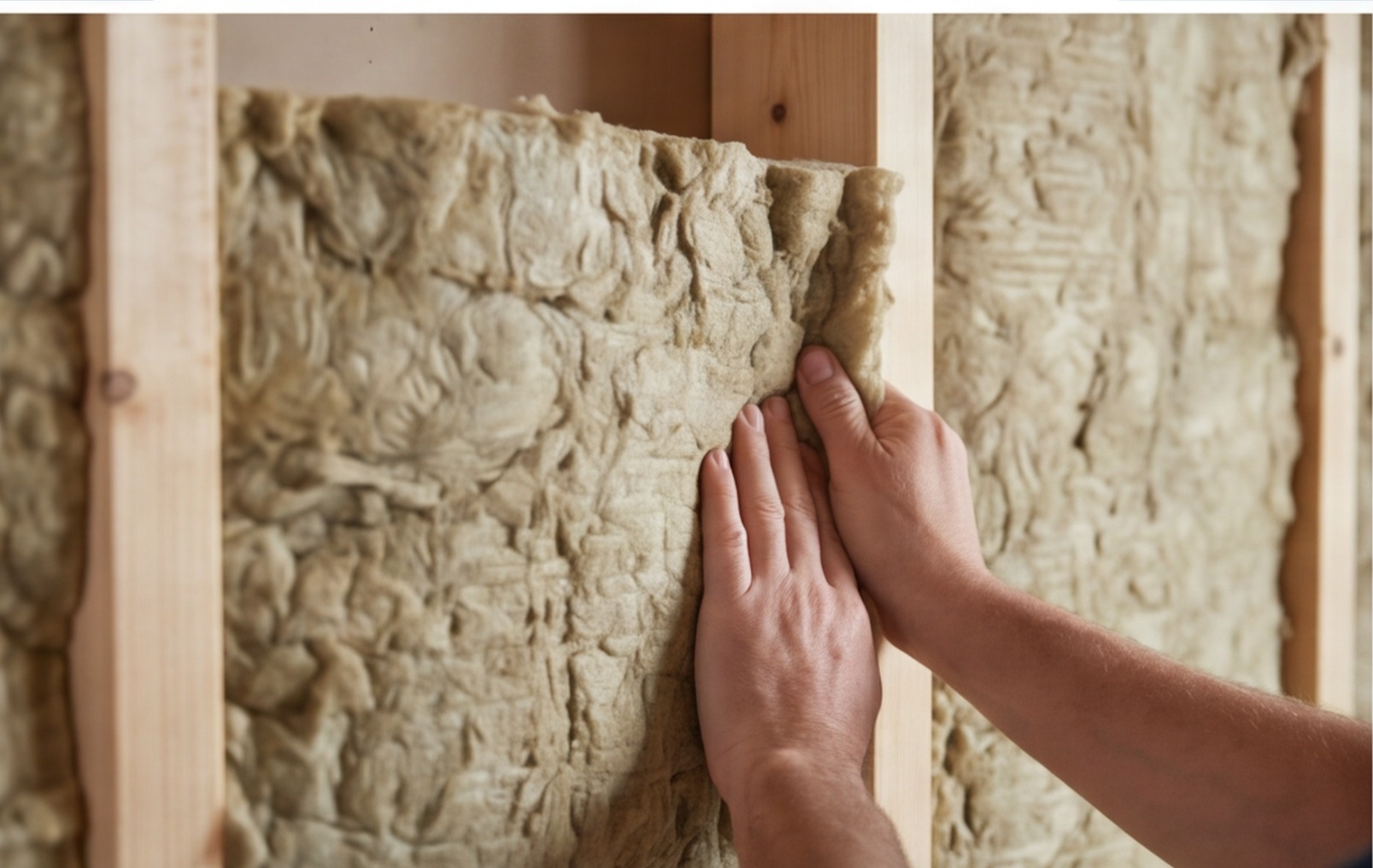
Insulation in a partition wall serves acoustic rather than thermal purposes. Standard practice for a partition between rooms where basic sound attenuation is wanted:
- 50mm mineral wool slab or roll (Rockwool RWA45 or similar) — fills one face of the partition void
- Quantity: wall area × 1 (one layer in the void) + 10% waste
- Trade cost: approximately £3–£6 per m²
Where fire separation is required — between flats or between a house and attached garage, for example — specify fire-rated board (30-minute or 60-minute resistance as required) and acoustic insulation. Fire-rated board carries a significant price premium and must be specified correctly. Refer to Approved Document B (Fire Safety) for the relevant fire resistance performance requirements.
Door Openings and Lintels
Door openings in a stud partition require a header (lintel) above the opening and trimmer studs on each side. In a non-load-bearing timber stud partition at domestic ceiling heights, a double 38mm CLS header is typically sufficient — no structural steel required. In metal stud systems, purpose-made header sections are used.
Door Opening Frame Elements
| Element | Standard specification | Notes |
|---|---|---|
| Trimmer studs (each side of opening) | 2 × CLS per side = 4 pieces | Full height + to underside of header |
| Header (lintel) | 2 × CLS on flat, spanning opening + 100mm each side | Double up if wide opening |
| Cripple studs above header | As required to maintain stud pattern above opening | — |
| Door frame / lining | Client-supplied or specified separately | State clearly in quote if excluded |
Door linings, architraves and ironmongery are typically priced separately or flagged as client-supplied. Make this explicit in the quote — clients often assume the whole door is included when you have only priced the structural opening.
Jointing, Beading and Skimming
Once the boards are on, the finish options are taped-and-jointed (common in commercial or new build) or fully skimmed (common in domestic work where a painted finish must match surrounding plastered walls).
Taped-and-Jointed vs Skimmed
| Finish type | Material cost per m² | Labour | Best for |
|---|---|---|---|
| Taped and jointed | £1–£2.50 | 15–25 min per m² | Commercial, new build, subsequent tiling |
| Skim coat (full) | £1.50–£3.50 | 20–35 min per m² | Domestic, painted finish matching plaster walls |
Beads and Angles
External corners on a partition wall need metal angle bead — either galvanised steel or plastic corner bead — to protect the plaster edge from chipping. Budget around £1–£2 per linear metre of external corner. Measure the external corners from your survey to add this to your materials list.
Scrim tape is required at all board joints before skimming. Allow one roll of 90m scrim per 25–30m² of board area.
Labour, Waste and the Final Quote
With your materials take-off complete, you can build the labour estimate. Stud partition labour splits into three distinct phases:
Labour Allowances by Phase
| Phase | Typical rate per m² of wall |
|---|---|
| Frame erection (CLS timber) | 0.3–0.5 hours per m² |
| Plasterboard fixing (both faces) | 0.3–0.4 hours per m² |
| Insulation fitting | 0.1–0.15 hours per m² |
| Skim coat (by plasterer) | 0.3–0.5 hours per m² |
| Door opening framing | Allow 2–3 hours additional per opening |
| Beading and scrim | Allow 0.1 hours per linear metre of corner |
For our 5m × 2.4m wall (12m²) with one door opening, a typical labour budget at £25–£35 per hour (carpenter) plus £30–£45 per hour (plasterer):
- Frame: 12m² × 0.4h = 4.8h carpenter
- Boarding both faces: 12m² × 2 × 0.35h = 8.4h carpenter
- Insulation: 12m² × 0.12h = 1.4h
- Door opening: 2.5h additional
- Skim: 24m² × 0.4h = 9.6h plasterer
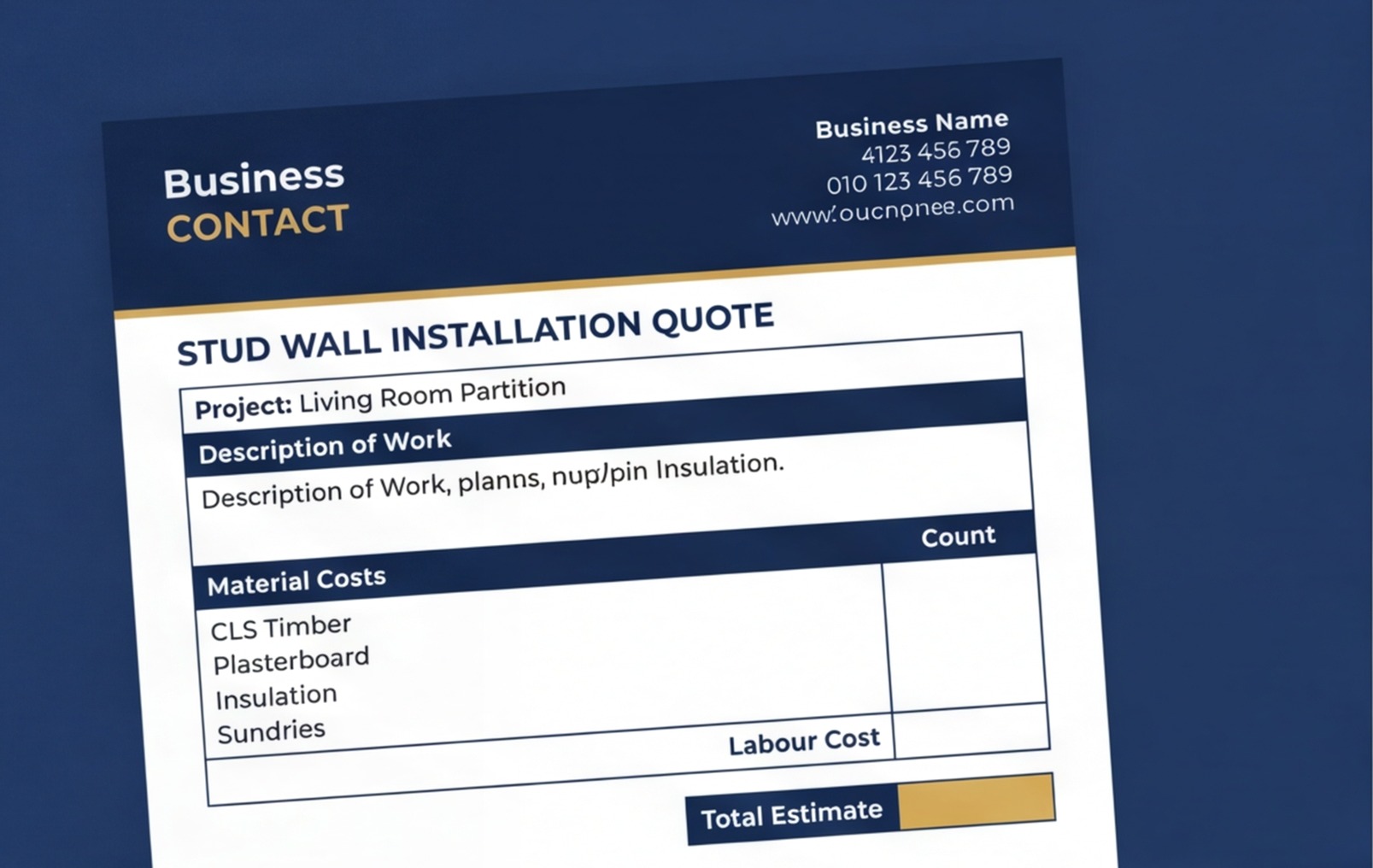
Total: approximately 17h carpenter + 9.6h plasterer. At mid-market rates, that is £425–£595 carpenter labour plus £288–£432 plasterer labour = £713–£1,027 labour, plus approximately £300–£450 in materials, giving a typical total range of £1,000–£1,500 for a simple 5m × 2.4m partition with one door.
Waste Allowance
Always add a waste allowance on materials — 10% on timber, 12–15% on plasterboard (cuts are significant around door openings and where boards must be cut to height). This is not padding — it is genuine cost. Returning to a merchant for one board because you under-ordered is a real money and time loss.
To build stud partition quotes into a full project estimate, try RenoCalc — it calculates partition areas, board quantities and plastering take-offs automatically from your floor plan, so your stud wall cost is part of the full job quote rather than a separate calculation.
Looking to understand plastering rates for the skim finish? Read our guide on plastering cost per square metre UK. For the complete refurbishment cost picture, see our full house refurbishment cost UK guide.
You can also use our floor plan cost estimator to cross-check partition and room areas before your quote goes out. For health and safety on stud partition work including dust and manual handling, see the HSE dry lining guidance.

Quote Stud Partitions Faster With RenoCalc
Take-offs, material quantities, labour allowances — RenoCalc pulls them all from your floor plan so your stud wall quotes are accurate and complete from the start. No spreadsheets, no guesswork.
Start a Free Quote with RenoCalc