Garage Conversion Cost UK: Habitable Room Breakdown by Trade
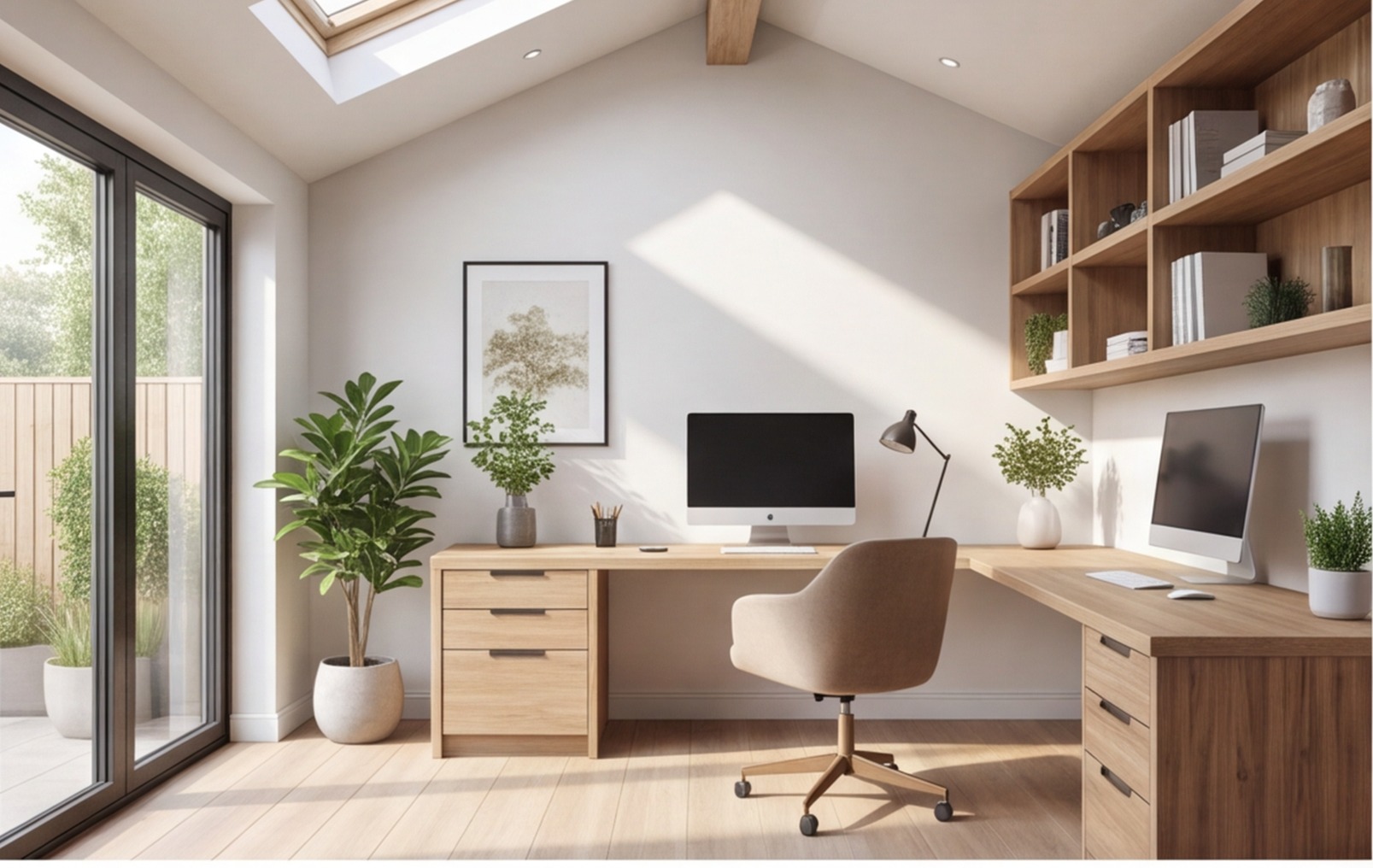
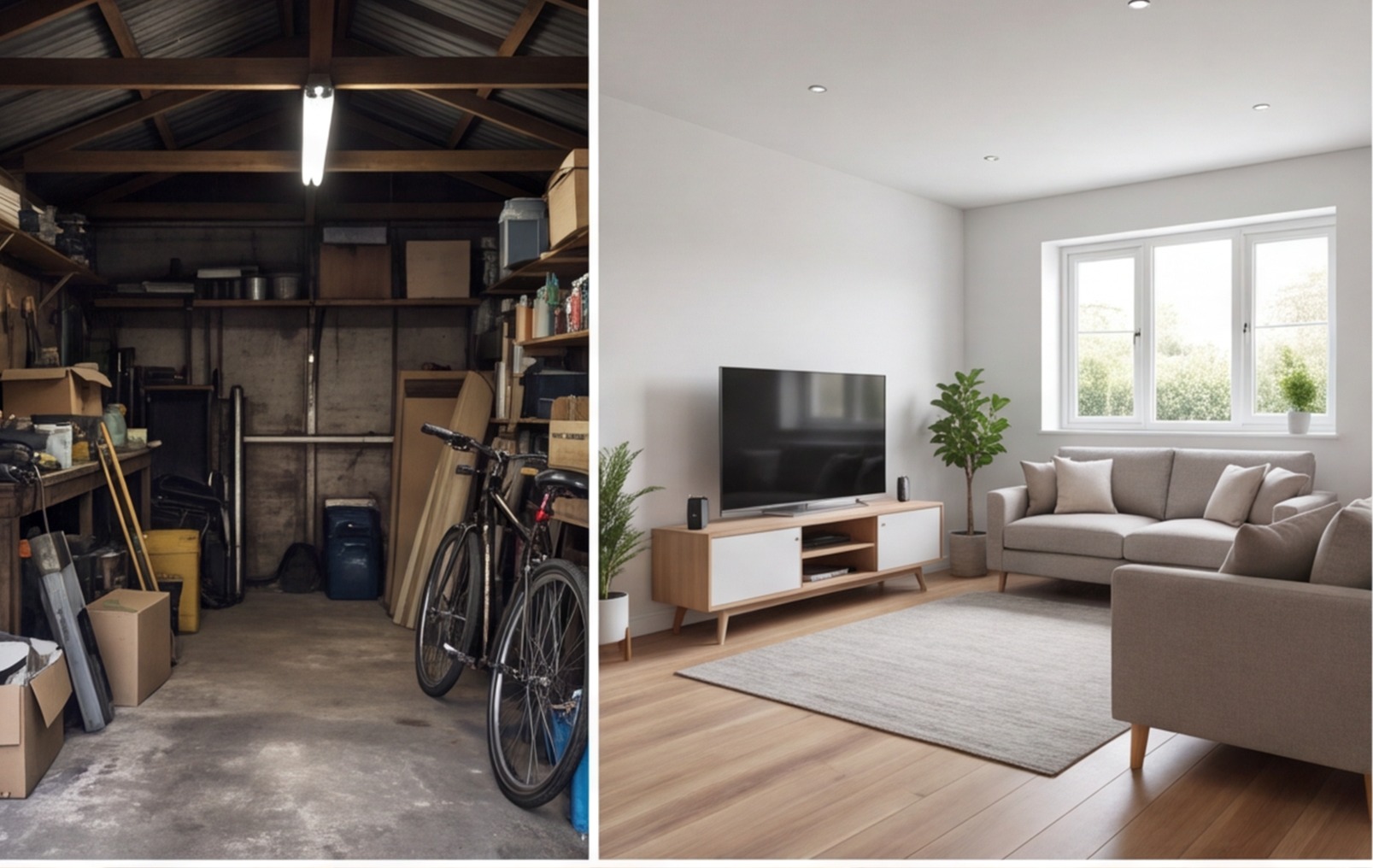
Garage conversion cost UK is one of those searches where the top results will give you a headline figure — £6,000, £10,000, £15,000 — and rarely explain what's actually included. I've priced and built garage conversions for years and the honest answer is: a compliant, habitable conversion done properly on a standard single garage costs £10,000–£18,000 at mid-range spec. Below that range, something is being skipped. In this article I'll break it down trade by trade — floor build-up, insulation, walls, windows, electrics, heating, plastering, flooring — and explain what Building Control will actually require.
Planning Permission and Building Control
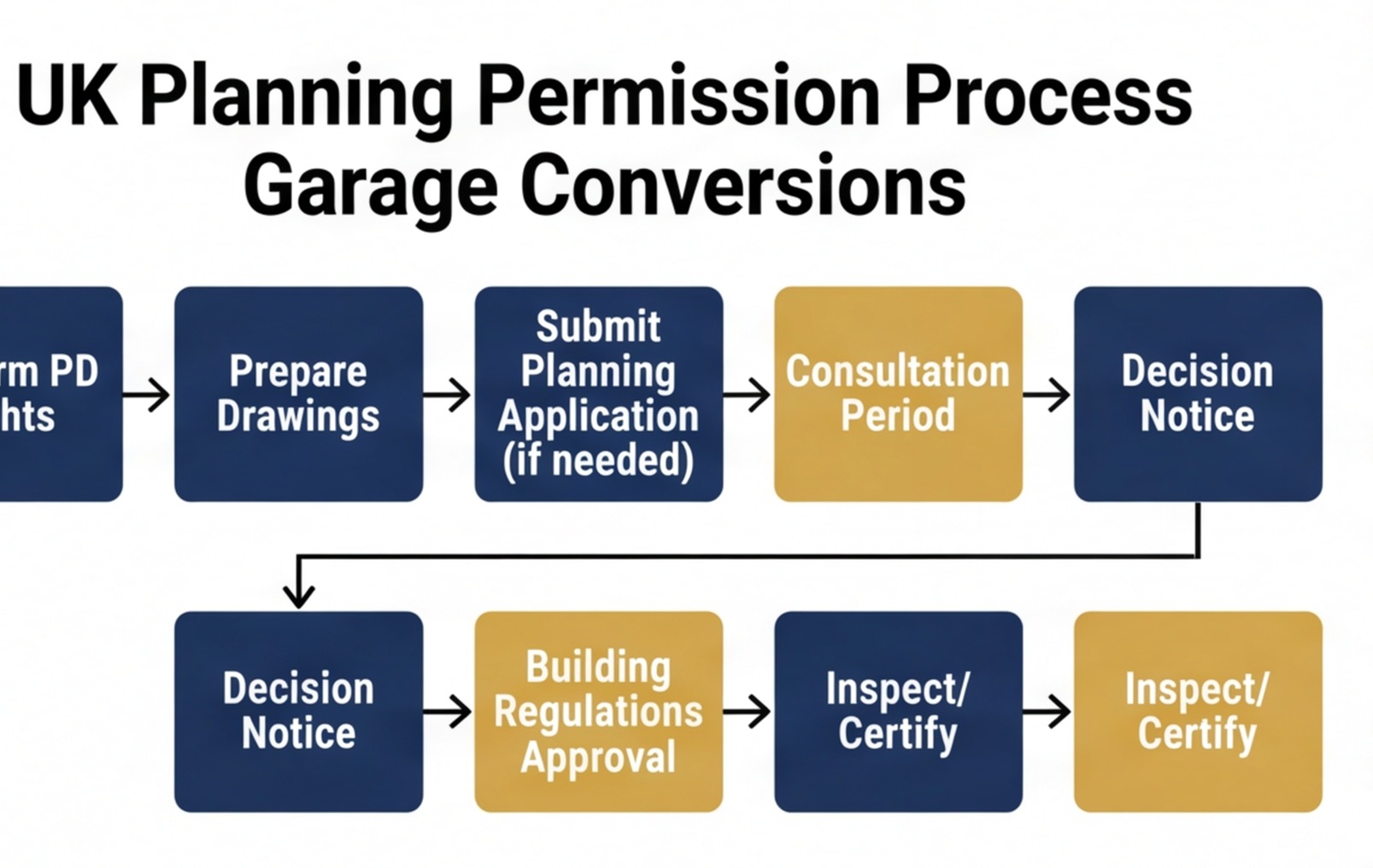
Let me deal with this upfront because it's where I see most garage conversions go wrong. Planning permission and Building Regulations approval are two separate things and both matter.
Planning Permission
Most internal garage conversions don't require planning permission under Permitted Development rights. You can convert the interior of an attached or integral garage to living space without applying to the council in most cases. The exceptions are:
- Properties in conservation areas
- Listed buildings
- Properties where a planning condition removed permitted development rights when the house was built
- Where you're making significant external changes (beyond infilling the door opening)
Always check your title deeds and any planning conditions on the original house before starting. Your local authority planning portal will have the planning history for the property.
Building Regulations
Building Regulations approval is mandatory for every garage conversion to a habitable room — no exceptions. You cannot legally skip this. The key requirements under the Regulations are:
- Structural: floor, walls and roof must be structurally adequate for habitable use
- Thermal: walls, floor and ceiling must meet current Part L insulation standards
- Damp proof course: the floor and walls must have appropriate DPC protection
- Ventilation: the room must have adequate ventilation (openable window area or mechanical)
- Electrics: all new electrical work must be notified and inspected under Part P
- Fire: if the garage connects directly to the house, a fire-rated door is required at the connection
- Smoke alarms: interlinked smoke alarms required
You'll need to appoint a Building Control officer from your local authority or an Approved Inspector before work starts. Building Control fees for a garage conversion typically run £400–£800. Budget for intermediate inspections at the floor stage, insulation stage and completion.
Floor Build-Up: The Foundation of a Warm Conversion
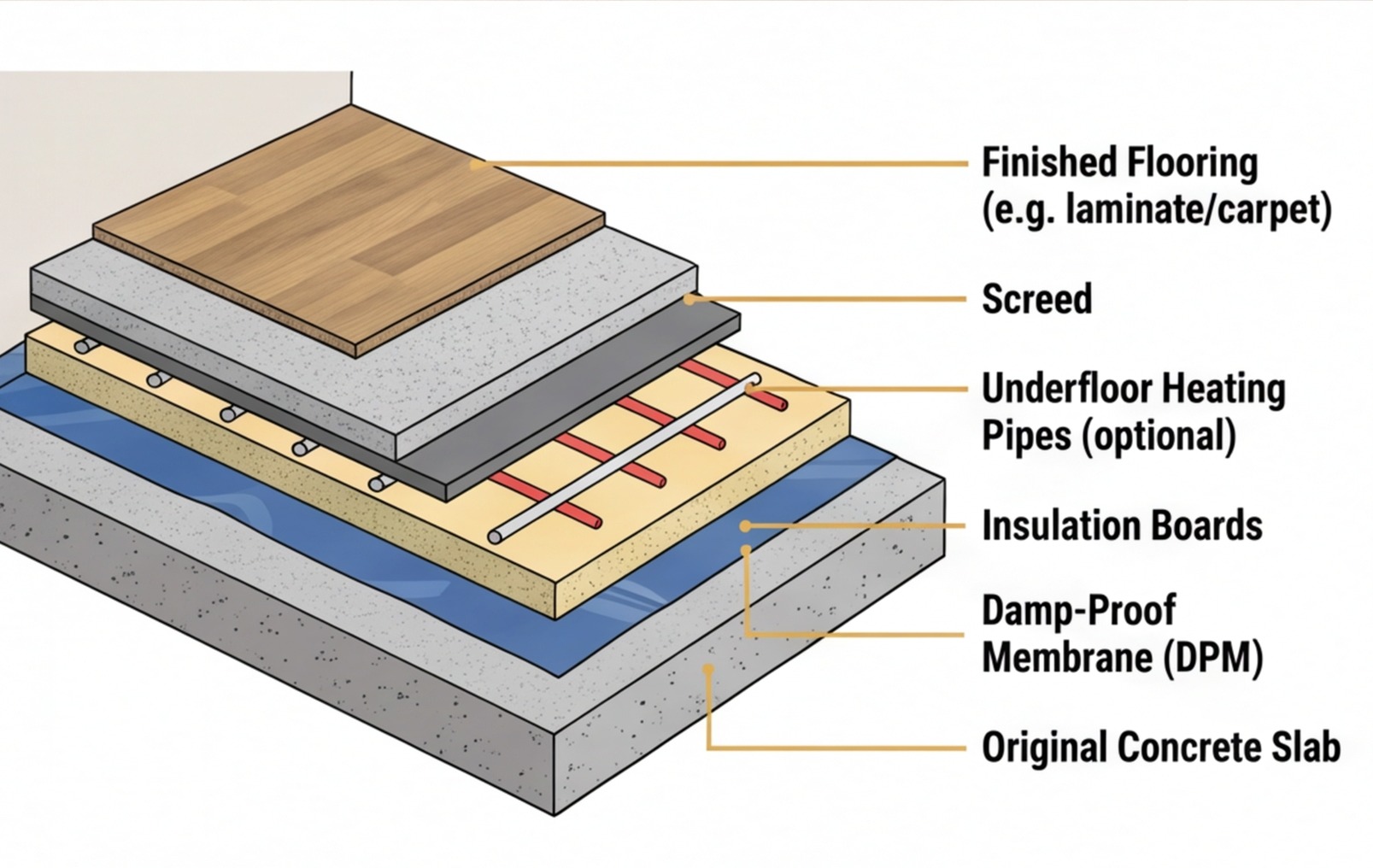
The floor is probably the most important element to get right in a garage conversion. Garage floors are typically laid on hardcore fill at a level below the internal floor level of the house — which means they can be cold, damp and at the wrong height. Getting it right involves:
Option 1: Insulated Screed Floor
The most common and usually most cost-effective solution. The existing concrete slab is cleaned and prepared, a damp proof membrane (DPM) is laid, rigid PIR insulation boards (typically 75–100mm to meet current U-value requirements) are laid on top, and a 75mm sand/cement screed or self-levelling compound is poured over. This raises the floor level — check there's enough height to the door threshold and ceiling before specifying.
- Cost: £1,500–£2,800 for a standard single garage (16–18m²)
- Allow 150–180mm total build-up depth
Option 2: Raised Timber Floor
Where there's insufficient headroom for a screed build-up, or where the client wants a timber floor feel, a raised timber deck on preservative-treated battens (with insulation between) can work. It costs marginally more and needs careful detailing around the edges to prevent cold bridging and damp ingress.
- Cost: £2,000–£3,500 for a standard single garage
- Total build-up typically 100–150mm
Whichever approach you use, the DPC on the walls must tie in properly with the floor DPM to form a complete moisture barrier. Building Control will inspect at this stage — don't close up the floor until it's been signed off.
Walls and Insulation
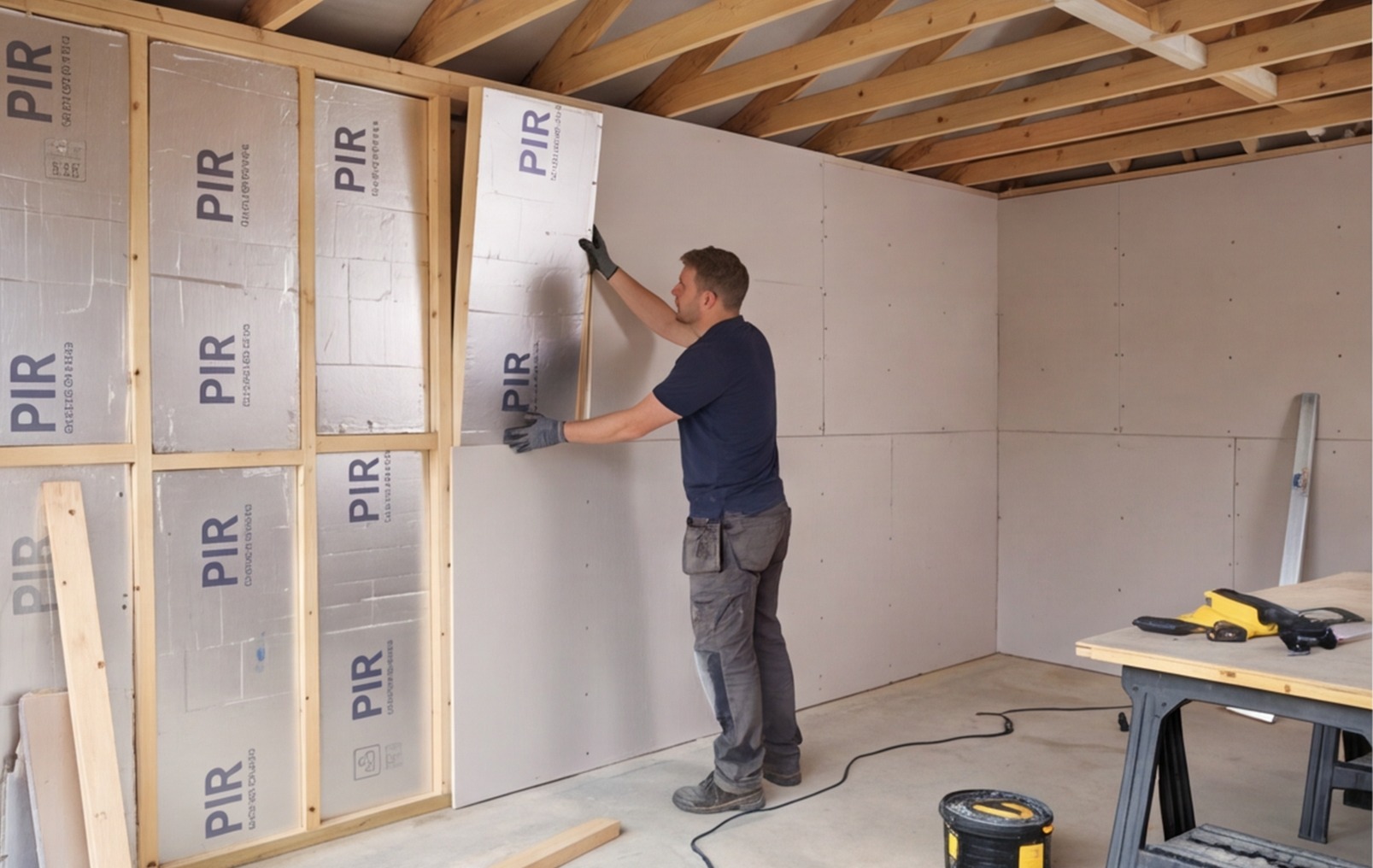
Garage walls are typically single-leaf masonry with no cavity — they're not built for habitation. They need insulating to meet current Building Regulations thermal performance standards (U-value of 0.28 W/m²K or better for walls). There are two main approaches:
Direct Insulation and Dry-Lining
Rigid PIR insulation boards (typically 50–75mm) are bonded or mechanically fixed directly to the masonry walls, then plasterboard is fixed to the face of the insulation. This is the most space-efficient method but requires a vapour control layer and careful attention to thermal bridging at junctions. Cost: £1,200–£2,000 for a single garage.
Stud Wall with Mineral Wool Insulation
A timber stud frame is erected 25–50mm off the masonry wall, mineral wool (100mm) is packed between the studs and plasterboard is fixed to the frame. This achieves a similar U-value to the PIR method but uses more floor space (the stud wall adds 100–150mm around the perimeter). Cost: £1,500–£2,500 for a single garage.
The ceiling also needs insulating if the garage has a flat roof above rather than an accessible loft. PIR boards bonded to the soffit with plasterboard over is the standard approach — cost £800–£1,500 depending on configuration.
Door Infill and Windows
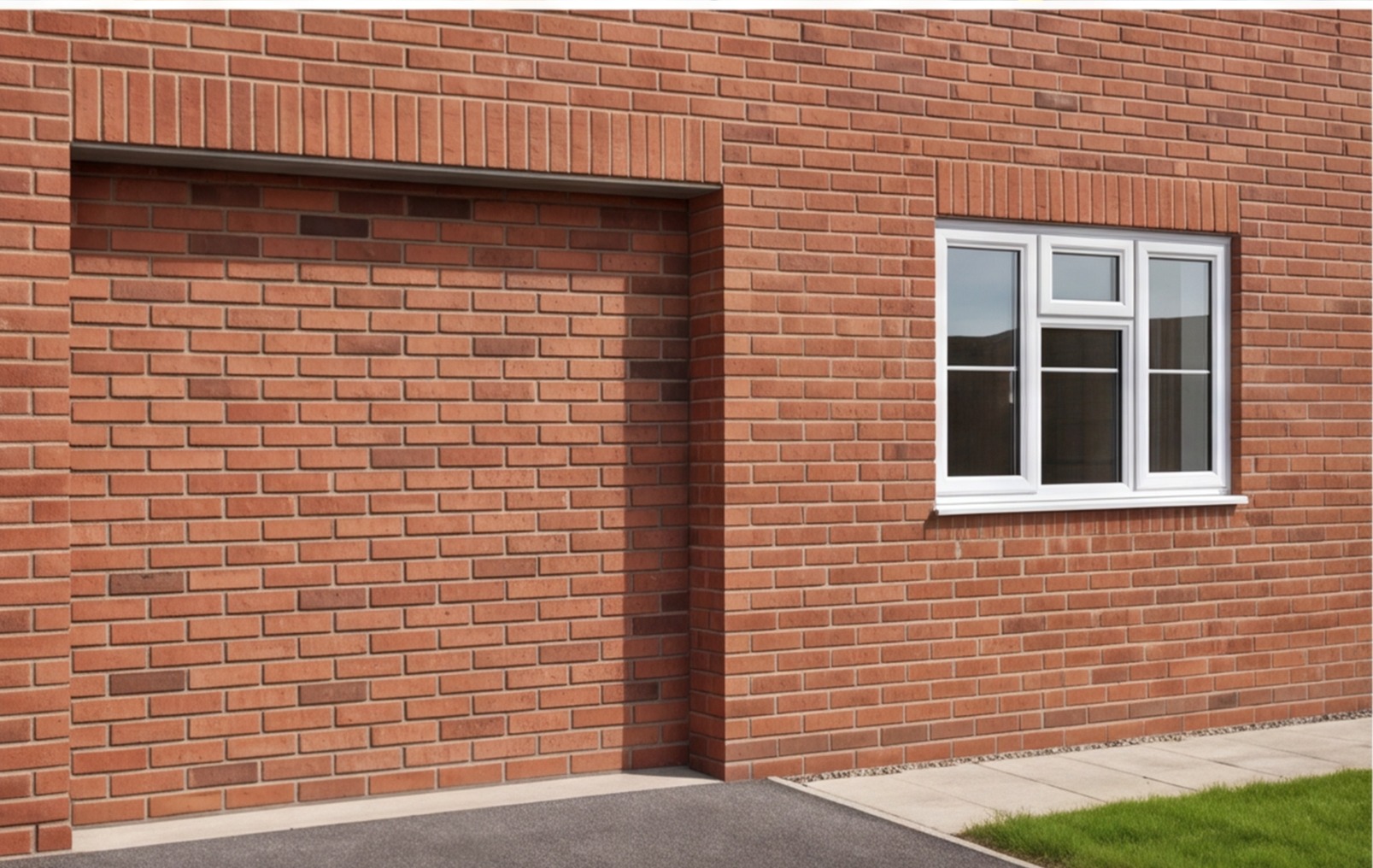
Infilling the garage door opening is one of the most visible elements of a conversion. Options include:
- Full brickwork infill with window: match the existing brickwork and fit a standard window into the upper portion of the opening. Cleanest finish, best insulation performance, most popular choice. Cost: £1,500–£3,000 including window.
- Timber-framed panel with window: a timber frame clad in matching render or boarding, with a window. Slightly less substantial looking but cheaper on some builds. Cost: £1,000–£2,000.
- Full-width glazing or bifold doors: if planning allows and the conversion is to a garden room or living space, the entire opening can be glazed. Cost: £3,000–£8,000 for quality aluminium glazing.
Building Regulations require that any new window in a habitable room meets current Part L thermal requirements — double or triple glazing, minimum energy rating C. The window must also provide adequate escape in the event of fire if it's on the ground floor of a habitable room without another escape route.
Electrics and Heating
A garage typically has basic lighting and one or two sockets run from the house consumer unit. Converting to a habitable room means proper electrical installation to domestic standards — and that work must be notified and inspected under Part P of Building Regulations.
Electrics
First fix involves running new circuits from the consumer unit for lighting, sockets and any heating circuits. On a standard single garage, electrical work typically covers: two new lighting circuits, three double socket outlets, fused spur for heating, smoke detector wiring. Cost: £800–£1,500 first and second fix combined.
If the existing consumer unit has no spare capacity, a consumer unit upgrade adds £500–£900. Check before pricing.
Heating
Options depend on whether the garage is attached to the house and connected to the central heating system:
- Extend existing CH system: add a new radiator run off the house boiler. Cost: £400–£800 per radiator including pipework.
- Underfloor heating: electric UFH matted into the floor screed is clean and effective. Cost: £600–£1,200 for a single garage depending on floor area.
- Electric panel heater: simplest and cheapest option, but more expensive to run. Cost: £150–£400 per heater installed.
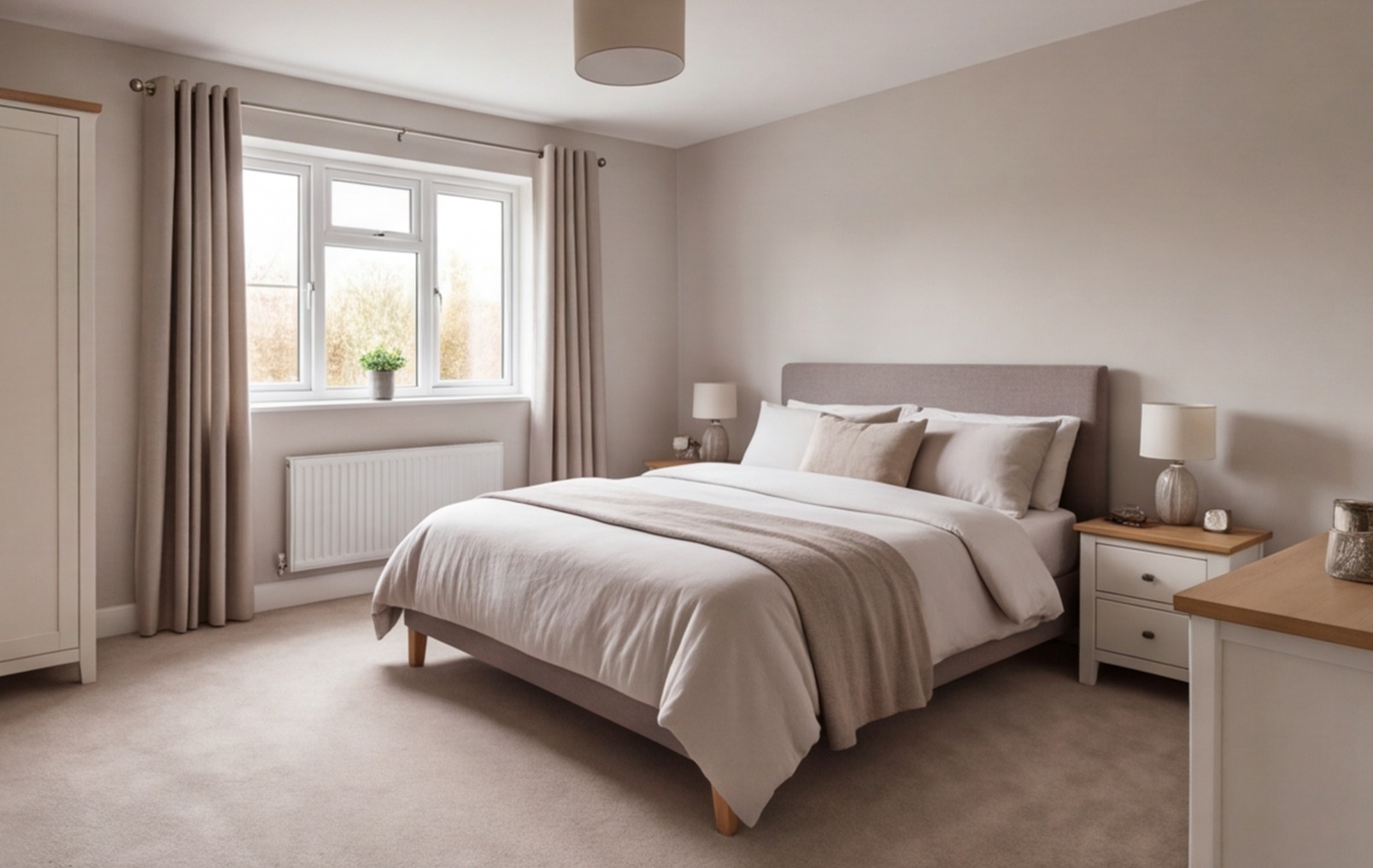
Plastering and Finishing
Once the structural and service trades are done, plastering and finishing bring the space to habitable standard.
Plastering
The insulated dry-lining boards need boarding over at joints and skimming throughout for a smooth finish. On a single garage, plastering runs £600–£1,200 depending on the wall finish specified. If a specialist multi-finish skim is needed over dot-and-dab boards, allow the upper end of that range.
Flooring
Once the screed has dried out (allow four to six weeks for a sand/cement screed, or use fast-drying products if programme is tight), the floor finish can be installed:
- LVT (luxury vinyl tile/plank): £30–£55/m² supply and fit
- Engineered wood: £45–£80/m² supply and fit
- Carpet: £20–£45/m² supply and fit
- Tiles: £45–£90/m² supply and fit
Decoration
Full decoration of a single garage conversion — mist coat, two coats throughout, gloss woodwork — typically runs £400–£800.
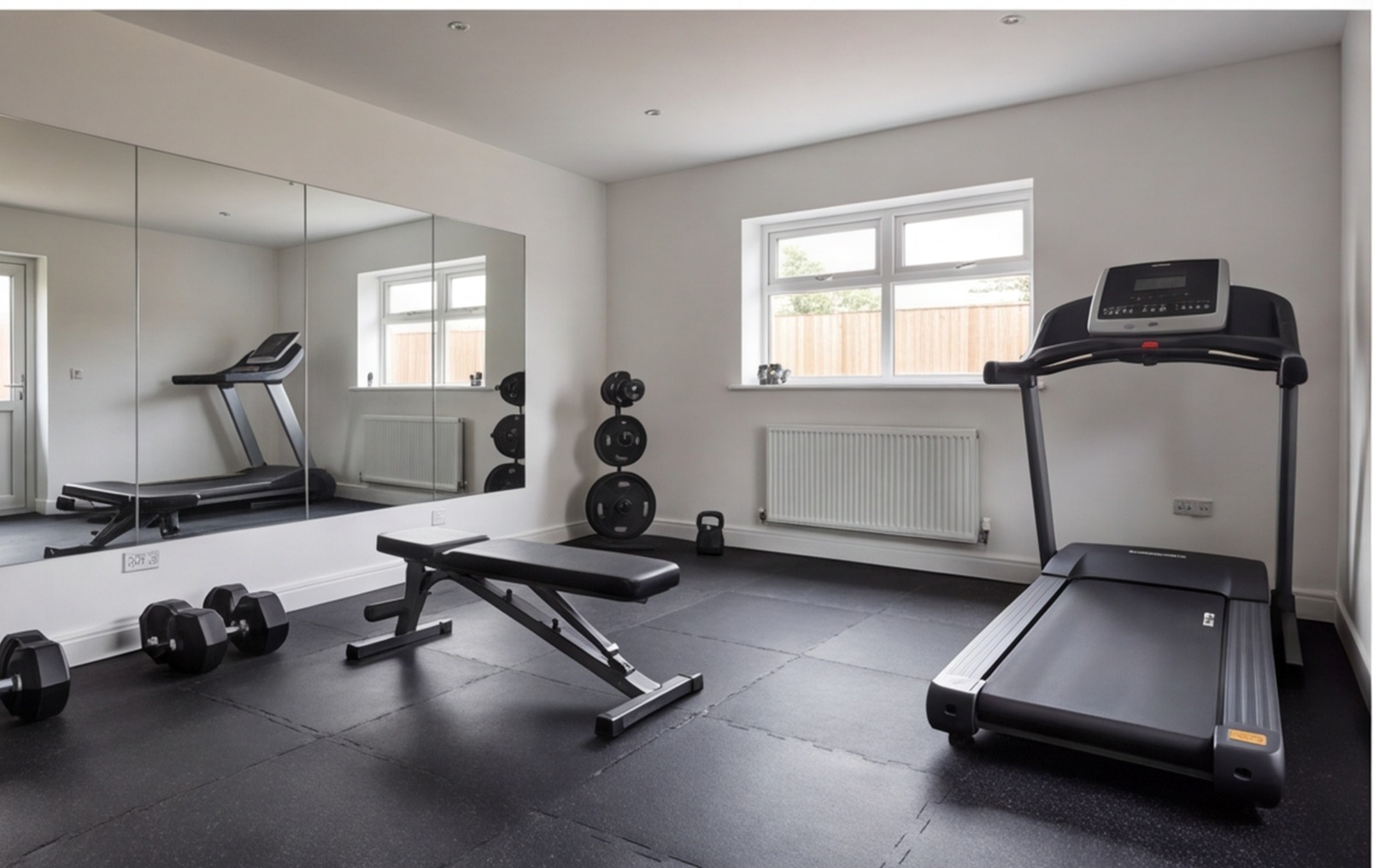
Full Garage Conversion Cost Breakdown
Here's a complete trade-by-trade breakdown for a standard single garage (approximately 16–18m²) converted to a habitable room at mid-range spec:
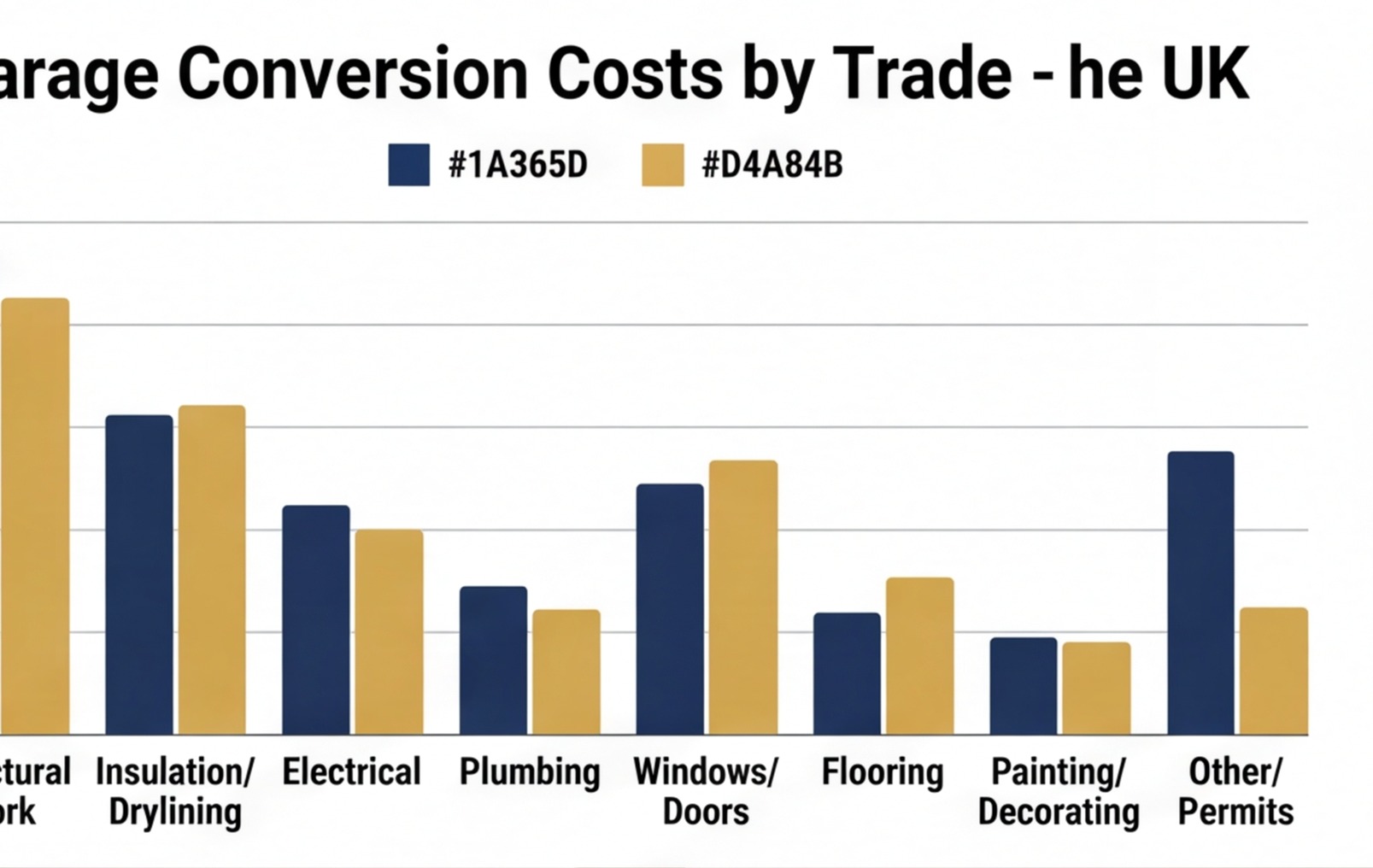
| Trade / Element | Scope | Estimated Cost |
|---|---|---|
| Floor build-up | DPM, PIR insulation, sand/cement screed | £1,500–£2,800 |
| Wall insulation & dry-lining | PIR boards or stud frame, mineral wool, plasterboard | £1,200–£2,500 |
| Ceiling insulation | PIR to flat roof soffit, plasterboard | £800–£1,500 |
| Door opening infill | Brickwork infill to match existing, DPC detail | £800–£1,800 |
| Window | Double-glazed uPVC or aluminium, supply and fit | £600–£1,500 |
| Internal door | Fire-rated door and frame at connection to house | £400–£800 |
| Electrics | First and second fix, lighting, sockets, consumer unit if needed | £800–£1,800 |
| Heating | Extend CH system + radiator or electric UFH | £600–£1,500 |
| Plastering | Board joints, full skim finish | £600–£1,200 |
| Flooring | LVT or engineered wood, 16–18m² | £600–£1,200 |
| Decoration | Full repaint, mist coat, two coats walls and ceiling, gloss woodwork | £400–£800 |
| Building Control fee | Application, inspections, completion certificate | £400–£800 |
| Skip / clearance | Strip-out, concrete disposal if needed | £300–£600 |
| Contingency (10%) | £900–£1,800 | |
| Total | £10,000–£20,600 |
For a conversion that includes an en-suite bathroom, add £4,000–£7,000 depending on spec and the distance to the existing soil stack. Adding a kitchenette for a home office or annexe purpose adds £2,500–£6,000.
Want a quote built from your actual garage dimensions? Upload your floor plan to RenoCalc and get a trade-by-trade cost in under three minutes. For context on how garage conversions compare to extension costs, read our guide on extension cost per square metre UK.
If you're converting to a habitable annexe as part of an HMO or investment property, read our HMO conversion cost guide for guidance on how habitable space standards apply.
For full project costing — not just the conversion, but an entire refurbishment scope — see how RenoCalc compares to other construction estimating tools.
Frequently Asked Questions
How much does a garage conversion cost in the UK?
A garage conversion to a habitable room in the UK typically costs £10,000–£25,000 depending on the size of the garage, the intended use and the spec level. A straightforward single garage converted to a home office or bedroom at mid-range spec runs £10,000–£16,000. Converting to a bedroom with an en-suite adds £4,000–£7,000. High-spec conversions with underfloor heating, quality flooring and premium finishes can reach £20,000–£25,000. These are Midlands trade rates for 2024–2026 — London and South East will be 20–35% higher.
Do I need planning permission for a garage conversion?
Most internal garage conversions don't require planning permission in England — they fall under Permitted Development rights. However, if you're changing the external appearance of the garage (infilling the door opening, adding windows, changing the roofline), some of those changes may trigger a planning application. Properties in conservation areas, listed buildings, or those where permitted development rights have been removed by condition will need planning permission. Building Regulations approval is always required for a garage conversion regardless of planning status.
What Building Regulations apply to a garage conversion?
Building Regulations apply in full to any garage converted to a habitable room. The key areas covered are: structural adequacy of the floor, walls and roof; thermal insulation to current Part L standards; ventilation (natural and/or mechanical); fire safety (escape windows, fire doors where connecting to the main house, smoke alarms); electrical installation to Part P; and damp proofing. You'll need to appoint a Building Control officer or Approved Inspector and get a completion certificate at the end of the job. Without it, the conversion will cause problems when you sell.
What is the cheapest way to convert a garage?
The cheapest compliant conversion uses: insulated floor screed rather than a raised timber floor, PIR board insulation to walls rather than a stud wall with mineral wool, single-section window in the former door opening rather than bifolds, a basic panel radiator rather than underfloor heating, and standard plasterboard and skim. Done to mid-range spec on a standard single garage (around 16–18m²), this approach typically costs £10,000–£14,000. It's worth spending the money on proper floor insulation and wall insulation regardless — a cold, damp garage room is no good to anyone.
Does a garage conversion add value?
It depends on the property and the local market. In areas where off-street parking is scarce and houses are valued partly for their garages, converting the garage can actually reduce the property value. In areas where parking is readily available and the house already has a driveway, a well-done garage conversion to a usable habitable room (especially an extra bedroom or home office) typically adds value. Always check what converted and unconverted properties are selling for on your street before deciding.
How long does a garage conversion take?
A standard single garage conversion to a habitable room takes approximately three to five weeks from start to finish, assuming Building Regulations drawings are ready and trades are booked in advance. The sequence is: groundworker or builder for floor build-up, insulation and door infill; electrician first fix; plumber if heating is being added; plasterer; electrician second fix; decorator; flooring. Delays typically occur when Building Control inspections are needed at specific stages — build in time for the intermediate inspections rather than trying to rush through.
Can I convert a garage to a bedroom with en-suite?
Yes, and it's one of the most popular garage conversion uses. You'll need adequate ceiling height (minimum 2.1m is the practical minimum, 2.3m is more comfortable), space for the en-suite (typically 2m² minimum), and plumbing connections to the existing drainage stack or soil pipe. The en-suite typically adds £4,000–£7,000 to the base conversion cost depending on spec. You'll also need mechanical ventilation to the en-suite as there's unlikely to be a suitable external wall for a natural ventilation opening.

Get Your Garage Conversion Quote in Minutes
Stop guessing at garage conversion costs. Upload your garage floor plan or sketch to RenoCalc and get a trade-by-trade breakdown — floor build-up, insulation, electrics, heating, plastering and finishing — in under three minutes. No site visit needed to get your first number.
Generate My Garage Conversion Quote