Extension Cost Per Square Metre UK: Single, Double and Wraparound
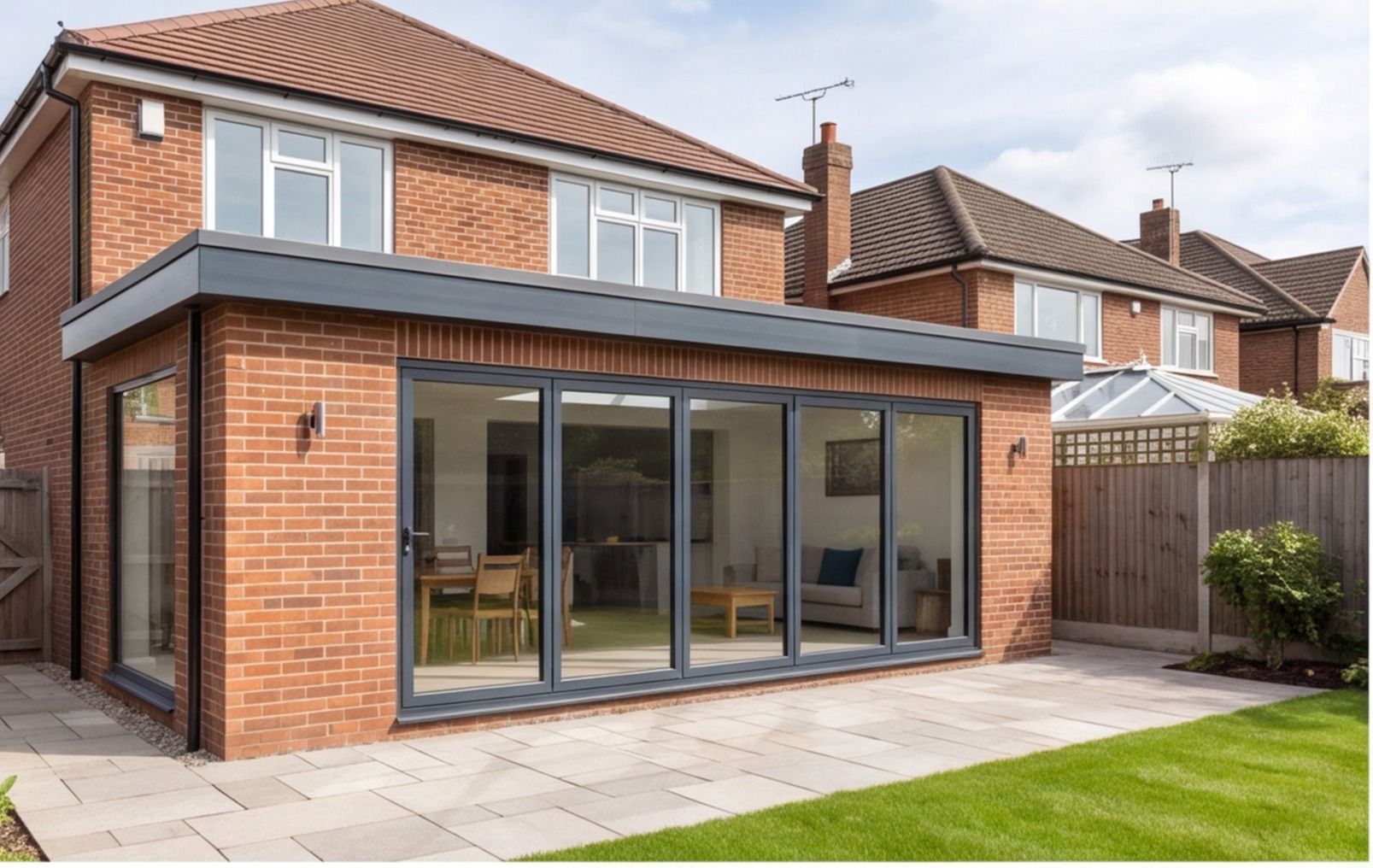
Extension cost per square metre UK is one of those figures that gets thrown around constantly — and misused even more constantly. I've seen quotes from builders that are £1,200/m² all-in and quotes from others for similar work at £3,500/m². Both are real numbers, but they're measuring completely different things. In this article I'll give you the real breakdown — what's included, what's excluded, and what the honest per-square-metre rates look like in 2024–2026 for single-storey, double-storey and wraparound extensions. Every rate here is based on actual UK trade costs, not marketing copy.
What Extension Cost Per Square Metre Actually Means
Before diving into numbers, it's worth being clear about what a per-square-metre extension rate includes — and what it doesn't. Different builders and different cost guides use different assumptions. Here's what I include when I quote extension cost per m²:
- Groundworks: excavation, concrete strip or raft foundations
- Drainage: connections, gullies, soakaways where needed
- External walls: blockwork cavity walls or timber frame
- Structural steelwork: RSJs, padstones, lintels
- Roof: structure, insulation, tiles or flat roof membrane
- External windows and doors: supply and fit
- Insulation: walls, roof, floor
- First fix electrics and plumbing
- Plasterboard, skim plaster
- Second fix electrics and joinery
- Floor screed or timber deck
- Decoration and basic finishes
What's not included in a standard per-square-metre rate:
- Kitchen or bathroom fitting
- Bi-fold or sliding doors (these are priced separately)
- Underfloor heating
- VAT (20% on new build extension work)
- Architect and structural engineer fees
- Planning permission and Building Control fees
- Party wall agreements
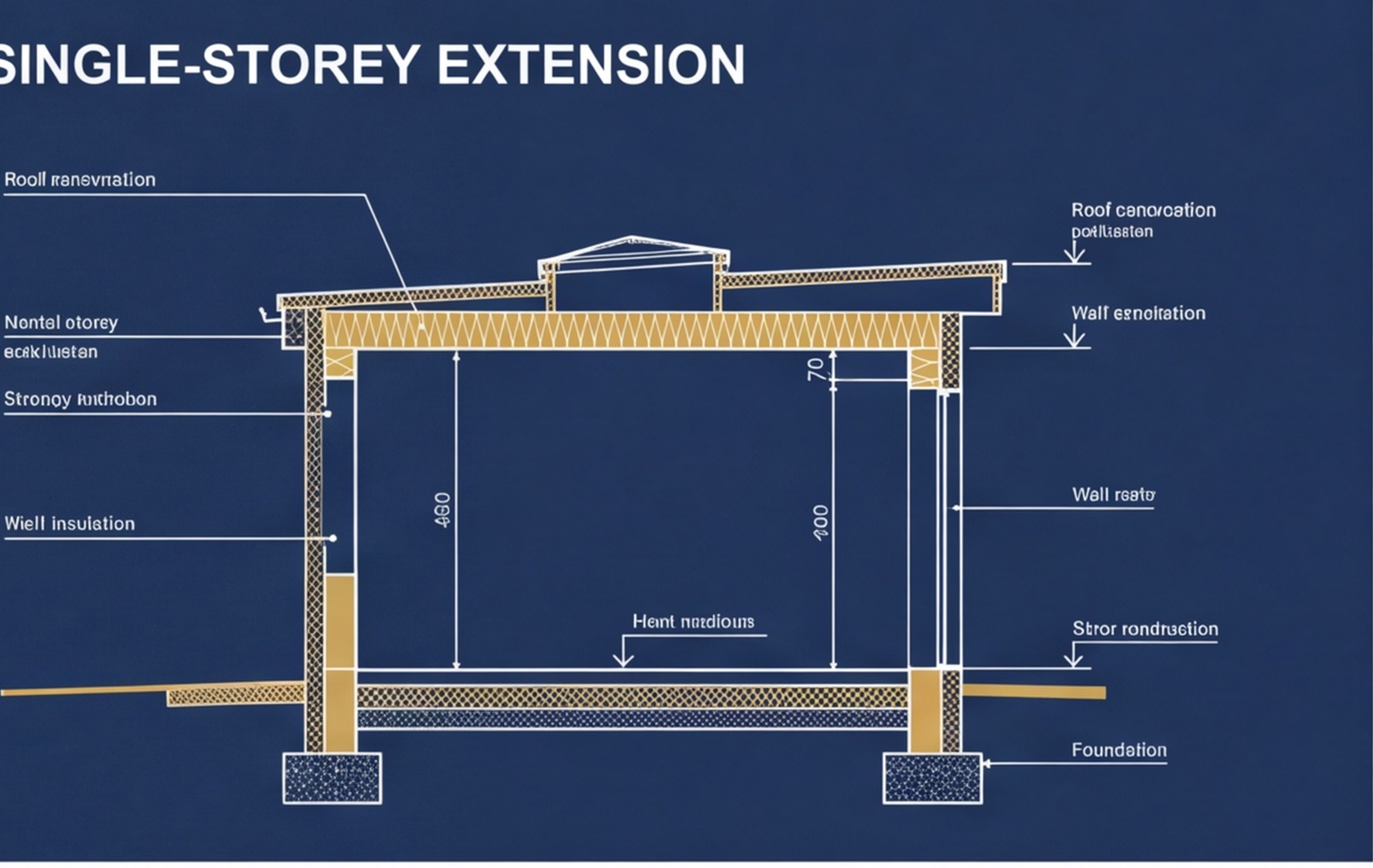
When a quote looks unrealistically cheap, it almost always means some of those line items are missing. Always check what's included before comparing quotes.
Single-Storey Extension Cost Per Square Metre
Single-storey rear extensions are the most common type of extension work in the UK. They typically create a kitchen-diner, utility room, home office or garden room. The per-square-metre cost depends heavily on the roof type, glazing specification and internal finishes.
| Spec Level | Roof Type | Cost Per m² | Example: 20m² |
|---|---|---|---|
| Basic | Flat/mono-pitch, uPVC windows | £1,800–£2,200/m² | £36,000–£44,000 |
| Mid range | Pitched roof, uPVC or aluminium windows | £2,200–£2,600/m² | £44,000–£52,000 |
| High spec | Pitched or lantern roof, aluminium bi-folds, underfloor heating | £2,600–£3,200/m² | £52,000–£64,000 |
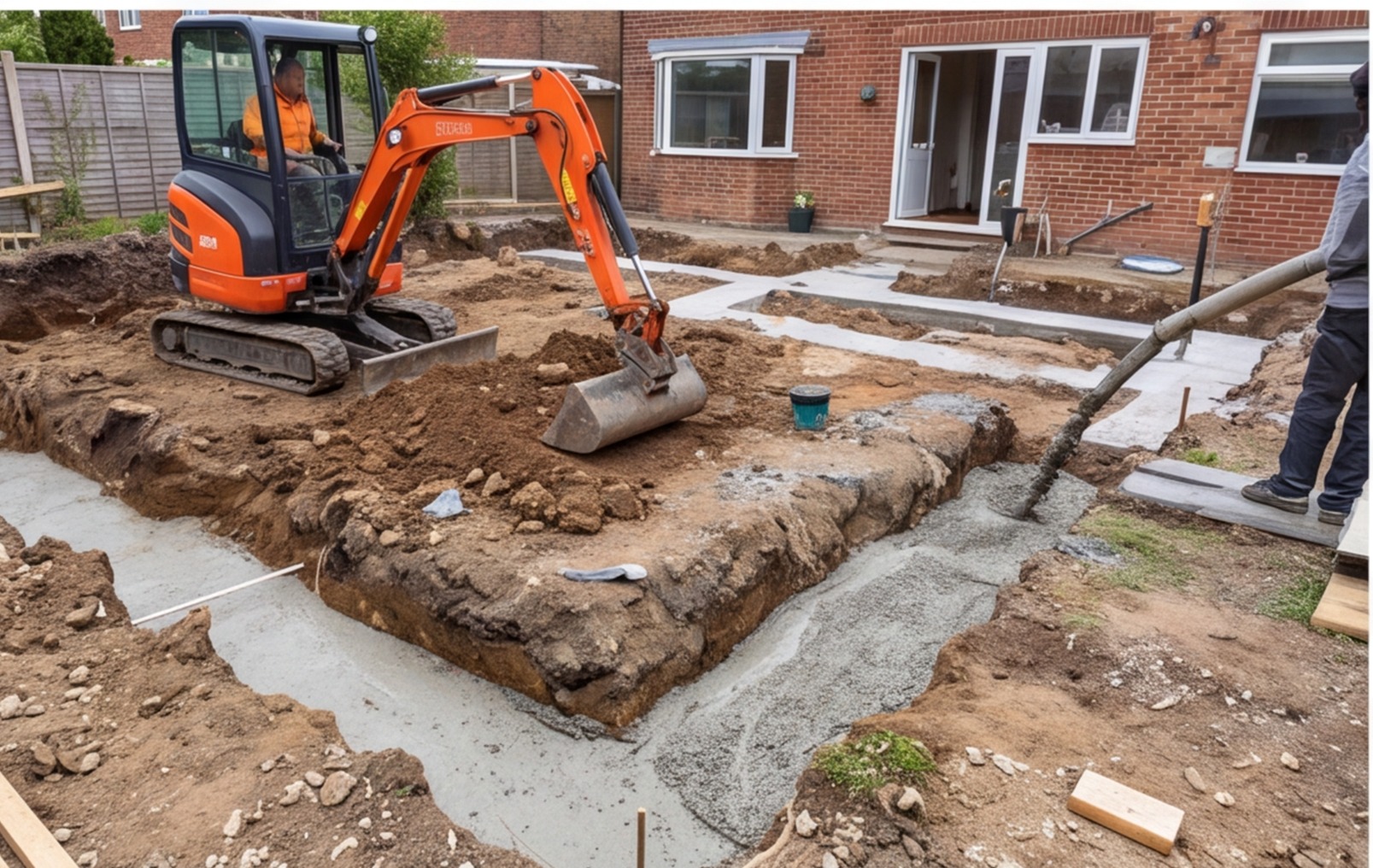
The most common mistake I see on single-storey extension quotes is under-costing the groundworks. Foundations can vary enormously — a straightforward strip foundation on stable ground costs very differently to a raft or pile foundation needed on poor ground conditions or near trees. If your plot has clay subsoil (common across much of the Midlands and South East), tree root influence zones or filled ground, get a proper soil investigation done before you quote. Getting this wrong means the foundations alone can blow the entire contingency.
For a detailed quote on your specific extension, upload your floor plan to RenoCalc and get trade quantities calculated from the actual plan geometry.
Double-Storey Extension Cost Per Square Metre
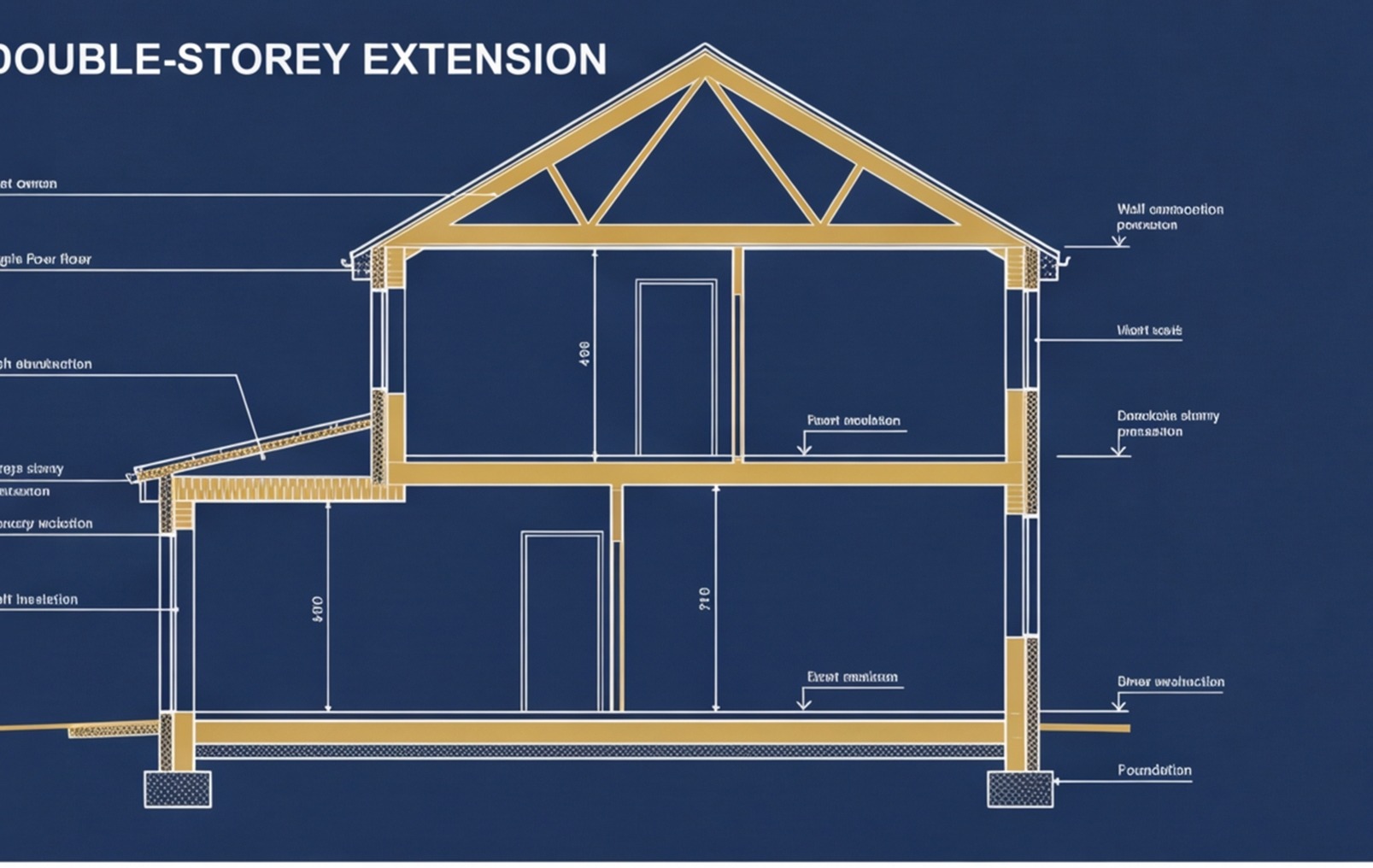
A double-storey extension is more cost-efficient per square metre than a single-storey because the expensive elements — foundations, drainage and roof — are essentially the same for both. You're adding the second floor for the cost of the additional external walls, first-floor joists, staircase and upper floor finishes.
| Spec Level | Notes | Cost Per m² (total GIA) | Example: 40m² GIA (20m² per floor) |
|---|---|---|---|
| Basic | Standard blockwork, uPVC windows, basic finishes | £1,600–£2,000/m² | £64,000–£80,000 |
| Mid range | Good spec windows, quality finishes throughout | £2,000–£2,400/m² | £80,000–£96,000 |
| High spec | Aluminium windows, underfloor heating, premium finishes | £2,400–£3,000/m² | £96,000–£120,000 |
Note that double-storey extensions almost always require full planning permission — Permitted Development rights only cover single-storey rear extensions. Factor in architect fees (typically £3,000–£7,000 for design and planning submission) and structural engineer fees (£1,500–£3,000) when budgeting. Building Control approval is mandatory for all extension work regardless of planning status.
Wraparound Extension Cost Per Square Metre
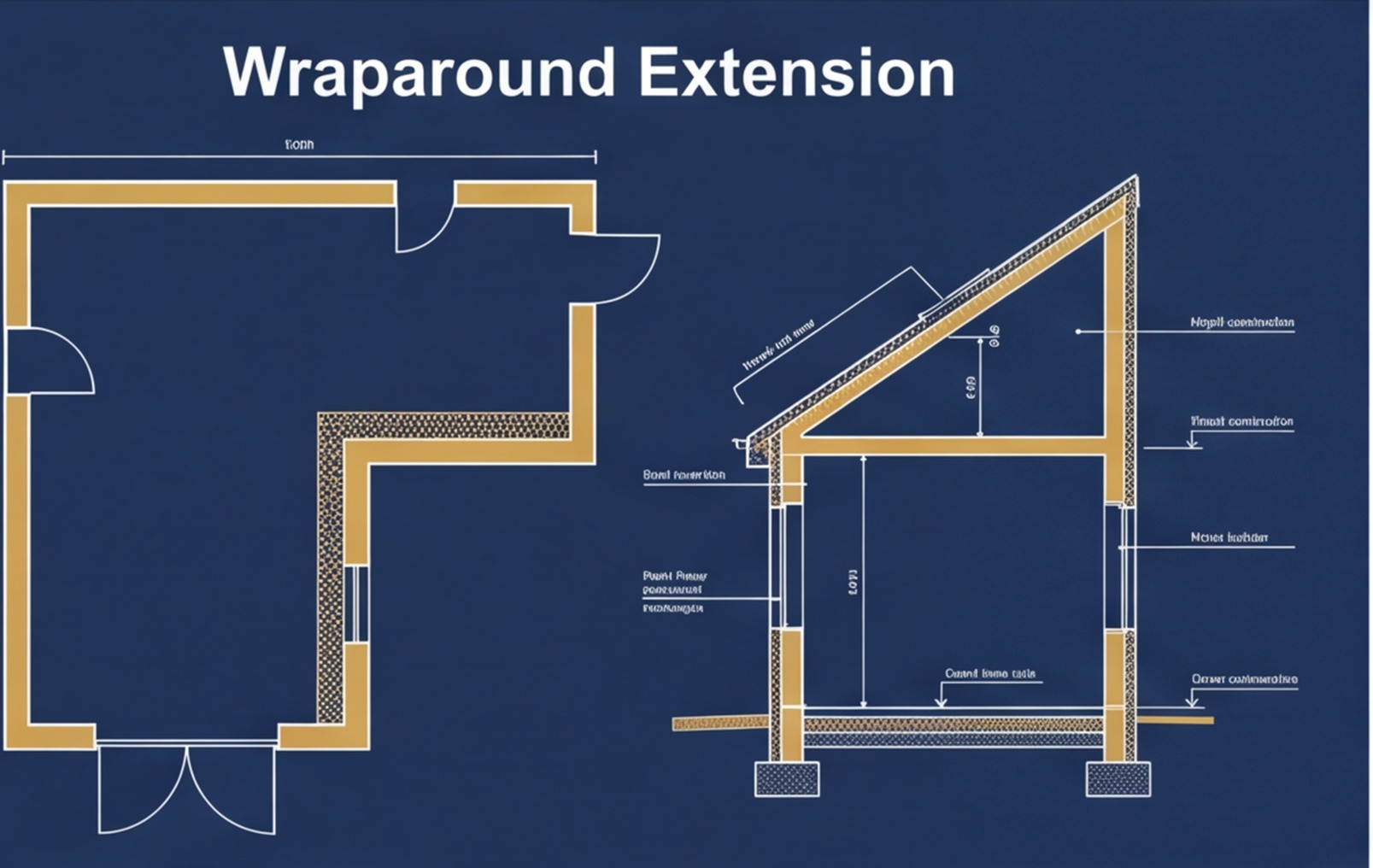
Wraparound extensions — combining a rear extension with a side infill — are more complex to price because they involve two external walls meeting at a corner, often with an L-shaped roof and sometimes a lantern or flat roof over the internal corner area. They're popular on semi-detached houses where the side return alongside the garage or passage can be enclosed.
| Spec Level | Notes | Cost Per m² | Example: 30m² |
|---|---|---|---|
| Basic | Simple L-shape, flat roof, uPVC | £2,000–£2,500/m² | £60,000–£75,000 |
| Mid range | Pitched or flat roof with lantern, aluminium windows | £2,500–£3,000/m² | £75,000–£90,000 |
| High spec | Full glazing, bi-folds, bespoke roof light, underfloor heating | £3,000–£3,800/m² | £90,000–£114,000 |
Wraparounds cost more per square metre than a straightforward rear extension for several reasons. The L-shape creates more linear metres of external wall relative to floor area. The corner junction is complex structurally. The roofline ties into both the rear and side of the house, often requiring careful weatherproofing and flashings. On a semi-detached, you may need a party wall agreement with your neighbour before you can start.
Full Trade Breakdown: What Goes Into the Extension Cost
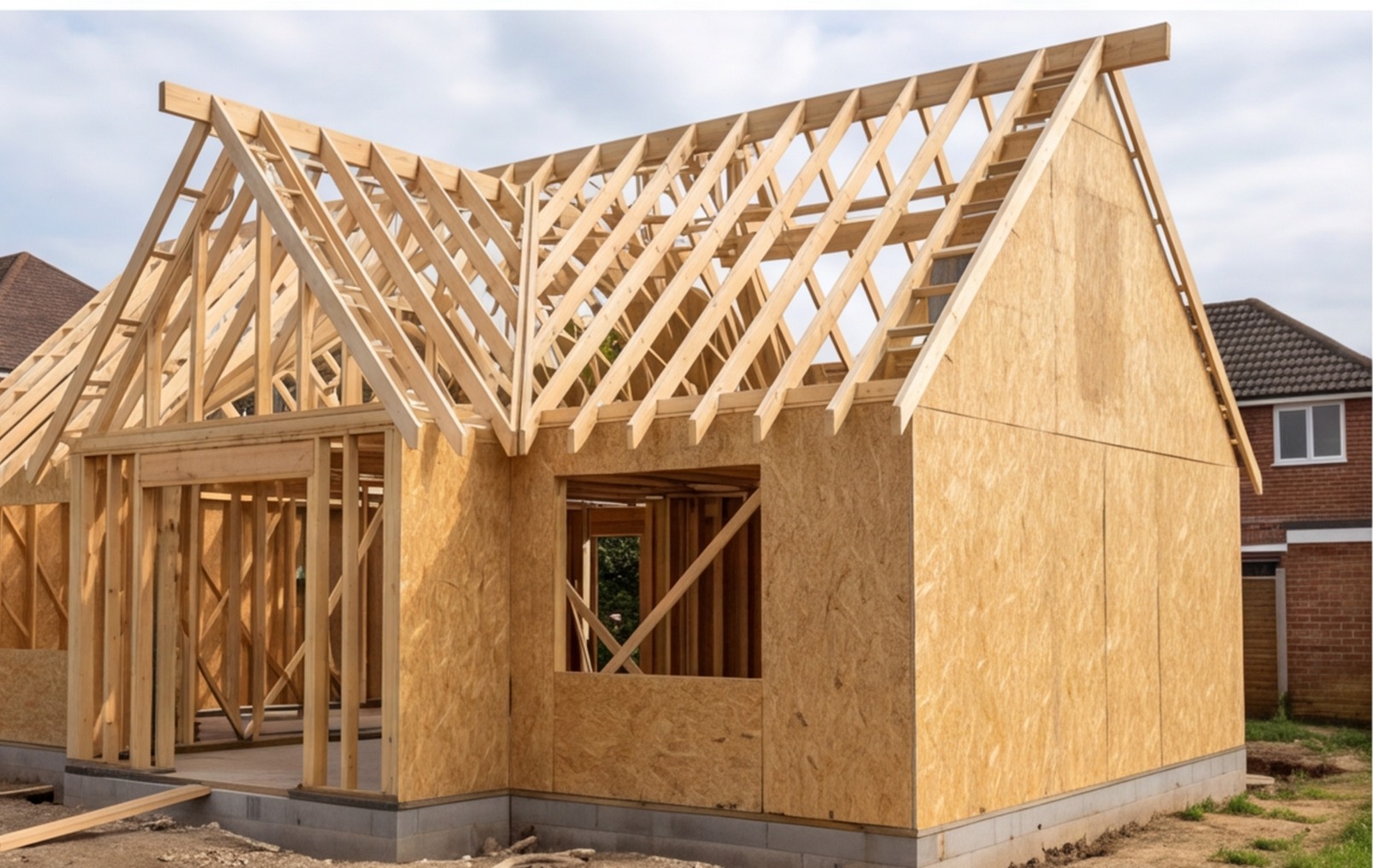
Rather than treating an extension as a single number per square metre, I find it more useful to understand what each trade contributes to the total cost. Here's a breakdown for a typical 20m² single-storey rear extension at mid-range spec:
| Trade / Element | Description | Estimated Cost |
|---|---|---|
| Groundworks & foundations | Excavation, strip or raft foundation, concrete, DPC | £4,500–£7,500 |
| Drainage | Connection to existing drain, new gullies, soakaway if needed | £1,500–£3,000 |
| External walls | Cavity blockwork, insulation, outer leaf | £5,000–£8,000 |
| Structural steelwork | RSJs, padstones for open-plan connection | £2,000–£4,500 |
| Roof structure | Timber rafters/joists, insulation, tiles or flat roof membrane | £4,500–£8,000 |
| Glazing | Aluminium or uPVC windows, bifolds or patio doors | £3,500–£8,000 |
| Electrics — first & second fix | Cables, consumer unit additions, sockets, lighting | £1,800–£3,000 |
| Plumbing (if applicable) | Radiator, UFH, or connection to existing system | £1,500–£3,500 |
| Plastering | Plasterboard, dot and dab, skim finish | £2,000–£3,500 |
| Flooring | Screed or timber deck, floor insulation, finish | £2,500–£4,500 |
| Decoration | Full redecoration of new space plus making good existing | £1,500–£2,500 |
| Internal joinery | Skirting, architrave, internal door to connect space | £800–£1,500 |
| Skip / clearance | Excavation spoil, construction waste | £800–£1,500 |
| Contingency (10%) | £3,300–£6,300 | |
| Total | £35,700–£64,800 |
The wide range reflects genuine variability — ground conditions, distance from drain, roof spec, glazing choice. The only way to tighten the range is to survey the site and measure from drawings. That's exactly what the RenoCalc floor plan cost estimator does — calculate from real geometry, not guesswork.
Extension Type Cost Comparison
When a client is choosing between extension types, the per-square-metre comparison alone doesn't give the full picture. Here's a side-by-side comparison of three common extension configurations on a typical three-bed semi:
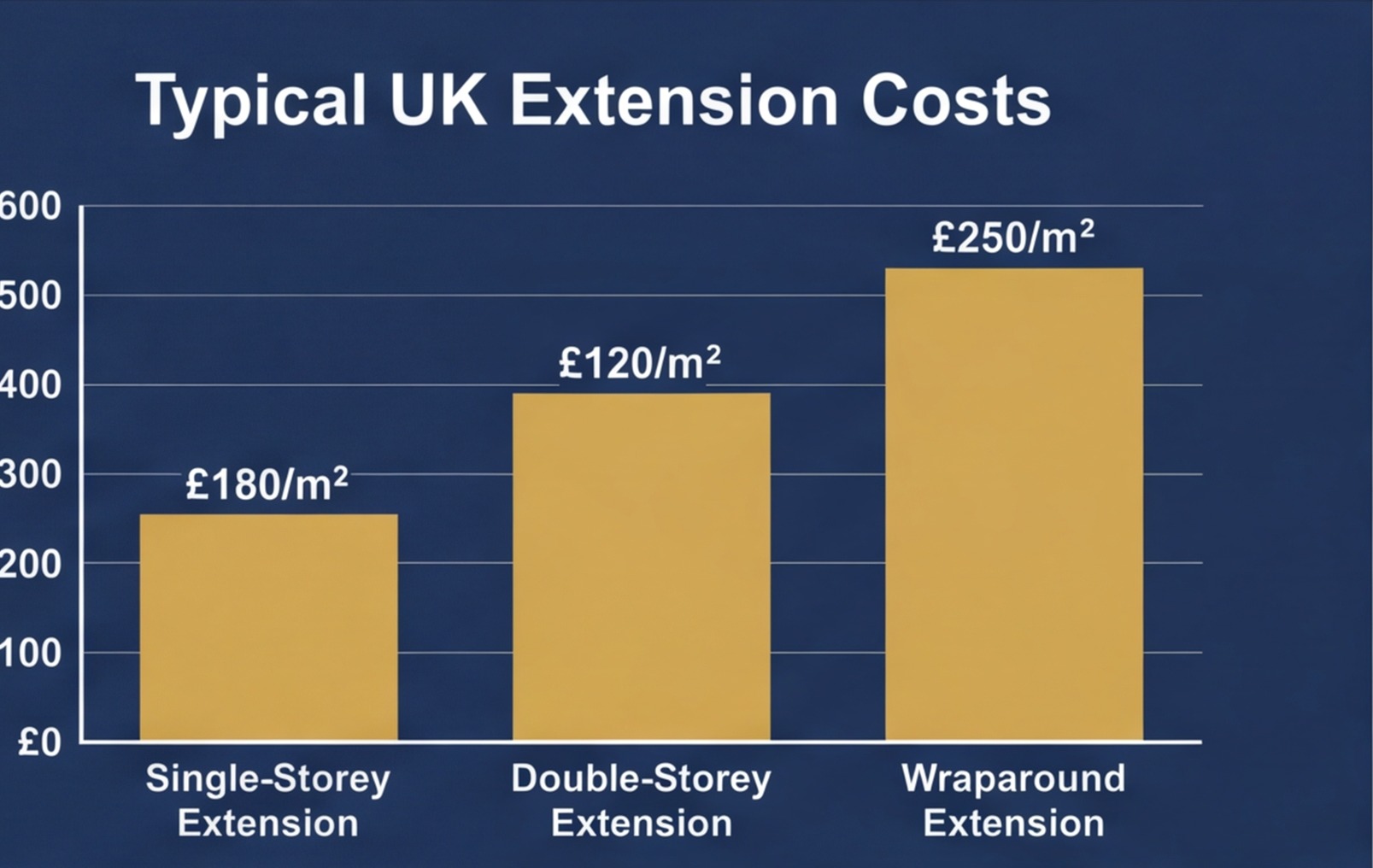
| Extension Type | Floor Area | Cost Per m² | Total Cost (Mid Range) | Space Added |
|---|---|---|---|---|
| Single-storey rear | 20m² | £2,200–£2,600/m² | £44,000–£52,000 | Kitchen-diner or living area |
| Double-storey rear | 40m² GIA | £2,000–£2,400/m² | £80,000–£96,000 | Kitchen-diner + bedroom/bathroom above |
| Wraparound | 30m² | £2,500–£3,000/m² | £75,000–£90,000 | Open-plan kitchen-diner, utility, possible wc |
In value terms, a double-storey extension adding a bedroom typically provides the best return on investment, particularly if the added bedroom takes the property from three to four bedrooms. Speak to a local estate agent before committing to a spec — the return on a premium kitchen-diner extension varies significantly by area.
Getting an Accurate Extension Quote
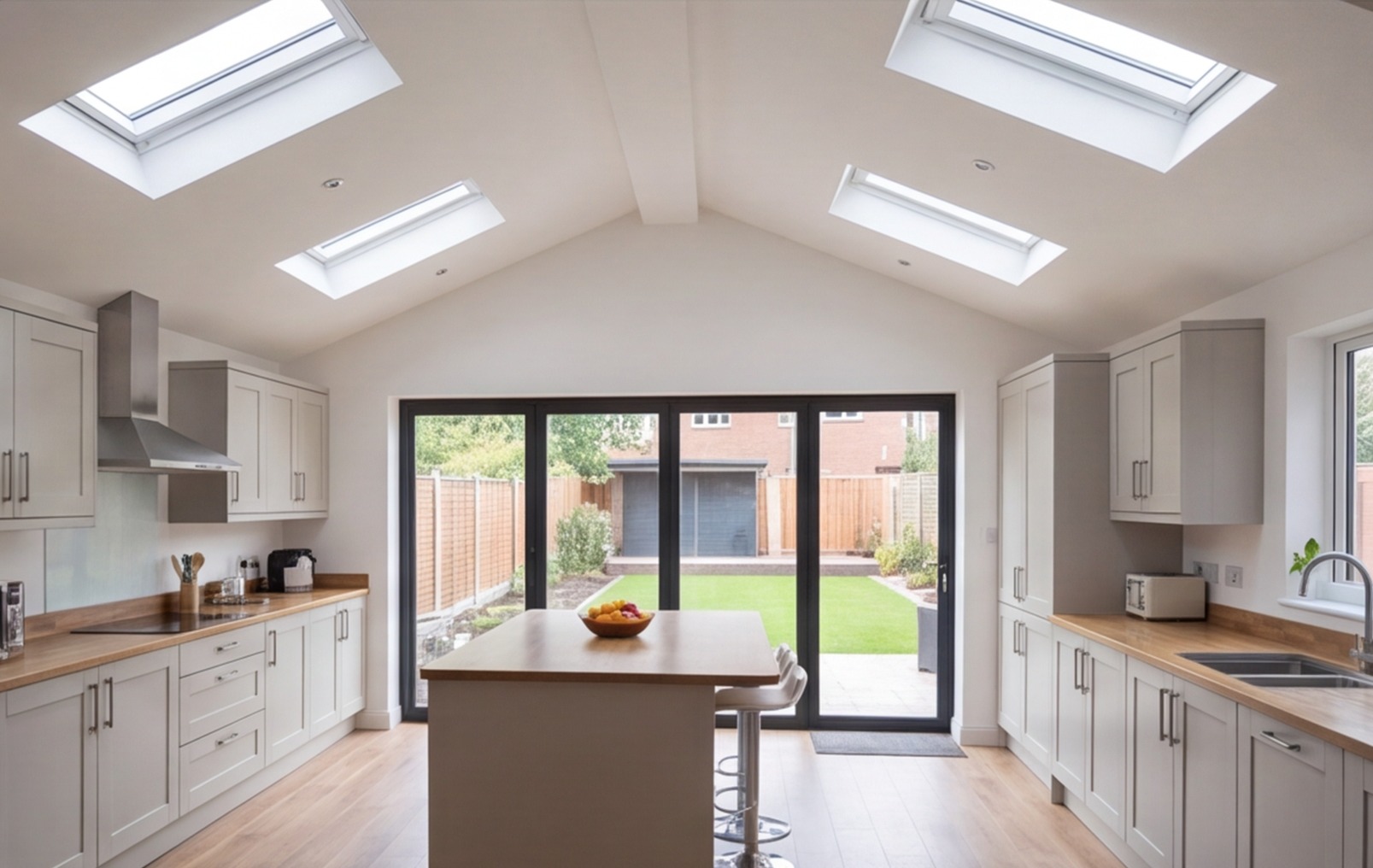
Per-square-metre figures are useful for early-stage budgeting. For anything beyond a rough feasibility check, you need a quote built from actual drawings and a site survey. Here's the process I'd follow:
- Confirm planning before committing to design cost. Check whether your extension falls under Permitted Development or needs planning permission. The Planning Portal permitted development guide explains the limits. Your local authority planning portal can give you a pre-application response for a small fee — worth doing before spending money on architect drawings.
- Engage an architect or architectural technician. Fees typically run £3,000–£8,000 for a single-storey extension depending on complexity. They'll produce planning drawings and Building Regulation drawings — don't quote from planning drawings alone, they don't contain enough structural detail.
- Get a structural engineer to specify the steelwork. Particularly important where you're removing a section of existing wall to connect the extension to the house. Getting the steel wrong is expensive to fix.
- Survey the ground conditions. If there are trees within 10 metres, clay subsoil or any uncertainty about what's underground, commission a soil investigation. It's much cheaper than discovering a problem once the digger is on site.
- Get three trade quotes from the drawings. Compare like for like — check what each quote includes and excludes.
For a faster initial estimate before the architect is engaged, use RenoCalc to upload even a rough sketch plan and generate a trade-by-trade cost breakdown. It won't replace a full professional quote but it gives you a solid starting point before committing to design fees.
For more on estimating renovation and building work, read how to estimate renovation costs before buying and how a bill of quantities breaks down an extension project.
Frequently Asked Questions
What is the average extension cost per square metre in the UK?
A single-storey extension in the UK typically costs £1,800–£2,800 per square metre for a standard build with mid-range finishes. Double-storey extensions run £1,600–£2,400/m² because the additional floor space uses the same foundations and roof, improving the per-square-metre efficiency. Wraparound extensions combining a rear and side element cost £2,000–£3,200/m² due to the complexity of tying in two external walls and managing the corner junction. All figures are Midlands-based 2024–2026 trade rates — add 20–35% for London and the South East.
Why does a double-storey extension cost less per square metre than a single-storey?
The foundations, drainage connections and roof are largely fixed costs that you pay regardless of how many storeys you build. Adding a second storey spreads those fixed costs across more floor area. You're essentially getting the upper floor for the cost of the external walls, first-floor joists, staircase and the upper floor finishes — all of which are cheaper per square metre than groundworks and roofing. This is why adding a second storey to a planned extension almost always improves cost efficiency, assuming the planning permission allows it.
Do I need planning permission for a house extension?
Many extensions fall under Permitted Development rights and don't need planning permission. Single-storey rear extensions up to 4 metres deep on a detached house (3 metres on a semi or terrace) generally qualify. Under the Prior Approval neighbour consultation scheme, you can extend up to 6 metres on a semi or terrace and 8 metres on a detached without full planning permission. Extensions that are side extensions, exceed height limits, are on listed buildings, or are in conservation areas almost always require full planning permission. Always confirm with your local authority before starting work.
What is included in an extension cost per square metre?
A properly calculated extension cost per square metre includes: groundworks and foundations, drainage, external walls (blockwork or timber frame), structural steelwork, roof structure and covering, external windows and doors, internal insulation, first fix electrics, first fix plumbing if applicable, plasterboard and skim, second fix electrics and joinery, floor screed or timber floor deck, and final finishes (flooring, decoration, tiling). What it does not usually include is kitchen or bathroom fitting, VAT, architect fees, planning fees or Building Control fees.
How much does a 20m² single-storey extension cost?
A 20m² single-storey rear extension in the UK Midlands typically costs £36,000–£56,000 at 2024–2026 trade rates. At the lower end you're looking at a straightforward build with standard blockwork walls, a flat or mono-pitch roof, uPVC windows and mid-range internal finishes. The higher end reflects a pitched roof, aluminium glazing, underfloor heating and better-spec internal finishes. A full kitchen fitted within the extension adds £5,000–£12,000 on top. Prices in London and the South East run 20–35% higher.
Does a house extension add value?
Yes, generally. A well-designed and well-built extension typically adds more value than it costs in most UK markets, particularly if it adds a bedroom or creates an open-plan kitchen-diner. The return is strongest in areas with high property values where buyers expect more space. In lower-value areas the return can be lower — it's worth checking sold prices for extended versus non-extended properties in your street before committing to a large extension budget.
What is the cheapest type of extension?
Single-storey flat-roof extensions are typically the most cost-efficient to build per square metre of floor area — simpler structure, less roofing complexity and no staircase required. A basic single-storey lean-to at the rear with a flat or mono-pitch roof can come in at the lower end of the £1,800–£2,800/m² range. Timber-frame construction can also reduce costs compared to traditional blockwork on some site types. The cheapest option structurally isn't always the best value long term — a cheap flat roof poorly constructed will cost more in repairs over the next decade than a pitched roof done right first time.

Get Your Extension Quote in Minutes
Don't guess your extension cost per square metre. Upload your floor plan or sketch to RenoCalc and get a full trade-by-trade extension breakdown — groundworks, structure, roof, glazing, electrics, plastering, finishes — in under three minutes. No site visit needed to get started.
Generate My Extension Quote