Bathroom Renovation Cost London 2026: What a Bathroom Renovation Costs in the Capital
Quick Answer
Bathroom renovation costs in London 2026: budget refit £5,000–8,000, mid-specification £8,000–16,000, luxury £16,000–35,000+. London bathrooms cost 35–50% more than the national average. Key London factors: access restrictions in mansion blocks and period properties, premium sanitaryware expectations in high-value areas, and trade rates 30–45% above national averages.
Bathroom renovation cost London is a different conversation to the rest of the UK — and it's not just about trade rates. The capital has a particular combination of property types, access constraints, and client expectations that consistently push costs above what you'd pay in Birmingham, Manchester or Bristol for a comparable specification.
I've worked on London renovation projects across the full spectrum — from a quick re-suite of a Hackney studio flat to a full wet room conversion in a Kensington townhouse. The variables are real and they matter. In this guide I'll give you London-specific pricing for 2026, explain the factors that drive costs here above the national average, and show you how to use those numbers to budget accurately before you commission anyone.
If you want to understand the national baseline first, read our full UK bathroom renovation cost guide. This page focuses specifically on what changes when you're doing the work in London.
London Bathroom Renovation Prices 2026
These are total project costs — all trades, all materials, labour included — for a full renovation in a standard London property. The ranges reflect the spread between competitive outer London pricing and premium inner London rates.
| Specification Level | Outer London | Inner London | Premium Areas (SW3, W8, W1) |
|---|---|---|---|
| Budget refit (like-for-like, basic tiles) | £5,000–£6,500 | £6,000–£8,000 | £7,500–£10,000 |
| Mid-specification (full renovation, mid-range sanitaryware) | £8,000–£12,000 | £10,000–£16,000 | £14,000–£22,000 |
| Luxury (designer fittings, large-format tiles, wet room) | £16,000–£22,000 | £20,000–£30,000 | £28,000–£45,000+ |
These figures are based on a standard bathroom of 4–6 m² in an existing property. They assume a full renovation: strip-out, replumb, retile, new suite, new shower, electrics and decoration. A cosmetic refresh — paint, new accessories, replacement of a WC — would cost substantially less.
Compared to the national UK average of £5,500–£9,000 at mid-specification, London's £10,000–£16,000 range represents a 40–80% premium at the same spec level. That premium is real and consistent — not an outlier from a single expensive project.
Why London Bathroom Renovation Costs More
Trade Labour Rates
London plumbers, tilers, and bathroom fitters charge 30–45% more than equivalent trades in most of England and Wales. A plumber charging £220–£280 per day in the Midlands will charge £320–£400 per day in inner London — sometimes more. This isn't greed; it reflects the genuine cost of living and operating in London. Van parking alone can add £20–£40 per day in congestion charges, parking fees and ULEZ charges. Trades price to cover these costs.
Material Logistics and Delivery Premiums
Delivering bathroom materials to inner London addresses costs more and is slower than a suburban or rural delivery. Pallet deliveries to central postcodes often attract surcharges. Skip hire in inner London is consistently higher — a standard builders' skip that costs £200–£280 in Coventry or Leeds will cost £350–£500 in central London. These costs end up in the quote.
Expectation of Specification
London property values are high, and clients — and the market — expect bathrooms to reflect that. A mid-range bathroom that would satisfy a buyer in a provincial town may be inadequate for a property in Wandsworth or Islington. This has a real effect on quoting: trades in London tend to quote for a quality of materials and finish that raises the baseline cost even on jobs where clients haven't explicitly specified premium products.
Access and Working Restrictions
Many London properties have access constraints that do not exist elsewhere. Narrow terraces with no side access mean all materials go through the front door. Properties above a shop or commercial ground floor add complexity. Leasehold flats in mansion blocks have managed building restrictions on working hours, lift use and noise. All of these add time, and time adds cost.
Victorian and Edwardian London Properties: Specific Bathroom Challenges
London's housing stock is overwhelmingly Victorian and Edwardian — built between roughly 1850 and 1914. These properties have particular characteristics that directly affect bathroom renovation costs, and any contractor quoting without considering them is likely to underquote and come back for variations.
Original Cast Iron and Lead Pipework
Properties built before the 1960s often retain original cast iron soil stacks and lead supply pipes. Lead supply pipes to a bathroom basin or bath are a live health concern and should be replaced, not capped and worked around. Cast iron soil stacks are heavy and brittle — connecting new plastic waste pipes to them requires specialist joints and care. If the existing stack shows corrosion or cracking (common in properties over 100 years old), replacing a section or the full stack adds £600–£2,000 to the project depending on accessibility.
Solid Brick Walls and Waste Routing
Victorian London properties are typically solid brick construction with no wall cavity. Routing new waste pipes through walls requires core drilling. In a semi-detached or terraced property, the party wall between properties cannot be penetrated — waste runs must find a route through internal walls or floor voids. This restricts where fixtures can be positioned and adds plumbing time to any project that involves repositioning the WC or relocating a shower.
Lime Plaster Substrates
Original lime plaster on Victorian walls is incompatible with direct tile adhesion. It needs to be hacked off and replaced with tile backer board or cement board in all wet zones before any tiling begins. Discovering this at strip-out is common on period properties where the previous bathroom was tiled directly to the plaster decades ago. Budgeting £400–£800 for substrate remediation on a Victorian London property is not excessive — it is likely.
Floor Joist Condition
First-floor bathrooms in Victorian terraces frequently have compromised floor joists directly beneath the bath and WC positions. Decades of minor leaks — from worn tap washers, perished overflow pipes and degraded sealant around the bath — silently rot the timber below. A surveyor's inspection or experienced builder's assessment before strip-out helps set expectations. Replacing two or three joists adds a day to the programme and £400–£900 to the cost.
Mansion Blocks and Leasehold London Flats
London has a very large stock of leasehold flats — purpose-built mansion blocks from the Victorian era, 1930s blocks, post-war blocks, and modern developments. Bathroom renovations in leasehold flats carry additional layers of complexity that most other UK cities simply don't have at the same scale.
Freeholder Consent — Getting It Before You Start
Most long leases require you to obtain written consent from the freeholder or their managing agent before carrying out any alterations to plumbing, drainage or structural elements. A bathroom renovation almost always triggers this requirement. The consent process typically involves submitting a description of the works, contractor details, and sometimes evidence of the contractor's insurance. Allow 2–4 weeks for consent to be granted — and never start work without it. The consequences of an unlicensed alteration — particularly if it causes water ingress to a flat below — can include injunctions, forced reinstatement at your cost, and lease forfeiture proceedings.
Working Hours Restrictions
Many managed London mansion blocks and residential blocks impose working hours restrictions through their building rules. Typical restrictions allow noisy work only between 8am–5pm Monday to Friday, with no work permitted on Sundays and Bank Holidays. Some blocks restrict Saturday working to 9am–1pm. A bathroom renovation that would take 8 working days in an unrestricted property may extend to 10–12 working days in a managed block if the working window is shorter and the contractor needs to demobilise and remobilise more frequently. Discuss working hour constraints explicitly with your contractor before agreeing a programme.
Shared Drainage Stacks
In purpose-built blocks, individual flats typically connect to a shared soil stack. Any connection or modification to the shared stack is a building matter — not purely a flat matter — and needs freeholder approval. If the existing soil stack connection in your bathroom is deteriorated or incorrectly installed, rectifying it may require the managing agent's involvement and potentially the consent of the building's structural engineer. Budget for this administrative time as well as the physical cost of the work.
Lift Use and Common Part Protection
Managed blocks typically require contractors to protect common area flooring, walls and lift interiors during a renovation. Cardboard and hardboard protection, door frame guards and lift padding are standard expectations. In some blocks, materials must be hand-carried rather than trolleyed to avoid damage to the lift mechanism. All of this adds time — time your contractor will either price in or charge as a variation if they discover the restrictions after starting.
Inner vs Outer London: How Much the Postcode Affects the Price
The London premium is not uniform across the capital. There's a meaningful difference between what you'll pay in Zones 1–2 versus Zones 3–6, and understanding this helps you assess whether a quote is proportionate to your location.
Inner London (Zones 1–2)
This covers postcodes including SW1–SW11, W1–W14, N1, E1–E8, EC1–EC4, SE1, WC1–WC2. Trades operating primarily in inner London carry the full London overhead: ULEZ charges every day, congestion zone costs in the central zone, inner London parking costs, and inner London living costs that set their wage floor. Expect trade day rates at the top of the London range — plumbers at £380–£450 per day, tilers at £300–£380 per day.
Outer London (Zones 3–5)
Areas including Bromley, Croydon, Enfield, Harrow, Walthamstow, and Lewisham typically see trade rates 15–25% below inner London. Parking is easier, ULEZ exposure is lower (particularly in zones 5–6), and the pool of available contractors is larger. The result is that a bathroom renovation in Outer London is frequently quoted at a price comparable to the Home Counties or better commuter belt towns rather than central London.
| Trade | Outer London Rate/Day | Inner London Rate/Day | Premium Areas Rate/Day |
|---|---|---|---|
| Plumber | £280–£340 | £340–£420 | £400–£500 |
| Tiler | £220–£280 | £280–£360 | £340–£440 |
| Electrician | £240–£300 | £300–£380 | £360–£460 |
| General builder / fitter | £200–£260 | £260–£340 | £320–£420 |
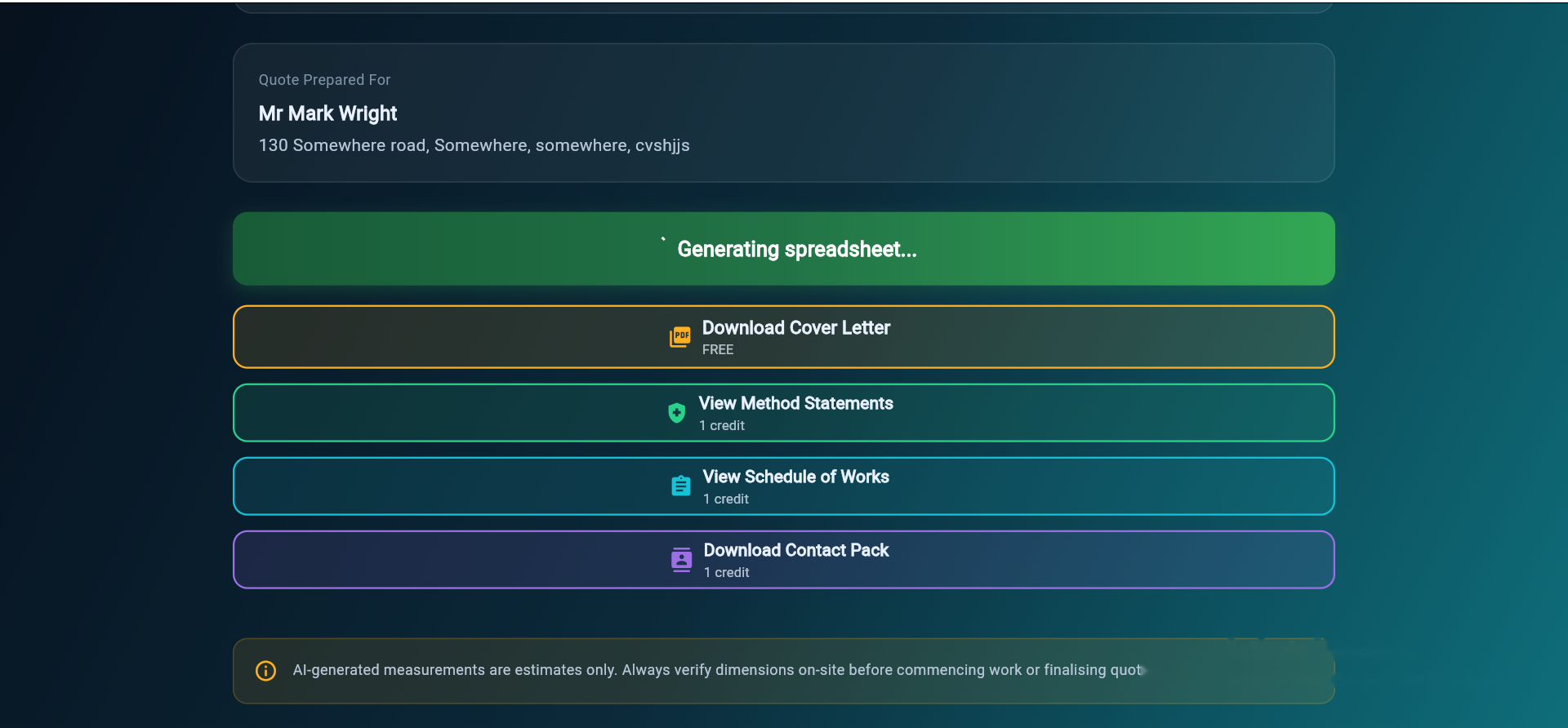
See How RenoCalc Works
Watch RenoCalc turn a floor plan upload into a full bathroom renovation cost estimate — the same process that works for London properties across all specification levels.
Frequently Asked Questions
How much does a bathroom renovation cost in London?
Bathroom renovation costs in London 2026 range from £5,000–8,000 for a budget refit up to £35,000+ for a luxury specification. A mid-range London bathroom — full strip-out, new suite, full tiling, plumbing and electrics — typically costs £8,000–16,000. London trade rates run 30–45% above the national average, and the premium nature of most London properties means mid-range specification is the baseline expectation rather than the exception.
Why is bathroom renovation more expensive in London than the rest of the UK?
Three factors drive London bathroom costs above national averages. First, London trade rates — plumbers, tilers and electricians — are 30–45% higher than equivalent trades in the Midlands or North. Second, access and logistics: deliveries in inner London attract premiums, parking is expensive, and skip hire costs are significantly higher. Third, the age and condition of London housing stock — primarily Victorian and Edwardian terraces and mansion blocks — means older pipework, difficult access, and more remedial work found at strip-out.
Do I need freeholder consent to renovate a bathroom in a London flat?
If you own a leasehold flat — which covers the majority of London flats — you will almost certainly need to notify your freeholder or managing agent before starting a bathroom renovation. Most leases require written consent for alterations to plumbing, drainage or structural elements. Failure to notify can result in breach of lease. Some mansion block leases also restrict working hours, typically to 8am–5pm Monday to Friday, and prohibit noisy work on weekends. Check your lease and write to your managing agent before instructing any contractor.
What are the specific challenges of renovating a bathroom in a Victorian London property?
Victorian London properties — typically 1850–1910 terraces and mansion conversions — present several specific challenges. Original lead or iron pipework may need replacing rather than connecting into, adding £500–£1,500 to the plumbing cost. Solid brick walls complicate waste routing and often require core drilling. Lime plaster substrate needs specialist preparation or replacement with cement board before tiling. Floor joists from this era are often partially rotted around the bath and WC positions — budget a contingency of at least 15% for discoveries at strip-out.
How do bathroom renovation costs differ between inner and outer London?
Inner London (zones 1–2) commands the highest trade rates, with premium areas like Kensington, Chelsea and Mayfair at the top end. Outer London (zones 3–6) — areas such as Bromley, Croydon, Enfield and Harrow — typically sits 15–25% below inner London pricing, broadly comparable to home counties pricing. The divide is less about geographical distance and more about trade availability: inner London trades are in high demand and price accordingly, while outer London has a more competitive supply of available contractors.
Getting an Accurate London Bathroom Renovation Cost
London bathroom renovation costs are genuinely higher than anywhere else in the UK, and for specific reasons — not simply because London tradespeople are more expensive. The age and type of London housing stock, the access and logistics constraints, and the implied specification expectations in a high-value property market all contribute to a real and consistent premium.
If you are budgeting for a London bathroom renovation, use the ranges in this guide as your starting point. Add a 15% contingency for period properties, add 10% for leasehold flats in managed blocks, and be realistic about specification — in a London property, going in at budget specification often creates a mismatch with the rest of the building that reduces rather than protects your investment.
Get Your London Bathroom Renovation Estimate
Upload your floor plan to RenoCalc and get a full element-by-element cost breakdown. Useful for benchmarking London contractor quotes before you sign anything.
Start Your Free Estimate