Bathroom Renovation Cost Bristol 2026: What a Bathroom Renovation Costs in Bristol
Quick Answer
Bathroom renovation costs in Bristol 2026: budget refit £3,800–7,000, mid-specification £7,000–13,000, luxury £13,000–28,000. Bristol has seen above-average house price growth, and bathroom renovation costs have followed. Clifton, Redland, and Westbury Park command premium trade rates; areas like Easton and Bedminster offer more competitive pricing.
Bathroom renovation cost in Bristol is not a simple number — and the variation within the city itself is significant. A bathroom renovation in Clifton is not the same conversation as the same job in Bedminster or Knowle. Bristol's property market has been one of the strongest performers in England over the past decade, and trade rates have followed the housing market upward, particularly in the premium BS6, BS8 and BS9 postcodes.
Bristol also has a distinctive housing stock: an enormous number of Victorian terraces, a substantial Georgian and Regency quarter in and around Clifton, and some of the most characterful leasehold conversions in the South West. Each of these property types has specific implications for bathroom renovation costs that go beyond the headline trade day rate.
This guide gives you real 2026 bathroom renovation costs for Bristol, broken down by area and specification. For the national context, see our UK bathroom renovation cost guide. This page focuses on what is specific to Bristol.
Bristol Bathroom Renovation Prices 2026
These are total project costs for a full bathroom renovation — strip-out, new suite, replumb, retile, electrics and decoration — in a typical Bristol property. The ranges reflect the spread from competitive south Bristol pricing to premium north Bristol rates.
| Specification Level | South/East Bristol (BS3, BS5, BS14) | North Bristol / BS7 / BS9 | Clifton / Redland (BS6, BS8) |
|---|---|---|---|
| Budget refit (like-for-like, basic tiles) | £3,800–£5,500 | £4,500–£6,500 | £5,500–£7,500 |
| Mid-specification (full renovation, mid-range sanitaryware) | £7,000–£10,000 | £8,500–£12,000 | £10,000–£15,000 |
| Luxury (designer fittings, large-format tiles, wet room) | £13,000–£18,000 | £15,000–£22,000 | £18,000–£28,000 |
At national average prices (see the UK guide), a mid-range bathroom renovation typically runs £5,500–£9,000. Bristol's equivalent of £7,000–£13,000 reflects a 20–45% premium above the national average — less than London, but more than cities such as Sheffield, Leicester or Stoke. This premium is the product of strong housing demand and a relatively contained pool of quality trades.
Bristol's Trade Market in 2026
Bristol has a healthy construction sector, but demand outpaces supply for skilled trades in the residential renovation market — particularly for plumbers and experienced bathroom fitters. The city's property market has attracted significant buy-to-let investment and owner-occupier renovation activity since the early 2010s, and the trade base has not expanded proportionally to meet demand.
What Good Trades Charge in Bristol
For a bathroom renovation in Bristol in 2026, expect the following trade day rates as a baseline:
| Trade | Bedminster / Easton | Bishopston / Horfield | Clifton / Redland |
|---|---|---|---|
| Plumber | £220–£280 | £250–£310 | £280–£360 |
| Tiler | £180–£240 | £200–£260 | £230–£300 |
| Electrician | £200–£260 | £220–£280 | £250–£320 |
| General builder / fitter | £170–£220 | £190–£240 | £210–£270 |
Note that these rates are for established, insured tradespeople with good reviews. Cheaper labour is available but carries proportionally higher risk in a bathroom — a room where water management is everything. A tiler who saves you £200 but leaves inadequately tanked shower walls will cost you £3,000–£8,000 in remedial work when water gets behind the tiles.
Waiting Times
Good Bristol bathroom tradespeople are typically booked 4–8 weeks in advance. The temptation to use the first available contractor rather than waiting for a recommended one is real — particularly if you are renting out a property and the bathroom is out of commission. Resist it. The cost of remedial work on a poorly executed bathroom renovation consistently exceeds any saving from using a cheaper or quicker contractor.
Bristol's Victorian Terraces: What the Plumbing Really Looks Like
The majority of Bristol's residential housing stock is Victorian terracing, predominantly dating from 1870–1910. Bedminster, Easton, St Pauls, St Andrews, Bishopston, Horfield, Redland, and significant parts of Clifton are defined by these properties. They are characterful, popular and frequently expensive to renovate properly because the original building services are now 110–150 years old.
Plumbing in Bristol's Victorian Stock
The plumbing situation in an untouched or only partially updated Victorian Bristol terrace is typically one of the following:
- Original lead supply pipes: Lead pipework to the bathroom basin, bath or toilet cistern is still found in Bristol Victorian properties where the bathroom was added in the early twentieth century and never fully upgraded. Lead pipes must be replaced — there is no acceptable alternative — adding £600–£1,200 to the plumbing scope on a typical Victorian bathroom renovation.
- Original clay or cast iron waste: The soil stack and horizontal waste runs in Victorian Bristol properties are often original clay or cast iron. Clay is brittle and prone to partial blockage from root ingress or fracture over time. Cast iron corrodes. Before committing to a like-for-like bathroom renovation in a Victorian Bristol property, it is worth having an experienced plumber inspect the waste runs as part of the specification process rather than after strip-out.
- Partially updated hybrid systems: The most common situation — a mix of copper supply pipes installed at various points in the twentieth century, connected to the original clay or iron waste, with various patches and repairs over the decades. This is manageable but needs assessment before pricing.
Back Additions and Split-Level Layouts
Many Bristol Victorian terraces have a back addition — a single-storey or two-storey rear extension built contemporaneously with the main house. Bathrooms in back additions often have lower ceiling heights, different floor structures (sometimes concrete rather than suspended timber), and complicated waste routing because the pipework has to navigate the junction between the original house and the addition. Budget additional plumbing time and contingency for any bathroom in a Bristol back addition.
Georgian Clifton: Leasehold Flats and Listed Building Considerations
Clifton contains one of the most impressive concentrations of Georgian and Regency architecture outside Bath, with large terraces and crescents including Royal York Crescent, Caledonia Place, and the Clifton Suspension Bridge surroundings. Many of these properties are divided into leasehold flats — and many are also Listed Buildings, which adds a layer of complexity that does not apply to the Victorian terraces elsewhere in Bristol.
Leasehold Consent Requirements
As with London mansion blocks, if you own a leasehold flat in a Clifton Georgian conversion, your lease will almost certainly require you to obtain freeholder or managing agent consent before carrying out a bathroom renovation. The consent process in Bristol-based managed buildings typically takes 2–4 weeks and may require the submission of contractor details, a description of works, and evidence of public liability insurance for all trades involved.
Listed Building Consent
If the building containing your flat is Grade I or Grade II Listed — which applies to a significant proportion of the Clifton Georgian terraces — certain works within the flat may require Listed Building Consent from Bristol City Council. Internal works that alter the character of a Listed Building — including changes to original fireplaces, historic joinery, original cornices, or the layout of principal rooms — require consent. A bathroom renovation that is entirely within a room that was historically a bathroom (rather than a bedroom or reception room converted into a bathroom) is generally less likely to trigger a consent requirement, but it is worth checking with Bristol City Council's planning department before starting if the building is Listed.
Party Wall Considerations
In Clifton Georgian terraces converted into flats, party wall issues can arise if bathroom renovation work involves cutting into a wall that is shared with an adjoining property. The Party Wall etc. Act 1996 applies and requires formal notice to be served on the adjoining owner. A solicitor or party wall surveyor can advise on whether your specific works trigger the Act.
Eco and Sustainable Bathroom Options in Bristol
Bristol consistently features in surveys of the UK's most environmentally aware cities — it was European Green Capital in 2015 and has maintained a strong sustainability culture in both its public sector and residential renovation market. This has real effects on what Bristol homeowners request in bathroom renovations and what the local supply chain can provide.
Water Efficiency
Low-flow shower heads and tap aerators are a minimal cost addition — typically £50–£150 more than standard products — and reduce water consumption by 30–50% compared to older fixtures. Dual-flush or rimless WCs with a 4/2.6 litre flush (meeting current Water Regulations) are now standard in mid-range and above renovations and carry no significant cost premium over standard cisterns.
Responsible Materials
Bristol homeowners frequently enquire about reclaimed tiles, natural stone with a certified supply chain, and products from manufacturers with demonstrable environmental credentials. Reclaimed Victorian encaustic tiles — appropriate for period Bristol properties — are available from Bristol salvage merchants and can be cost-neutral or even cheaper than new equivalent products. Certified natural stone (Rainforest Alliance or equivalent) carries a small premium but is available through Bristol's better bathroom suppliers.
Smart Heating Controls
Electric underfloor heating with a smart thermostat — controlling heat by time and occupancy rather than running continuously — is both the most practical underfloor heating option for a bathroom renovation and aligns with energy efficiency goals. A smart-controlled electric mat system for a standard bathroom adds £350–£700 to the project cost and reduces energy waste compared to a dumb thermostat system.
Does Going Eco Add Cost?
For most practical eco choices — low-flow fittings, dual-flush WC, smart underfloor heating, reclaimed or sustainably sourced tiles — the cost premium is modest (typically 5–15% on the affected line items) or negligible. The perception that an eco bathroom must be significantly more expensive than a standard one is generally not accurate for the mainstream choices available in Bristol in 2026.
See How RenoCalc Works
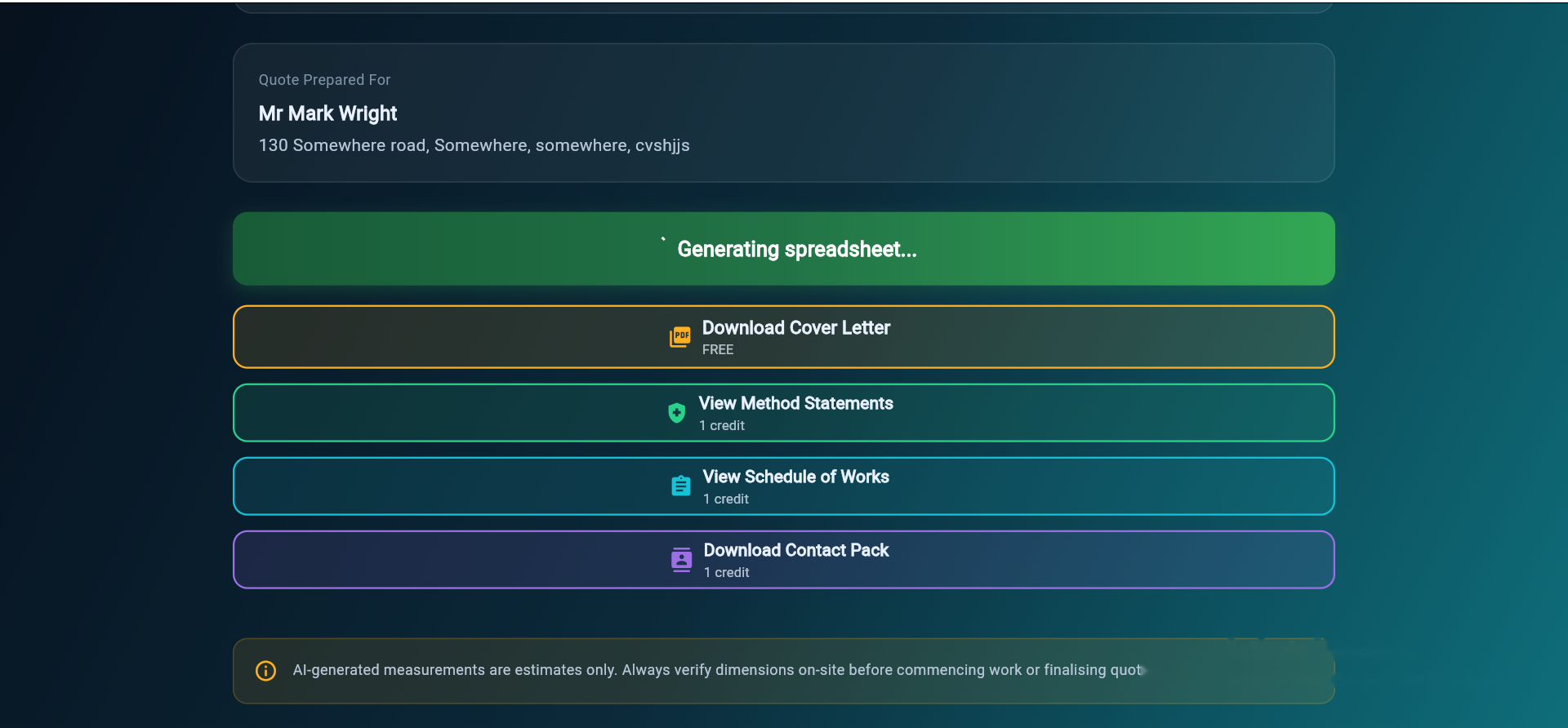
Watch RenoCalc turn a floor plan upload into a full bathroom renovation estimate — the same process works for Bristol properties across all specification levels and areas.
Frequently Asked Questions
How much does a bathroom renovation cost in Bristol?
Bathroom renovation costs in Bristol 2026 range from £3,800–7,000 for a budget refit up to £28,000 for a luxury specification. A mid-range Bristol bathroom — full strip-out, new suite, full tiling, plumbing and electrics — typically costs £7,000–13,000. Bristol has seen stronger-than-average trade rate growth since 2022, driven by high property demand and a competitive construction market, particularly in BS6, BS8 and BS9 postcodes.
Why is Clifton more expensive for bathroom renovation than other parts of Bristol?
Clifton (BS8) and adjacent areas including Redland (BS6) and Westbury Park command premium trade rates for two reasons. First, these are high-value areas and tradespeople price to the market — the same contractor will price 15–25% higher in Clifton than in Knowle or Bedminster, reflecting both demand and implied quality expectations. Second, Clifton has a significant stock of Georgian and Regency properties — many converted into leasehold flats — with the same access, plumbing and substrate challenges as premium London properties.
What specific challenges do Bristol Victorian terraces present for bathroom renovation?
Bristol's Victorian terraces — dominant in Bedminster, Bishopston, Easton, St Andrews and Redland — typically have original or only partially upgraded plumbing. Common challenges include: original lead supply pipes requiring replacement; cast iron or clay waste pipes that may be partially blocked or cracked; lime plaster walls needing removal and re-boarding before tiling; and narrow rear access making skip placement and material delivery difficult. Budget a 15% contingency on any Victorian Bristol bathroom renovation.
Are eco or sustainable bathroom options popular in Bristol, and do they cost more?
Bristol consistently ranks as one of the UK's most environmentally conscious cities, and this extends to bathroom renovation choices. Low-flow shower heads, dual-flush WCs, recycled or reclaimed tiles, and smart thermostat underfloor heating are frequently requested. Most practical eco choices carry a modest 5–15% cost premium on the affected line items, or in some cases (reclaimed tiles from local salvage) no premium at all. The perception that an eco bathroom must be significantly more expensive is generally not accurate for the mainstream choices available in Bristol.
How do Bristol bathroom renovation costs compare to Bath and Cardiff?
Bristol trade rates are broadly similar to Bath, with Bath's Georgian areas potentially commanding slightly higher rates due to stricter planning and heritage constraints. Cardiff generally prices 10–20% below Bristol at equivalent specification — Welsh trade labour rates are lower and the property market has historically been less heated. For a standard mid-range bathroom renovation, you might pay £7,000–10,000 in Cardiff versus £8,000–13,000 in Bristol.
Getting an Accurate Bristol Bathroom Renovation Cost
Bristol bathroom renovation costs reflect a city with strong housing demand, a characterful but ageing housing stock, and a premium market in its northern and western areas that operates on different terms to the city as a whole. The variation between a budget bathroom renovation in Bedminster and a luxury specification in Clifton is wide — and even within those categories, the specific property type and its condition at strip-out can move the final cost substantially.
The best approach is to get an estimate before inviting contractor quotes — so that when quotes come in you know whether they are reasonable, high, or suspiciously low. A suspiciously low quote on a Victorian Bristol terrace bathroom almost always means the contractor has not fully accounted for the substrate and plumbing work that period properties require.
Get Your Bristol Bathroom Renovation Estimate
Upload your floor plan to RenoCalc and get a full element-by-element cost breakdown. See what your Bristol bathroom renovation should cost before you engage a single contractor.
Start Your Free Estimate