Full House Renovation Cost London 2026: What a Complete Renovation Costs in the Capital
Quick Answer
A full house renovation in London 2026 costs £120,000–280,000+ for a standard 3-bedroom Victorian or Edwardian terrace depending on specification. London renovation costs run 35–50% above the national average. Per m²: standard spec £1,200–2,000/m², good spec £2,000–3,000/m², premium £3,000–5,000+/m².
London renovation costs operate in a different category to the rest of the UK. It is not simply that labour is more expensive — though it is, typically 25–40% above national average trade rates. It is the accumulation of London-specific costs that catch people out: party wall surveyors for almost every structural job, street scaffolding licences that add £600–£1,500 and 4–8 weeks lead time, parking suspensions, skip permits, and the planning requirements that come with London's density of conservation areas. A full house renovation budget that ignores these additions will be wrong by tens of thousands of pounds.
I have managed renovation projects across London for over three decades. This guide breaks down what a full gut-and-refurb of a 3-bedroom Victorian or Edwardian terrace — the most common London renovation scenario — actually costs in 2026, with specific attention to the London factors that national cost guides consistently understate.
Total Cost by Specification Level
The table below covers a full gut-and-refurb of a 3-bedroom Victorian or Edwardian terrace at approximately 90 m² in Greater London. "Full renovation" here means stripped back to structure: new electrics, new heating, replastered throughout, new kitchen and bathrooms, redecorated, new flooring. These are construction costs; fees, party wall, scaffolding licences, contingency and temporary accommodation are covered separately below.
| Specification Level | London Cost Range | UK Average (for comparison) | What's Included |
|---|---|---|---|
| Budget / investor spec | £120,000–£160,000 | £80,000–£110,000 | Functional lettable standard. Mid-market kitchen and bathrooms, rewire, combi boiler and radiator heating, full replaster, redecorate, LVT and carpet flooring. |
| Standard / owner-occupier spec | £160,000–£220,000 | £110,000–£150,000 | Quality kitchen, two well-specified bathrooms, new timber sash windows where required, rewire, underfloor heating to ground floor, engineered timber or high-spec LVT, full replaster, professional decoration. |
| High spec / premium finish | £220,000–£280,000+ | £150,000–£185,000+ | Bespoke kitchen, premium bathrooms with stone tile and freestanding bath, wet room, full underfloor heating, smart home system, structural alterations (rear knockthrough, side return), premium finishes throughout. |
These figures carry a 35–50% premium over UK national average costs. The gap widens as specification rises: at premium specification level, London premium trades — bespoke joiners, high-end kitchen fitters, stone specialists — operate in a market almost entirely detached from national pricing.
London Renovation Cost per m²
Cost per m² is the most reliable benchmark for comparing renovation projects, because it normalises for property size. The figures below are for full gut-and-refurb renovation — not cosmetic refreshes, not extensions separately, but complete renovation of existing floor area.
| Specification | Cost per m² (London) | Typical 90 m² Total |
|---|---|---|
| Standard spec | £1,200–£2,000/m² | £108,000–£180,000 |
| Good spec | £2,000–£3,000/m² | £180,000–£270,000 |
| Premium spec | £3,000–£5,000+/m² | £270,000–£450,000+ |
For context, the national average for standard spec renovation sits at £1,000–£1,400/m². London's premium reflects higher trade day rates (£280–£450/day for skilled trades in London versus £200–£350 nationally), higher material delivery and storage costs, and the additional compliance costs of working in a dense urban environment.
Trade-by-Trade Cost Breakdown
The breakdown below reflects London trade rates in 2026. Every figure shown is for a 3-bedroom terrace at approximately 90 m².
| Trade Package | Budget Spec | Standard Spec | High Spec | Notes |
|---|---|---|---|---|
| Strip-out and demolition | £4,000–£6,500 | £5,500–£8,500 | £7,000–£12,000 | London skip hire and permits, labour to clear, asbestos allowance on pre-1985 properties |
| Structural and damp-proof work | £6,000–£12,000 | £10,000–£22,000 | £18,000–£45,000+ | Structural engineer's report, steels, padstones, damp treatment; range depends heavily on scope of alterations |
| Roof — repair or full replacement | £4,500–£9,000 | £8,000–£18,000 | £14,000–£30,000 | Victorian slates, repointing, chimney stacks; scaffolding licence adds £600–£1,500 to all roof work in London |
| Windows and external doors | £6,000–£10,000 | £10,000–£20,000 | £20,000–£45,000+ | Timber sash required in conservation areas; uPVC may need planning consent in London CAs |
| Kitchen — supply and fit | £12,000–£22,000 | £22,000–£45,000 | £45,000–£120,000+ | London kitchen supply and fitting costs significantly above national average; bespoke joinery commands a substantial premium |
| Bathrooms — supply and fit (x2) | £8,000–£14,000 | £14,000–£28,000 | £28,000–£65,000 | Family bathroom and en suite; stone tile and specialist wet rooms at the top end |
| Full rewire | £6,000–£9,500 | £7,500–£12,000 | £10,000–£18,000 | Consumer unit, all circuits, sockets, switches, lighting; smart home integration at premium level |
| Plumbing and heating system | £10,000–£18,000 | £16,000–£30,000 | £24,000–£50,000 | New combi boiler or heat pump, full radiator or UFH system, cylinder where required |
| Plastering — full replaster | £9,000–£14,000 | £12,000–£18,000 | £14,000–£24,000 | Dot-and-dab or sand and cement with skim throughout; lime plaster in conservation areas adds significant cost |
| Decorating — full internal | £5,500–£9,000 | £8,000–£14,000 | £12,000–£25,000+ | Prep, prime, two coats; specialist finishes and premium paints at upper end |
| Flooring — throughout | £6,500–£11,000 | £10,000–£18,000 | £18,000–£40,000+ | LVT and carpet at budget; engineered timber, stone tile, bespoke carpet at premium |
| Carpentry — joinery and stairs | £4,500–£7,500 | £7,000–£12,000 | £12,000–£28,000 | Skirting, architrave, internal doors, staircase; bespoke joinery commands large London premium |
| Total construction (excl. London-specific costs, fees, contingency) | £82,000–£122,000 | £130,000–£207,000 | £222,000–£497,000+ | Add London-specific costs below, plus 15% for fees and contingency |
London-Specific Costs
The following costs are either unique to London or materially higher in London than in the rest of the UK. They are frequently underestimated in renovation budgets prepared using national cost guides.
Party Wall Costs
The Party Wall etc. Act 1996 requires property owners to notify their neighbours before carrying out certain works affecting a shared wall or boundary. In London terraced streets, this applies to the overwhelming majority of structural renovations: removing chimney breasts, inserting RSJ beams, underpinning, excavating for a rear extension, or cutting into shared walls.
The process requires written notice to be served on each affected neighbour at least one to two months before work begins. If a neighbour consents in writing, no surveyor is required. If they do not respond or serve a counter-notice of dissent, each party must appoint a party wall surveyor (or agree on a single agreed surveyor) and an Award must be drawn up. In practice, on a London terrace, budget £1,200–£3,500 per affected neighbour for party wall surveyor fees. With two neighbours on a mid-terrace, that is £2,400–£7,000 in party wall costs alone — before construction starts.
Scaffolding and Street Licences
Almost every London terrace requires scaffolding for roof work, fascia and soffit replacement, or any external upper-storey work. Because these properties are built to the back of pavement, scaffolding must overhang or occupy the public highway. This requires a Section 169 licence from the local authority highway department — a separate process from the Building Regulations or planning process, with its own lead times and fees.
In practice: scaffold erection and hire costs £3,500–£8,000. The street licence costs £600–£1,500 depending on the borough (Westminster and the Royal Borough of Kensington and Chelsea are typically higher). Applications require 4–8 weeks lead time and must be factored into the project programme in advance. Failing to licence scaffold on the highway is a criminal offence.
Parking Suspensions
Skip placement and material deliveries in London almost always require parking suspension bays to be ordered from the council. Budget £200–£600 per suspension per week, depending on the borough. Inner London boroughs are significantly more expensive than outer boroughs. Skip hire in London also costs more than nationally: a standard 8-yard skip runs £350–£600 in London versus £200–£350 nationally.
Congestion and ULEZ Costs
Trades working in inner London factor in Congestion Charge (£15 per day) and ULEZ compliance into their day rates. If tradespeople are bringing older vehicles, they may price in the ULEZ charge (£12.50/day) or pass it on directly. This is a real cost that is embedded in London trade pricing and explains part of the day rate premium over national averages.
Temporary Accommodation in London
Living elsewhere for 20–28 weeks of a full renovation is the norm. In London, short-term rental costs £2,500–£5,500 per month — substantially above the national average of £1,500–£3,500. Over a 24-week full renovation, this adds £15,000–£33,000 to the total project cost. It is frequently the largest invisible line item in a London renovation budget.
| Cost Item | Typical London Range |
|---|---|
| Party wall surveyor fees (per affected neighbour) | £1,200–£3,500 |
| Street scaffolding licence (Section 169) | £600–£1,500 |
| Scaffold erection and hire (6–12 weeks) | £3,500–£8,000 |
| Parking suspension bays (per week) | £200–£600 |
| Skip hire — 8-yard (per skip) | £350–£600 |
| Temporary accommodation (per month) | £2,500–£5,500 |
| Structural engineer (London rate) | £1,000–£2,500 |
| Contingency (10–15% of construction cost) | £16,000–£42,000 on typical budget |
Heritage and Conservation Area Considerations
London has more designated conservation areas than any other city in England — over 1,000, covering large swathes of inner London and significant portions of many outer boroughs. Working within a conservation area does not prevent renovation, but it imposes material and process constraints that affect cost, programme, and scope.
What Changes in a Conservation Area
Permitted development rights — the ability to make certain changes without planning permission — are restricted in conservation areas. Specifically, in London conservation areas you typically cannot: replace original timber sash windows with uPVC; change the front elevation materials; install external cladding; add roof structures visible from public areas; or alter boundary walls and gates on primary elevations without specific planning consent. Many of these works require a planning application even though they would be permitted development in an ordinary residential street.
The Cost of Conservation-Compliant Materials
Where planning requires like-for-like restoration or use of traditional materials, costs increase substantially. Timber sash windows (rather than uPVC casements) cost 40–80% more to supply and 20–30% more to fit. Lime mortar repointing (rather than sand cement) takes longer and costs more. Original period features — cast iron radiators, period cornice, original floorboards — require specialist restoration rather than replacement. Budget an additional 15–30% on externally visible elements when working in a conservation area.
Planning Applications and Lead Times
A conservation area planning application for external alterations takes 8–13 weeks from submission to decision. Add 4–6 weeks for drawing preparation. The application fee is £258 for householder applications; designer fees to prepare the application package and heritage statement run £1,500–£4,000. Factor these lead times into any project programme — attempting to start construction before consent is granted is a common and expensive mistake.
Listed Buildings
A small number of properties in London are listed (Grade I, II* or II). Listed building consent is required for any works affecting the character of the building, both internal and external. This process is more stringent than conservation area consent and carries significant penalties for non-compliance. If you are considering a listed building renovation, budget substantially more for professional advice: heritage architects charge £150–£350/hour and listed building consent applications are routinely complex.
RenoCalc: London Renovation Quoting in Under 3 Minutes
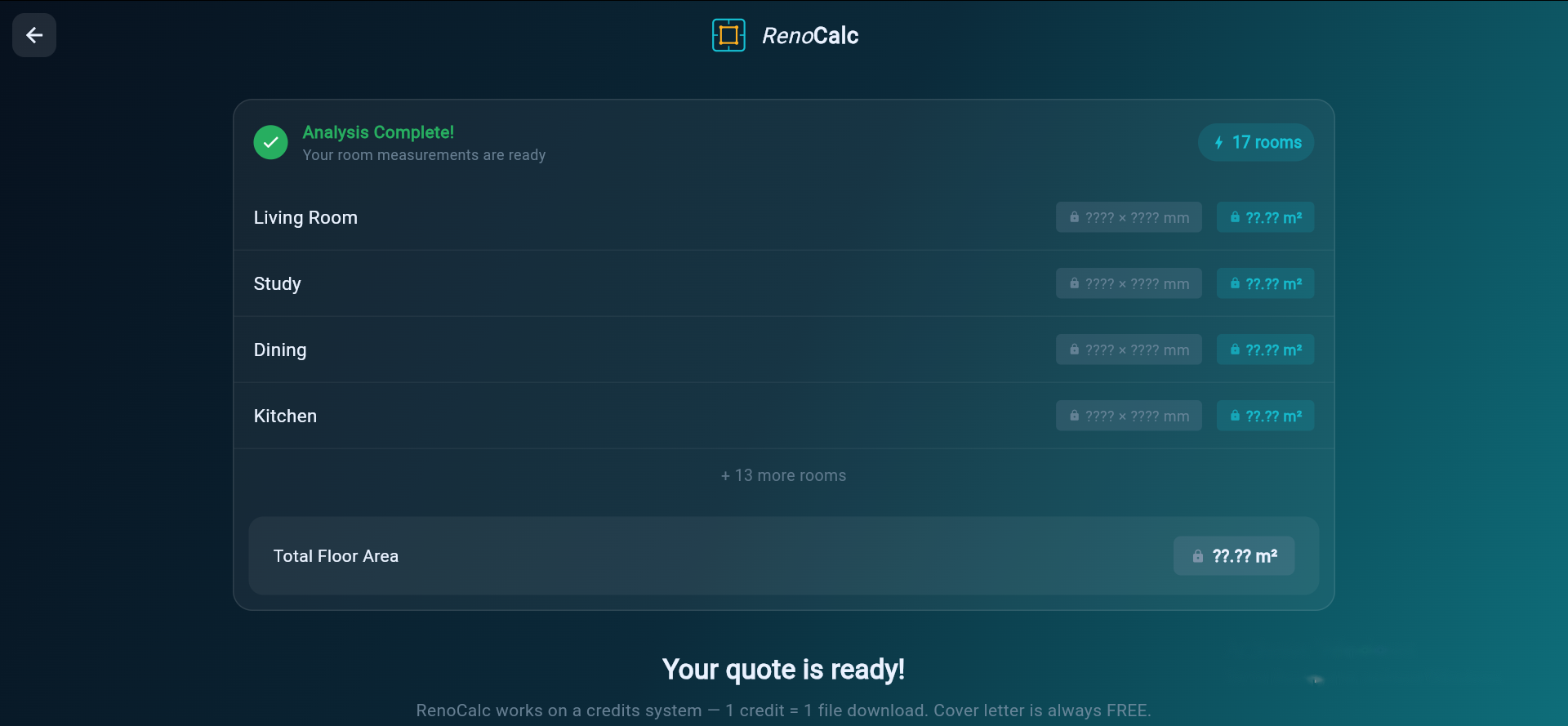
RenoCalc reads your property floor plan and builds a complete renovation cost estimate room by room — calibrated to your location, spec level, and the specific rooms in your property. Upload a floor plan of a London terrace and get a full trade-by-trade breakdown in under 3 minutes.

Frequently Asked Questions
How much does a full house renovation cost in London?
A full house renovation in London 2026 costs £120,000–£280,000+ for a 3-bedroom Victorian or Edwardian terrace at approximately 90 m². Budget investor spec runs £120,000–£160,000. Standard owner-occupier spec runs £160,000–£220,000. High spec with structural alterations and premium finishes runs £220,000–£280,000+. These are construction costs — add party wall fees, scaffolding licence, skip permits, temporary accommodation, and 10–15% contingency on top.
Do I need a party wall agreement for a London renovation?
In practice, yes — for the vast majority of London terrace renovations that include structural work. The Party Wall etc. Act 1996 requires notice to be served on neighbours before works affecting a shared wall or boundary begin. If a neighbour consents, no surveyor is needed. If they dissent or fail to respond, party wall surveyors must be appointed. Budget £1,200–£3,500 per affected neighbour for surveyor fees. On a mid-terrace with two neighbours, total party wall costs run £2,400–£7,000.
How much does scaffolding cost in London for a house renovation?
Scaffolding for a London terrace renovation costs £3,500–£8,000 for erection and hire over 6–12 weeks. Because London terraces are built to the pavement edge, scaffolding must occupy or overhang the highway, requiring a Section 169 street licence from the local authority at an additional £600–£1,500. Licence applications take 4–8 weeks, so they must be planned into the programme well in advance of works starting.
Are renovation costs in Hackney or Peckham cheaper than in Notting Hill?
Trade costs are broadly consistent across inner London — electricians, plumbers, and plasterers do not typically charge differently in Peckham versus Notting Hill. The cost difference between areas comes from specification expectations. Properties in prime inner London are routinely renovated to premium specification (bespoke kitchens, stone bathrooms, specialist joinery), which costs significantly more than the standard specification common in Hackney or Peckham. At standard spec, the difference between areas is modest — 10–20%. At high spec, it can be 50–100%.
Does being in a conservation area significantly increase London renovation costs?
It can, particularly for externally visible elements. Conservation area restrictions may require timber sash windows instead of uPVC (40–80% higher cost), lime mortar repointing instead of sand cement, and like-for-like restoration of period features. A planning application for external alterations adds £258 in application fees, £1,500–£4,000 in designer fees, and 8–13 weeks to the programme. On affected elements, budget 15–30% more than the standard figure. Structural alterations inside the property are generally unaffected by conservation area designation, though they still require Building Regulations approval.
Get a Realistic London Renovation Budget Before You Commit
The most expensive renovation mistakes in London happen before the job starts: underestimating the cost, not factoring in party walls, or failing to account for the conservation area requirements of the property. Use the figures in this guide as a benchmark — but get a property-specific cost model before you commit to a purchase price or a builder's quote.
Upload your London property's floor plan to RenoCalc. The AI reads the plan room by room and generates a full renovation cost breakdown — every trade, every room — calibrated to London pricing, in under 3 minutes.
Get a London Renovation Quote in Under 3 Minutes
Upload your floor plan. RenoCalc builds the complete cost — room by room, trade by trade, at London rates. Used by London builders and property investors. Try it free.
Start Your Free Estimate