Full House Renovation Cost Bristol 2026: What a Complete Renovation Costs in Bristol
Quick Answer
A full house renovation in Bristol 2026 costs £80,000–175,000+ for a standard 3-bedroom property. Bristol renovation costs have risen sharply with the city's property market growth. Clifton and Cotham command near-London pricing; Easton, Bedminster, and Fishponds offer better value. Per m²: standard spec £900–1,500/m², good spec £1,500–2,400/m².
Bristol renovation costs have risen faster than most UK cities outside London over the past decade, tracking the city's exceptional property market performance. Bristol now regularly ranks as the most expensive city in England outside London to buy a home, and renovation costs reflect this: trade day rates in Bristol sit 10–20% above the national average, and specification expectations in the city's desirable areas — Clifton, Cotham, Redland, Montpelier, Stokes Croft — are high.
Bristol has three characteristics that make it distinctive as a renovation market: a large proportion of Georgian and Victorian stock that requires specialist handling; a strong and growing eco-renovation culture, with Bristol consistently leading the UK in uptake of heat pumps, whole-house ventilation, and sustainable building materials; and a significant density of conservation areas covering much of the most desirable housing stock. Each of these factors shapes cost, scope, and programme in ways that a national cost guide does not capture.
Total Cost by Specification Level
The figures below are for a full gut-and-refurb renovation of a 3-bedroom property at approximately 90 m² in Bristol — stripped back to structure, all systems replaced, fully habitable at completion. These are construction costs; add 10–15% for contingency, fees, skip hire, and structural engineer.
| Specification Level | Bristol Cost Range | UK Average (for comparison) | What's Included |
|---|---|---|---|
| Budget / investor spec | £80,000–£105,000 | £80,000–£110,000 | Functional lettable standard. Mid-market kitchen and bathroom, full rewire, new combi boiler and radiators, full replaster, redecorate, LVT and carpet flooring. |
| Standard / owner-occupier spec | £105,000–£140,000 | £110,000–£150,000 | Quality kitchen, two good bathrooms, new windows where required, rewire, underfloor heating to ground floor, engineered timber or quality LVT, full replaster, professional decoration. |
| High spec / premium finish | £140,000–£175,000+ | £150,000–£185,000+ | Bespoke kitchen, premium bathrooms, structural open-plan alterations, eco-renovation measures (heat pump, MVHR, insulation), premium finishes throughout. |
Bristol sits 10–20% above the national average in most renovation cost benchmarks, driven by higher trade day rates (£220–£340/day versus a national average of £200–£320/day) and the elevated material and compliance costs of working with Bristol's older housing stock. Clifton and Cotham sit at the very top of the Bristol range; areas like Fishponds, Henbury, and Lawrence Weston sit closer to the national average.
Bristol Renovation Cost per m²
Full house renovation cost per m² in Bristol in 2026 runs materially above the national average in prime areas, with standard Bristol averaging 10–20% above the national norm.
| Specification | Cost per m² (Bristol) | Typical 90 m² Total |
|---|---|---|
| Standard spec | £900–£1,500/m² | £81,000–£135,000 |
| Good spec | £1,500–£2,400/m² | £135,000–£216,000 |
| Premium spec (Clifton / Cotham) | £2,400–£4,000+/m² | £216,000–£360,000+ |
The premium bracket is specific to Clifton, Cotham, and the Georgian quarter more broadly. The stock in these areas is large (130–200 m² properties are common) and the property values justify premium specification and specialist conservation-compliant work. For the majority of Bristol renovation activity — Victorian and Edwardian terraces in Bedminster, Easton, Horfield, and Fishponds — the standard and good spec brackets apply.
Trade-by-Trade Cost Breakdown
These figures reflect Bristol trade rates in 2026 for a 3-bedroom property of approximately 90 m².
| Trade Package | Budget Spec | Standard Spec | High Spec | Notes |
|---|---|---|---|---|
| Strip-out and demolition | £2,800–£4,500 | £4,000–£6,500 | £5,500–£9,000 | Labour, skip hire (2–3 loads), asbestos allowance on pre-1985 stock; lime plaster removal adds time and cost on Georgian properties |
| Structural and damp-proof work | £4,500–£9,000 | £8,000–£18,000 | £14,000–£35,000+ | Structural engineer's report, steels, damp treatment; Bristol's older stock often has significant damp issues on north-facing and downhill aspects |
| Roof — repair or full replacement | £3,800–£7,500 | £6,500–£14,000 | £12,000–£22,000 | Welsh slate on Victorian Bristol stock is traditional and expensive to replace like-for-like; conservation areas may require it |
| Windows and external doors | £5,000–£8,500 | £8,500–£16,000 | £16,000–£35,000 | Timber sash required in most Clifton and Redland conservation areas; high-performance timber units cost significantly more than uPVC |
| Kitchen — supply and fit | £8,000–£15,000 | £15,000–£30,000 | £30,000–£70,000 | Bristol kitchen specification typically higher than national average; design-led buyers are common in BS6, BS8, and BS9 |
| Bathrooms — supply and fit (x2) | £5,500–£9,500 | £9,500–£18,000 | £18,000–£40,000 | Family bathroom and en suite; freestanding baths and walk-in showers common at standard spec in Bristol |
| Full rewire | £5,000–£7,500 | £6,500–£9,500 | £8,500–£14,000 | Consumer unit, all circuits, sockets, switches, lighting; smart home and EV charging integration at premium level |
| Plumbing and heating system | £8,500–£13,500 | £12,000–£22,000 | £20,000–£40,000 | Heat pump with UFH increasingly popular in Bristol at standard spec; combi boiler remains standard at budget spec |
| Plastering — full replaster | £7,500–£11,000 | £9,500–£13,500 | £12,000–£20,000 | Dot-and-dab or sand and cement with skim; lime plaster required in listed buildings and some conservation area properties — adds 30–50% to plastering cost |
| Decorating — full internal | £4,000–£6,500 | £6,000–£10,000 | £8,500–£16,000 | Prep, prime, two coats throughout; feature wall treatments and specialist finishes at upper end |
| Flooring — throughout | £5,000–£9,000 | £8,000–£14,000 | £14,000–£28,000 | LVT and carpet at budget; engineered timber, original floor restoration, stone tile at upper end |
| Carpentry — joinery and stairs | £3,500–£5,500 | £5,500–£9,500 | £9,000–£22,000 | Skirting, architrave, doors, staircase; original Victorian and Georgian joinery restoration commands a specialist premium in Bristol |
| Total construction (excl. fees, contingency) | £63,000–£97,000 | £99,000–£161,000 | £168,000–£371,000+ | Add 10–15% for contingency, Building Control fees, structural engineer, skip hire |
Bristol's Georgian and Victorian Property Stock
Bristol's residential housing stock spans a broader range of historic periods than most comparable cities. The city's growth through the eighteenth and nineteenth centuries — driven by trade, commerce, and later industry — produced three distinct layers of period housing, each presenting different renovation challenges and costs.
Georgian and Regency Stock: Clifton, Cotham, Kingsdown
The Georgian and Regency terraces, crescents, and townhouses of Clifton (BS8), Cotham (BS6), and Kingsdown (BS2) are Bristol's most architecturally significant residential stock. These properties were built between roughly 1750 and 1840 and are typically constructed in Bath or Bristol limestone, with high ceilings (often 3.2–3.6 metres to ground floor), large sash windows, original lime plaster walls, and period joinery — cornices, dado rails, panelled doors — that has survived in varying degrees of preservation.
Renovating Georgian Bristol stock requires a different approach to Victorian terraces. Lime mortar and lime plaster are the traditional materials, and in conservation areas they are required by planning policy. Lime plaster work costs 30–50% more than gypsum plaster and takes longer to dry. Original sash windows require specialist restoration or replacement with like-for-like timber units. Original floorboards, fireplaces, and period joinery are worth preserving — both for conservation compliance and because they are what makes the properties desirable — but preservation costs more than replacement.
Victorian Stock: Bedminster, Easton, Horfield, Bishopston
The bulk of Bristol's housing stock is Victorian terracing built between 1860 and 1910. This includes the classic two-up two-down of Easton (BS5) and the larger bay-fronted terraces of Bishopston (BS7), Horfield (BS7), and Redland (BS6). Victorian Bristol terracing is solidly built but shares the same systemic deficiencies as the stock nationally: outdated electrics, ageing plumbing, no cavity insulation, and roofs that are often at or past their design life.
One Bristol-specific characteristic of Victorian stock: the city's topography means many properties face north or sit on slopes with significant ground moisture. Damp penetration — both rising damp and penetrating damp from the soil line — is more prevalent in Bristol terraces than in flat-terrain cities. Always budget for a pre-purchase damp survey and include a meaningful damp treatment allowance (£2,500–£8,000) in any renovation budget for a Victorian Bristol terrace.
Edwardian Stock: Redland, Westbury Park, Henleaze
The Edwardian suburbs of Redland (BS6), Westbury Park (BS6), and Henleaze (BS9) contain Bristol's largest and most architecturally generous terraced and semi-detached housing. These properties — typically 100–150 m² with four or five bedrooms — were built between 1900 and 1914 for the middle-class professional market and retain the scale and detailing of that era. Full renovation costs for a large Edwardian semi in Redland at standard spec run £130,000–£175,000, rising to £200,000–£280,000+ at high specification.
Clifton vs BS3 and BS5: Renovation Cost Comparison
Bristol's renovation market is sharply segmented by geography. The most significant divide is between the west and north of the city — Clifton, Cotham, Redland, and Westbury Park — and the south and east: Bedminster (BS3), Easton (BS5), Fishponds (BS16), and the outer northern suburbs.
Clifton and Cotham (BS8 and BS6): Top of the Bristol Market
Clifton and Cotham represent the apex of the Bristol renovation market. Property values here are the highest in the city — Clifton's Georgian and Victorian terraces regularly sell at £600,000–£1.2 million for a 3–4 bedroom property — and renovation specifications reflect this. Owner-occupiers in Clifton routinely spend £150,000–£220,000 on full renovations; larger Georgian townhouses can justify £300,000–£450,000 on a comprehensive refurbishment including structural alterations and eco-upgrade.
The key drivers of elevated cost in Clifton: larger properties (120–200 m² is typical); conservation area compliance requiring timber joinery, lime mortar, and specialist materials; the concentration of premium trade contractors who command higher day rates; and the higher client expectations that come with high-value properties.
Bedminster and Southville (BS3): Value End of a Popular Market
Bedminster (BS3) has become one of Bristol's most popular renovation destinations over the past decade, driven by its relative affordability compared to Clifton and its close-in location. Victorian terraces in Bedminster — typically 80–100 m², two-up two-down or three-bedroom through-terrace — can be purchased at £250,000–£380,000 and renovated to a high standard for £90,000–£125,000, producing a finished property value of £380,000–£500,000. The renovation investment to property value ratio is attractive by Bristol standards.
Southville (BS3) sits slightly above Bedminster in prestige and pricing. The streets around North Street attract a design-led buyer who specifies their renovation carefully — quality kitchens, well-finished bathrooms, engineered oak flooring — but at a scale and specification that remains below the Clifton premium. Typical renovation budget for a 3-bed Southville Victorian terrace at good spec: £110,000–£140,000.
Easton and Fishponds (BS5 and BS16): Entry-Level Bristol Renovation
Easton (BS5) and Fishponds (BS16) represent the most competitive end of the Bristol renovation market. Property prices here are lower, renovation activity is high, and there is a mix of owner-occupier and investor buyers. A standard spec renovation of a 3-bed Victorian terrace in Easton runs £85,000–£110,000 — comparable to national average costs, reflecting both the lower specification norms and the slightly more competitive trade environment in east Bristol.
| Area | Postcode | Budget Spec | Standard Spec | High Spec |
|---|---|---|---|---|
| Clifton, Cotham, Redland | BS8, BS6 | £100,000–£125,000 | £125,000–£175,000 | £175,000–£280,000+ |
| Bedminster, Southville | BS3 | £85,000–£105,000 | £105,000–£135,000 | £135,000–£175,000 |
| Easton, Fishponds, Horfield | BS5, BS16, BS7 | £80,000–£100,000 | £100,000–£130,000 | £130,000–£160,000 |
Sustainable Renovation in Bristol
Bristol has one of the most developed eco-renovation markets in England. This is partly cultural — the city has a long tradition of environmental activism and a highly educated professional population that prioritises sustainability — and partly practical: Bristol City Council's climate ambitions, the city's local area energy planning work, and a well-established network of local sustainable building contractors and consultants have created a market infrastructure that simply does not exist at the same level elsewhere in the UK outside London.
Why Bristol Homeowners Invest in Eco-Renovation
The reasons are multiple: a genuine commitment to reducing carbon emissions; the practical attraction of lower energy bills as gas prices have remained elevated; EPC improvements that are increasingly relevant to mortgage lenders (lenders have begun offering lower rates for A and B-rated properties); and the resale premium that eco-renovated properties are achieving in the Bristol market, where informed buyers are increasingly willing to pay for a property that has been properly insulated and fitted with low-carbon heating.
Common Eco-Renovation Measures and Their Costs
The most commonly installed eco-renovation measures in Bristol renovation projects in 2026:
| Measure | Typical Cost | Notes |
|---|---|---|
| Air source heat pump (ASHP) with underfloor heating | £12,000–£22,000 | Bosch Compress, Vaillant aroTHERM, or Grant Aerona; Boiler Upgrade Scheme grant of £7,500 available |
| Internal wall insulation (IWI) — solid-wall property | £8,000–£16,000 | Woodfibre board or aerogel board preferred in conservation areas; reduces room size marginally |
| Whole-house mechanical ventilation with heat recovery (MVHR) | £5,000–£10,000 | Best installed during full renovation when ducting can be run before plasterboard; difficult to retrofit |
| Solar photovoltaic panels (4 kWp system) | £6,000–£10,000 | Not permitted on listed buildings and some conservation area properties; check permitted development rights |
| Triple-glazed timber sash windows | +25–40% over double-glazed equivalent | Specialist manufacturers: Bereco, Green Building Store; required by some Bristol conservation areas |
| EV charging point (7kW home charger) | £800–£1,500 | OZEV grant of up to £350 available for residential properties |
| Full eco-renovation package (IWI + ASHP + MVHR + solar) | £30,000–£55,000 | Added on top of standard renovation cost; achievable EPC rating improvement: D/E to A/B |
Eco-Renovation in Conservation Areas
Bristol's Georgian and Victorian conservation areas present specific challenges for eco-renovation. External wall insulation is generally not acceptable in conservation areas because it alters the external appearance of the property. Internal wall insulation is the alternative — it does not require planning consent and can use breathable materials (woodfibre, hemp-lime) compatible with lime construction. Solar panels are not permitted on listed buildings and face restrictions in some conservation areas. Bristol City Council has published an energy efficiency guidance document for conservation area properties — consult it early in the design process, as it identifies compliant approaches for each measure.
Planning and Conservation Areas in Bristol
Bristol City Council administers over 30 conservation areas across the city. The largest and most relevant to renovation activity are Clifton (which encompasses most of BS8), Redland and Cotham (covering large parts of BS6), Kingsdown (BS2), Cliftonwood, Victoria Park (Bedminster), and Hotwells. Within these areas, planning restrictions affect the scope and materials of renovation work in ways that must be factored into programme and budget from the outset.
What Requires Planning Consent in Bristol Conservation Areas
Within Bristol's conservation areas, the following works that would normally be permitted development require a householder planning application: replacing original timber windows with uPVC or aluminium; installing external cladding or render different from the existing; adding satellite dishes or solar panels visible from public areas; altering roof form, dormers, or roof-lights in some areas; and demolishing or significantly altering boundary walls, railings, or gates on the principal elevation.
Bristol City Council's planning officers are active in enforcing these requirements. Enforcement notices for unauthorised works in conservation areas are not uncommon, and the cost of retrospective consent applications — or, worse, removal and reinstatement — is significant. Always check conservation area status and permitted development rights before starting any external works.
Programme Impact
A householder planning application for works in a Bristol conservation area takes 8–13 weeks from validated submission to decision. Allow 4–6 weeks for design and drawing preparation beforehand. If specialist materials (lime mortar, restoration-standard timber joinery) need to be specified and sourced, add 4–8 weeks lead time. The cumulative effect is that a Bristol conservation area renovation project should begin its planning and design work 6–8 months before the intended construction start date. Starting design work after agreeing a purchase price — without factoring in these lead times — is the most common programme error in Bristol conservation area renovation.
Bristol City Council Pre-Application Advice
Bristol City Council offers a paid pre-application advice service for householder applications, typically costing £150–£400 for a written response. For a conservation area renovation project of any significant value, this is money well spent: it establishes the planning position before design and procurement decisions are made, and can prevent costly redesigns or refusals at the formal application stage.
RenoCalc: Bristol Renovation Quoting in Under 3 Minutes
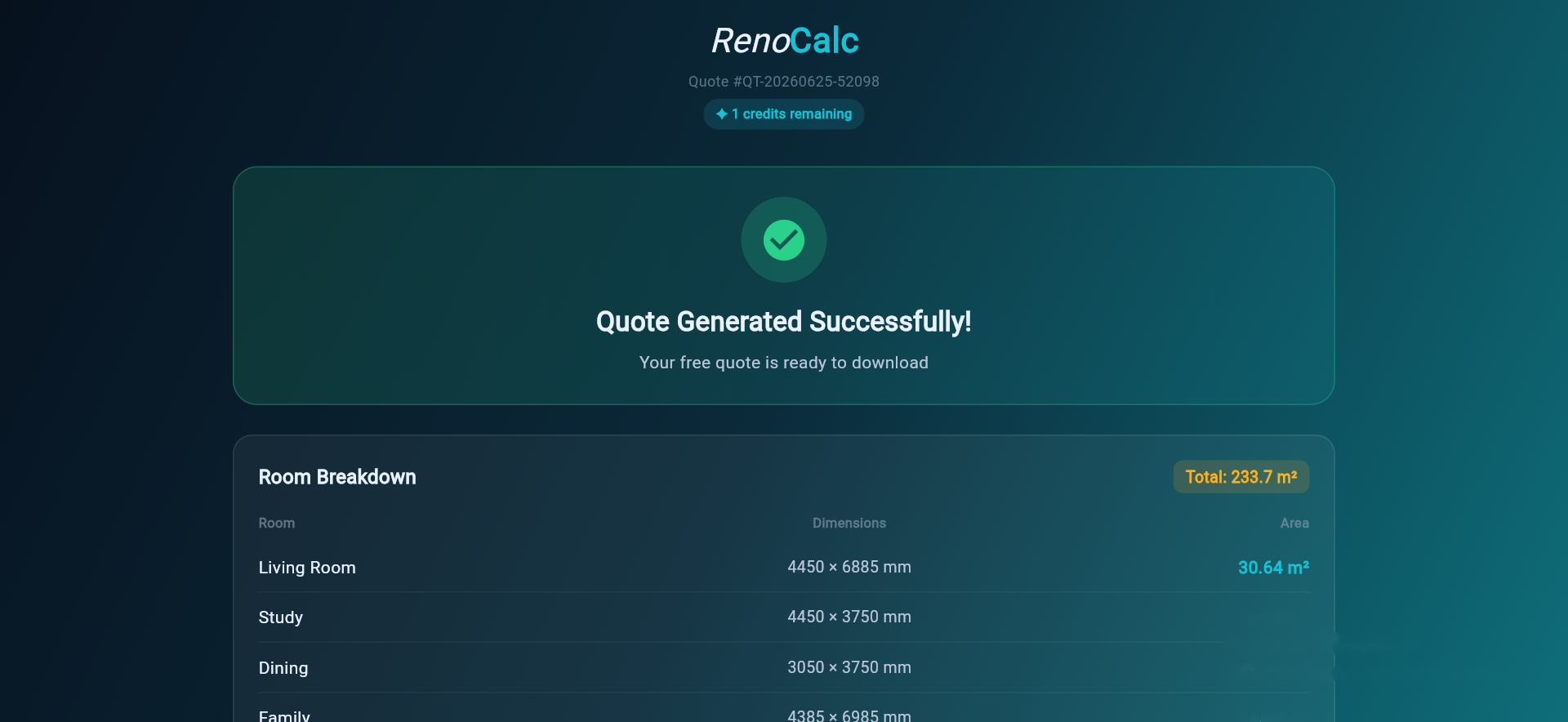
RenoCalc reads a floor plan and produces a full trade-by-trade renovation cost breakdown in under 3 minutes. Upload a Bristol property floor plan and get a complete room-by-room cost model — useful whether you are doing a single property or managing a renovation portfolio across Bristol's varied housing stock.
Frequently Asked Questions
How much does a full house renovation cost in Bristol?
A full house renovation in Bristol 2026 costs £80,000–£175,000+ for a 3-bedroom property at approximately 90 m². Budget investor spec runs £80,000–£105,000. Standard owner-occupier spec runs £105,000–£140,000. High spec with structural alterations and premium finishes runs £140,000–£175,000+. Clifton and Cotham sit at the top of these ranges; Easton, Bedminster, and Fishponds are more competitive. Add 10–15% for contingency, fees, and skip hire.
Is Clifton more expensive to renovate than Bedminster?
Yes, significantly at premium specification. The main drivers are: larger property sizes in Clifton (Georgian townhouses are 130–200 m² versus 80–100 m² for a Bedminster Victorian terrace); conservation area requirements for specialist materials; higher specification norms (premium kitchens, stone bathrooms, period joinery restoration); and the concentration of premium trade contractors. At standard spec on a similarly-sized Victorian terrace, the gap between Clifton and Bedminster is 15–25%. At premium spec on Georgian stock, it can be 50–100% or more.
Is eco-renovation common in Bristol and how much does it add to cost?
Eco-renovation is more common in Bristol than in almost any other UK city outside London. A full eco-renovation package — internal wall insulation, air source heat pump with underfloor heating, whole-house MVHR ventilation, solar PV panels — adds £30,000–£55,000 to a standard renovation budget but dramatically improves EPC rating, reduces running costs, and commands a resale premium in Bristol's eco-aware market. Government grants (Boiler Upgrade Scheme: £7,500 for ASHP) offset some of this cost. Heat pumps are particularly well-suited to Bristol's mild climate and are increasingly standard at owner-occupier specification in Clifton, Redland, and Bedminster.
What planning restrictions apply in Redland and Clifton conservation areas?
Bristol's Clifton and Redland conservation areas restrict a range of works that would normally be permitted development: replacing windows with non-timber alternatives, changing external materials, adding visible solar panels or roof structures. Applications take 8–13 weeks. Using conservation-compliant materials (timber sash windows, lime mortar) adds 15–25% to the cost of affected elements. Bristol City Council offers pre-application advice for £150–£400, which is strongly recommended before committing to design solutions in conservation areas.
How much does it cost to renovate a Georgian house in Clifton?
A full renovation of a Georgian townhouse in Clifton costs £200,000–£450,000+ depending on size, specification, and extent of structural work. Georgian Bristol properties are typically 130–200 m² over three or four storeys, with basement. They require lime plaster and mortar (30–50% more expensive than gypsum), specialist timber sash window restoration or replacement, period joinery repair, and often significant structural survey work. The cost per m² for a good specification Clifton Georgian renovation runs £1,400–£2,400/m².
Build an Accurate Bristol Renovation Budget Before You Commit
Bristol's renovation market is one of the UK's most dynamic — but it is also one of the most variable in terms of cost drivers. Georgian conservation area compliance, eco-renovation expectations, and the stark pricing difference between Clifton and Easton mean that a generic national cost guide will produce an inaccurate budget for a Bristol renovation. Use the figures in this guide as your starting point, but get a property-specific cost model before committing to a purchase or a builder's quote.
Upload your Bristol property's floor plan to RenoCalc. The AI reads the plan room by room and generates a complete renovation cost breakdown — every trade, every room — in under 3 minutes.
Get a Bristol Renovation Quote in Under 3 Minutes
Upload your floor plan. RenoCalc builds the complete cost — room by room, trade by trade. Used by Bristol builders and property owners. Try it free.
Start Your Free Estimate