Refurbishment Cost Per m² UK 2026: Light Touch to Full Gut Renovation

Quick Answer
Refurbishment costs per m² UK: light refurb (cosmetic only) £150–400/m², medium refurb (kitchen/bathroom replacement, replastering, electrics update) £500–900/m², full refurb (strip to structure, full rewire, new plumbing, new fit-out) £900–1,800/m², and high-specification full refurb £1,800–3,000+/m². London and South East adds 20–35% to these figures.
Refurbishment cost per m² is not a single number. It's a range that spans from £150 to over £3,000 per square metre depending on what you're doing to the property — and the distance between a cosmetic refresh and a full gut renovation is enormous, both in scope and in cost.
The confusion starts because people use the word "refurbishment" to describe anything from repainting a kitchen to stripping a house back to bare brick and rebuilding everything inside. Each of those scenarios has a radically different cost per m², and using the wrong benchmark leads to badly wrong budgets.
This guide separates the four main levels of refurbishment, gives you the cost per m² for each in 2026, and explains what drives the differences. I've spent 32 years in construction working across all four of these levels — from quick cosmetic jobs to full strip-back renovations on Victorian terraces. The figures here reflect real UK trade pricing, not theoretical estimates.
The Four Levels of Refurbishment
Before diving into individual breakdowns, here's the summary table. This gives you a quick reference for benchmarking your project before you get into the detail.
| Refurbishment Level | Cost Per m² | Typical Scope |
|---|---|---|
| Light refurbishment | £150–£400/m² | Decoration, flooring, cosmetics — walls, surfaces and finishes only |
| Medium refurbishment | £500–£900/m² | Kitchen and bathroom replacement, replastering, electrics update, possibly new boiler |
| Full gut refurbishment | £900–£1,800/m² | Strip back to structure, full rewire, new plumbing and heating, new everything |
| High-spec full refurbishment | £1,800–£3,000+/m² | As full gut, plus premium materials, structural alterations, bespoke specification throughout |
These figures cover England outside London as a base. For London work, add 20–35% across all categories. For Scotland and Wales, costs are broadly comparable with Midlands and North of England rates, though certain trades can be harder to resource in rural areas.
Light Refurbishment — £150–400/m²
A light refurbishment deals entirely with what you can see. The structure, services and plasterwork are all retained — you're refreshing the surface layer of the property. This is the most common scope for buy-to-let investors preparing a property for market between tenancies, or for owner-occupiers updating a recently purchased house in otherwise sound condition.
What Light Refurbishment Includes
- Full repaint throughout — ceilings, walls and woodwork
- New flooring — carpet, vinyl, LVT or engineered timber
- New light fittings and switch plates
- Kitchen respray or new cabinet doors and worktop without moving the layout
- Bathroom reseal, regrout and cosmetic upgrades (new accessories, mirror, towel rail)
- Internal door replacement where needed
- External decoration and minor joinery repairs
At £150/m² you're doing this work cheaply with budget materials and limited decoration. At £400/m² you're using quality flooring, proper paint products, skilled decorators and a better kitchen door finish. On a 100m² house, that's £15,000–40,000 — a range that depends almost entirely on material specification and the number of rooms involved.
Light refurb does not touch the electrics beyond changing fittings, does not involve any structural work, and does not include replastering unless isolated areas have failed. If your survey turns up damp, movement or outdated wiring, you're into medium refurb territory before you've written a schedule of works.
Medium Refurbishment — £500–900/m²
A medium refurb goes beyond the surface. You're replacing the kitchen and bathrooms as complete units, updating the electrical installation (though not necessarily a full rewire), replastering where needed, and typically installing a new boiler and upgrading the heating distribution. This is the most common scope for a property purchased below market value and brought up to a lettable or sellable standard.
Medium Refurbishment Cost Breakdown
| Element | Cost Range |
|---|---|
| Full kitchen replacement (supply and fit) | £6,000–£15,000 |
| Bathroom replacement (supply and fit) | £3,500–£8,000 |
| Replastering — full property or selected rooms | £4,000–£9,000 |
| Consumer unit upgrade and additional circuits | £1,500–£3,000 |
| New boiler and heating controls | £2,500–£4,500 |
| New radiators throughout | £1,500–£3,500 |
| New flooring throughout | £4,000–£8,000 |
| Full decoration — walls, ceilings, woodwork | £4,000–£8,000 |
| Minor joinery and external works | £1,000–£3,000 |
| Total (85–100m² house) | £28,000–£62,000 |
The wide range here is driven almost entirely by kitchen specification. A flat-pack kitchen from a trade supplier at £3,500 installed sits at the bottom; a mid-range fitted kitchen with stone worktop and integrated appliances at £12,000 installed sits near the top. The structural and services elements are broadly fixed — it's finish specification that moves the needle.
Full Gut Refurbishment — £900–1,800/m²
A full gut refurbishment strips the property back to the structural shell. All plasterwork is removed, flooring lifted, kitchen and bathrooms stripped out, and in most cases the ceilings come down too. What you're left with is the bare structure — brickwork, concrete floors and roof timbers — from which everything is rebuilt from scratch.
This is the appropriate scope when the property has significant damp issues requiring treatment to the bare wall, when the electrical installation predates modern safety standards and is genuinely hazardous, when the plumbing is lead pipe or heavily corroded, or when the layout needs to change significantly to be functional.
What a Full Gut Refurb Involves
- Full strip-out: all plaster, flooring, ceilings, kitchen, bathrooms, internal doors and frames
- Structural survey and repairs — lintels, joist replacement, roof repairs where needed
- Damp treatment to bare masonry where required
- Full electrical rewire — new consumer unit, all new cable runs, sockets, switches, lighting circuits
- New plumbing throughout — mains cold, hot water system, heating pipework
- New boiler, hot water cylinder and heat distribution
- Insulation upgrade — solid wall internal insulation or cavity fill, loft insulation
- Full re-board and skim (or full plaster) throughout
- New kitchen, bathrooms, internal doors and frames, skirtings and architraves
- New flooring throughout, full decoration
On a 100m² house, this comes to £90,000–180,000. On an older property with more structural issues, or in London, costs at the upper end and beyond are realistic. This is why full refurb projects on older stock bought at a discount require rigorous financial modelling before purchase — the headline purchase price discount can easily be absorbed by the refurb cost.
High-Spec Full Refurbishment — £1,800–3,000+/m²
At the high-specification end of full refurbishment, the scope is identical to a full gut refurb — everything stripped and rebuilt — but the specification of materials and finishes is at a premium level. This is the territory of architectural refurbishments, prime residential projects and high-value buy-to-sell flips targeting the top end of the market.
What Pushes Cost into This Tier
- Bespoke kitchen with stone worktops, integrated appliances and quality cabinetry: £20,000–60,000+
- Stone or large-format porcelain tiling to bathrooms: £4,000–12,000 per bathroom
- Underfloor heating throughout (wet system): £8,000–20,000
- Structural alterations — removing walls, adding steel beams, rear extension: £20,000–60,000+
- Engineered timber, stone or large-format tile flooring throughout: £8,000–25,000
- Smart home system — lighting control, AV, security: £10,000–40,000+
- Premium windows and external doors — timber or aluminium: £15,000–35,000
The cost per m² at this level can exceed £3,000 on a complex project in London. For a 150m² property in prime London, a high-spec refurb budget of £400,000–600,000 is realistic and not unusual in the prime residential market.
What Drives the Difference in Refurbishment Cost
Structural Condition of the Property
The condition of the existing structure is the factor most likely to derail a refurb budget. Properties that look cosmetically poor but are structurally sound are genuinely cheaper to refurb than properties with damp, rot, subsidence or structural movement — regardless of how they appear on a viewing. A full structural survey and a damp survey before purchase are essential on any property you intend to do more than a cosmetic refresh on.
Specification
Material specification can double the cost of a medium or full refurb. The same scope of works on the same house — same rooms, same trades, same sequence — costs drastically different amounts depending on what you're buying. A builder's-grade kitchen at £3,500 versus a mid-range fitted kitchen at £12,000 is four times the price for the same installation work. Getting clarity on specification before you budget is non-negotiable.
London Uplift
Labour costs in London are 20–35% higher than the national average. On a £150,000 full refurb in the Midlands, the equivalent specification in London would cost £180,000–200,000. This is primarily a function of London trade labour rates, the cost of doing business in the capital (van parking, congestion, access restrictions) and the higher cost of living that feeds through into wages. Material costs are broadly similar nationally.
Price Your Refurbishment Before You Commit
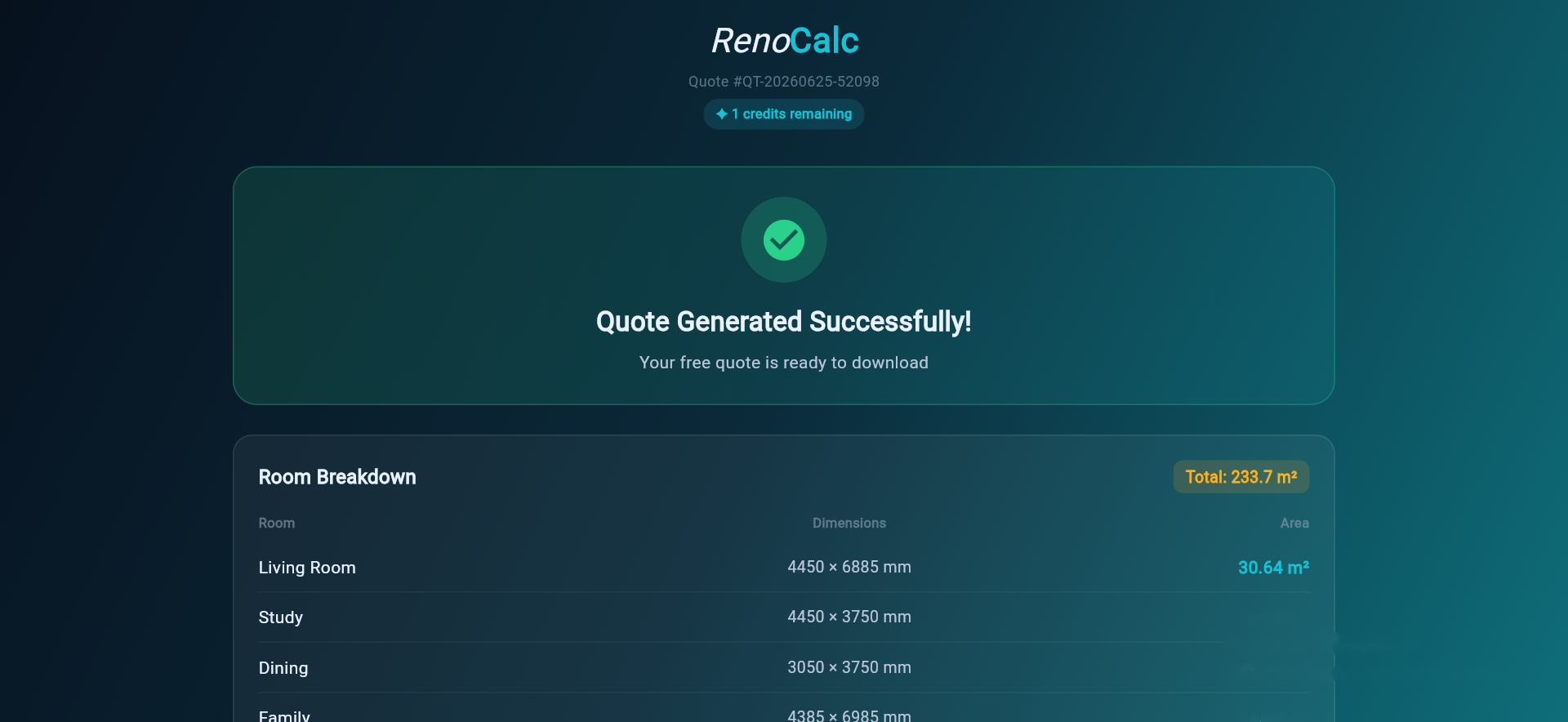
Upload your floor plan to RenoCalc and get a full refurbishment cost breakdown by trade in under 3 minutes. Covers every level from light touch to full gut.
Try Free — No Card NeededRefurb vs Knock Down and Rebuild
When a property needs a full gut refurb at £1,200–1,500/m², and a new build costs £1,800–2,500/m², the question inevitably arises: would it be better to demolish and start again?
In most cases, refurbishment is still the better economic choice — primarily because the existing structure (foundations, walls, roof) has already been paid for and retains value. You're replacing the internals, not the entire building. A full gut refurb that brings a property from a derelict condition to a high-quality standard typically results in a better ratio of end value to total cost than a new build on the same footprint.
The cases where demolition and new build makes more sense: the existing structure has significant structural problems requiring expensive remediation; the property contains hazardous materials (asbestos, lead, contaminated ground) that make safe refurbishment prohibitively expensive; the existing layout is fundamentally unsuited to modern use and the footprint is large enough that a new build makes sense economically; or the site value supports a larger new build that the existing structure doesn't permit.
VAT is also a consideration. New build residential construction is zero-rated; full refurbishment is typically charged at 20% VAT. On a £200,000 refurb, the VAT differential alone is £40,000 — a significant factor in large-scale projects.
For wider context, see the house renovation cost per m² guide and compare with the new build cost per m² guide — which covers the full new build cost breakdown in detail.
See RenoCalc in Action
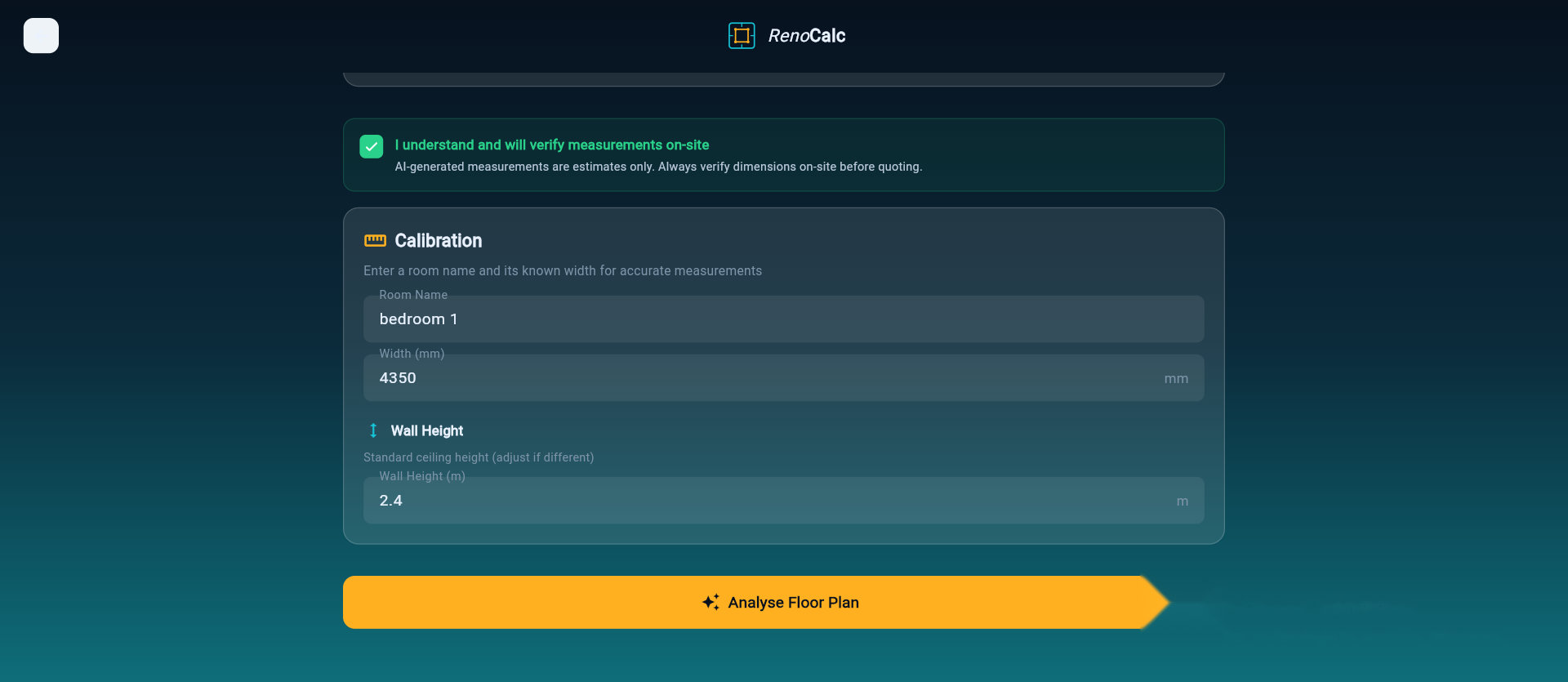
RenoCalc reads your floor plan, identifies scope and outputs a full refurbishment cost breakdown by trade — covering strip-out through to second fix decoration. Watch how it works:
The RenoCalc Spreadsheet contains 40,000+ live formulas, a full material price library and current UK labour rates. It covers every trade from groundworks to decoration — including all four refurbishment levels described in this guide. The cover letter is free with every quote.
Frequently Asked Questions
What is the average refurbishment cost per m² in the UK?
Refurbishment cost per m² in the UK in 2026 ranges from £150–400/m² for a light cosmetic refurb up to £1,800–3,000+/m² for a high-specification full gut renovation. A medium refurb (kitchen and bathroom replacement, replastering, electrics update) costs £500–900/m². A full gut renovation stripping back to structure with full rewire and new plumbing costs £900–1,800/m². The right figure depends heavily on the property's current condition and the specification you're targeting.
What is included in a full refurbishment?
A full refurbishment strips the property back to the structural shell — removing all plasterwork, flooring, kitchen, bathrooms and ceilings — then rebuilds everything from scratch. This includes a full electrical rewire, new plumbing and heating system, new insulation, new plasterboard and skim, new kitchen, new bathrooms, new flooring throughout, internal doors, decoration and external works where required. Full gut refurbishment costs £900–1,800/m², rising to £1,800–3,000+/m² at high specification.
Does the London uplift apply to refurbishment costs?
Yes. Labour costs in London are significantly higher than in the Midlands, North of England or Wales. Add 20–35% to the per-m² figures quoted here for work in Greater London. The uplift is most pronounced for trades with the highest labour content — electrics, plumbing, plastering and carpentry. Material costs are broadly similar nationally, so the London premium is primarily a function of labour rates and the cost of doing business in the capital.
When is it better to knock down and rebuild rather than refurbish?
The economics depend on the condition of the existing structure, the cost of remediation and the relative cost per m² in your location. In most cases, refurbishment is still the better financial choice as the existing structure retains value. Demolition and new build makes more sense when the existing structure has significant structural problems, contains hazardous materials, or the site value supports a larger new build. VAT is also a factor — new builds are zero-rated while refurbishment is charged at 20%, a difference of £40,000 on a £200,000 refurb contract.
What drives the difference between a light and full refurbishment?
The primary drivers are: the structural condition of the property (properties requiring new joists, roof repairs or structural remediation push into full refurb territory regardless); the extent of services replacement (a full rewire and new plumbing system alone can cost £15,000–30,000 on a 3-bed house); specification (premium kitchens and stone bathrooms add substantially to cost); and London uplift (add 20–35% for London work). The difference between a £400/m² cosmetic refurb and a £1,500/m² full gut is essentially the difference between changing what you can see and changing everything behind the walls as well.
Do I need building regulations approval for a refurbishment?
Whether building regulations approval is required depends on the scope of work. Cosmetic work (decoration, flooring, replacing kitchen units in the same position) generally does not. However, a full rewire (Part P), structural changes including wall removals (Part A), new bathroom or shower room, changes to the heating system (Part L), and changes to the building envelope typically do require notification and inspection. Work done without required approvals can cause difficulties on sale and may need to be remediated at your cost.
What VAT rate applies to refurbishment work?
Most refurbishment work on existing residential properties is charged at the standard 20% VAT rate. However, some qualifying work attracts a reduced 5% rate — including energy-saving measures (insulation, heating controls) and works on properties that have been empty for more than two years. Conversions of non-residential buildings to residential use can also attract the 5% rate on qualifying works. Confirm the applicable rate with your contractor before budgeting — the difference between 5% and 20% on a £100,000 refurb is £15,000. HMRC VAT guidance sets out the qualifying criteria in full.
People Also Ask
How do I calculate refurbishment cost per m²?
To calculate refurbishment cost per m², first measure the gross internal floor area (GIA) of the property in square metres — the total usable floor area across all floors, excluding external walls and stairs. Then apply the appropriate cost-per-m² tier based on the refurbishment level you are targeting (light: £150–400, medium: £500–900, full gut: £900–1,800). For a more detailed budget, break the project into trade packages (electrics, plumbing, plastering, kitchen, bathroom, flooring, decoration) and price each individually. RenoCalc does this automatically from a floor plan.
How much does it cost to refurbish a Victorian terrace?
A Victorian terrace typically requires a full or high-spec refurbishment rather than a light or medium one, due to outdated services (wiring, plumbing), lath-and-plaster walls that need replastering, original floorboards requiring attention, and often significant damp or structural issues. Cost typically falls in the £900–1,800/m² range for a full gut refurbishment, with the upper end of that range for London properties. On a typical 90m² mid-terrace, expect £80,000–160,000 for a full refurbishment, before any extension or structural reconfiguration.
Is it worth doing a full refurbishment before selling?
Whether a full refurbishment adds value before sale depends on the local market, the extent of works and the current condition of the property. In general, cosmetic refurbishment (paint, flooring, kitchen refresh) delivers the best return relative to cost — typically 2–5x the investment in added sale value. Full gut refurbishments before sale are harder to justify unless the property is currently in very poor condition that is suppressing offers. A structural survey and local agent appraisal will help you understand the likely value uplift in your specific market before committing to the spend.
How long does a full house refurbishment take?
A full gut refurbishment of a typical 3-bedroom house takes 12–20 weeks from strip-out to completion, assuming continuous trades without delays. The programme typically runs: strip-out (1–2 weeks), structural works and first fix electrics/plumbing (3–4 weeks), plastering (2–3 weeks including drying), second fix electrics/plumbing (1–2 weeks), kitchen and bathroom fit-out (2–3 weeks), flooring (1 week), decoration (2–3 weeks), snagging (1 week). Planning the sequence carefully — particularly allowing adequate drying time after plastering before second fix — is critical to avoiding rework.
Do I need planning permission for a refurbishment?
Internal refurbishment work — rewiring, replastering, new kitchen, new bathroom — does not require planning permission in most cases. Planning permission is required for changes that affect the external appearance of the building (replacement windows in a conservation area, alterations to the roof, extensions) or for changes of use. If the property is listed, Listed Building Consent is required for any works affecting its character — including internal works. Contact your local planning authority or check the Planning Portal if you are unsure whether your proposed works require consent.
What should I do first in a house refurbishment?
The correct sequence for a full house refurbishment is: (1) strip out — remove all existing finishes, kitchen, bathrooms, flooring and damaged plasterwork; (2) structural works — any beam insertions, wall removals, underpinning; (3) first fix electrics and plumbing — cables and pipework run before walls are plastered; (4) plastering — walls and ceilings replastered; (5) second fix electrics and plumbing — sockets, switches, sanitary ware fitted; (6) kitchen and bathroom fit-out; (7) flooring; (8) decoration. Doing this in the right order avoids costly rework — in particular, never plaster before first fix is complete, and never fit flooring before second fix and decoration are finished.
Know Your Refurb Level Before You Budget
The most common budgeting mistake in refurbishment is applying the wrong cost-per-m² tier to the project. A property that looks like a light refurb but has a 1960s electrical installation, unlined chimney stacks and failing plasterwork is a medium or full refurb — and the budget needs to reflect that before you exchange contracts.
Use the figures in this guide as a first-pass benchmark, then refine with a detailed schedule of works and trade quotes. If you want to accelerate from floor plan to cost breakdown, try RenoCalc free — it covers all four refurbishment levels in its quoting engine.
Also see: full house renovation cost UK for room-by-room cost data, and new build cost per m² for comparison with building from scratch.
Get a Refurbishment Cost Breakdown in Under 3 Minutes
RenoCalc covers every refurbishment level — from cosmetic refresh to full gut renovation. Upload your floor plan and get a trade-by-trade cost breakdown. Free to start, no card needed.
Start Free — No Card Needed