Single Storey Extension Cost UK 2026: What Does It Actually Cost Per m²?
Quick Answer
A single-storey rear extension costs £1,500–2,000/m² for a standard build, £2,000–2,800/m² for a good specification, and £2,800–4,000/m² for a high-specification contemporary finish. A 4m × 5m (20m²) extension at mid specification typically costs £40,000–56,000 plus VAT. Single-storey extensions on detached houses up to 4m depth often qualify for Permitted Development — no planning permission required.
The single-storey rear extension is by far the most common extension type in the UK — and it's also one of the most misquoted. The per-m² figure that tends to circulate online rarely accounts for what actually goes into a finished extension: the structural opening into the existing house, the glazing specification, the fit-out of the new space, professional fees and VAT.
This guide gives you the honest per-m² breakdown — split by specification tier — with a real worked example using a 4m x 5m (20m²) rear extension that's the most frequently asked-about size I see in RenoCalc quoting. Then I'll walk through the five factors that move the price most sharply: glazing, roof type, underfloor heating, kitchen fit-out if it's a kitchen extension, and the structural opening back into the house.
All costs are UK 2026, exclusive of VAT. London and the South East: add 20–30%.
Single Storey Extension Cost Per m² — UK 2026
The per-m² rates below cover the structural shell: foundations, ground beam or block-and-beam floor, external walls (cavity blockwork), roof structure and covering, external windows and doors (standard specification), first-fix services routed into the extension. They do not include the structural opening into the house, professional fees, fit-out or VAT.
| Specification Tier | Cost Per m² | Typical Spec |
|---|---|---|
| Budget / Standard | £1,500–£2,000 | Pitched tiled roof or basic flat roof; uPVC French doors or standard windows; standard cavity wall construction |
| Good Spec | £2,000–£2,800 | Aluminium bi-fold doors; GRP or EPDM flat roof; rooflight or lantern; external render or brick finish; underfloor heating |
| High-Spec / Contemporary | £2,800–£4,000 | Full-width glazing system; structural glass elements; standing seam or green roof; premium insulation; feature external finishes |
Note that per-m² rates decrease as the extension gets larger. The groundworks mobilisation, scaffolding, and structural opening costs are largely fixed regardless of whether the extension is 15m² or 30m². A larger footprint spreads those fixed costs over more floor area, reducing the effective per-m² rate. This is why building a 25m² extension is not always proportionally more expensive than a 15m² one.
Worked Example: 4m x 5m Single Storey Extension
A 4m x 5m (20m²) rear extension is the most common size I quote through RenoCalc. It's large enough to be genuinely useful — a kitchen-diner or a generous family room — while sitting comfortably within permitted development limits in most cases. Here's what it actually costs at mid-spec (good spec tier) in 2026.
| Element | Cost Range | Notes |
|---|---|---|
| Architect's drawings and planning (if required) | £1,500–£3,500 | Design drawings, planning application drawings |
| Structural engineer | £600–£1,200 | Foundation design, beam calculations |
| Building Control — Full Plans | £500–£1,200 | Application and inspection visits |
| Groundworks — excavation, concrete foundations | £3,000–£6,000 | Strip foundations; deeper if ground conditions require |
| Floor — beam and block or concrete slab | £1,500–£3,000 | Includes DPM and insulation to Part L |
| External walls — cavity blockwork | £4,000–£7,000 | Inner leaf block, insulation, outer leaf brick or block render |
| Roof structure and covering | £3,000–£7,000 | Flat GRP/EPDM or pitched tiled roof; includes insulation |
| Rooflight or lantern | £800–£2,500 | Fixed rooflight; lantern at upper end |
| Bi-fold or French doors — supply and fit | £1,500–£5,000 | uPVC French doors at low end; aluminium bi-folds at high end |
| Structural opening into existing house | £2,000–£4,500 | Steel beam, knock-through, make good |
| Scaffolding | £800–£1,800 | Erected for duration of structural work |
| First-fix plumbing, electrics and underfloor heating | £2,500–£5,000 | UFH manifold, wet system connected to boiler; electrical circuits |
| Plastering — walls and ceiling | £1,200–£2,500 | Skim coat throughout |
| Windows — side or additional elevation | £500–£1,500 | If side windows are required |
| Second-fix electrics — sockets, lighting, UFH thermostat | £800–£1,800 | Includes LED downlights |
| Shell total (before fit-out) | £25,000–£55,000 | Wide range reflects spec and glazing choices |
At mid-spec — GRP flat roof, aluminium bi-folds, lantern rooflight, underfloor heating — the shell total for a 4m x 5m extension runs approximately £40,000–£56,000 before VAT. This aligns with the £2,000–£2,800/m² per-m² rate at 20m². Fit-out (kitchen, flooring, decoration) is additional — see below for kitchen extension costs.
The Five Key Cost Drivers in a Single Storey Extension
1. Glazing Specification
Nothing moves the cost of a single-storey extension more quickly than the glazing. A standard pair of uPVC French doors costs £700–£1,200 supply and fit. A 3.6m-wide aluminium bi-fold set costs £3,500–£6,000. Full-width aluminium sliding or bifold for a 4m rear wall costs £5,000–£9,000. Structural glass walls from specialist glaziers start at £12,000 for a similar width. The structural steel beam required above a full-width opening also scales with span — a 4m steel is significantly more expensive to supply and crane in than a 1.8m lintel over French doors.
Decide early and fix the glazing specification before the structural design is finalised. Changing from French doors to full-width bi-folds after the beam has been specified triggers a redesign of the structural steel — wasted cost.
2. Roof Type and Rooflights
A flat GRP or EPDM roof is reliable, lower maintenance, and creates a clean contemporary aesthetic. A pitched tiled roof costs more in labour and materials but is often preferred in conservation areas or where the extension is visible from the street. A green (sedum) roof is a specialist product: £80–£150/m² supply and fit on top of the flat roof cost, but may add value in planning terms in sensitive locations.
Rooflights and lanterns: a fixed frameless rooflight (600mm x 900mm) costs £400–£900 supply and fit. A large lantern over the central area of the extension — a common contemporary choice — costs £1,500–£5,000 depending on size and specification. Specify the rooflight position early because it affects the roof joists and needs to be allowed for in the structural design.
3. Underfloor Heating
A wet underfloor heating system is the natural choice for a new extension with a concrete or beam-and-block floor. The floor screed goes down, the UFH pipe is embedded in it, the screed dries, and then the floor finish goes on top. The manifold connects to the existing boiler. Supply and fit for the UFH system in a 20m² extension costs £1,500–£3,000 including manifold, pump, pipework and connection to the boiler. Add £500–£1,000 for the screed if a separate pour is required. Budget separately for any thermostat upgrades to the existing boiler controls.
4. Foundation Depth and Ground Conditions
The groundworks quote is where extensions most often overshoot the budget. Standard strip foundations are specified at around 600mm depth in stable ground. If the structural engineer determines deeper foundations are needed (tree roots, made ground, soft clay), costs increase sharply. Going from 600mm to 1,200mm depth in a typical garden nearly doubles the groundworks cost — from £3,000 to £5,500 or more. Always budget a contingency of £2,000–£4,000 for foundation overruns, and insist on a structural engineer's foundation specification before groundworks begin.
5. Structural Opening into the Existing House
This is the most frequently forgotten cost item in online extension cost calculators. The structural opening — knocking through the existing rear wall to connect the extension to the main house — requires a steel beam (RSJ) of appropriate size to carry the load above. Supply, delivery and installation of a 3–4m RSJ costs £1,500–£3,500. Add labour for knocking through, boxing the beam, plastering the reveals, and making good — total £2,000–£5,000 for a standard opening. If you're creating a full-width opening, the beam is larger and the cost rises accordingly.
RenoCalc: Extension Quotes From a Floor Plan in 3 Minutes
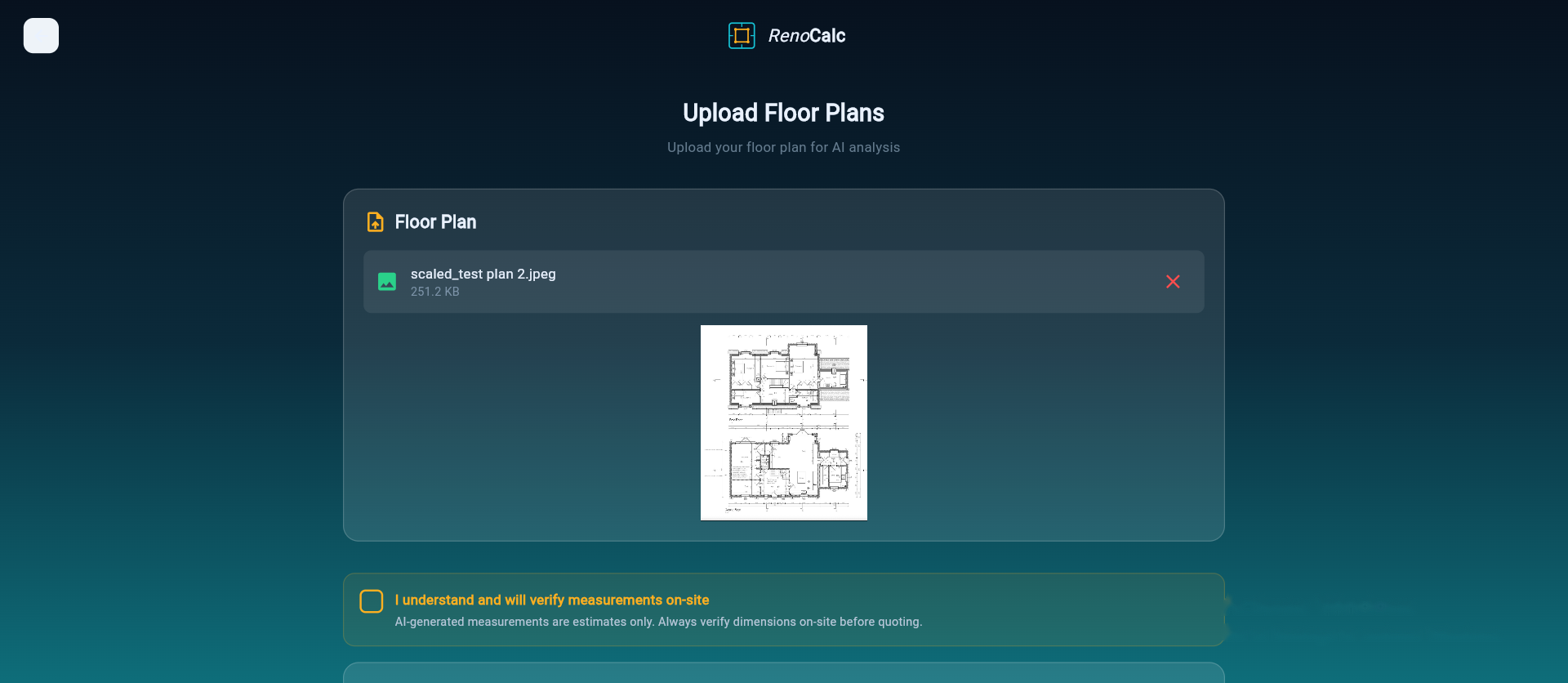
Upload your extension floor plan to RenoCalc and get a full cost breakdown in around 3 minutes — shell, structural opening, glazing, underfloor heating, fit-out and professional fees. The RenoCalc Spreadsheet contains 40,000+ live formulas and a current UK material and labour price library.
Kitchen Extension: Fit-Out Costs
The most common use of a single-storey rear extension is to create a new kitchen-diner. The shell costs above don't include the kitchen. Here's what the kitchen fit-out adds at each spec tier.
| Kitchen Tier | Additional Cost | What's Included |
|---|---|---|
| Budget kitchen fit-out | £5,000–£9,000 | Entry-level rigid units, laminate worktops, stainless sink, standard extraction, basic tiling |
| Mid-spec kitchen | £9,000–£18,000 | Trade rigid units, quartz or solid-surface worktop, undermount sink, integrated extraction, porcelain splashback, LVT floor |
| High-spec kitchen | £18,000–£35,000+ | Bespoke or handleless units, stone worktop, boiling water tap, integrated appliances, under-cabinet lighting, heated floor, designer tiles |
A total project cost for a 20m² kitchen extension at mid-spec — shell, structural opening, underfloor heating, bi-fold doors, professional fees and mid-spec kitchen — runs approximately £55,000–£80,000 before VAT in 2026. In London, add 20–30%.
Permitted Development: What You Can Build Without Planning Permission
Most single-storey rear extensions are built under permitted development rights in England — meaning no planning application is required. But the rules are specific, and getting them wrong can mean enforcement action after the build is complete.
Standard Permitted Development Limits
- Maximum depth: 4m from the original rear wall for detached houses, 3m for semi-detached and terraced houses.
- Maximum height: 4m, reducing to 3m within 2m of the boundary.
- The extension must not cover more than 50% of the garden area (original garden as at 1 July 1948).
- Materials must be of similar appearance to the existing house.
- No verandas, balconies or raised platforms.
- Permitted development rights do not apply to listed buildings, properties in conservation areas, or where PD rights have been removed by a planning condition.
Prior Approval — Larger Extensions
The Prior Approval (Larger Home Extension) scheme allows single-storey rear extensions up to 8m deep (detached) or 6m deep (semi/terrace) without full planning permission, subject to a formal neighbour consultation process. You must apply to the local planning authority for a Prior Approval decision. The authority consults adjoining owners and makes a decision — not a planning decision, but a determination of whether the impact is acceptable. Prior Approval applications cost £120 in England in 2026 and typically take 42 days to process.
If any neighbour objects to a Prior Approval application, the authority considers the impact — they can then require a full planning application. Budget for this possibility in your programme.
Get Your Single Storey Extension Quote
Upload your floor plan to RenoCalc and get a full single-storey extension cost breakdown in around 3 minutes — shell, structural opening, glazing, underfloor heating and fit-out all costed from your actual dimensions. Cover letter, schedule of works and method statements included. Free to start.
Start Your Free EstimateFrequently Asked Questions
How much does a single storey extension cost per m² in the UK?
A single-storey rear extension costs £1,500–£2,000 per m² at standard build, £2,000–£2,800 per m² at good spec, and £2,800–£4,000 per m² at high-spec contemporary finish in 2026. These rates cover the structural shell — foundations, walls, roof, windows and doors — but not fit-out, professional fees or VAT.
How much does a 4m x 5m single storey extension cost?
A 4m x 5m (20m²) rear extension at mid-spec costs £40,000–£56,000 for the shell before VAT in 2026. Add professional fees (£2,500–£5,000), Building Control (£500–£1,200), the structural opening into the existing house (£2,000–£4,500), and fit-out. A complete kitchen extension at mid-spec runs £55,000–£80,000 before VAT. In London, add 20–30%.
Does a single storey rear extension need planning permission?
Often not — single-storey rear extensions up to 4m deep (detached) or 3m (semi/terrace) are usually permitted development in England. The Prior Approval scheme extends these limits to 8m and 6m. Conservation areas, listed buildings and properties where PD rights have been removed always require a planning application. The planning fee in England is £258 in 2026.
How much do bi-fold doors add to an extension cost?
A 3-panel aluminium bi-fold set (covering around a 2.4m opening) costs £2,000–£4,000 supply and fit. A 4m-wide set for a full rear wall costs £4,000–£9,000. Compared to uPVC French doors at £700–£1,500 supply and fit, bi-folds represent a premium of £2,000–£7,000 depending on width. The structural beam above a wider opening is also more expensive — factor this into the comparison.
Is a flat roof or pitched roof better for a single storey extension?
A flat roof (GRP or EPDM) is cheaper and suits contemporary designs, and allows rooflights and lanterns to be added. A pitched tiled roof matches traditional properties better and is often preferred by planning officers in conservation areas. The cost difference on a 20m² extension is typically £2,000–£5,000 in favour of flat. Most contemporary extensions use flat roofs; most traditional builds use pitched.
Should I include VAT when budgeting for a single storey extension?
Yes. All cost ranges in this guide are exclusive of VAT. Most building contractors charge 20% VAT on labour and materials for residential extension work. Some insulation installations attract 5% VAT. Budget for 20% VAT on top of all figures shown, or confirm with your contractor whether their quote is inclusive or exclusive of VAT before comparing quotes.
How long does a single storey extension take to build?
A 20m² single-storey rear extension at standard specification typically takes 10–16 weeks from groundworks start to practical completion in 2026. Groundworks and foundations: 2–3 weeks. Structural shell (walls, roof, glazing): 4–6 weeks. First-fix services (plumbing, electrics, UFH): 1–2 weeks. Plastering and drying time: 2–3 weeks. Second fix, flooring and decoration: 2–3 weeks. Add 4–8 weeks before site start for architect drawings, structural engineer input, and Building Control submission.
Does a single storey extension add value to a house?
A well-designed single-storey kitchen extension typically adds 5–10% to a property's value, depending on the local market and the quality of the extension. A mid-spec 20m² kitchen extension costing £60,000–£75,000 all-in on a house worth £350,000 might add £20,000–£35,000 in value. The benefit lies primarily in quality of living rather than pure return on investment. Extensions in London and the South East tend to see better returns due to higher price-per-m² in the local market.