Conservatory Cost UK 2026: Every Type, Every Material — Real Prices
Quick Answer
Conservatory costs UK range from £8,000–15,000 for a uPVC lean-to (3×3m), £12,000–22,000 for a uPVC Victorian style, £18,000–35,000 for aluminium, and £25,000–60,000+ for an orangery with a solid insulated roof. Key decisions: roof type (polycarbonate vs glass vs solid), base type, heating provision, and frame material. Most conservatories fall under Permitted Development.
The question "how much does a conservatory cost?" has become harder to answer because the category has expanded so dramatically. Twenty years ago a conservatory meant a uPVC lean-to with a polycarbonate roof. Today the same term covers everything from a £9,000 flat-pack lean-to to a £60,000+ orangery with solid slate roof, underfloor heating and bi-fold doors — and everything in between.
What you choose needs to match your intention for the space. A conservatory you'll use three months a year needs a different specification — and budget — to one you want as a year-round kitchen extension or dining room. I'll take you through every main type, the material choices that drive cost, the base and foundation decisions, and the costs that always surprise people who haven't done this before.
Conservatory Cost at a Glance
The table below gives the headline price ranges for the main conservatory and orangery types in the UK in 2026. All figures include supply of the structure, installation (frame, roof, glazing, base slab if a standard concrete slab is required), and connection to the house. They exclude internal flooring beyond the slab, blinds, furniture, and the electrical connection from the consumer unit.
| Type | Size (example) | Material | Cost Range |
|---|---|---|---|
| Lean-to (monopitch) | 3m x 3m | uPVC, polycarbonate roof | £8,000–£15,000 |
| Lean-to (glass roof) | 3m x 3m | uPVC, self-cleaning glass roof | £12,000–£20,000 |
| Victorian (3-facet) | 3m x 4m | uPVC, polycarbonate or glass roof | £12,000–£22,000 |
| Edwardian (rectangular) | 4m x 3.5m | uPVC, glass roof | £14,000–£24,000 |
| Victorian / Edwardian | 4m x 4m | Aluminium, glass roof | £18,000–£35,000 |
| Lean-to with solid roof | 4m x 3m | uPVC or aluminium, tiled roof | £18,000–£32,000 |
| Orangery (solid insulated roof, lantern) | 5m x 4m | Aluminium, solid insulated roof | £28,000–£55,000 |
| Large orangery / garden room | 6m x 5m | Aluminium, solid roof, bi-folds | £40,000–£70,000+ |
uPVC Conservatories — Lean-To and Victorian
uPVC is the most popular conservatory frame material in the UK by volume, and has been since the 1990s. It's low maintenance, good value, and available in a wide range of styles and colours. The criticism — that it looks cheap — is less valid than it used to be; modern uPVC profiles are significantly slimmer and better-finished than the products that shaped the material's reputation.
The lean-to (monopitch) is the simplest and cheapest form: a flat or very low-pitch roof running down from the back wall of the house. It works particularly well on bungalows and on houses where the roof height on the rear elevation is low. A 3m x 3m uPVC lean-to with polycarbonate roof costs £8,000–£12,000 installed. The same footprint with a glass roof costs £12,000–£18,000 — the glass roof is a significant improvement in temperature stability and appearance, and worth the premium if budget allows.
The Victorian conservatory — with its angled facets at the rounded end — is the classic shape and typically requires more frame fabrication than a lean-to. A 3m x 4m Victorian uPVC with glass roof costs £14,000–£22,000 including base and electrical connection. The Edwardian style (rectangular footprint with pitched or hipped roof) gives more usable floor area than a Victorian for the same overall dimensions and is often the better choice when the space is intended for dining or a kitchen extension function.
| Element | Cost Range |
|---|---|
| Concrete slab base — supply and lay (3m x 4m) | £1,500–£3,500 |
| uPVC frame — Victorian 3-facet configuration | £5,000–£9,000 |
| Roof — polycarbonate panels | £1,200–£2,000 |
| Roof — self-cleaning glass (alternative) | £3,000–£6,000 |
| Glazing — toughened safety glass panels | Included in frame cost above |
| Electrical connection — ring or spur from consumer unit | £500–£1,200 |
| Making good — internal wall opening to house | £300–£800 |
| Total — polycarbonate roof | £9,000–£16,500 |
| Total — glass roof | £12,000–£22,000 |
Aluminium Conservatories
Aluminium has become the material of choice for mid-to-high specification conservatories and garden rooms over the past decade. It offers significantly slimmer sightlines than uPVC (giving more glass area and better views), higher strength (important for large span roof lights), and a more architecturally refined appearance. Powder-coated aluminium doesn't warp, fade or require repainting, and it handles large glass panels that would be structurally challenging in uPVC.
The cost premium over uPVC is real: an aluminium conservatory of the same size and shape typically costs 40–70% more than the uPVC equivalent. A 4m x 4m aluminium Edwardian with full glass roof runs £20,000–£35,000, versus £14,000–£22,000 for a comparable uPVC unit. Whether that premium is justified depends on the visual importance of the space and the quality of the rest of the house — aluminium looks particularly well-resolved on modern houses and on renovated period properties where the aesthetic standard is high.
Orangeries and Solid Roof Conservatories
An orangery is not a conservatory with a solid roof — it's a fundamentally different structure. An orangery has substantial masonry or structural elements (piers, columns, or perimeter walls), a solid insulated roof with a central glazed lantern or roof light, and is treated for Building Regulations purposes as a full house extension. It performs like a room because it is a room.
The solid insulated roof changes the thermal performance entirely. A standard glass-roofed conservatory loses heat rapidly in winter and overheats severely in summer — in the UK climate, that means it's genuinely comfortable for perhaps five to seven months of the year. A solid roof orangery maintains comfortable temperatures year-round with minimal heating in winter, making it suitable as a permanent kitchen extension, dining room, or living space.
| Element | Cost Range |
|---|---|
| Foundations — strip footings or concrete slab | £3,000–£7,000 |
| Brickwork / blockwork piers and perimeter walls | £4,000–£9,000 |
| Aluminium frame — structural posts, beams and glazing | £8,000–£18,000 |
| Solid insulated roof with glazed lantern | £6,000–£14,000 |
| Bi-fold or sliding doors | £3,000–£8,000 |
| Underfloor heating system | £2,500–£6,000 |
| Electrical — lighting, sockets, controls | £1,200–£2,500 |
| Plastering, decoration and internal making good | £2,000–£5,000 |
| Total | £30,000–£74,000 |
Because an orangery is a full extension under Building Regulations, Building Control approval is required: budget £700–£1,500. Party wall notices may also be required if the structure is built within 3m of a neighbour's property. As with any extension, planning permission may be needed if the orangery exceeds permitted development limits.
The Four Key Decisions That Determine Your Cost
1. Glass Roof vs Polycarbonate Roof vs Solid Roof
Polycarbonate is the cheapest roof option and also the worst-performing. It lets in noise (rain on polycarbonate is loud), degrades in UV light over 10–15 years, and insulates poorly. Self-cleaning glass roofs are a significant improvement: better acoustics, better appearance, better longevity. A solid insulated roof (tiled or flat with lantern) is the best-performing option but makes the structure a full extension under Building Regulations, which adds approval costs and potentially planning permission. Choose your roof based on how you'll actually use the space, not just the upfront cost.
2. Base and Foundation Type
A standard concrete slab (100–150mm reinforced concrete on hardcore) costs £1,500–£3,500 for a 3m x 3m to 4m x 4m footprint. This is fine for lightweight uPVC conservatories. For an orangery or heavier aluminium structure, strip foundations (dug trenches filled with concrete) are required — these cost £3,000–£7,000. If the garden slopes significantly, a dwarf wall is required to bring the floor to house level, adding £2,000–£5,000 to the base cost. Ground conditions affect foundation specification — if you're on clay or the site has made ground, costs can increase further.
3. Heating — How Will You Heat It?
This is the most underestimated decision. An unheated glass-roofed conservatory is a cold box in winter. Options: (a) extend the existing central heating system by adding a radiator — budget £500–£1,500 for the pipework extension and radiator; (b) electric underfloor heating beneath a tile or stone floor — budget £1,500–£3,500 for the mat system supply and lay; (c) hot water underfloor heating connected to the boiler — budget £2,500–£6,000; (d) a standalone electric heater or infrared panel — cheapest upfront, highest running cost. An orangery with solid roof and wet UFH creates a genuinely comfortable year-round room; a polycarbonate conservatory with a radiator will still be cold in January.
4. Frame Material and Colour
White uPVC is the cheapest option. Coloured uPVC (grey, anthracite, cream) adds £500–£1,500. Aluminium starts where upper-end uPVC finishes. Timber-framed conservatories (oak or softwood) cost £20,000–£50,000+ for a standard size — they're beautiful but require regular maintenance and specialist installers. Colour-matching the frame to your existing windows and doors is worth doing for visual consistency; most manufacturers offer dual-colour options (one colour outside, white inside).
Costs That Surprise People
Conservatory quotes from installers typically cover the structure only — frame, roof, glazing, and sometimes the base. Several items are almost always excluded from the headline price.
Electrical Connection
The quote usually does not include running a circuit from the consumer unit to the conservatory. An electrician installing a dedicated spur or ring main extension to the conservatory costs £500–£1,200 depending on the run distance and how many sockets and lighting circuits are required. A conservatory used as a dining room or study needs at least 4–6 double sockets and good lighting — factor this in.
Blinds
A glass or polycarbonate roof conservatory without blinds is either too bright or too hot for much of the year. Bespoke conservatory blinds (roof blinds, side blinds, and door blinds) for a 3m x 4m conservatory cost £1,500–£4,000 fitted depending on the style and mechanism. This is not optional — it's a functional necessity for a usable space.
Flooring
The concrete slab base is typically left as bare concrete by the installer. You need to add floor covering: tiled floor with underfloor heating mat (the most practical choice for a conservatory) costs £600–£1,800 for supply and lay. LVT costs £400–£900. Real wood or engineered timber is not recommended under glass roofs due to temperature and humidity fluctuation — it will move and gap.
Internal Decoration
Where the conservatory connects to the existing house through a knocked-through opening (replacing a window or door opening with a wider structural opening), making good, plastering, and decorating the internal reveal and the affected wall adds £500–£2,000 depending on the extent of the structural alteration and the quality of the finish required.
Planning Permission — What Usually Applies
Most standard conservatories in England fall within permitted development and do not need a planning application. The key conditions under Part 1 of the GPDO are the same as for any single-storey rear extension: the addition must not extend beyond the rear wall of the original house by more than 4m (detached) or 3m (attached), must not be higher than 4m, and must not cover more than half the garden area of the original house. Conservatories must also be separated from the main house thermally — glass or double-glazed doors or windows — to qualify for the Building Regulations exemption that applies to conservatories.
Conservation areas, national parks, listed buildings, and properties where PD rights have been removed by planning condition all require a full planning application. The planning fee in England is £258 (2026). Planning drawings for a conservatory typically cost £600–£1,200 from an architect or technician.
If you are building an orangery (solid roof, full Building Regulations extension), you need Building Control approval regardless of whether planning permission is required. Budget £700–£1,200 for Building Control fees on an orangery.
See How RenoCalc Quotes Extension and Conservatory Work
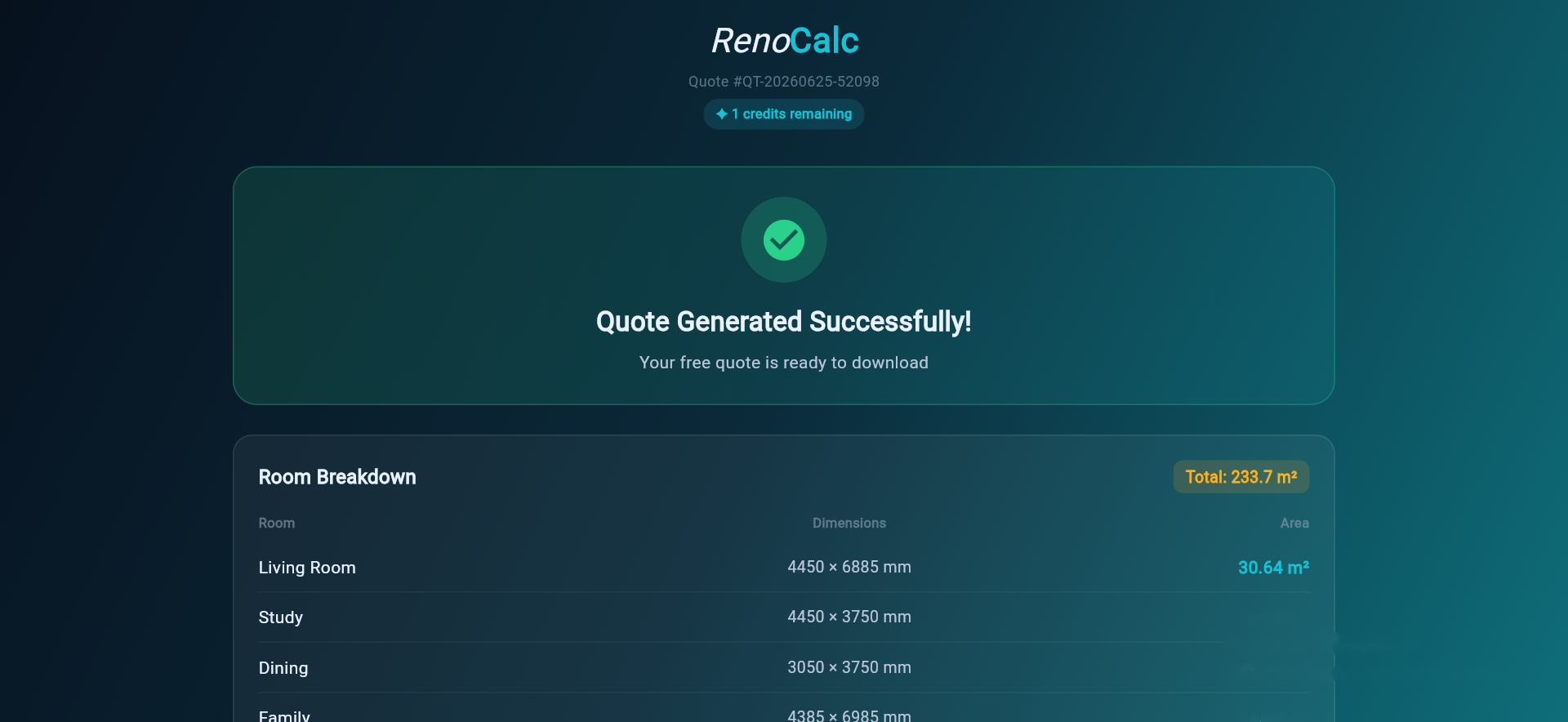
RenoCalc covers conservatories and orangeries as part of its extension quoting — upload your floor plan and get a full cost breakdown in under 3 minutes, covering the base, frame, roofing, electrical, heating and internal finishes.
Frequently Asked Questions
How much does a conservatory cost in the UK in 2026?
Conservatory cost UK in 2026 ranges from £8,000–£15,000 for a small uPVC lean-to (3x3m) up to £25,000–£60,000+ for a fully insulated orangery with solid roof, underfloor heating and high-specification internal finishes. A standard uPVC Victorian conservatory costs £12,000–£22,000 including base and electrics. Aluminium conservatories start at £18,000–£35,000 for an equivalent footprint. These figures include supply and installation but not internal flooring beyond the slab, blinds, or furniture.
Do I need planning permission for a conservatory?
Most conservatories in England fall within permitted development and do not require planning permission, provided they do not exceed 4m in height, do not cover more than half the garden area of the original house, and are not forward of the principal elevation. Conservation areas, national parks, listed buildings, and properties where PD rights have been removed always need planning consent. When in doubt, apply for a Lawful Development Certificate for written confirmation.
What is the difference between a conservatory and an orangery?
A conservatory is predominantly glass — glass roof, glass walls — and is exempt from Building Regulations provided it is thermally separated from the main house by insulated doors or windows. An orangery has a solid insulated roof (tiled or flat with lantern light) and typically brick or structural piers with glazing between them. Because of its solid roof, an orangery is treated as a full extension and is subject to Building Regulations. An orangery costs more but performs far better thermally and creates a genuine year-round room.
What type of base or foundation does a conservatory need?
A standard concrete slab (100–150mm reinforced concrete on compacted hardcore) costs £1,500–£3,500 for a 3x3m to 4x4m footprint and is suitable for uPVC conservatories. Orangeries and heavier structures require strip foundations at £3,000–£7,000. A sloping garden may require a dwarf wall to bring the floor level up to match the house — add £2,000–£5,000. Ground conditions affect foundation depth and specification; on clay soil or made ground, engineering advice should be sought.
How much does a solid roof conservatory cost compared to glass?
A solid insulated tiled roof adds £5,000–£15,000 over the cost of an equivalent glass or polycarbonate roof conservatory of the same size, depending on the roof area and finish specification. However, the solid roof transforms the space into a genuine year-round room — eliminating the overheating in summer and heat loss in winter that make glass-roofed conservatories uncomfortable for much of the UK year. The premium is well justified for any conservatory intended as a permanent living space rather than a seasonal addition.
How much does a 4m x 3m conservatory cost?
A 4m x 3m (12m²) conservatory costs £12,000–£22,000 for a uPVC Victorian or Edwardian style with glass roof, including the concrete base and electrical connection. An aluminium version of the same footprint costs £18,000–£32,000. An orangery with a solid insulated roof at 4m x 3m costs £22,000–£40,000 as it requires proper foundations, masonry piers, and Building Regulations approval. All figures are supply and install only — add flooring, blinds, and heating provision separately.
Does a conservatory add value to a house?
A well-built conservatory or orangery can add 5–7% to a property's value, but only if it is high quality and actually usable year-round. A polycarbonate-roofed conservatory that overheats in summer and is freezing in winter is often viewed negatively by buyers as something they will need to replace. An orangery with a solid insulated roof, underfloor heating, and bi-fold doors adds genuine living space and is valued more like an extension. The return depends on local market conditions and the quality of the build.
Know Your Budget Before You Talk to an Installer
Conservatory installers quote the structure. What you actually need is a complete cost covering the base, frame, roof, glazing, electrical connection, heating, blinds, flooring, and internal making good. These are all in the figures above — use them to build a complete budget before any salesperson sits down with you.
If you're building an orangery or treating the conservatory as a full extension to your renovation programme, upload your floor plan to RenoCalc. The AI reads the plan and generates a full cost breakdown — base, structure, electrics, heating, finishes — in under 3 minutes.
Get a Conservatory or Orangery Quote in Under 3 Minutes
RenoCalc turns your floor plan into a complete cost breakdown — base, structure, heating, electrics, finishes. Built for UK builders and property investors.
Start Your Free Estimate