House Building Quote Template: What New-Build Quotes Need That Others Don't
Quick Answer
A house building quote template differs from a renovation quote in its phase-based structure: groundworks, superstructure, weathertight envelope, first fix, second fix, and finishes are priced as sequential phases rather than by individual rooms. New-build quotes must also include professional fees (architect, structural engineer, Building Control), party wall costs if applicable, and NHBC or similar warranty provision.
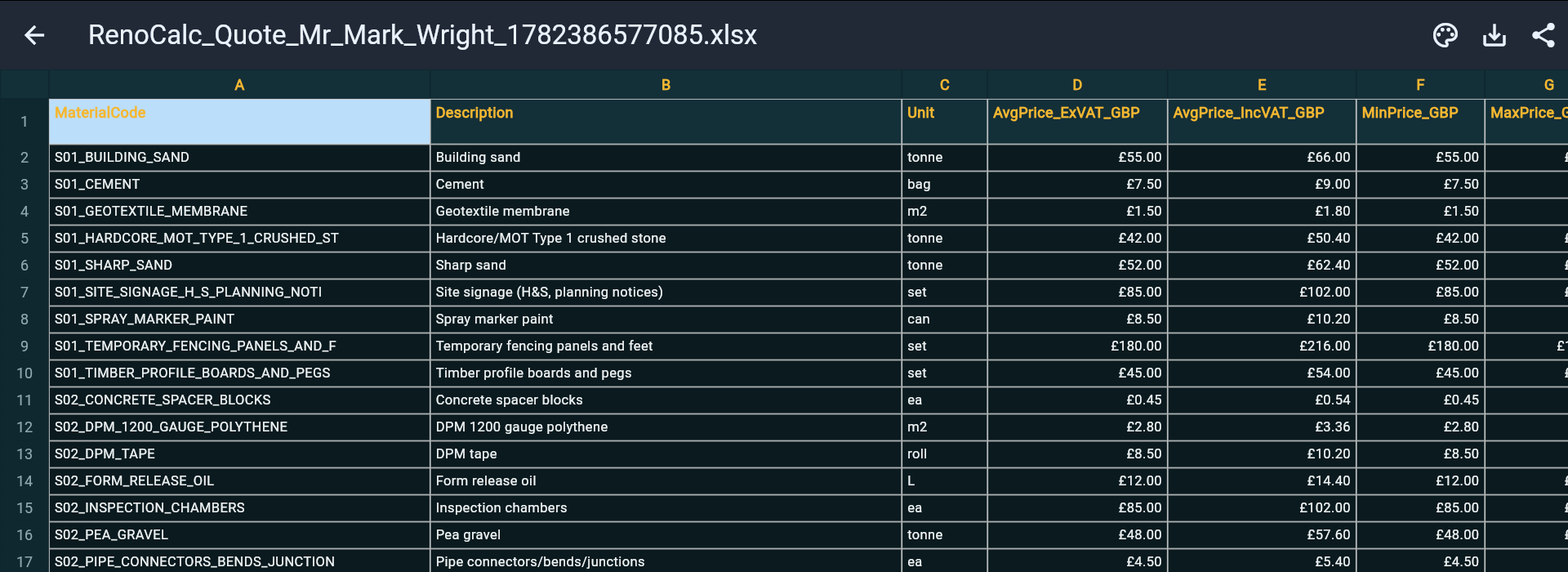
The structure of a house building quote is fundamentally different from a renovation or trade quote. New-build work is sequential. You cannot plaster until the blockwork is done. You cannot do first-fix electrics until the frame is up. You cannot fit out until the building is watertight. That sequential logic should be reflected in the quote — and most template quotes miss it entirely.
What clients and lenders actually need to see from a house building quote is phases, not just trades. They need to understand that groundworks come first, then structure, then services, then finish. They need to see the professional fees — planning, Building Control, structural engineer — as named line items, not assumptions. And they need to see that insurance and warranty are accounted for.
This guide covers the elements that distinguish a house building quote from every other type of construction quote, and how to structure them so the document works as a programme reference, not just a price list.
Phase Structure: The Core of a New-Build Quote
A trade-by-trade breakdown tells the client what trades are involved. A phase breakdown tells them what happens and when. For a new-build or large extension, the phase structure is the organising logic that makes the quote understandable — to the client, to the bank or lender, and to the site manager running the programme.
The standard phases for a new-build house quote in the UK are:
| Phase | Scope | Typical % of Build Cost |
|---|---|---|
| Phase 1: Preliminaries and Site Preparation | Site clearance, hoarding, temporary services, welfare facilities | 3–6% |
| Phase 2: Groundworks and Foundations | Excavation, concrete foundations, drainage runs, ground slab | 10–18% |
| Phase 3: Frame and Superstructure | Blockwork, brickwork, structural steels, roof structure and covering | 20–30% |
| Phase 4: First Fix Services | Electrics, plumbing and heating roughed in before boarding | 8–14% |
| Phase 5: Insulation and Boarding | Wall, floor and roof insulation; plasterboard throughout | 5–9% |
| Phase 6: Plastering and Second Fix | Wet plaster or skim, second-fix electrics and plumbing, joinery | 12–18% |
| Phase 7: Fit-Out and Finishes | Kitchen, bathrooms, flooring, decoration, sanitaryware | 12–20% |
| Phase 8: External Works and Completion | Paths, driveways, landscaping, fencing, snagging | 4–8% |
These percentages are indicative for a standard timber-frame or masonry new-build. The proportions shift depending on specification — a high-spec fit-out pushes Phase 7 higher; a deep-fill or piled foundation pushes Phase 2 higher. Use them as sense-checks, not targets.
The key point is that the phase structure in the quote should match the payment schedule. Stage payments tied to phase completions are the standard approach for self-build and development finance, and your quote needs to be structured to align with those milestones.
Professional Fees That Must Be Named
On a renovation quote, professional fees are often excluded with a note. On a house building quote, they need to be listed — because clients and lenders use the quote to understand the total project cost, and missing these items creates a shortfall that is discovered at the worst possible moment.
Planning Permission
If planning permission is not yet granted, the planning application fee must be included. For a new dwelling in England in 2026, the planning fee is £578 (householder applications) or higher for full applications. Architect or planning consultant fees for drawing up and submitting the application typically run £1,500–£5,000 depending on complexity. Check current fee schedules and permitted development rights on the Planning Portal.
Structural Engineer's Calculations
Every new build requires structural engineer's calculations — for foundations, beams, steels and any unusual structural condition. Engineer's fees typically run £800–£3,000 for a standard house. These should be a named line item in the quote. Clients frequently assume the builder's quote includes engineering calculations — it usually doesn't.
Building Control Fees
Building Control application fees for a new dwelling vary by local authority and by floor area, but typically run £800–£2,000 for a Full Plans application including inspection visits. These fees are paid to the local authority (or an approved inspector) and should be shown in the quote, even if the builder is not the one paying them — the client needs to know they exist.
Party Wall Act Surveyor
If the new build or extension is within three metres of a neighbouring property's foundations or involves work to a shared boundary, the Party Wall Act applies. Serving notices is relatively straightforward, but if the neighbour dissents, a party wall surveyor will be required — potentially on both sides. Party wall surveyor fees run £500–£1,500 per surveyor. List this as a provisional sum if the notice has not yet been served.
Scaffolding, Insurance and Warranty
Scaffolding
Scaffolding is one of the most under-quoted items in UK construction. On a new build, scaffolding is required from the moment the walls reach above head height and must stay in place until the roofing and external works are complete — often 16–24 weeks on a standard house. The cost depends on the house size, the number of scaffold lifts, the hire duration, and access constraints. Budget £3,000–£8,000 as a named line item, with a note that extended hire beyond the stated programme duration will be recharged at the weekly rate.
Site Insurance (Contract Works)
Contract works insurance (also called all-risks or contractor's all-risk insurance) covers the works in progress against fire, theft, storm damage and accidental damage during the build. On a new build, this is essential and should be in place before work starts. Premiums vary by contract value and duration — typically £500–£2,000 for a standard house build. The quote should name who is responsible for this (builder or client) and the estimated cost.
Structural Warranty (NHBC or Equivalent)
If the property will be sold or mortgaged, most lenders require a structural warranty — the most common in the UK is NHBC Buildmark, which provides a 10-year guarantee against structural defects. NHBC registration requires the builder to be registered with NHBC and the property to pass inspections at key stages. Registration and warranty fees typically run £1,200–£4,000 depending on property value. Alternative warranties — Premier Guarantee, LABC Warranty, Checkmate — are accepted by most lenders and can be cheaper. For professional guidance on construction cost benchmarks and fee estimation, refer to RICS guidance. These fees must be a named line item.
What to Exclude — and What Clients Often Miss
A house building quote should include a clear exclusions list. The most common items that clients assume are included but aren't:
- Architect's or designer's fees — often the client is managing the design separately
- Structural engineer's fees (unless named in the quote)
- Planning fees and planning consultant's costs
- Site survey and topographical survey
- Utility connection charges (gas, electric, water, broadband) — these are paid directly to the utility company and vary widely
- Landscaping and driveway (unless specifically included)
- Client-supplied fixtures and fittings — if the client is supplying their own kitchen, sanitaryware or appliances, this must be explicit
- VAT — new-build dwellings are zero-rated for VAT purposes if the builder is VAT-registered, but this should be confirmed and stated clearly
RenoCalc for Extensions and Conversions
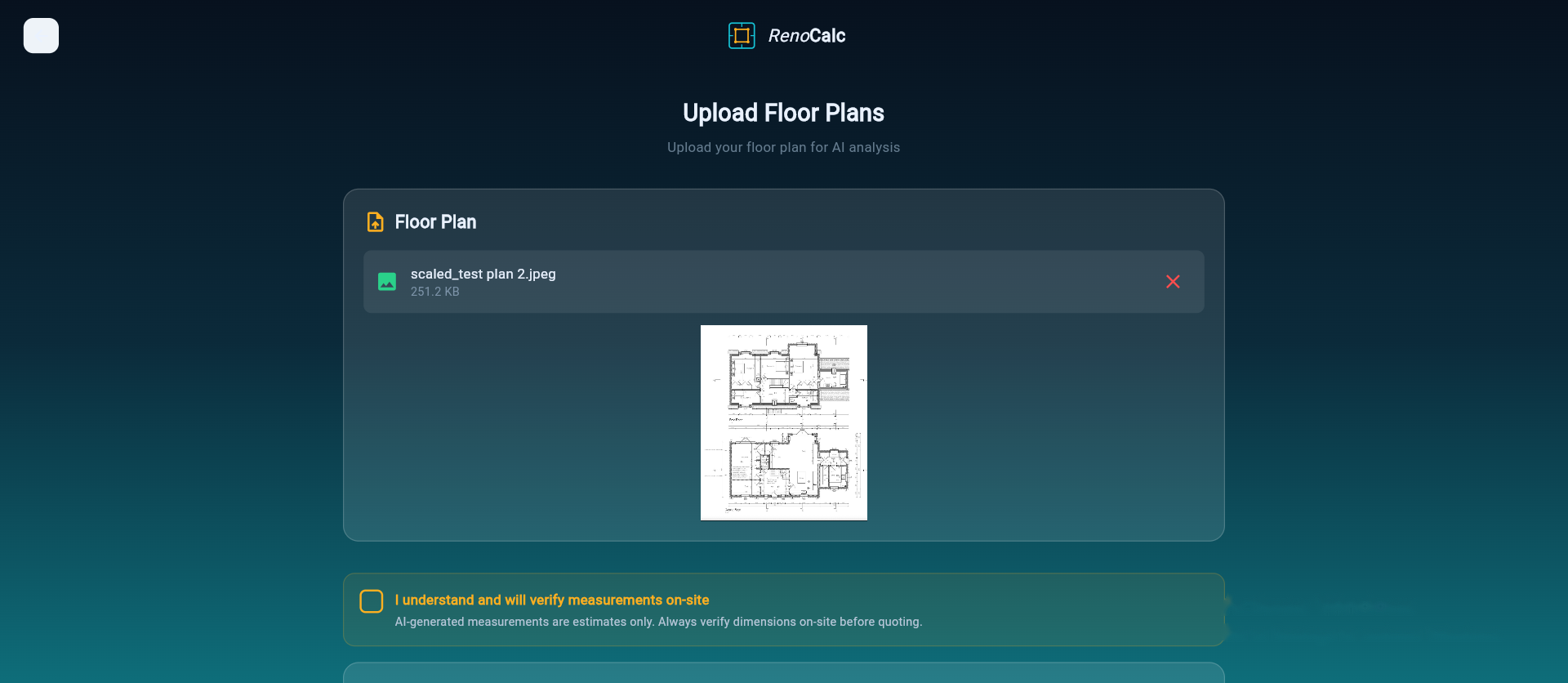
RenoCalc's floor-plan-to-quote system was built for renovation and conversion work, but its logic applies directly to extensions and conversions — single and two-storey rear extensions, side extensions, garage conversions, loft conversions, and large-scale house refurbishments. Upload the floor plan (or sketch), and the AI scans the rooms, identifies the trades and quantities, and generates a quote pack.
The output covers the internal phases of a build with precision — first-fix services, insulation, boarding, plaster, second-fix and fit-out, room by room. For an extension project, this is the bulk of the quote work. Add your groundworks, structure and roof as named sections, and you have a complete house extension quote that covers all the phases a lender or client needs to see.
See related guides: house extension cost UK and how to estimate construction costs.
Watch: Floor Plan to Quote in Minutes
This walkthrough shows how RenoCalc produces a full construction quote pack from a floor plan — from the AI scan through to the RenoCalc Spreadsheet and schedule of works.
Frequently Asked Questions
What should a house building quote template include?
A house building quote template should include a phase breakdown (groundworks, foundations, frame and superstructure, first fix services, insulation, second fix and fit-out, externals), planning and Building Control fees, structural engineer costs, scaffolding as a distinct line item, site preliminaries, insurance and warranty costs (NHBC or similar), and a clear statement of exclusions such as architect's fees, client-supplied materials and landscaping.
How is a house building quote different from a renovation quote?
A house building quote follows a sequential phase structure from groundworks to completion — each phase logically follows the last and costs can be specified with reasonable certainty from drawings. A renovation quote must account for what is hidden behind existing finishes and structure, which means provisional sums and exclusions play a much larger role. New-build quoting is more predictable; renovation quoting requires more contingency planning.
Should scaffolding be a separate line item in a house building quote?
Yes. Scaffolding on a new build is a significant and variable cost — typically £3,000–£8,000 depending on house size, height, duration and whether multiple lifts are required. Including it as a hidden part of the labour costs makes the quote harder to compare and harder to manage if the programme extends. Show scaffolding as a standalone line item with an assumed duration, with a note that extended hire will be recharged if the programme slips.
What NHBC or warranty costs should be in a new-build quote?
If the new-build property is being sold or mortgaged, a structural warranty is typically required — the most common is NHBC Buildmark, which covers the property for 10 years. NHBC registration and inspection fees typically cost £1,200–£4,000 for a standard new-build dwelling. Alternative warranties such as Premier Guarantee or LABC Warranty are also acceptable to most lenders. These fees must appear in the house building quote — they are often forgotten and become a dispute item.
Can RenoCalc be used for house building and extension quotes?
RenoCalc is primarily designed for renovation and conversion quoting, but its floor-plan-to-quote flow works well for extensions and conversions — single and two-storey additions, garage conversions, loft conversions and large-scale refurbishments. The output — RenoCalc Spreadsheet, cover letter, schedule of works, method statements and contract pack — applies equally to extension and conversion projects.
Build a Quote That Works as a Project Document
A house building quote that shows phases, names professional fees, and accounts for scaffolding, insurance and warranty is not just a price document — it is the project roadmap. When the quote structure matches the payment schedule and the programme, everyone from the client to the lender to the site manager is working from the same reference point.
RenoCalc generates the internal phase elements of a construction quote from a floor plan in under three minutes. Try it free and see how far the output takes you on your next extension or conversion project.
Generate Your Construction Quote Pack in 3 Minutes
Upload a floor plan. RenoCalc produces a full output pack — RenoCalc Spreadsheet, cover letter, schedule of works, HSE method statements and 12-page contract pack — ready for your client or lender.
Start Free — No Card Needed