How to Read Estate Agent Floor Plans for Renovation Quoting
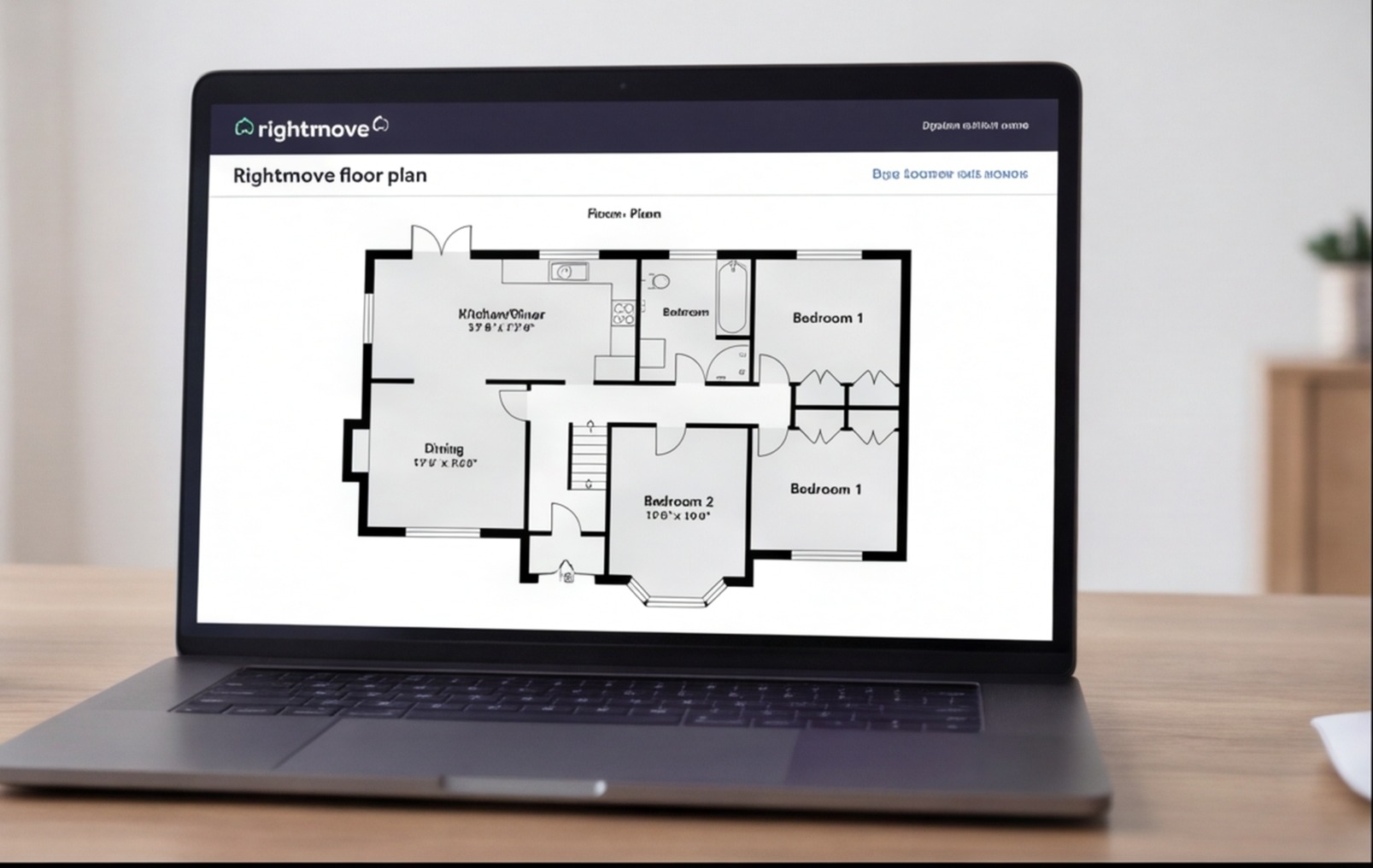
If you want to know how to read floor plans UK estate agents produce, you're not alone. Builders, investors and project managers are all using them to get early renovation estimates before spending money on surveys. The problem is that estate agent floor plans are made for marketing — not for quoting. They leave out a lot. But if you know what to look for, what to ignore and what questions to ask, a standard Rightmove plan can still get you most of the way to a sensible ballpark figure. This article walks you through how to do that properly.
Why Floor Plans Matter Before You Quote
Getting called out to a viewing or a pre-purchase inspection is part of the job. But with property investors — especially those buying off-market or from portals — you're often asked to give a rough figure before a site visit happens. That's where estate agent floor plans come in.
A decent floor plan tells you:
- The approximate footprint of each floor
- Room layout and flow
- Rough room sizes (with caveats)
- Where the stairs sit
- Where bathrooms and kitchens are positioned
- Whether there's a cellar, loft room or outbuilding
That information alone lets an experienced builder put together a working scope. You can estimate square meterage for flooring, plastering and painting. You can work out roughly how many radiators you're dealing with. You can see whether the bathroom and kitchen are back-to-back (cheap) or at opposite ends of the house (more pipework, more cost).

I've been doing this for 30 years. When a client sends me a Rightmove link and asks "what would it cost to do this place up?", I can pull the floor plan, cross-reference with the photos and give a credible range within a few minutes. Not a fixed quote — a range. There's a difference, and being clear about that protects you.
The key skill isn't memorising every symbol on the plan. It's knowing how to extract useful information and being honest about what you're estimating versus what you're guessing.
Understanding Scale and Printed Dimensions
This is where most people go wrong. They look at a floor plan and start measuring pixels on a screen. Don't do that — the image is resized every time it's displayed and your measurements will be wrong.
How scale works on floor plans
Floor plans are drawn to a set scale so that distances on paper correspond to real-world distances. Common UK scales are:
| Scale | What it means | 1cm on paper = |
|---|---|---|
| 1:100 | 1 unit on plan = 100 units in reality | 1 metre |
| 1:50 | 1 unit on plan = 50 units in reality | 0.5 metres |
| 1:200 | 1 unit on plan = 200 units in reality | 2 metres |
Estate agents will sometimes print the scale on the plan. Look for something like "Scale 1:100 @ A4" or a scale bar with labelled measurements. If a scale bar is present, print the plan at the right size, measure the bar with a ruler, and use that as your reference.
When dimensions are printed on the plan
Better estate agents (or their floor plan providers) print room dimensions directly on the plan. These are usually in metres. When dimensions are printed, use them. Don't measure — read. Printed dimensions from a professional survey are reasonably accurate, though they tend to be taken to the nearest 5 or 10 centimetres.
When there are no dimensions
Some plans — particularly older ones or those from cheaper estate agents — have no printed dimensions and no scale bar. In these cases, you can cross-reference with typical room sizes. A standard UK single bedroom is usually around 3m × 3m. A double bedroom is roughly 3.5m × 4m. A standard bathroom is often 2m × 2.5m or so. These are rough references, not guarantees.
The honest answer is: without printed dimensions or a physical scale bar, you're guessing. That's fine for a rough estimate, but be clear with the client that you're working from approximate room sizes until you can get on site.
Common Symbols on Estate Agent Plans
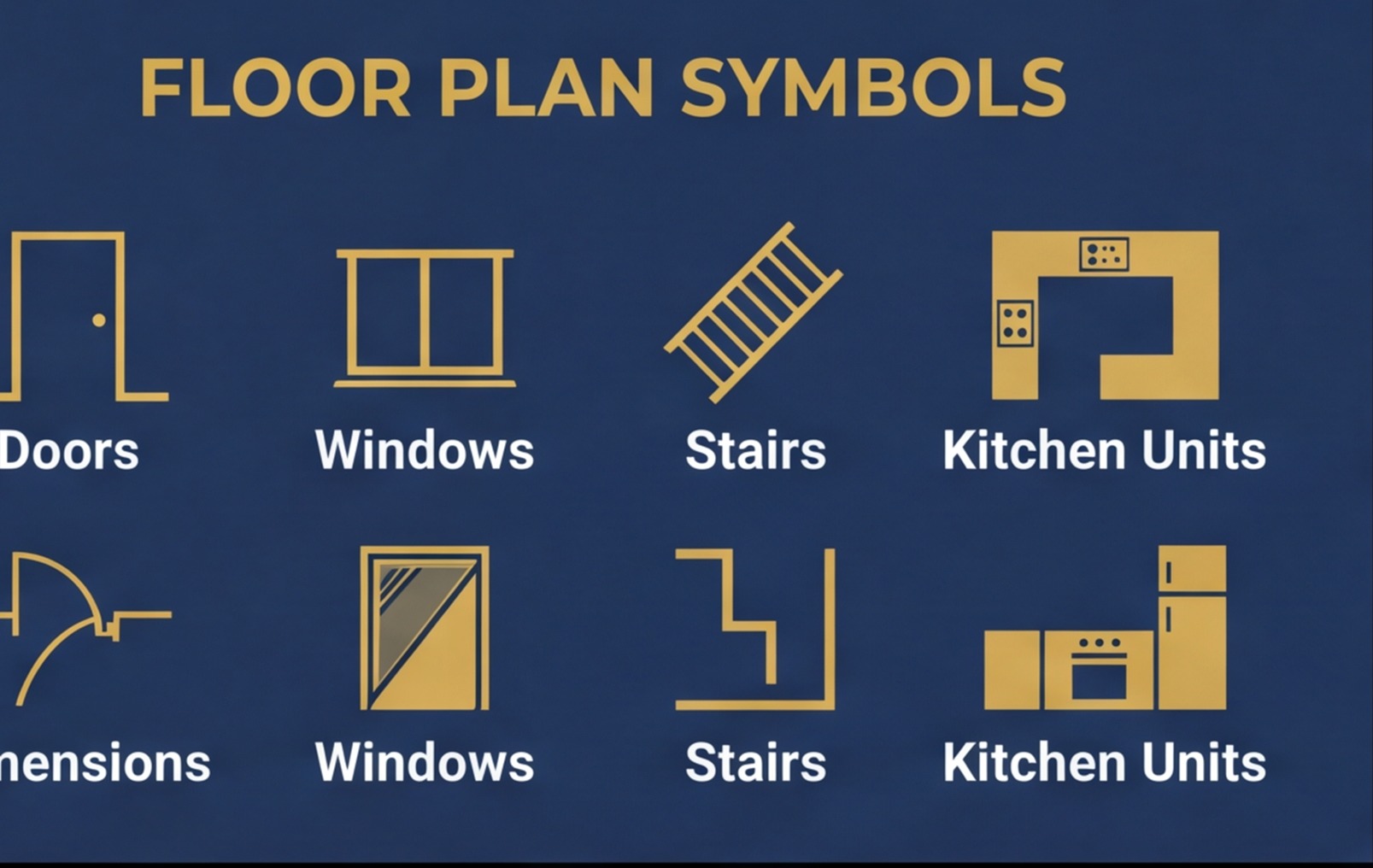
Estate agent floor plans use a fairly consistent set of symbols across providers. Once you know them, reading a plan becomes quick.
Walls
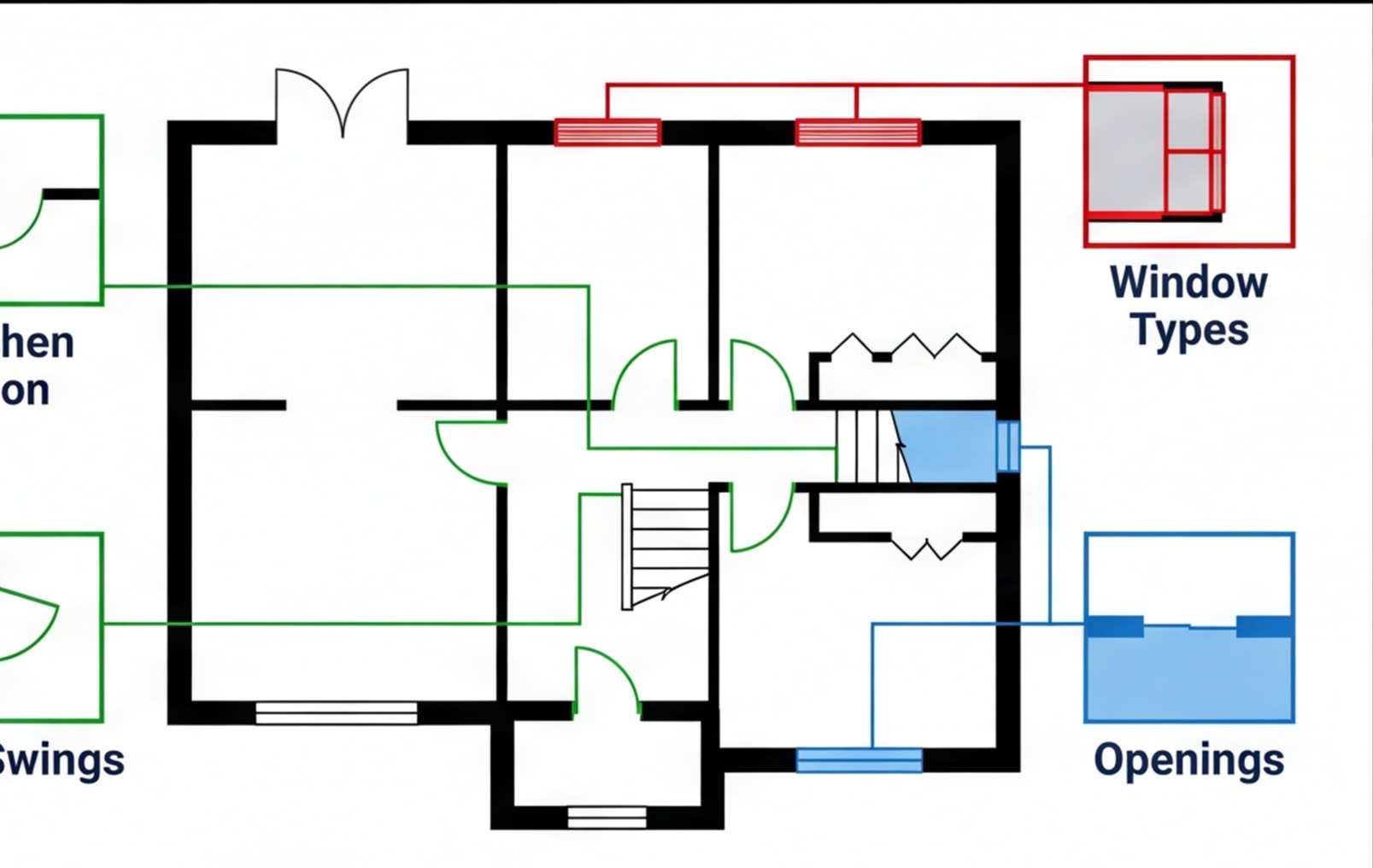
Thick solid lines are walls. The thicker the line, the thicker the wall — though estate agent plans aren't always consistent about this. Walls shown as two solid lines with hatching between them are typically masonry (brick or block). Thinner wall sections may indicate stud partitions. This matters for renovation because removing a stud wall is a different job to removing a masonry wall.
Doors
Doors are shown as a thin line (the door leaf) with a quarter-circle arc showing the swing direction. The arc tells you which way the door opens. This is important if you're moving a kitchen island or planning furniture layouts, and it tells you whether a door might need relocating to make a room work.
Windows
Windows appear as a break in the wall with three parallel lines — two outer lines representing the reveal and one representing the glazing. Bay windows show the projection into or out of the room.
Stairs
Stairs appear as parallel lines with a directional arrow and sometimes a label like "UP" or "DN". Count the lines to get the number of treads. This tells you roughly how many floors you're dealing with and where the staircase sits in the layout — useful for planning any reconfigurations.
Fitted elements
Baths, shower trays, kitchen units and WCs are usually shown as to-scale overhead silhouettes. A bath is an obvious rectangle. A WC is a rounded shape. A shower tray is a square with a circle (drain). Kitchen runs are shown as a series of rectangular base units along the wall.
How Rooms Are Labelled and What It Tells You
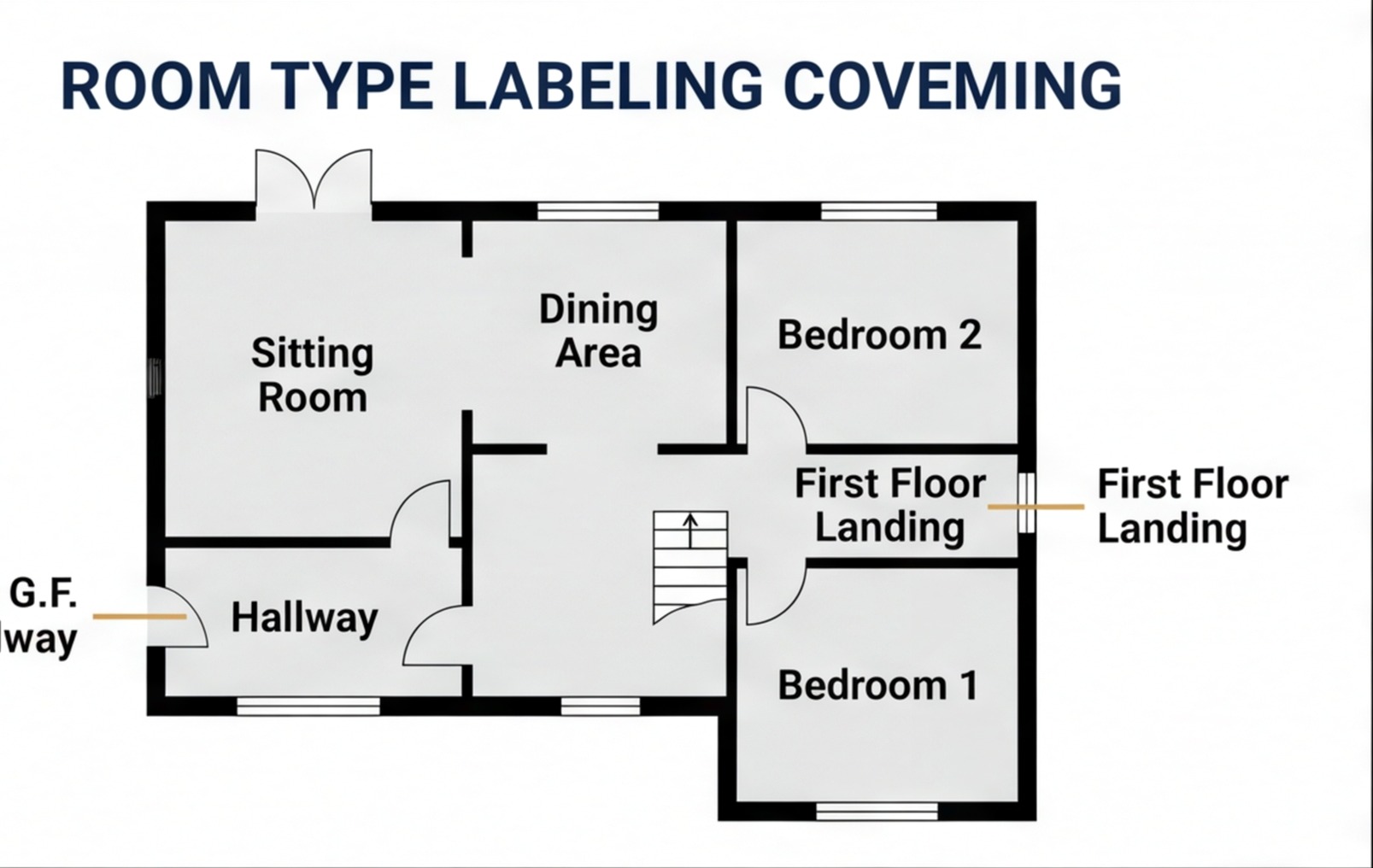
Room labels on estate agent plans carry more information than just the name. Pay attention to how they label rooms — it often reveals what renovations were done previously, what conditions you might find, and what the previous use implies about the building fabric.
Bedroom vs. reception room
A room labelled "reception" or "living room" on the ground floor has almost certainly had its original use maintained. A room on the ground floor labelled "bedroom" might have been converted from a reception — which can mean reduced ceiling height, different floor construction or previous damp history.
En suite vs. bathroom
An en suite on the plan tells you there's already a soil pipe run or drainage near that room. If the client wants to add another bathroom elsewhere, knowing where the existing waste runs are helps you estimate pipework costs.
Utility room
A utility room label means there's already plumbing for a washing machine and potentially a sink. Whether this is a converted space (garage, outhouse) or original is worth checking in the photos.
Loft room vs. loft
A habitable loft room on the plan means planning permission was likely obtained and building regulations were followed at some point — though always verify. An unconverted loft shown only as a floor area outline tells you there's potential but not a done deal.
Layout patterns to watch for
When I look at a plan for an investment property, I'm scanning for: how many wet rooms there are, whether the kitchen has direct external access (useful for HMO licensing), whether there's scope to add a bedroom without major structural work, and whether the layout flows or needs reconfiguring. These patterns are readable from a floor plan before you ever set foot in the building.
What Estate Agent Plans Don't Tell You
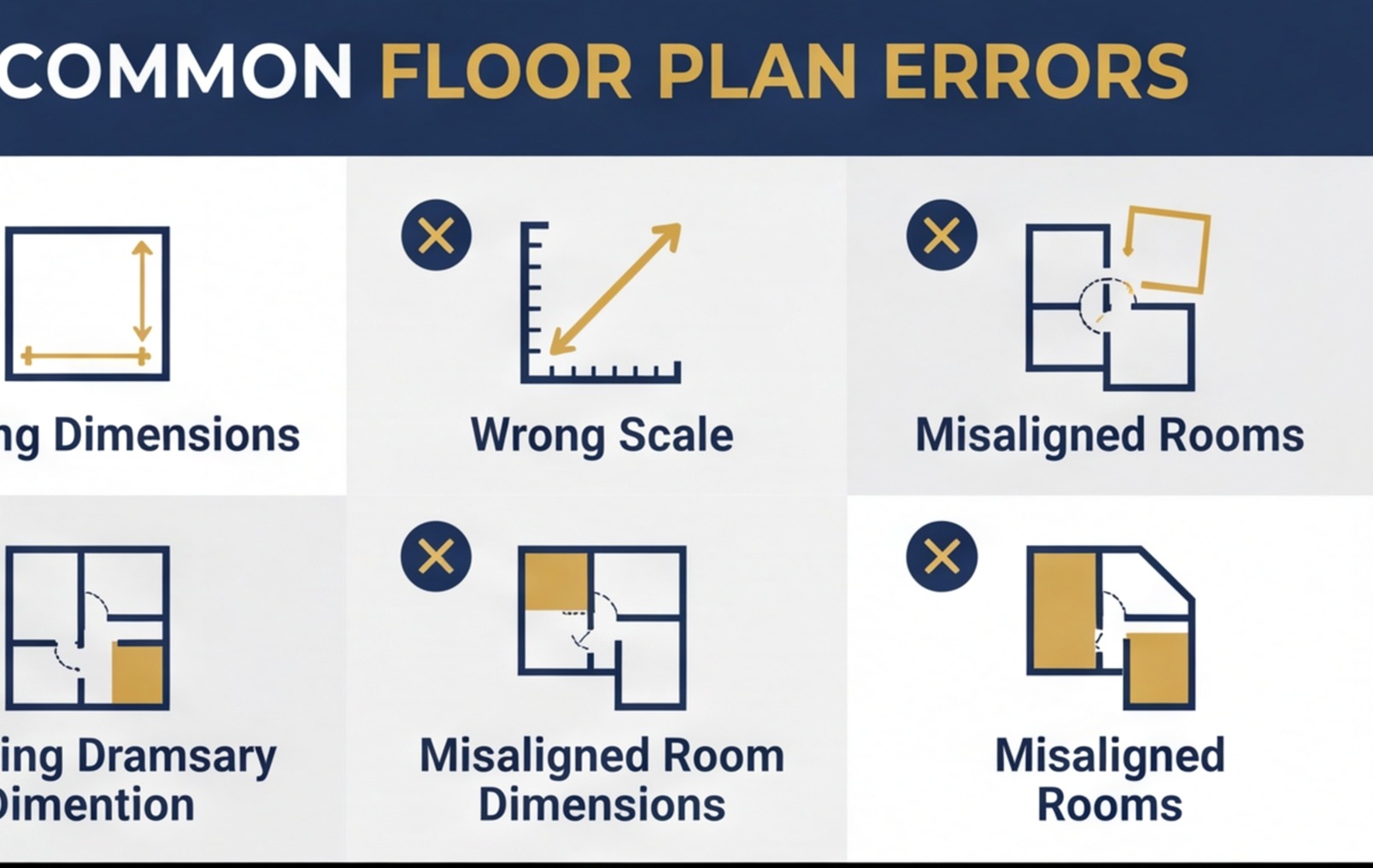
This is the section that matters most for anyone building a renovation quote from a floor plan. There's a long list of things these plans simply don't show — and every single item on this list affects your price.
Ceiling heights
Ceiling height affects the cost of plastering, tiling, coving, staircase builds and virtually everything else you can name. Estate agent plans never show this. Victorian terraces in the Midlands can have ceiling heights anywhere from 2.3m to 3.0m — that's a significant difference in materials and labour for a full skim.
Which walls are structural
A floor plan drawn for marketing purposes does not tell you whether a wall is load-bearing. That needs a structural engineer's assessment. Never assume from wall thickness alone on an estate agent plan — it's not reliable enough. For any proposed wall removal you will need Building Regulations approval.
Services locations
Where's the boiler? Where's the consumer unit? Where does the soil stack run? None of this appears on a standard estate agent floor plan. Yet all of it affects how much a bathroom relocation, new kitchen or full rewire will cost.
Condition of existing fabric
The plan shows a bathroom — it doesn't tell you the floor is rotten, the tiles have been there since 1987 and there's active damp behind the panel. You won't know until you're on site.
Party wall details
In terraced and semi-detached properties, party wall positions matter. The plan shows where the wall is — it doesn't tell you whether previous owners have already done work that needs a party wall agreement, or whether any consent was ever obtained.
Floor construction
Is it solid concrete or suspended timber? Suspended timber floors need a completely different approach for underfloor heating, damp treatment and floor levelling. The plan gives no clue.
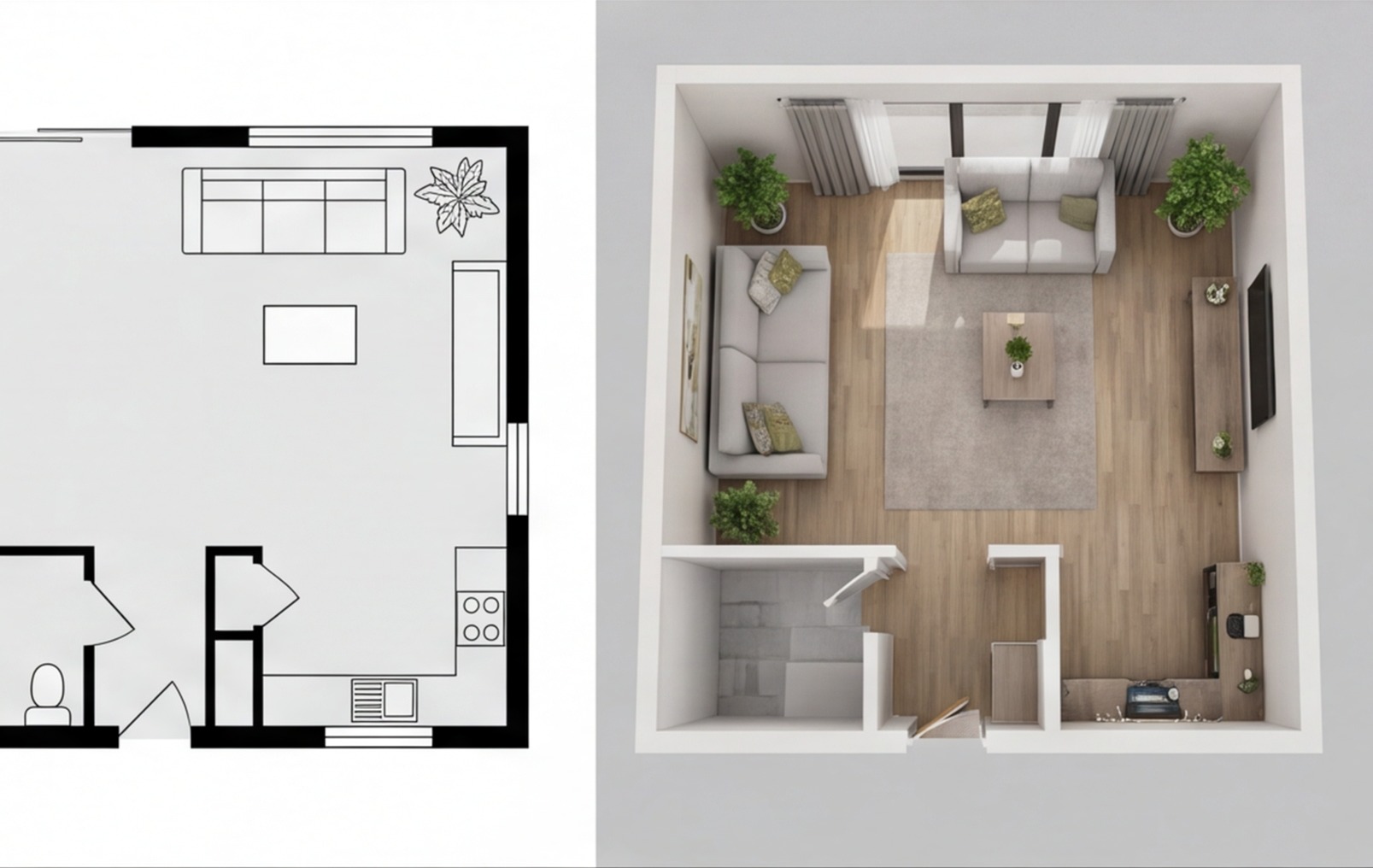
The way I handle this in practice: when giving a pre-survey estimate from a floor plan, I add a contingency range that accounts for these unknowns. A property where the photos show a dated interior and a boiler in the kitchen gets a wider contingency than one where the recent renovation history is visible. And I always tell the client that the estimate will be refined on site.
Using Floor Plans for Early Renovation Estimates
With all of the above in mind, here's how I approach building an early estimate from an estate agent floor plan.
Step 1: Calculate total floor area
Add up all the room dimensions across every floor. Include hallways, landings and WCs — they all need decoration at minimum. This gives you total floor area in square metres. I use this as the base for calculating plaster, floor finish, painting and general decoration costs.
Step 2: Count the wet rooms
Each bathroom, shower room, en suite and kitchen is a wet room. Wet rooms drive a disproportionate amount of renovation cost — tiles, waterproofing, plumbing, extract ventilation, fixtures. Count them and estimate scope per room based on what the photos show.
Step 3: Estimate the scope level
From the floor plan and photos combined, you can usually judge whether this is a light, medium or heavy refurb:
| Scope level | Typical work | Typical cost range (UK 2025) |
|---|---|---|
| Light | Decoration, carpets, minor fixes | £8,000–£20,000 |
| Medium | New kitchen and bathroom, full decoration | £20,000–£50,000 |
| Heavy | Structural work, rewire, re-plumb, full fit-out | £50,000–£120,000+ |
Step 4: Flag structural unknowns
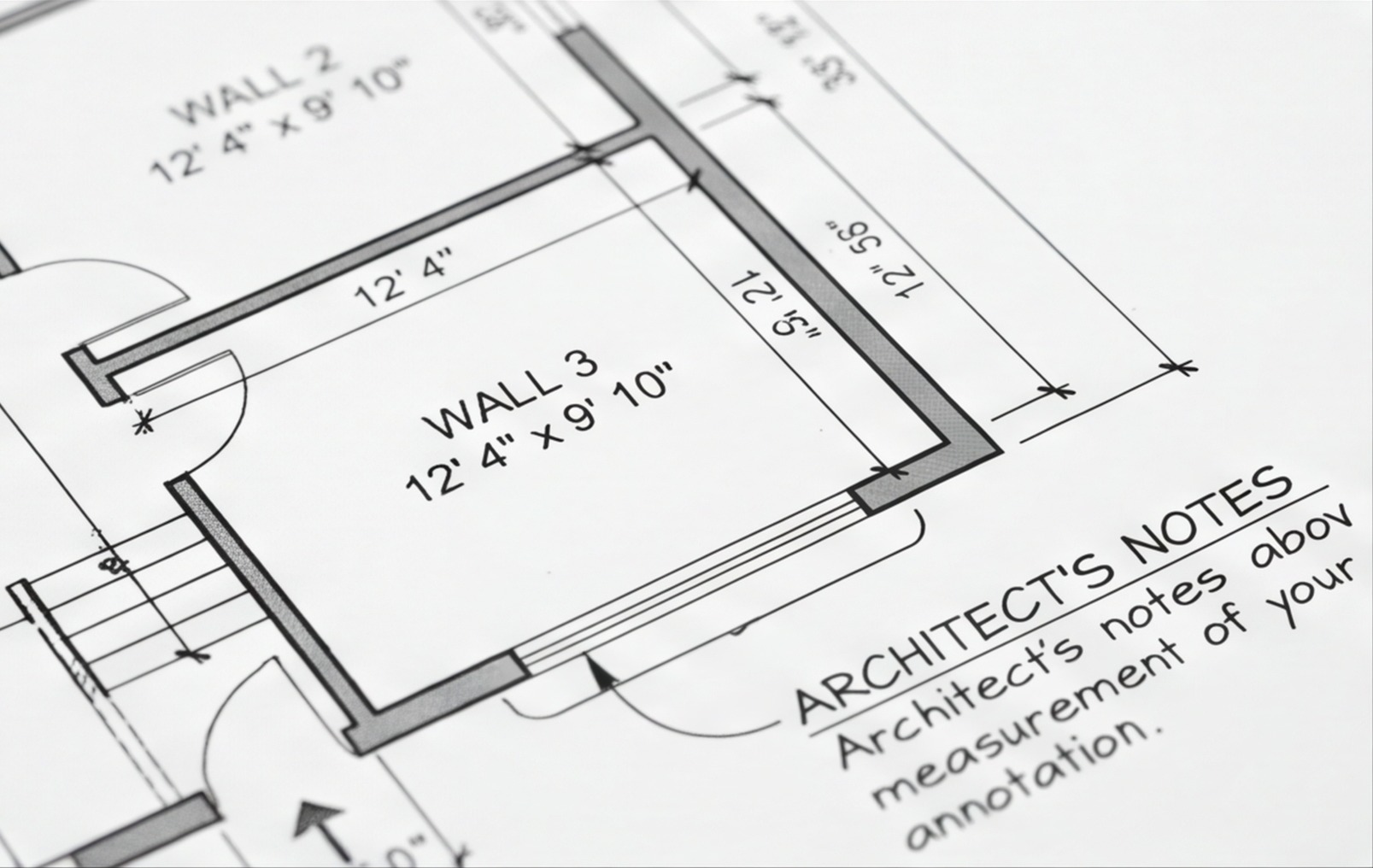
Any wall removal, extension or loft conversion must be flagged as "to be confirmed by structural engineer" in your estimate. Don't include a fixed price for steel beams, RSJs or structural alterations until you've got an engineer's spec. The floor plan might suggest a wall could come out — but you can't price it without knowing what's in there. Extensions also require planning permission or Permitted Development confirmation before work starts.
Step 5: Add your contingency
Pre-site estimates from floor plans need a meaningful contingency. I typically use 15–20% on top of my estimated build cost at this stage. That's not padding — that's honest acknowledgement that a marketing document has limits. When I can get on site, the contingency often comes down as uncertainties are resolved.
Using RenoCalc to speed the process up
We built RenoCalc specifically to handle this workflow. Upload the floor plan image, let the AI extract room dimensions, and it generates a structured renovation budget in under three minutes. It handles the area calculations, applies current UK trade rates and produces a quote you can discuss with the client — all from the floor plan image. There's no need to manually tot up square metres across six rooms. Try it with your next estate agent floor plan and see how fast the process becomes.
The floor plan cost estimator is particularly useful for investors who are running the numbers on multiple properties at once. Rather than spending half an hour per property on manual calculations, you get a consistent method and a reliable output every time.
For more detail on how to estimate renovation costs at each stage of the buying process, read our guide on how to estimate renovation costs before buying a property.
Frequently Asked Questions
Are estate agent floor plans accurate enough to quote from?
Not for a final quote, but they're useful for early estimates. Estate agent floor plans are created for marketing, not construction. Dimensions can be off by 5–15%, and they rarely show ceiling heights, structural walls, pipe runs or electrical positions. Use them to get a rough scope and a ballpark figure, then refine with a proper site survey before you commit to a final price.
What scale are estate agent floor plans usually drawn to?
Most UK estate agent floor plans are drawn at 1:100 or 1:50, though this isn't always stated. When a scale bar is printed, you can measure from it. If there's no scale reference and no printed dimensions, treat any measurements you take from the plan as approximate. Always verify with a tape measure on site before finalising any quote.
Can I use a Rightmove floor plan to get a renovation estimate?
Yes, as a starting point. Floor plans from Rightmove, Zoopla and other portals give you room layout, approximate sizes and an idea of the property's footprint. That's enough to estimate scope for a light or medium refurb. For anything structural — extensions, loft conversions, wall removals — you'll need a proper measured survey before quoting accurately.
What do the symbols on estate agent floor plans mean?
Common symbols include quarter-circle arcs for door swings, thin rectangles for windows, hatched walls for structural masonry, and dotted lines for overhead features like beams or roof slopes. Stairs are shown as a series of parallel lines with a directional arrow. Fitted items like baths, shower trays and kitchen units are usually drawn to approximate scale as overhead silhouettes.
What information is missing from estate agent floor plans?
Quite a lot. Estate agent plans typically omit ceiling heights, boiler and consumer unit locations, drainage and soil stack positions, the age and condition of existing finishes, which walls are structural, where any damp issues are, and loft access or crawl space details. All of these affect your renovation quote significantly, so always carry out a proper site visit before pricing a job.
The Bottom Line
Estate agent floor plans are useful — but they're a starting point, not a finished quote. Know how to read the symbols, extract the area data, identify the wet rooms and flag the structural unknowns. Build your estimate with a sensible contingency, be clear with the client about what's confirmed and what's assumed, and always follow up with a site visit before you commit to a final price.
If you want to speed up the early estimate stage, try RenoCalc — upload the floor plan and get a structured renovation budget in minutes.
Turn Any Floor Plan Into a Renovation Budget
RenoCalc reads the floor plan, calculates room areas and generates a full UK renovation quote in under 3 minutes. No spreadsheets. No guesswork.
Get Your Free Estimate
Pindi Sahota
Pindi has spent 30+ years in the building trade, running building projects across the UK. He is the founder of RenoCalc — the AI quoting app that turns floor plans into full job quotes in under 3 minutes. Based in Coventry, Director of Future Build Cov Ltd.