How to Quote a Full Rewire: Cable, Sockets and Consumer Unit Maths
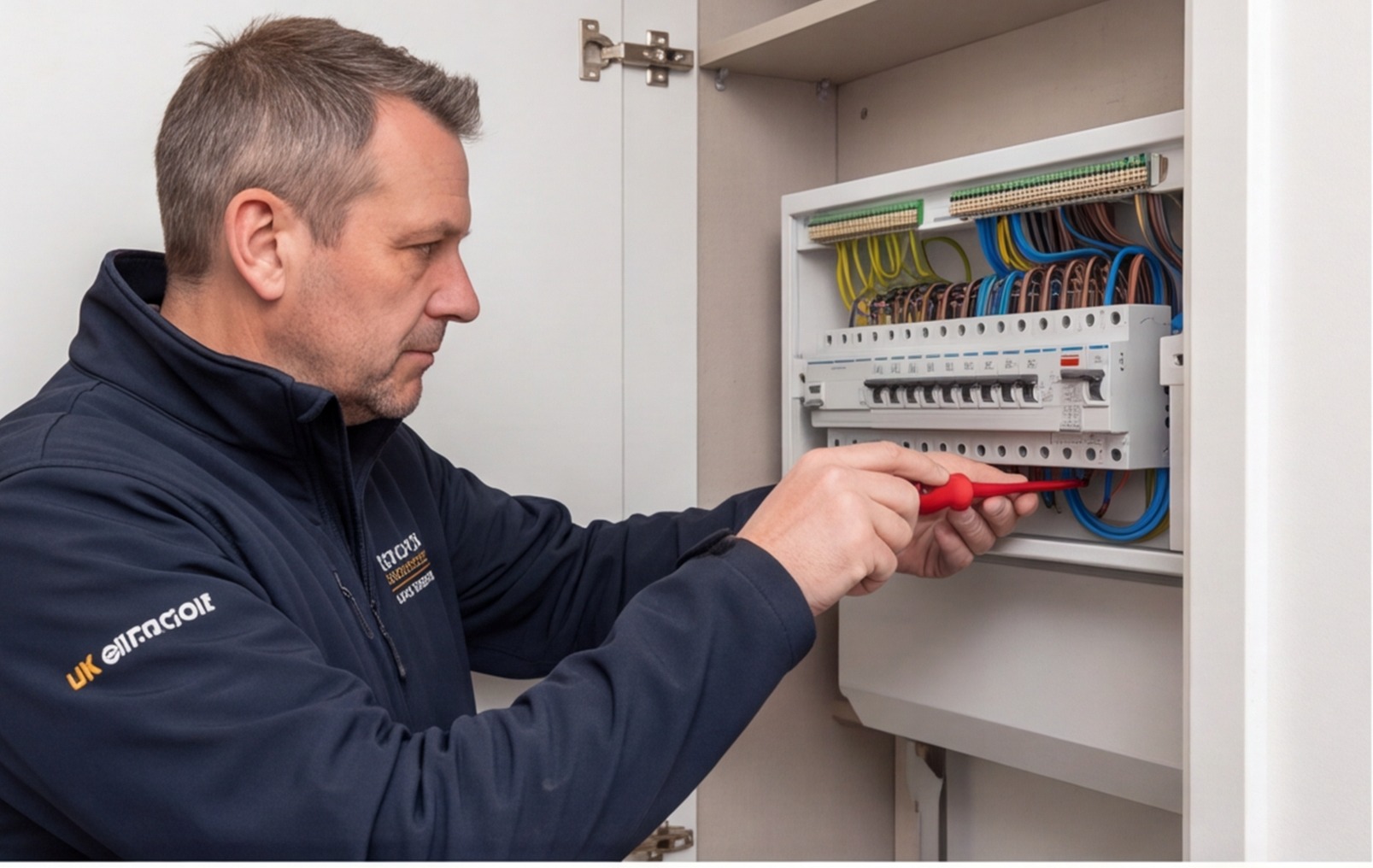
Knowing how to quote a rewire properly is the difference between a profitable job and one that eats your margin from the first week. A rewire touches every room, every wall, every ceiling — and the variables stack up fast. Room count, socket count, circuit design, consumer unit size, chasing requirements, making good — each one affects your price. This guide walks through the estimating process as a general quoting framework, covering the components, the maths and the way to present a complete rewire estimate to the client or homeowner. Note: electrical installation work must be carried out by a qualified, competent person in accordance with BS 7671 and the relevant Part P requirements.
Survey and Room Count
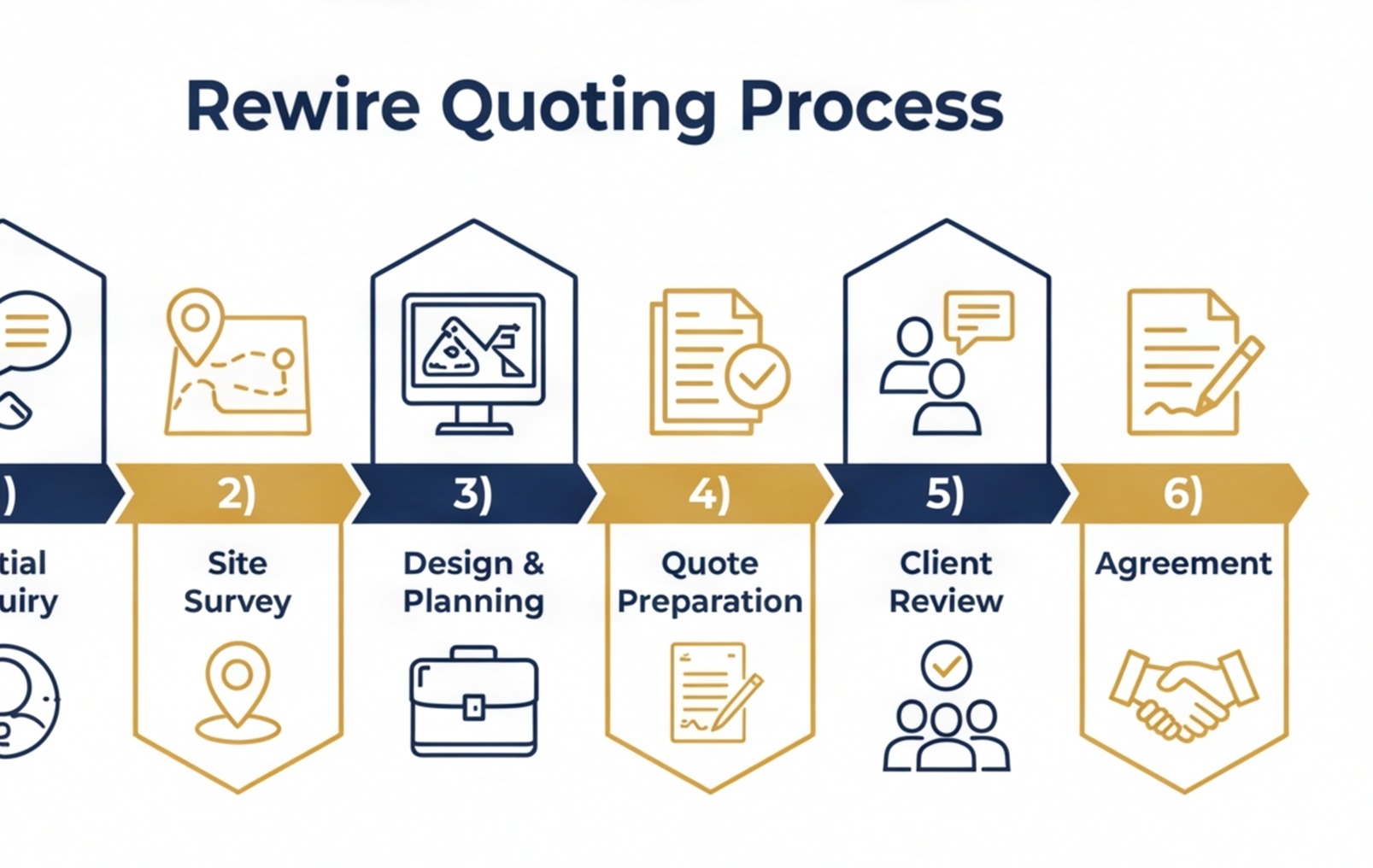
The starting point for any rewire estimate is a room-by-room survey. You need a floor plan — even a basic sketch — showing every room, hallway, landing and outbuilding that is in scope.
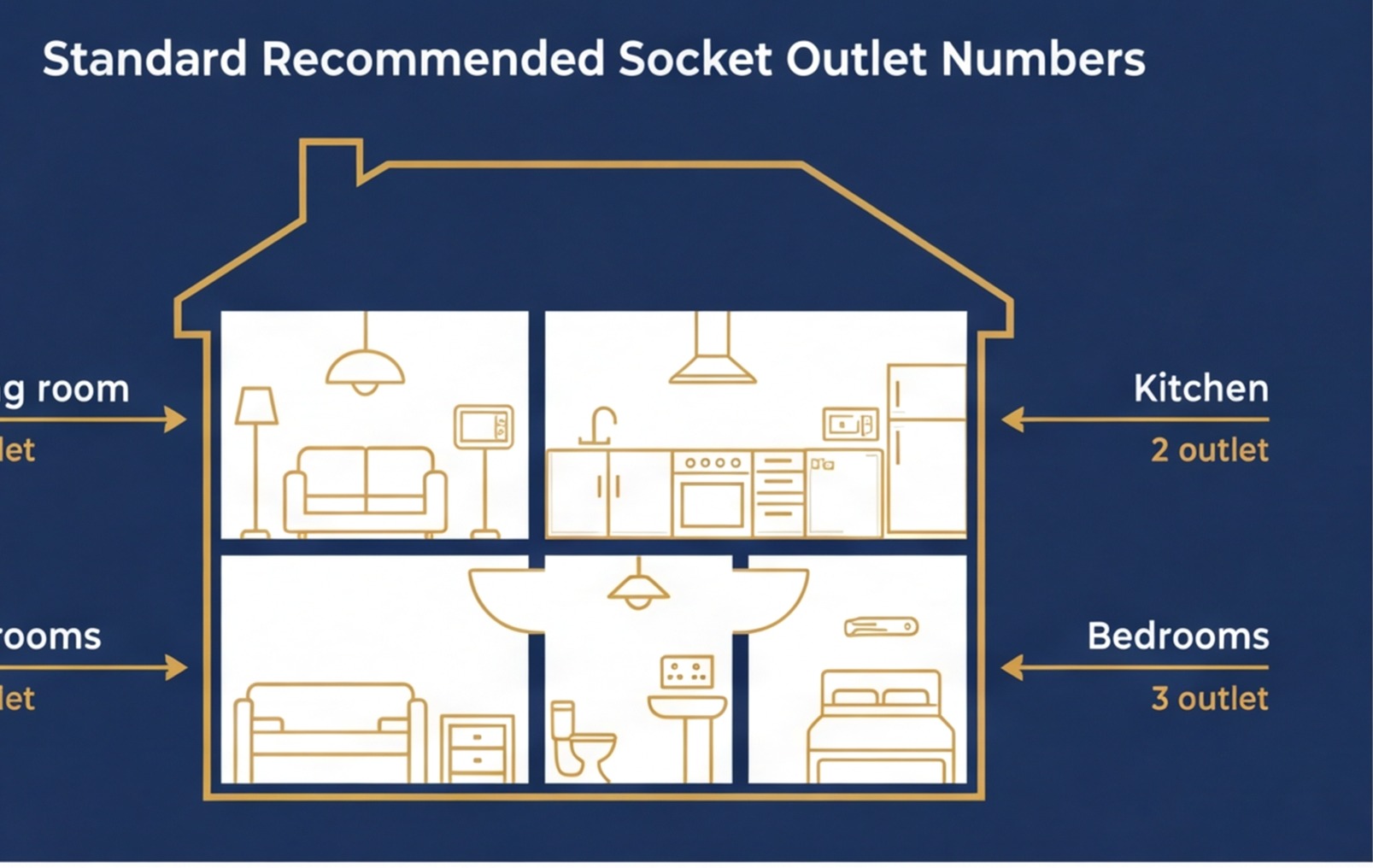
Typical Room-by-Room Socket Allowances
| Room | Minimum double sockets | Typical upgraded spec |
|---|---|---|
| Living room | 6 | 8–10 including USB sockets |
| Kitchen | 8 | 10–14 above and below worktops |
| Master bedroom | 4 | 6 including bedside positions |
| Double bedroom | 4 | 4–6 |
| Single bedroom / office | 2–3 | 4 |
| Bathroom | 0 (shaver socket only in Zone 2+) | Class II shaver socket |
| Hallway / landing | 1 | 1–2 |
| Garage | 2 | 4–6 with dedicated circuit |
Record the agreed socket count for each room on your survey sheet. These numbers drive your cable quantities and your accessories list. If the client wants USB sockets, data points or smart switches, note them — they all carry a different supply cost.
Cable Runs and Quantities
Cable is a significant material cost on a full rewire. The key cable types you will be pricing are 2.5mm² twin and earth (ring mains), 1.5mm² twin and earth (lighting circuits) and 6mm² or 10mm² for cooker, shower and other high-draw circuits.
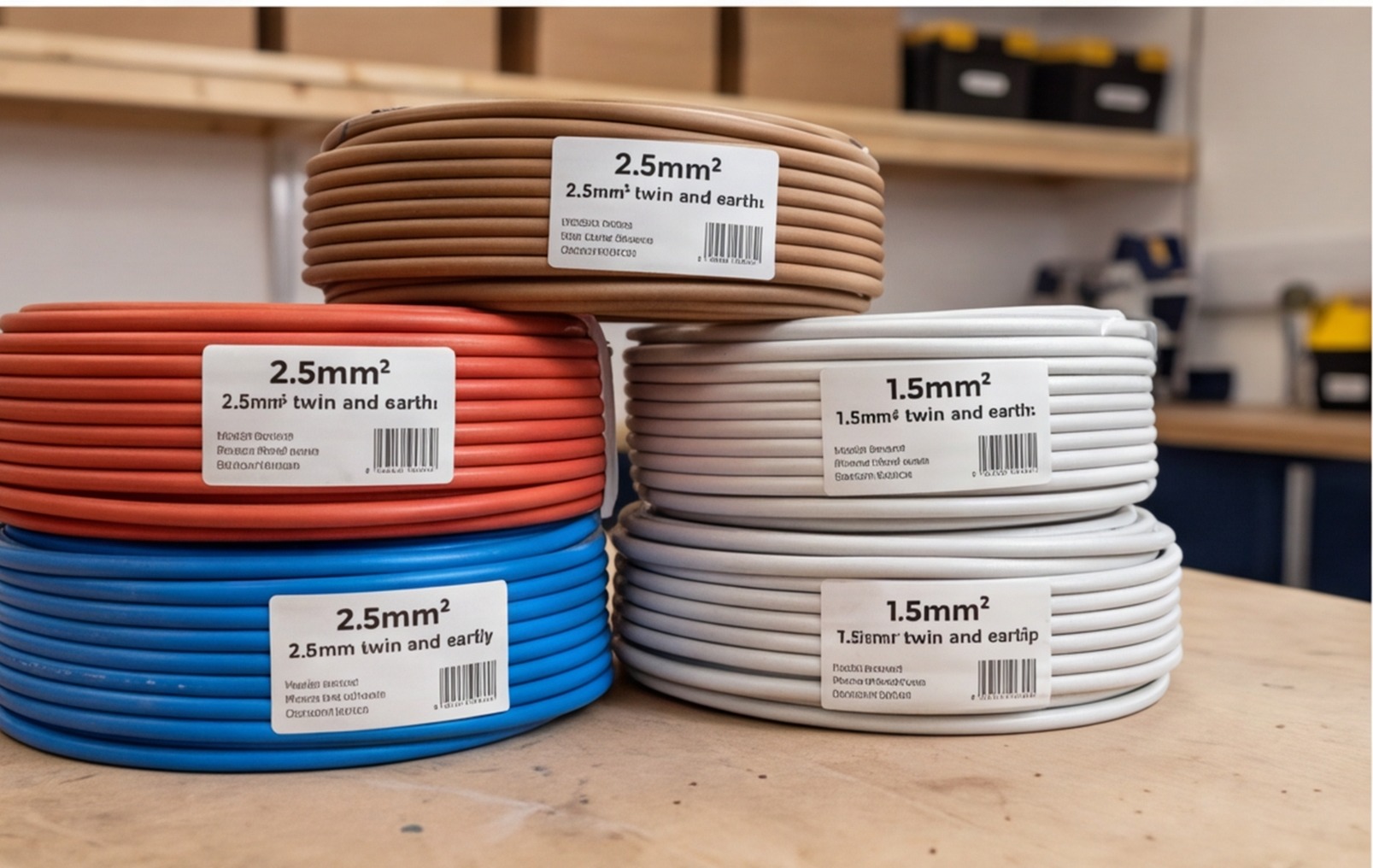
Cable Quantity Estimating Method
A common estimating method is the floor area multiplier. For a typical two-storey semi or terrace:
- 2.5mm² ring main cable: allow 1.5–2 metres of cable per m² of floor area (both floors combined)
- 1.5mm² lighting cable: allow 0.75–1 metre of cable per m² of floor area
- 6mm² cooker circuit: measure the actual run from the consumer unit to the cooker point, plus 20% for routing
- 10mm² shower circuit: as above — measure the run and add 20%
These are estimating approximations. On older properties with solid walls (brick, block or stone), cable runs are longer because you cannot chase diagonally through a joist — you must run vertically and horizontally, which adds length. On timber-frame or stud-wall properties, running cables through the void is faster but requires specific fire-stopping requirements.
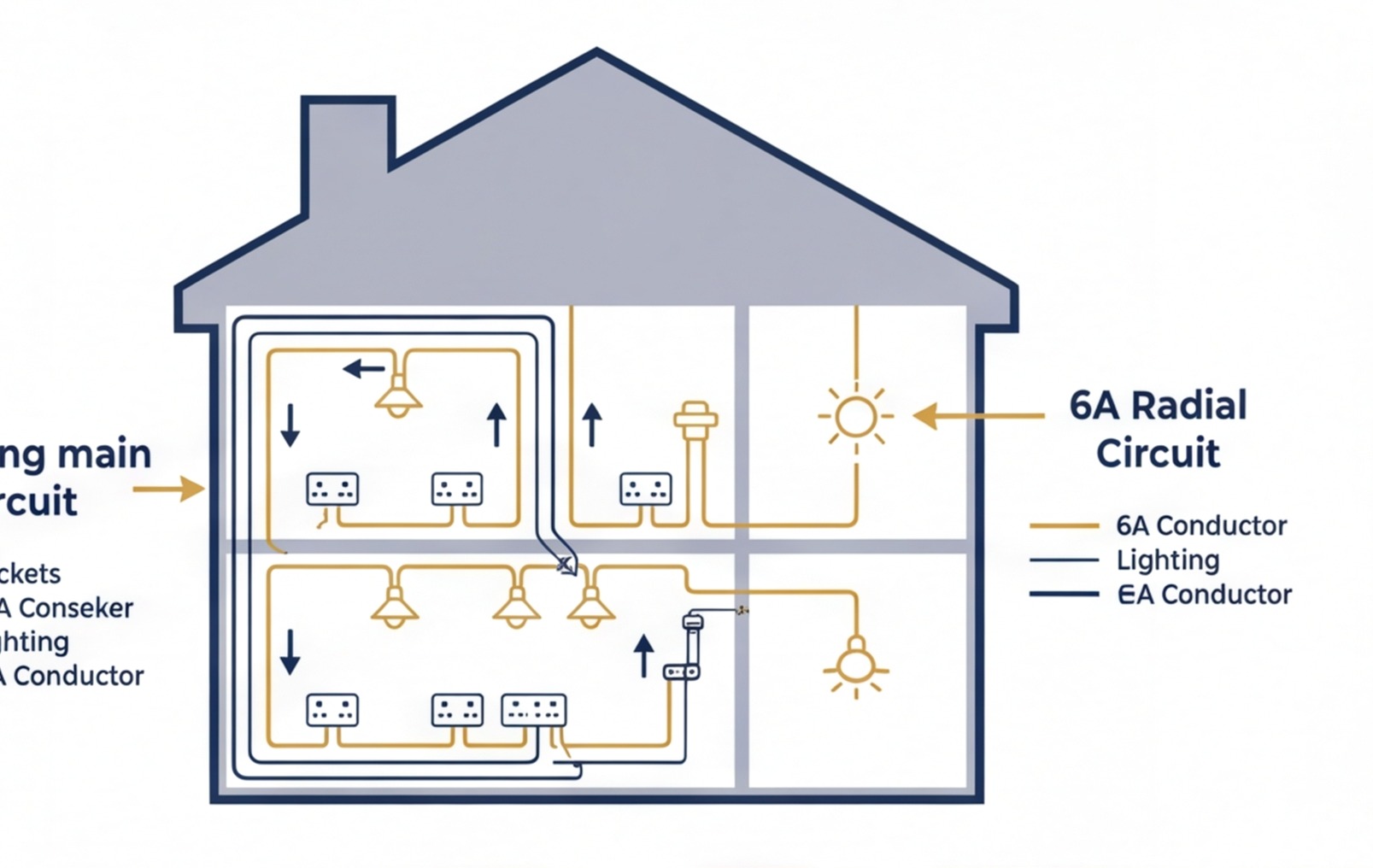
Cable Price Movements
Cable prices move with copper market prices. Always buy cable at current trade prices, not prices from three months ago. On a full house rewire for a 3-bedroom semi, you might be looking at 150–250 metres of 2.5mm² twin and earth and 80–120 metres of 1.5mm² twin and earth. At current trade prices, that is a significant materials cost that must be included in the quote — not absorbed into labour.
Sockets, Switches and Accessories
Accessories — sockets, switches, FCUs, isolators, shaver sockets, TV points, data points — add up quickly. Build a complete accessories schedule before you price the job.

Sample Accessories Schedule — 3-Bed Semi
| Item | Typical quantity | Trade supply range per unit |
|---|---|---|
| Double switched socket (white/chrome) | 30–45 | £3–£12 |
| Single switched socket | 4–8 | £2–£8 |
| USB double socket | 4–8 | £12–£25 |
| 1-gang light switch | 8–14 | £2–£8 |
| 2-gang light switch | 2–4 | £3–£10 |
| Intermediate / 2-way switches (stairs) | 3–4 | £3–£10 |
| Cooker control unit | 1 | £15–£35 |
| Shaver socket (Class II) | 1 | £15–£25 |
| Fused connection unit (FCU) | 2–4 | £5–£15 |
| TV / aerial point | 2–4 | £4–£10 |
Specify the accessories grade in the quote. White plastic, brushed steel and chrome all carry different price points. If the client upgrades the spec mid-job, that is a variation — not something you absorb.
Consumer Unit and Circuit Design
The consumer unit (CU) is the heart of the installation and a significant cost item. Since 2016, new and replacement consumer units in domestic properties must be housed in a non-combustible enclosure — typically metal, or a specific fire-rated plastic variant. This is a Building Regulations requirement.
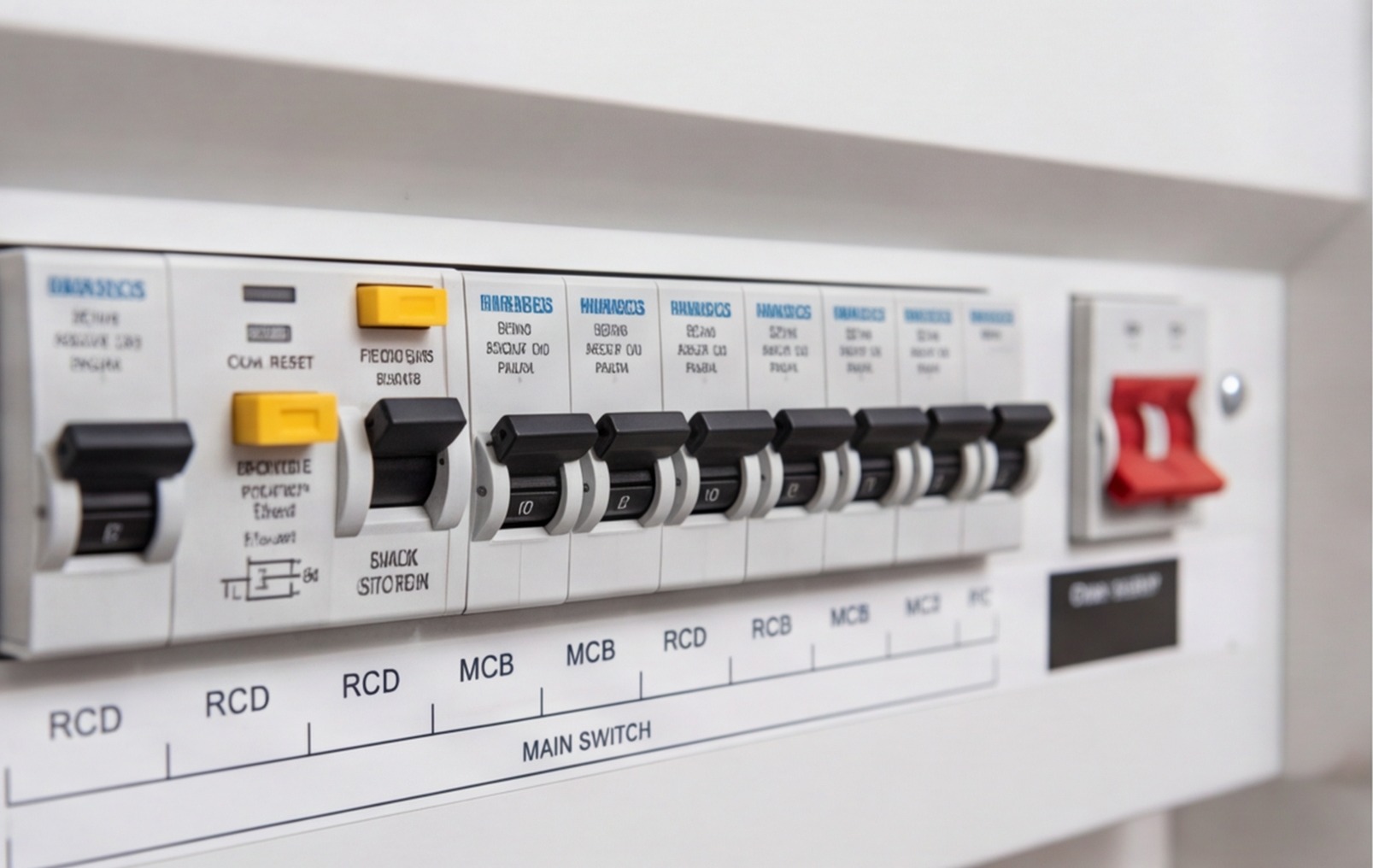
Consumer Unit Sizing
| Property type | Typical circuit count | Consumer unit size |
|---|---|---|
| 2-bed flat / small terrace | 8–10 circuits | 10-way dual RCD CU |
| 3-bed semi | 10–14 circuits | 12–14 way dual RCD CU |
| 4-bed detached / larger | 14–18+ circuits | 18-way dual RCD or RCBO board |
RCBO boards (one RCBO per circuit instead of shared RCDs) are increasingly specified because they offer better discrimination — a fault on one circuit does not trip all circuits on that RCD. They cost more to supply and fit but are worth offering as an upgraded option, particularly on family homes where a nuisance trip of half the property's circuits is genuinely disruptive.
Include the consumer unit supply and installation as a named line item. A 14-way metal consumer unit with dual RCD from a trade supplier might cost £80–£180 depending on brand; an RCBO board for the same way count could be £150–£350. Know your supplier prices before you write the quote.
Chasing, Clipping and Making Good
On a solid-wall property, chasing is a major labour cost. Every socket, every switch and every cable run that cannot be routed through the void or behind a duct requires a chased channel in the plaster or masonry. Chasing is dusty, slow and hard to price accurately without seeing the walls — which is why the site survey is non-negotiable.
Chasing Allowances
- Solid brick or blockwork: 20–30 minutes per linear metre by hand or angle grinder
- Plasterboard on timber: cable drops through void — typically no chasing, but fire-stopping required at every floor penetration
- Making good chases (skim filler): allow 5–10 minutes per metre if done by the electrician, or coordinate with the plaster programme
On a full house rewire across a solid-wall 3-bed semi, total chasing might run to 80–150 linear metres across all circuits combined. That is a significant time allowance that many rewire quotes underestimate.
Making good after chasing is often a grey area in rewire quotes. Be explicit in your quote: state clearly whether making good is included (filled flush, ready for decoration) or excluded (open channels, requiring a plasterer).
Testing, Certification and Coordination
A full rewire must be tested and certified to BS 7671 (the IET Wiring Regulations). The test results are recorded on an Electrical Installation Certificate (EIC). Where the installation is notifiable under Part P of the Building Regulations, it must either be carried out by a registered competent person scheme member (such as NICEIC, NAPIT or Elecsa) or notified to building control.

Testing Time Allowances
- Initial verification testing (continuity, insulation resistance, polarity, earth fault loop): 30–60 minutes per circuit
- RCD testing: 10–15 minutes per RCD
- Completing the EIC and schedule of test results: 1–2 hours
- DNO (Distribution Network Operator) notification if new supply or meter upgrade required: allow cost plus time
Putting It All Together
A full rewire quote should be itemised by section, not presented as a single number. Clients who see a large single number will always try to negotiate it down without understanding what makes it up. Itemised quotes give you something to discuss — and allow you to offer genuine options (such as the RCBO upgrade) without re-pricing from scratch.
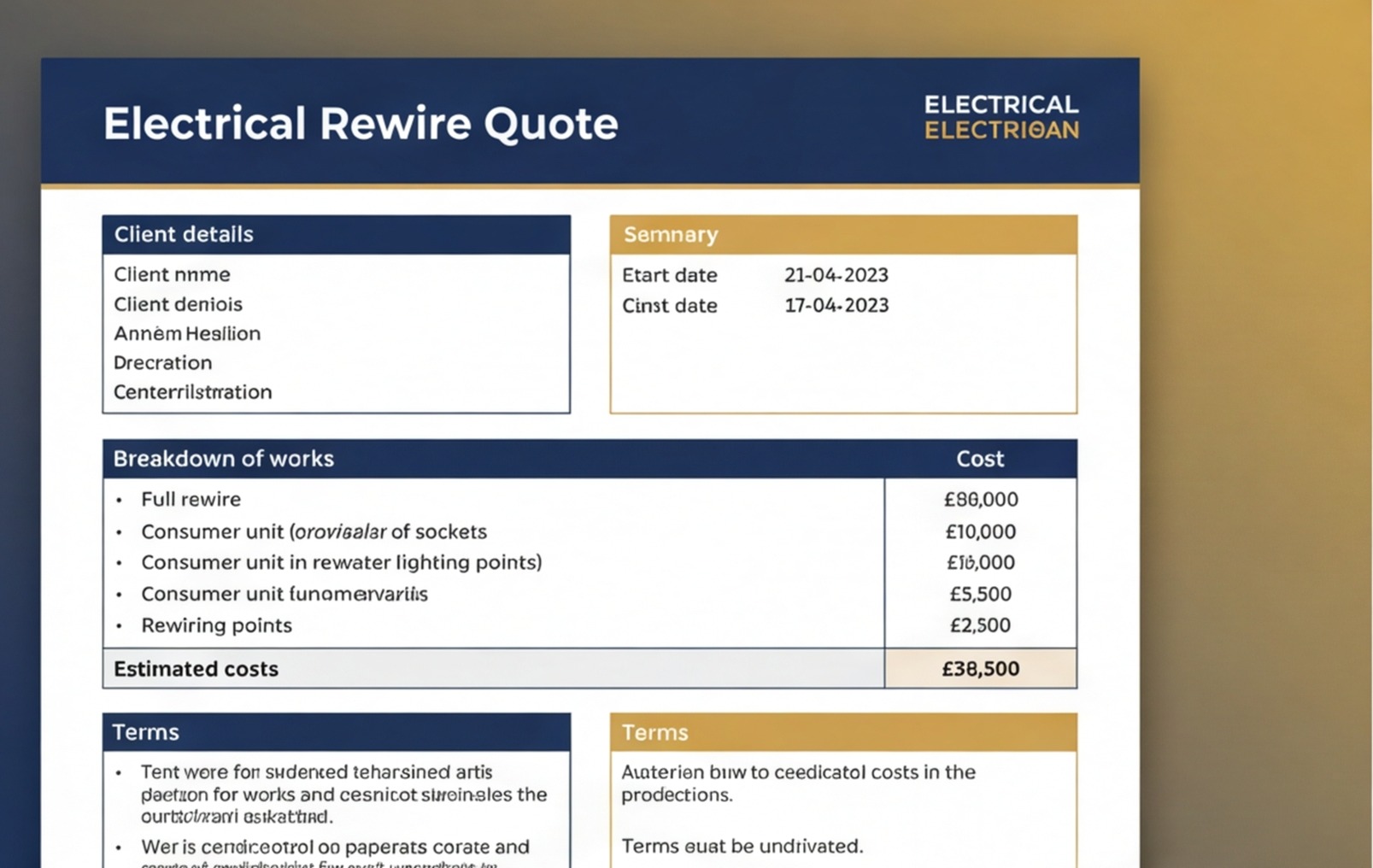
Rewire Quote Structure
- Property address and scope summary
- Cable materials — by type and quantity
- Accessories schedule — listed by room
- Consumer unit supply and installation
- Labour — first fix, second fix, chasing, making good (if included)
- Testing and certification — time and EIC cost
- Exclusions — specify what is NOT in scope
- Assumptions — access, programme, making good boundary
- Payment stage schedule
- Quote validity period
- Certification scheme membership and relevant qualifications
To build a structured job estimate that feeds into a full project quote, start with RenoCalc — it handles the line-item breakdown so you can price every element, not just the big-ticket items.
If you need to estimate the plastering cost that follows a rewire, read our guide to plastering costs per square metre UK. For the full refurbishment picture, see our guide to how to cost a refurb UK.
Looking for a faster way to build full project estimates? Our floor plan cost estimator integrates electrical, plumbing and structural costs into a single project quote. For HSE guidance on electrical safety in construction, see the HSE electrical safety pages.
When the rewire is complete and making good begins, read our stud partition wall quoting guide for the boarding and plastering that typically follows. If the rewire is part of a bathroom project, see how to quote a bathroom renovation.

Build Your Rewire Estimate Faster
Stop underestimating your rewire quotes. RenoCalc helps you build detailed, room-by-room job breakdowns so your estimate covers every cable metre, every socket and every circuit — before you commit to a price.
Start a Free Estimate with RenoCalc