Free Building Estimating Software UK: What's Worth Using
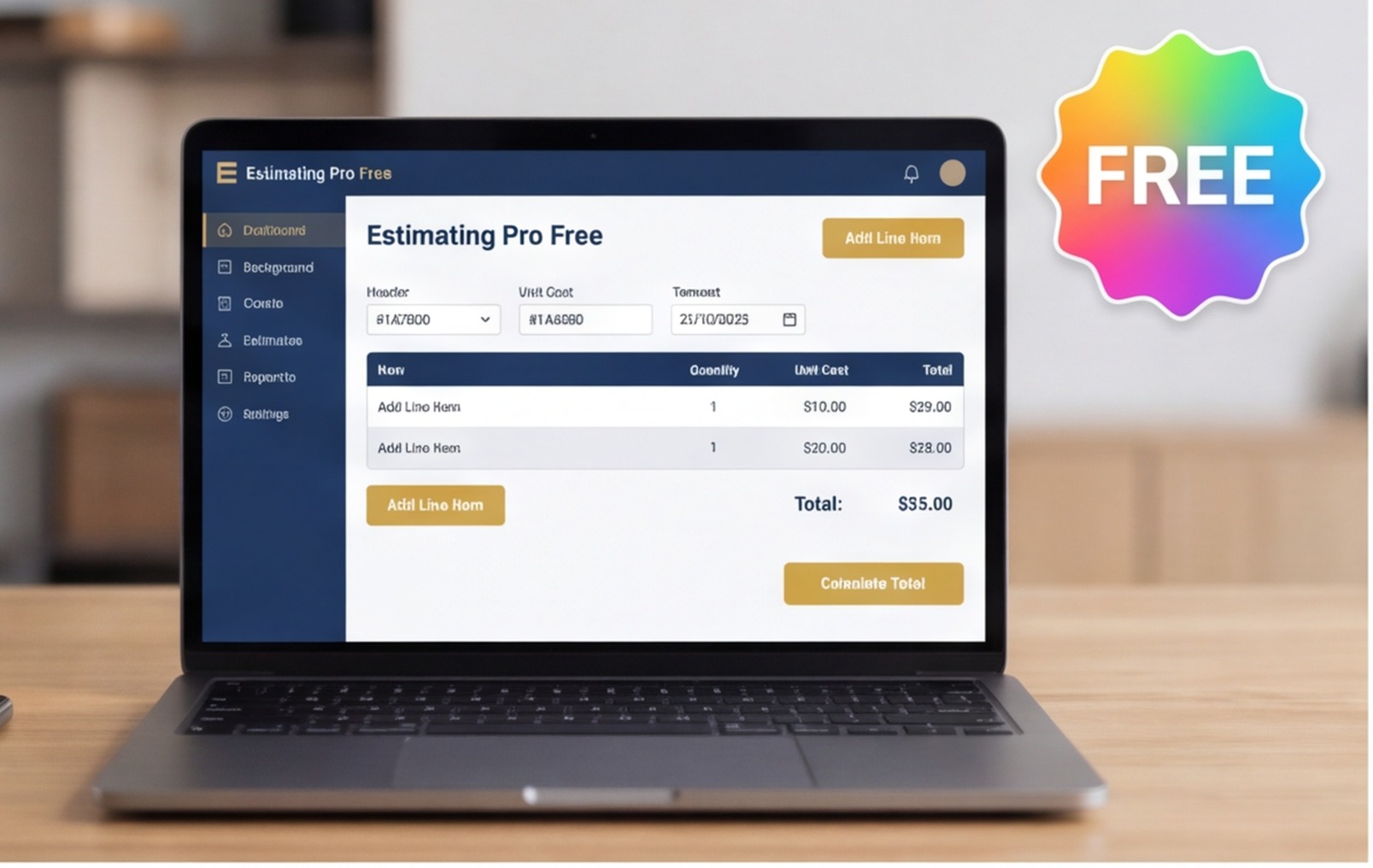
Most builders searching for free building estimating software aren't really looking for free — they're looking for something that works without paying a lot for features they don't use. Fair enough. The UK market has a range of options, from genuinely free spreadsheet tools to free trials of professional estimating software and first-quote-free models. In this guide I'll be straight about what's actually available, what "free" usually means in practice, where the limits are, and at what point most renovation builders find that free stops being enough. No inflated promises about tools that turn out to require a paid subscription to do anything useful.
Quick Answer
Free construction estimating software options in the UK: RenoCalc (first quote free, then £9.99/quote), Excel/Google Sheets (truly free but manual), BuildPartner (free tier), EasyEstimate (free tier with limits). No genuinely free tool offers AI-powered floor plan measurement, live material prices, and automated document generation. RenoCalc’s free first quote lets you test the full product — including schedule of works and method statement — before committing.
What "Free" Actually Means in This Market
Before you invest time in any tool billed as free, it's worth understanding the different flavours of "free" in the building software space. They're not all the same.
Genuinely free tools
Some tools are free because they always have been and always will be. Spreadsheets — Excel, Google Sheets, LibreOffice Calc — fall into this category. There's no subscription, no trial expiry, no feature unlock waiting behind a paywall. What you see is what you get: a blank canvas you build yourself.
Free tiers with feature limitations
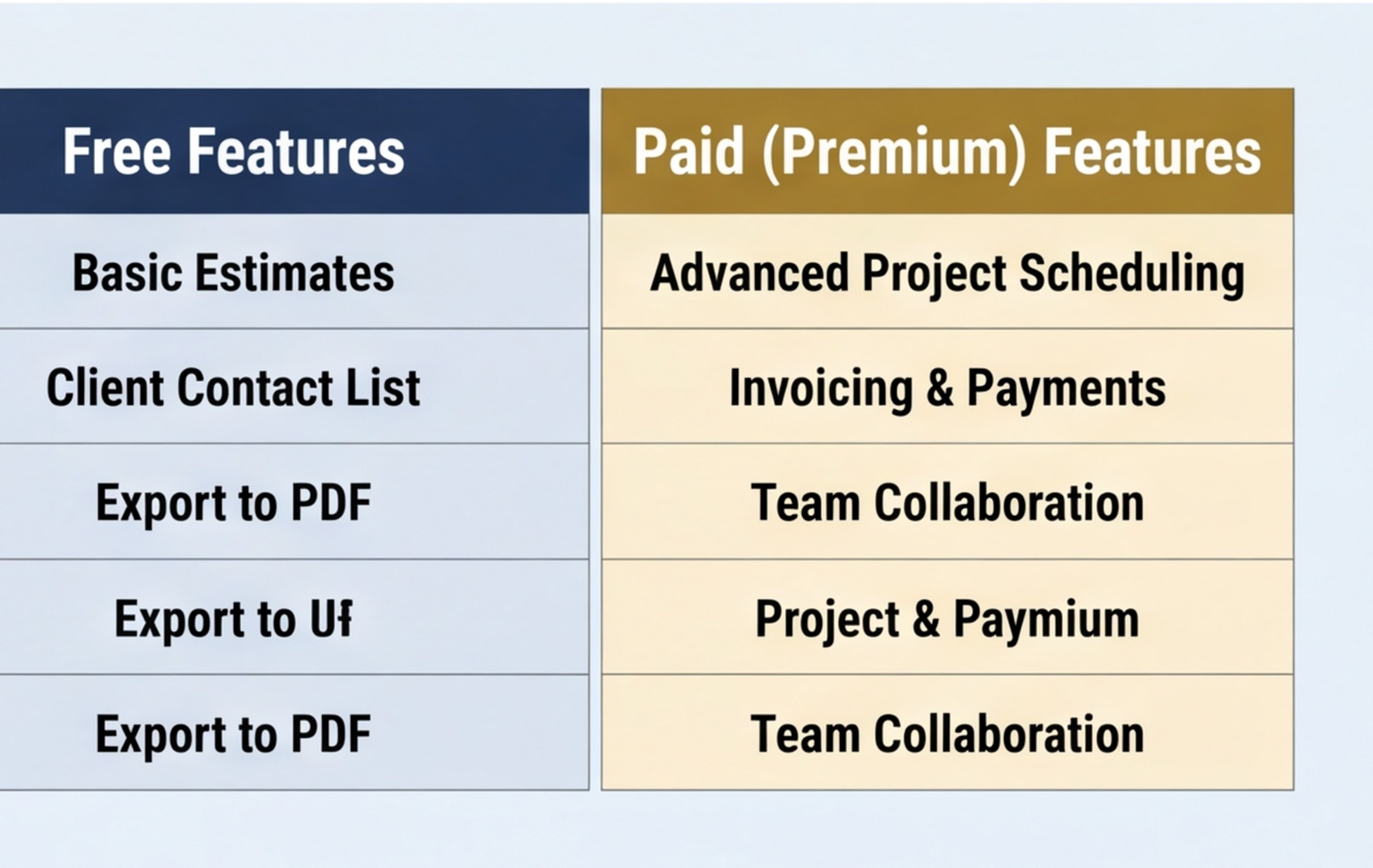
Many SaaS tools offer a "free forever" plan, but with enough restrictions that it's not really suitable for running a building business. You might be limited to a certain number of quotes per month, unable to export PDFs, missing integrations, or locked out of the features that actually save time. Read the fine print on what's excluded before assuming a free tier does what you need.
Time-limited trials
A 14 or 30-day trial gives you full access to the product for a fixed period. These are genuinely useful for testing whether a tool fits your workflow — but the clock is ticking. Use a real job during the trial to get an honest assessment. Don't test on invented data; test on a live quote you actually need to produce.
First-quote-free or freemium-style access
Some tools let you produce one or a limited number of outputs for free before requiring a subscription. This is a different model — you're getting the full product on a real job, not a stripped-down demo. It's the most useful form of "free" for judging whether the tool actually fits your work.
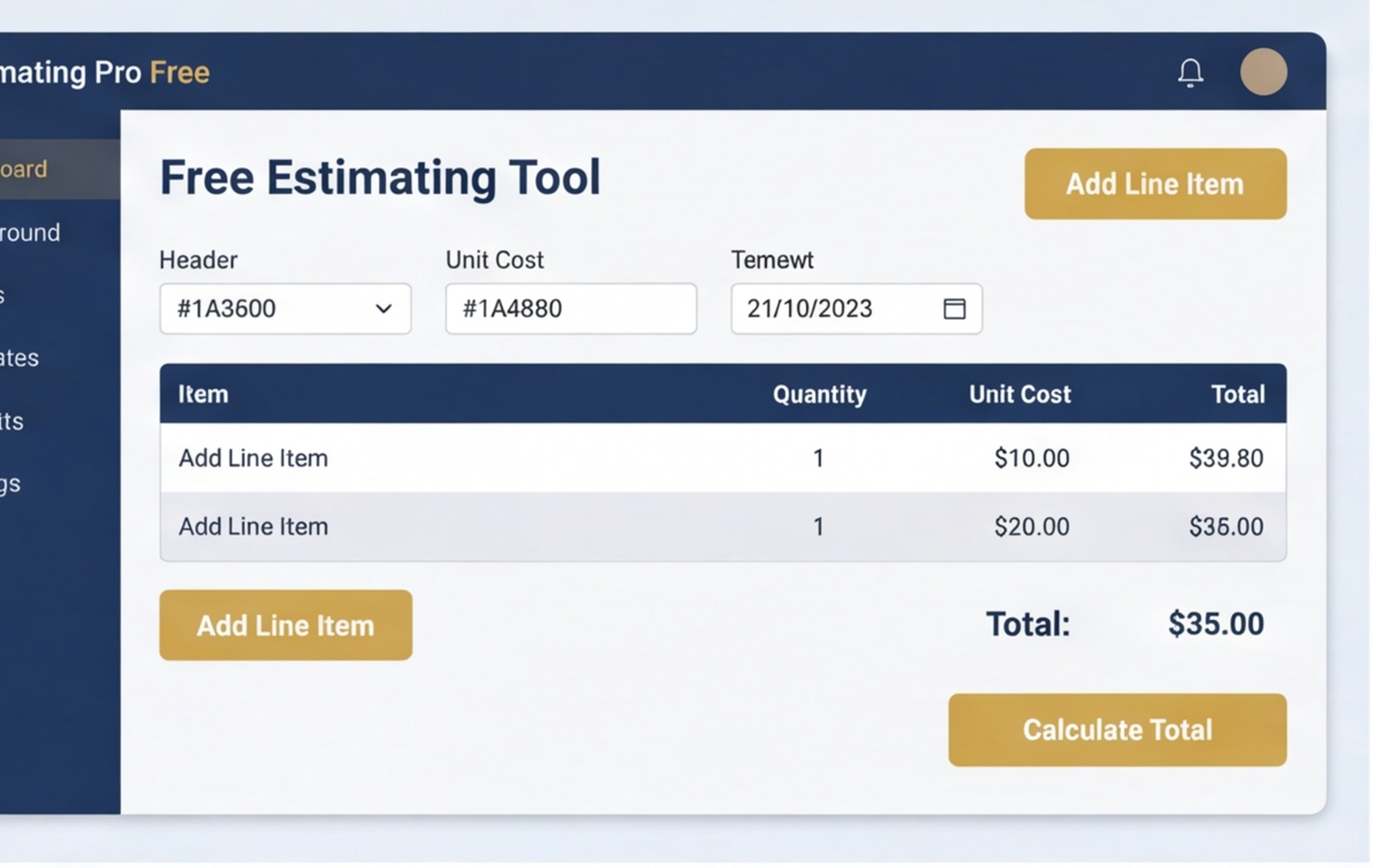
Knowing which category you're looking at changes how you evaluate the tool. A free spreadsheet template is free in a fundamentally different way from a free trial of professional estimating software.
Genuinely Free Options for UK Builders
Excel and Google Sheets
The honest answer is that most builders doing renovation quoting in the UK are still using Excel or Google Sheets. They're free (Google Sheets is fully free; Excel comes with most Windows and Microsoft 365 setups), they're familiar, and they work for basic estimating if you're willing to build and maintain the template yourself.
The strengths of spreadsheet estimating:
- No ongoing cost
- Fully customisable to your own pricing and layout
- Works offline
- No learning curve if you're already comfortable with Excel
- Can be shared with others without software access issues
The weaknesses are significant once you're doing regular renovation quoting:
- No floor plan measurement — every take-off is manual
- Pricing has to be maintained by hand — if trade rates change, your spreadsheet doesn't update
- Output documents don't look professional without significant formatting work
- No schedule of works or method statement — you're writing those separately in Word
- Complex spreadsheets introduce formula errors that are easy to miss and expensive to get wrong on a £40,000 job
- Time per quote is high — 2 to 4 hours is realistic for a full renovation estimate done in a spreadsheet
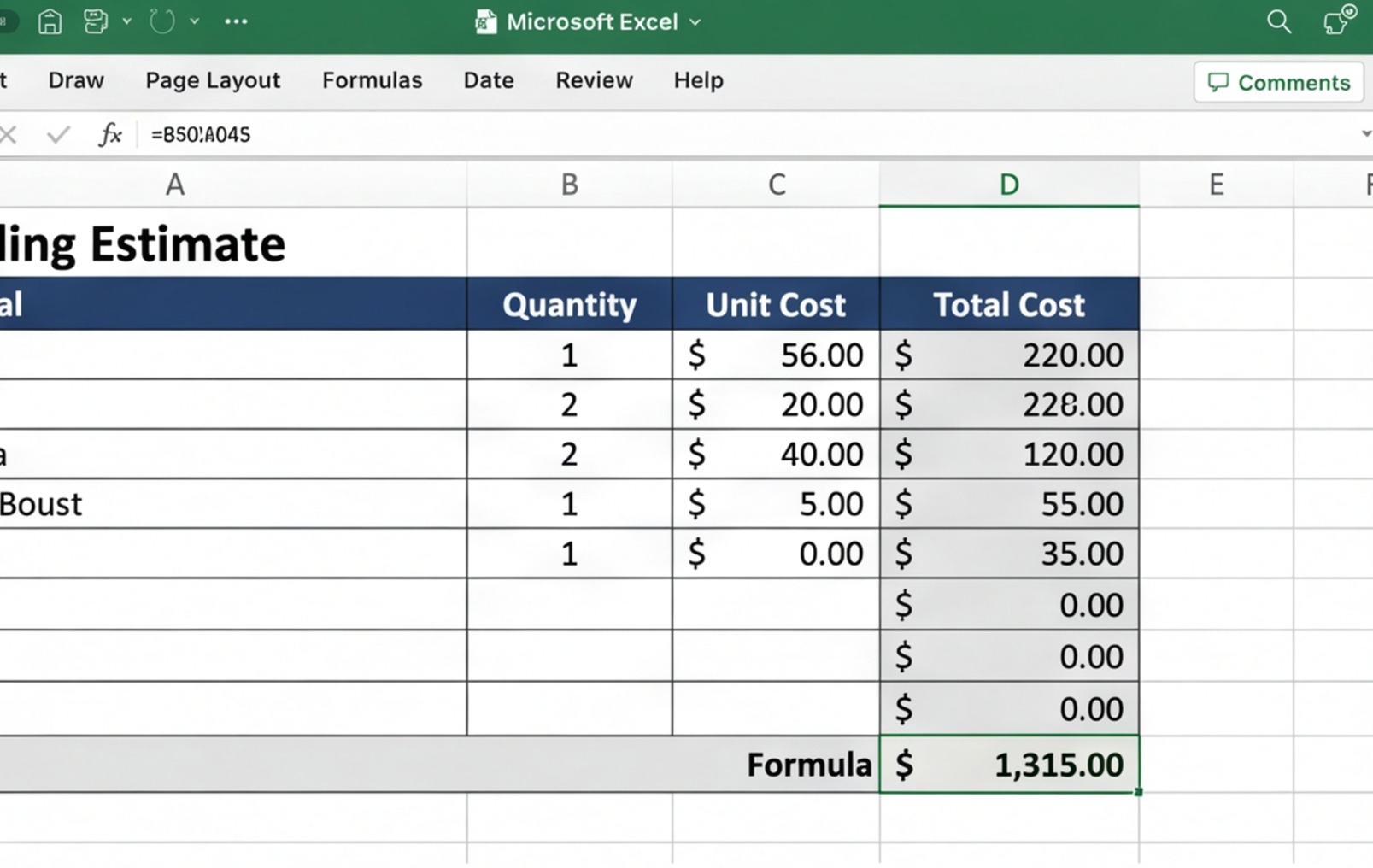
A good Excel template is worth having as a backup. It's not the same as purpose-built estimating software, but it costs nothing and works when you need it. If you need benchmark figures to cross-check your spreadsheet against, the plastering cost per square metre guide and tiling job pricing guide give you trade-level rates you can use directly.
Free online calculators and basic templates
There are various free online renovation cost calculators and basic estimating templates available from trade associations, builder forums and building material suppliers. These are useful for ballpark figures — getting a rough sense of whether a job is in the right range before you commit time to a detailed estimate. They're not a replacement for proper quoting software. The outputs aren't professional enough to send to a client as a formal quote, and they don't produce the supporting documentation a renovation job needs.
For ballpark figures before you buy a property or take on a job, try the floor plan cost estimator — it gives you a rough renovation cost from a floor plan without needing to produce a full quote.
Open-source construction estimating tools
There are open-source estimating tools available, mostly originating from the US or EU markets. They're genuinely free but come with trade-offs: they require technical setup, they use pricing data from overseas markets, and they have limited UK-specific features. For a UK builder without a developer on hand, they're generally more trouble than they're worth compared to a well-built Excel template or a low-cost commercial tool.
Free Trials Worth Testing in 2026
Beyond genuinely free tools, several UK-focused estimating and trade management platforms offer free trials that give you meaningful access to the full product. Here's what to look for when evaluating a trial.
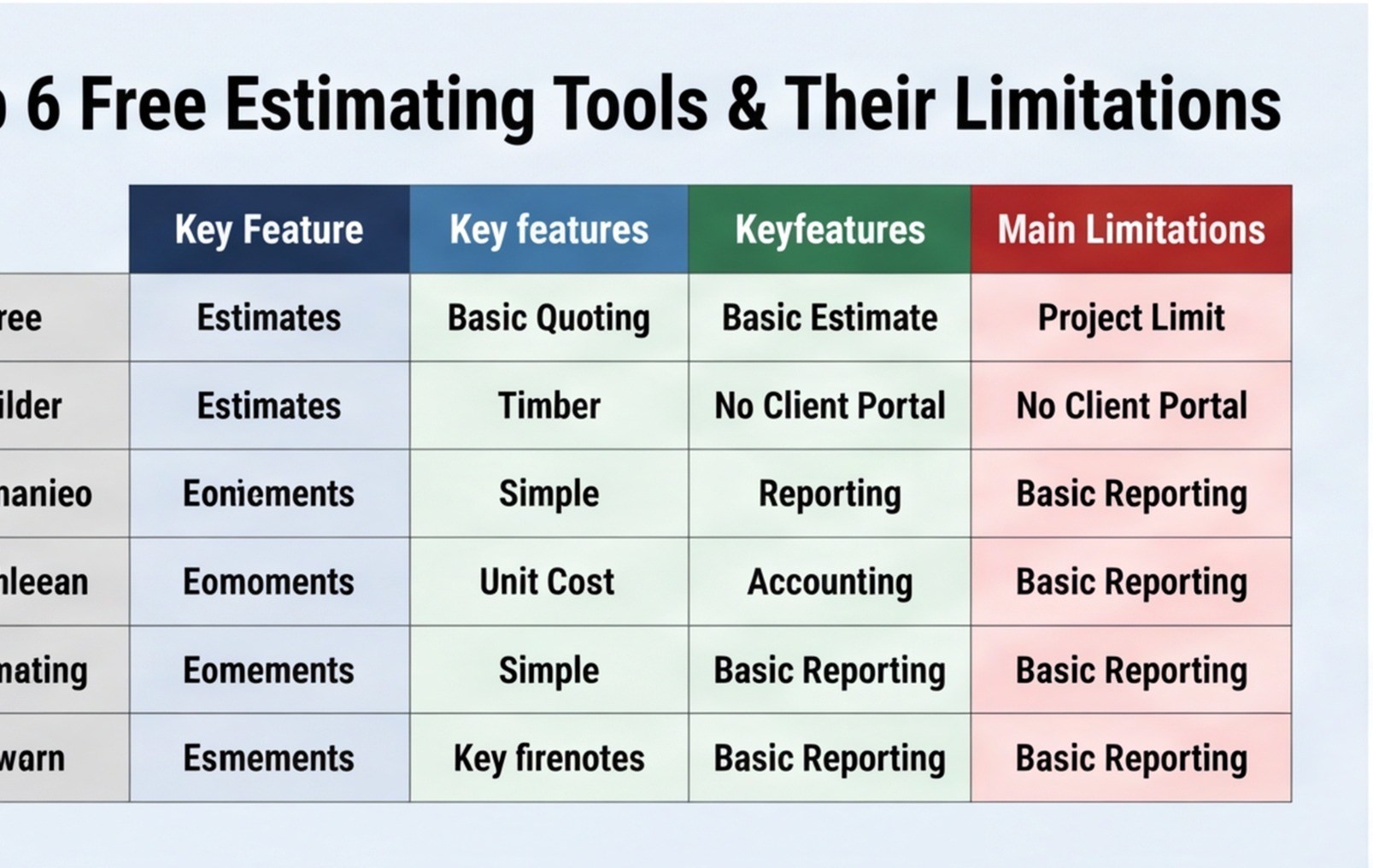
What makes a free trial worth your time
- Test on a real job, not a fake one. The only honest assessment of any estimating tool comes from using it on an actual job you need to quote. Invented test data tells you very little about whether the output will satisfy your clients or match your pricing reality.
- Check what happens when the trial ends. Does your data stay accessible? Can you export what you've produced? Is there a grace period? Understanding the exit clearly prevents nasty surprises.
- Trial the output, not just the input. The quote or estimate document you'd send to a client is what matters. During any trial, produce a full quote for a real job and review what the output looks like. Would your client trust it? Does it look professional?
- Check pricing before you start. Know what you'd pay after the trial before you invest time learning the tool. There's no point falling in love with a platform that costs £200 a month when your budget is £30.
Which tools offer meaningful trials
Most UK trade and estimating platforms offer 14 or 30-day trials across their main tiers. The quality of what you get varies — some let you access everything, others restrict exports or document generation until you pay. Check the trial terms before you start.
For a full overview of the main UK options and what each costs once you're paying, see the 2026 construction estimating software guide.

First-Quote-Free: How RenoCalc Works
RenoCalc takes a different approach to the free question. Rather than a time-limited trial or a stripped-down free tier, your first renovation quote is completely free. No account required. No card. No expiry. You produce one full renovation quote — including the schedule of works and method statement — from a real floor plan, at no cost.
Here's what that looks like in practice:
- Upload a floor plan — a Rightmove PDF, an architect's drawing, a photo of a hand-drawn sketch
- The AI reads the layout and measures room areas automatically
- You select the scope of works — demolition, first fix, plastering, flooring, second fix, decoration
- RenoCalc applies current UK renovation pricing with regional adjustments
- You get a full itemised renovation quote, a schedule of works and a method statement — ready to download as PDF
The whole process takes under 3 minutes. The documents you get are the full product — not a demo, not a watermarked preview. Your first quote is genuinely usable on a real job.
If you want to see what it produces before committing to a subscription, generate your free renovation quote here.
Beyond the first quote, a paid subscription gives you unlimited quotes. The pricing is flat-fee rather than per-user, so it doesn't grow with headcount the way most trade platform subscriptions do.
The Real Cost of Free Estimating
Free has a hidden cost, and it's time. This is the thing most people don't factor in when they stick with spreadsheets rather than paying for a dedicated tool.
A typical full renovation estimate done in a spreadsheet — for a three-bedroom refurbishment, say — takes about 2–4 hours. That includes:
- Measuring the floor plan manually (scaling off a PDF, counting rooms, calculating areas)
- Pricing materials and labour from memory or from a saved price list
- Building the quote document and formatting it to look professional
- Writing the schedule of works separately in Word
- Drafting the method statement separately
- Reviewing and checking for errors
If you're doing three quotes a week, that's 6–12 hours of estimating time weekly. Even at a modest day rate, the value of that time is significant. A paid estimating tool that cuts each quote to 30 minutes saves 4–10 hours a week — at a day rate of £250, that's £100–£250 of recovered time per week, every week.
The spreadsheet is free. The time it takes is not.
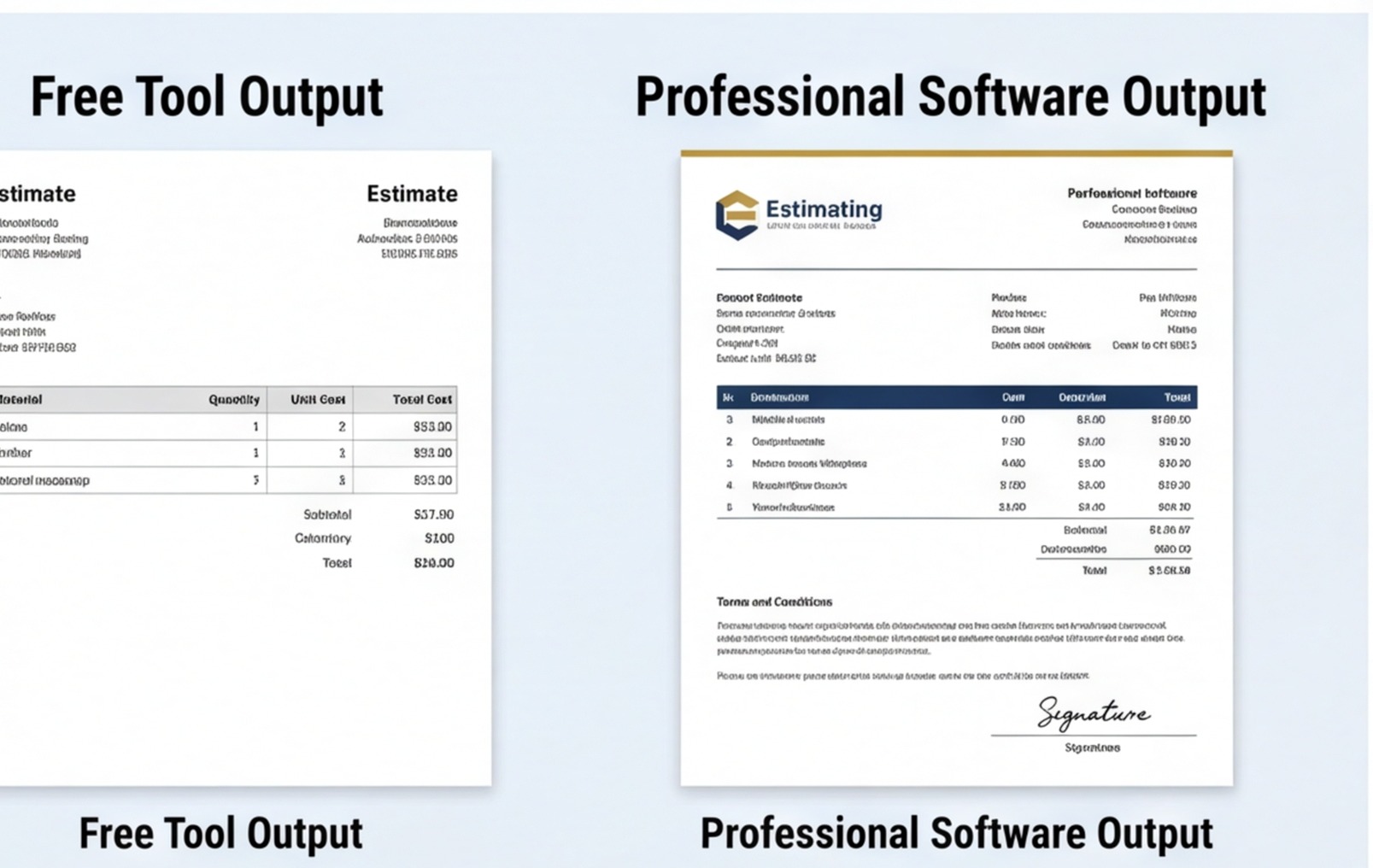
There's also the output quality question. A PDF produced from a well-built estimating tool looks fundamentally different from an Excel estimate that's been saved as a PDF. Clients notice. Property developers, housing associations and any client who's seen professional quotes before will notice the difference between a formatted, branded renovation document pack and a spreadsheet printout. Winning a competitive tender often comes down to which builder's proposal looks most credible alongside the others.
When to Move to Paid Software
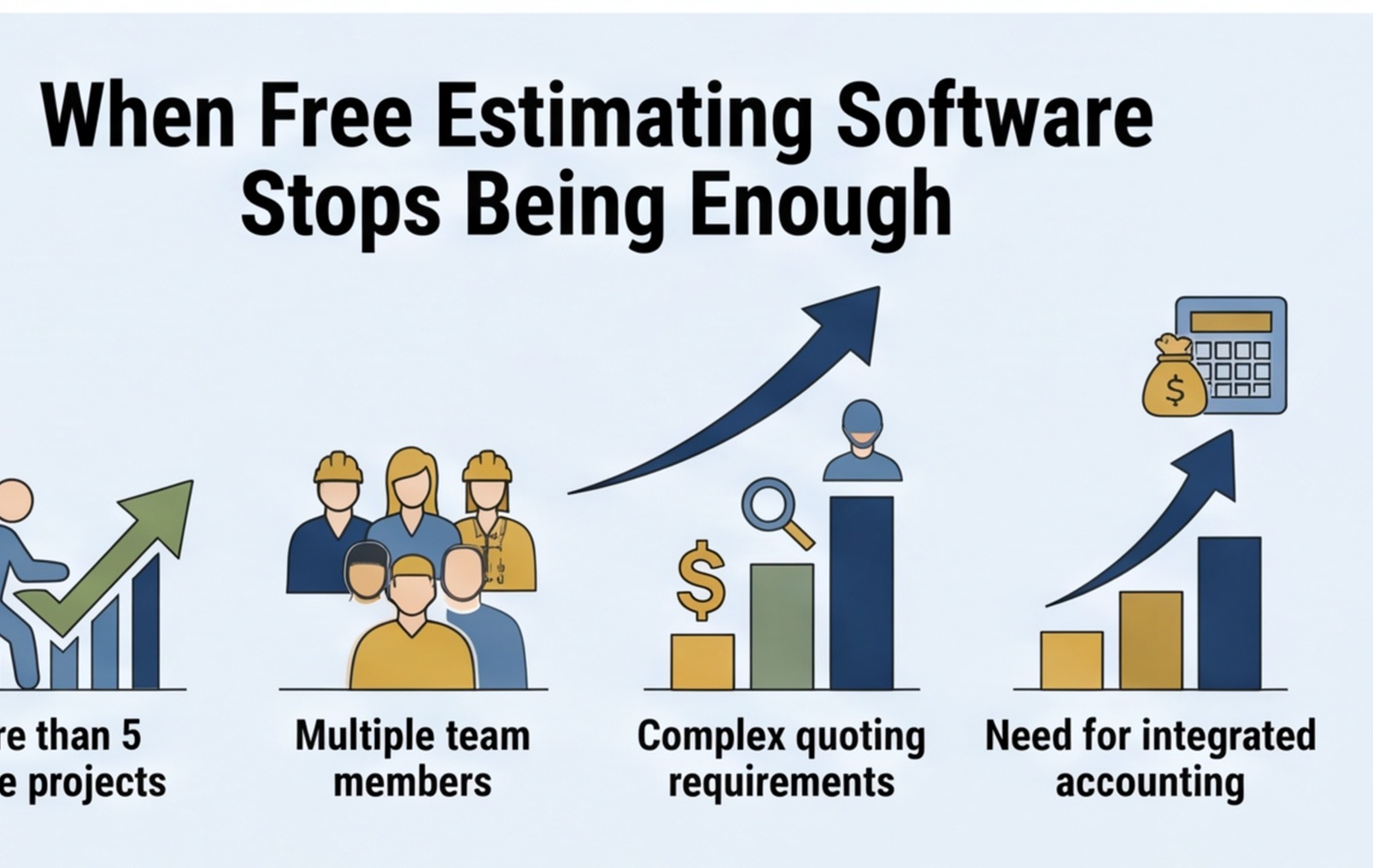
The right time to move from free to paid estimating software is usually well before it feels necessary. Here are the signals that free has stopped being enough.
You're spending more than an hour per quote
If every renovation estimate takes an hour or more just to calculate quantities from a floor plan, the time maths on a paid tool starts making sense immediately. RenoCalc cuts that stage to under 3 minutes. The monthly subscription cost covers itself in the first job of the month.
You're losing competitive tenders on presentation
If you're being told you weren't the cheapest but you still lost the job, the quality of your quote document may be a factor. Professional clients compare not just the price but the confidence the quote inspires. A well-structured renovation quote pack with a schedule and method statement signals a professional firm. A spreadsheet printout doesn't.
You're quoting more than two renovation jobs per week
At two renovation quotes a week using manual methods, the time cost starts to mount seriously. At three or more, paid software is almost certainly the rational choice on pure time economics.
Clients are asking for a schedule of works or method statement
The moment a client, developer or housing association asks for a schedule of works alongside your quote, and you're writing it separately in Word, you've hit the limit of what spreadsheet estimating can efficiently support. These documents should come out of your estimating process, not be written from scratch for every job.

You're under-quoting jobs because of inaccurate take-off
Manual take-off from floor plans introduces errors. If you've discovered mid-job that you measured a room wrong or miscalculated an area, a tool that does the measurement automatically eliminates that risk. One significantly under-quoted job can cost more than years of software subscriptions.
When you're ready to try something better than a spreadsheet, your first renovation quote with RenoCalc is free — try it on a real job and judge the output yourself. There's also a wider overview of the paid landscape in the 2026 construction estimating software guide, and the YourTradebase alternatives comparison covers several tools in detail.
For renovation cost benchmarks to validate your estimates against, see the 3-bedroom house renovation cost guide, the bathroom renovation cost breakdown, and the kitchen renovation cost guide.
Frequently Asked Questions
Is there genuinely free building estimating software in the UK?
The most genuinely free option is a spreadsheet — Excel or Google Sheets are free and widely used for building estimates. Beyond that, most "free" building estimating software in the UK is either a limited free tier with significant feature restrictions, a time-limited trial, or a freemium model where the useful features require a paid plan. RenoCalc offers your first renovation quote completely free with no card required — you produce a full quote, schedule of works and method statement from a floor plan at no cost before deciding whether to subscribe.
Are free building estimating spreadsheet templates any good?
A well-built spreadsheet template can produce a serviceable estimate for straightforward jobs. The limitations show up quickly when you're doing regular renovation quoting: no floor plan measurement, no automated pricing updates, no professional output documents, and real risk of formula errors on complex jobs. Many builders start with spreadsheets and keep using them out of habit long after the time cost has become significant. For occasional quoting on simple jobs, a template is fine. For regular renovation estimating, the manual time investment adds up fast.
What's the best free trial for building estimating software in the UK?
The most useful free access for renovation builders is RenoCalc — your first quote is completely free with no card required and no time limit. You try it on a real job and see the actual output before committing. Other tools offer 14 or 30-day trials across their full feature set. The key is to use any free trial on a real job you're actually quoting, not a test scenario — that's the only honest way to judge whether the output meets your standard and whether the tool fits your workflow.
How accurate is free building estimating software?
Accuracy depends entirely on the tool and how it prices work. Spreadsheet templates are only as accurate as the pricing figures you enter — they don't update automatically as material and labour costs change. Free tiers of professional tools may offer manual pricing only, without access to a UK pricing database. RenoCalc uses a current UK renovation pricing database with regional adjustments, which produces more consistent and realistic estimates than pricing from memory or outdated spreadsheet rates maintained by hand.
When should a builder move from free to paid estimating software?
The signal is usually time cost, not tool limitations. When you're spending more than an hour per quote on manual take-off, spreadsheet calculations and document writing, the maths on a paid tool starts working in your favour quickly. For a builder doing three renovation quotes a week at two hours each, that's six hours of estimating time. A purpose-built tool that cuts each quote to 30 minutes saves 4.5 hours a week — at any reasonable day rate, a monthly subscription pays for itself many times over in recovered billable time.
Does RenoCalc have a free version?
RenoCalc's first quote is completely free — no account required, no card, no time limit. You upload a floor plan, the AI measures the rooms and generates a full renovation quote, schedule of works and method statement. That first quote is yours to download and use on a real job at no cost. If you want to continue producing quotes beyond the first one, a paid subscription gives you unlimited quotes. There's no stripped-down free tier — your first quote is the full product, with nothing held back.
The Bottom Line on Free
Free building estimating software in the UK exists — spreadsheets are genuinely free and they work. They just cost time instead of money, and for a builder doing regular renovation quoting, that time cost is real and significant.
The best position most renovation builders can be in is: use a spreadsheet as a backup, take advantage of free trials and first-quote-free options to test tools properly, and commit to paid software when the time saving clearly justifies the monthly cost. For most builders doing more than two renovation quotes a week, that crossover happens fast.
Your first RenoCalc quote is free — no card, no account, no time limit. Try it on a real job and see what it produces. If it saves you two hours of spreadsheet work on a single estimate, the maths speaks for itself.