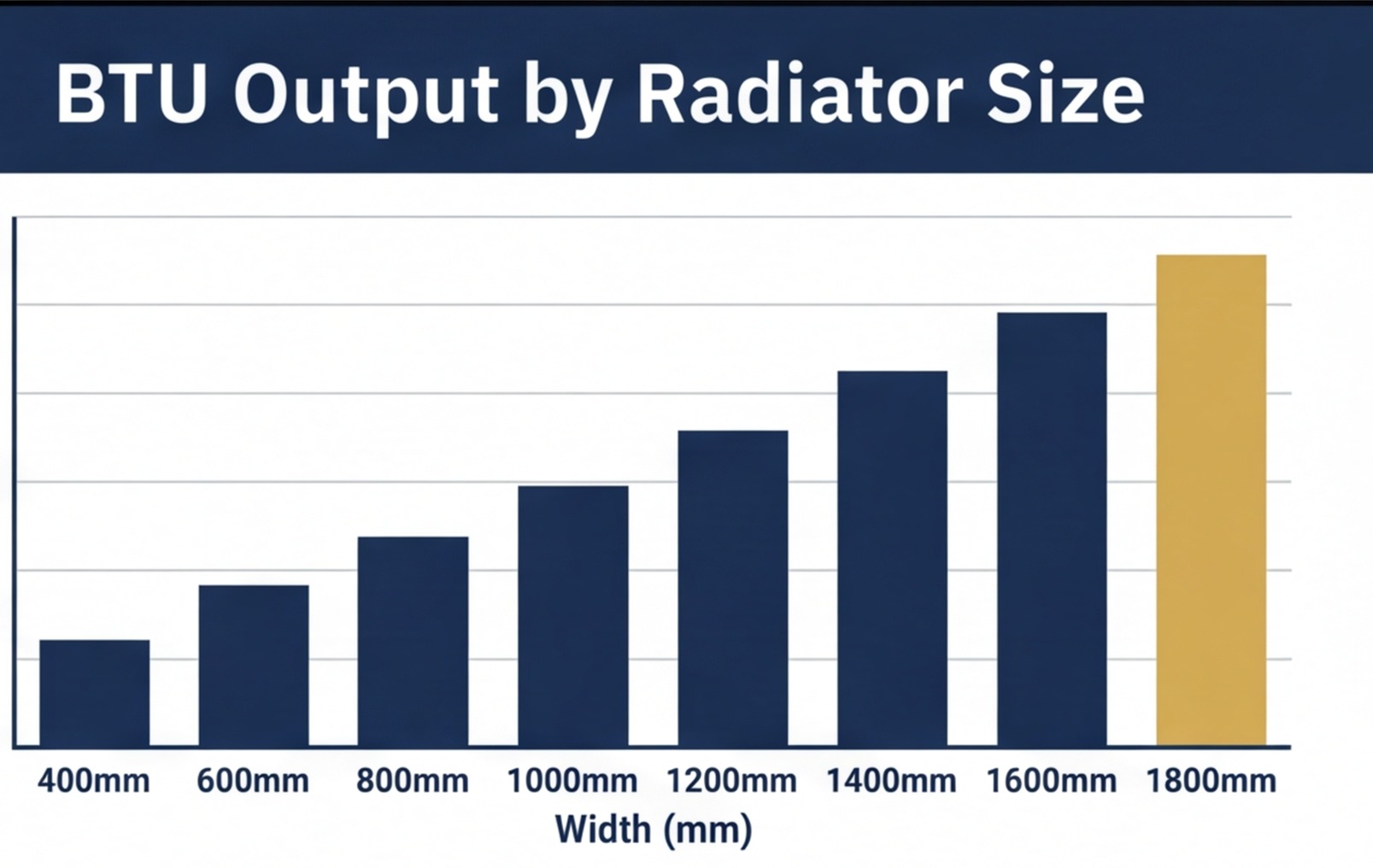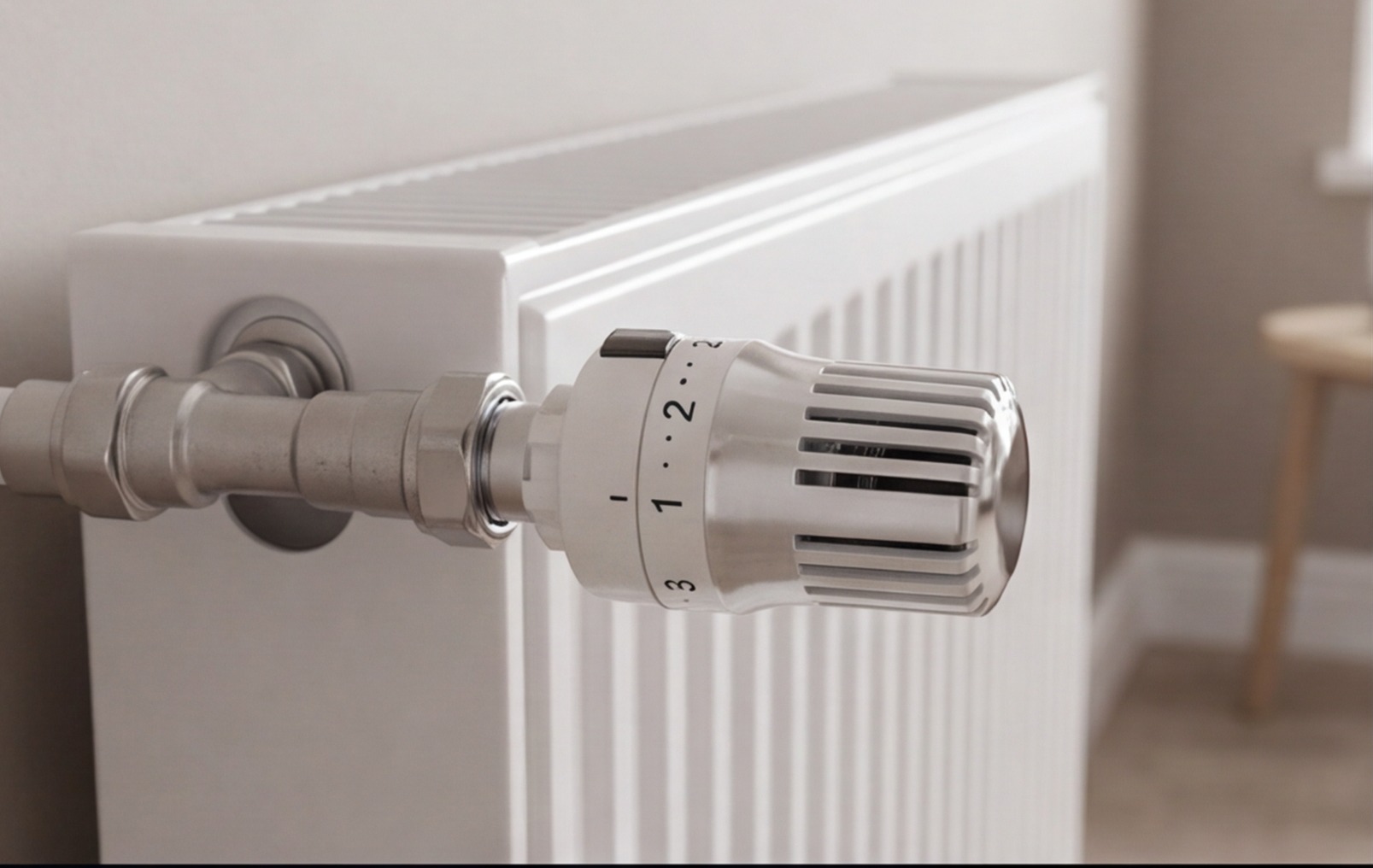
When a client asks why their new bathroom radiator barely warms the room, the answer is almost always the same: no one did the BTU calculation. Getting the BTU calculator per room right — or at least understanding the factors that drive it — is something every builder, plumber and project manager should be able to do at an estimating level. It won't replace a certified heating design, but it'll stop you specifying radiators that are obviously wrong for the space.
This guide explains how room size, insulation, glazing and room type all feed into the BTU figure, gives you working estimates by room type, and covers when you need a proper heating engineer rather than a back-of-envelope calculation.
Important: This guide is for general estimating and planning purposes only. It is not certified heating design. For any heating installation subject to Building Regulations, use a Gas Safe registered engineer or qualified heating designer who will carry out a full heat loss calculation to BS EN 12831.
How to Calculate BTU Requirements Per Room
A BTU (British Thermal Unit) is a measure of heat energy. Every radiator has a BTU output rating — usually measured at a standard temperature difference between the radiator water and the room air — and every room requires a certain number of BTUs to reach and maintain a comfortable temperature.
The calculation to size a radiator is essentially: how much heat does this room lose, and what output do I need to replace it?
The basic calculation approach
The correct engineering method uses room volume (not floor area) and a heat loss coefficient based on the property's construction and insulation. Here's how to approach it as a working estimate:
- Measure the room — length × width × ceiling height = volume in cubic metres (m³)
- Apply a BTU factor based on insulation level and property type (see table below)
- Multiply volume × factor to get approximate BTU requirement
- Adjust for room specifics — extra glazing, external walls, north-facing rooms all add to the figure
| Property type and insulation | BTU per m³ factor |
|---|---|
| Modern, well-insulated (post-2000, cavity wall and loft insulation, double glazed) | ~85 BTU/m³ |
| Average UK semi-detached (1960s–1990s, some insulation, double glazed) | ~100–115 BTU/m³ |
| Older, poorly insulated (pre-1960, solid walls, single glazed) | ~130–160 BTU/m³ |
Example: a 4m × 3.5m living room with 2.4m ceilings = 33.6m³. In an average semi-detached: 33.6 × 105 = ~3,528 BTU. So you'd be looking for a radiator with at least 3,500 BTU output.
If you're measuring rooms from a floor plan rather than being on site, the guide to measuring a room from a floor plan explains how to read dimensions accurately from scale drawings before you start calculating.
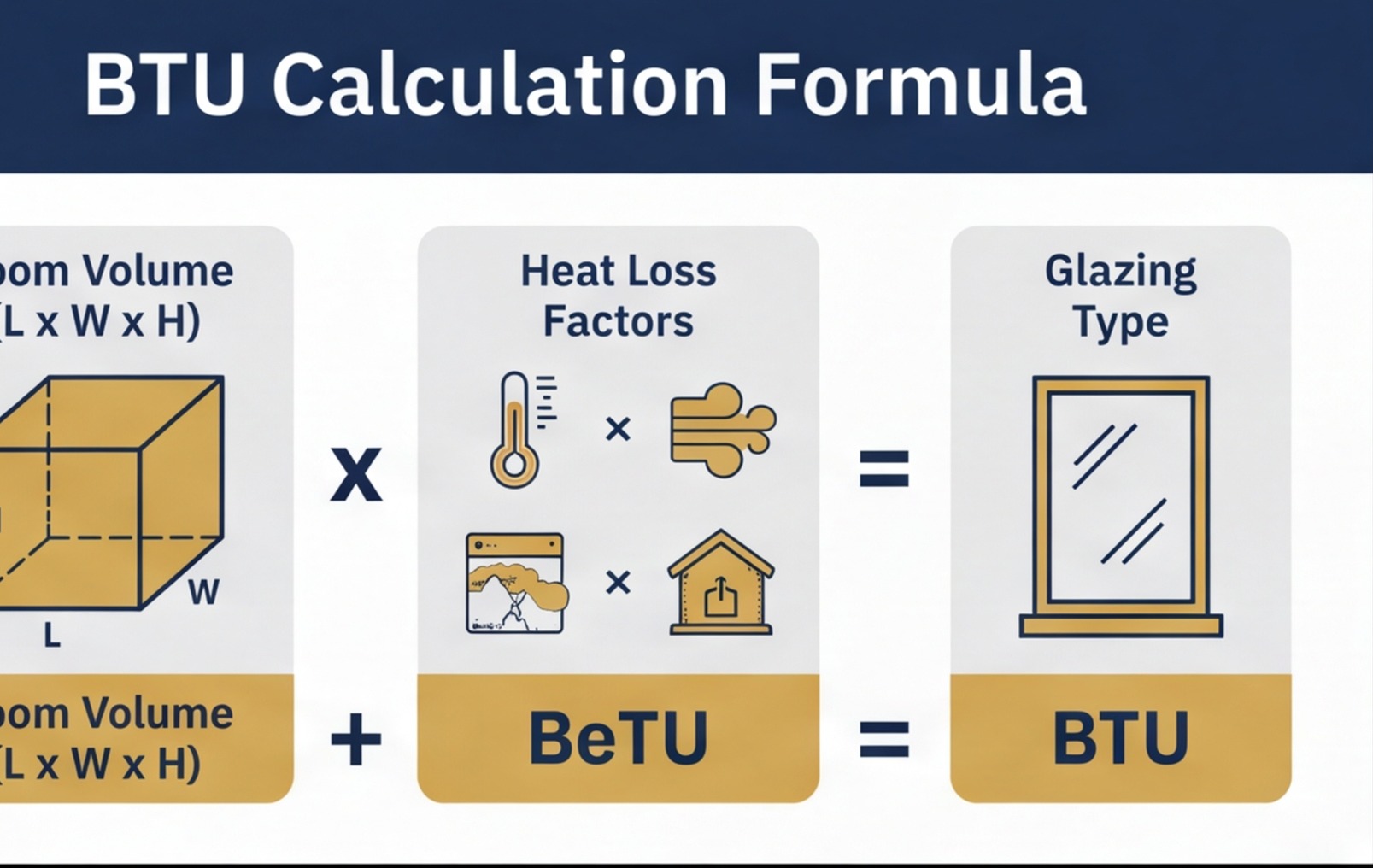
Heat Loss Factors That Affect Your BTU
The basic calculation gives a starting point, but several room-specific factors push the required BTU up or down. Understanding these stops you specifying radiators that are obviously wrong before a heating engineer does the formal calculation.
Insulation
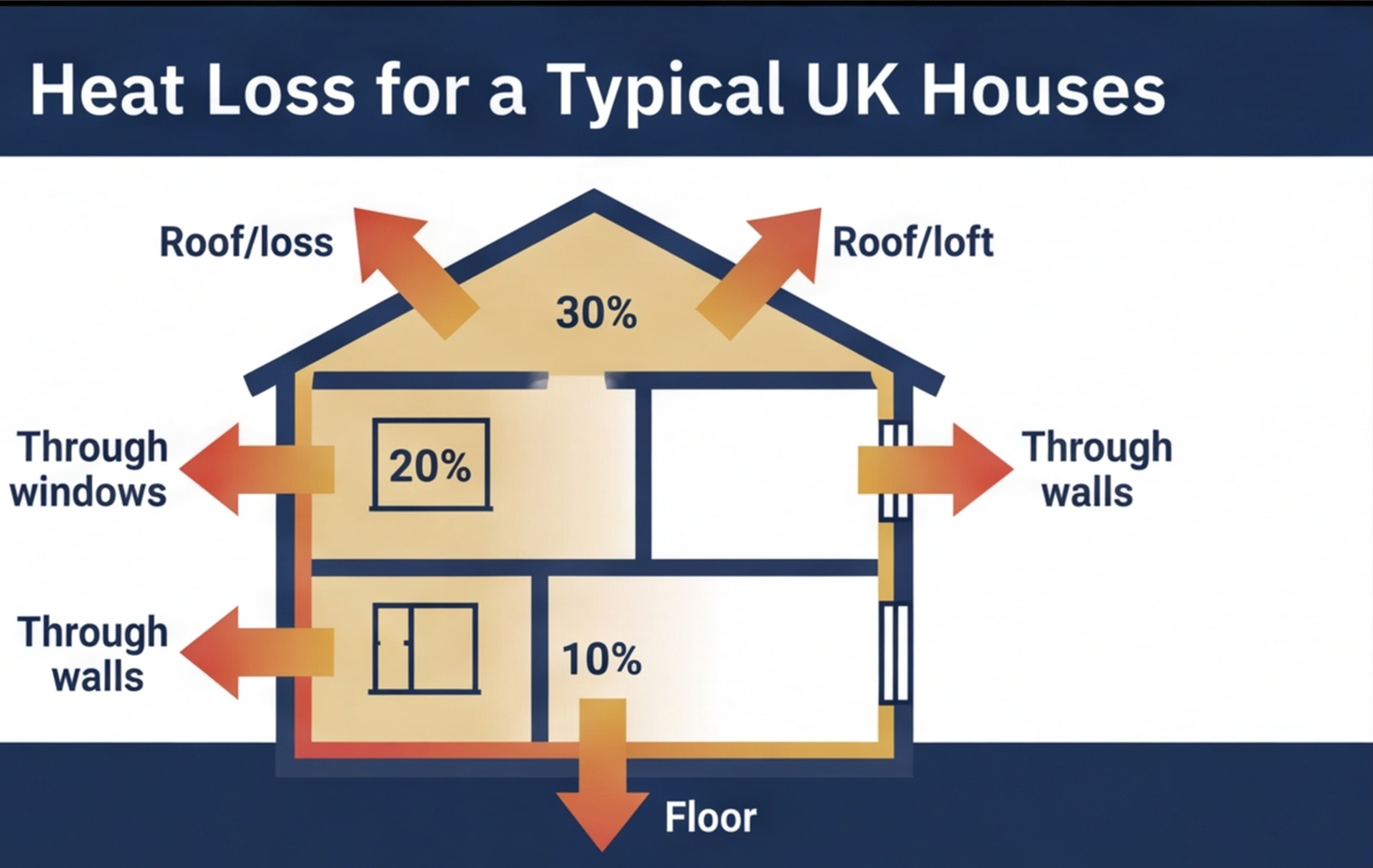
Insulation is the single biggest factor after room size. A well-insulated room holds heat dramatically better than an uninsulated one:
- Cavity wall insulation — reduces heat loss through walls by up to 35%
- Loft insulation at 270mm — reduces heat loss through ceilings significantly in top-floor rooms
- Solid wall insulation (internal or external) — essential for pre-1920 solid brick properties; uninsulated solid walls are a major heat sink
- Floor insulation — suspended timber floors without insulation lose significant heat downwards
Windows and glazing
Glass is a very poor insulator. A single-glazed window loses heat roughly five times faster than a well-insulated wall. Even double glazing is significantly worse than a standard cavity wall:
- Single glazing: high heat loss — add 10–15% to your BTU estimate
- Standard double glazing: moderate heat loss
- Triple glazing: significantly reduced heat loss through glass
A room with a large expanse of glass — a south-facing conservatory extension or a kitchen bifold — needs substantially more heating capacity than the basic calculation suggests, despite any solar gain in summer.
External walls and room orientation
Every external wall loses heat to the outside. A corner room with two external walls loses more heat than a room with one. North-facing rooms receive no direct solar gain and stay colder longer — add 5–10% to the BTU estimate for north-facing rooms in properties where this matters.
Ceiling height
This is why volume, not floor area, is the correct basis for the calculation. Victorian and Edwardian properties commonly have ceiling heights of 2.7m–3m or more. A room with 3m ceilings has 25% more volume than the same floor area with 2.4m ceilings — and needs 25% more BTU output to heat it.
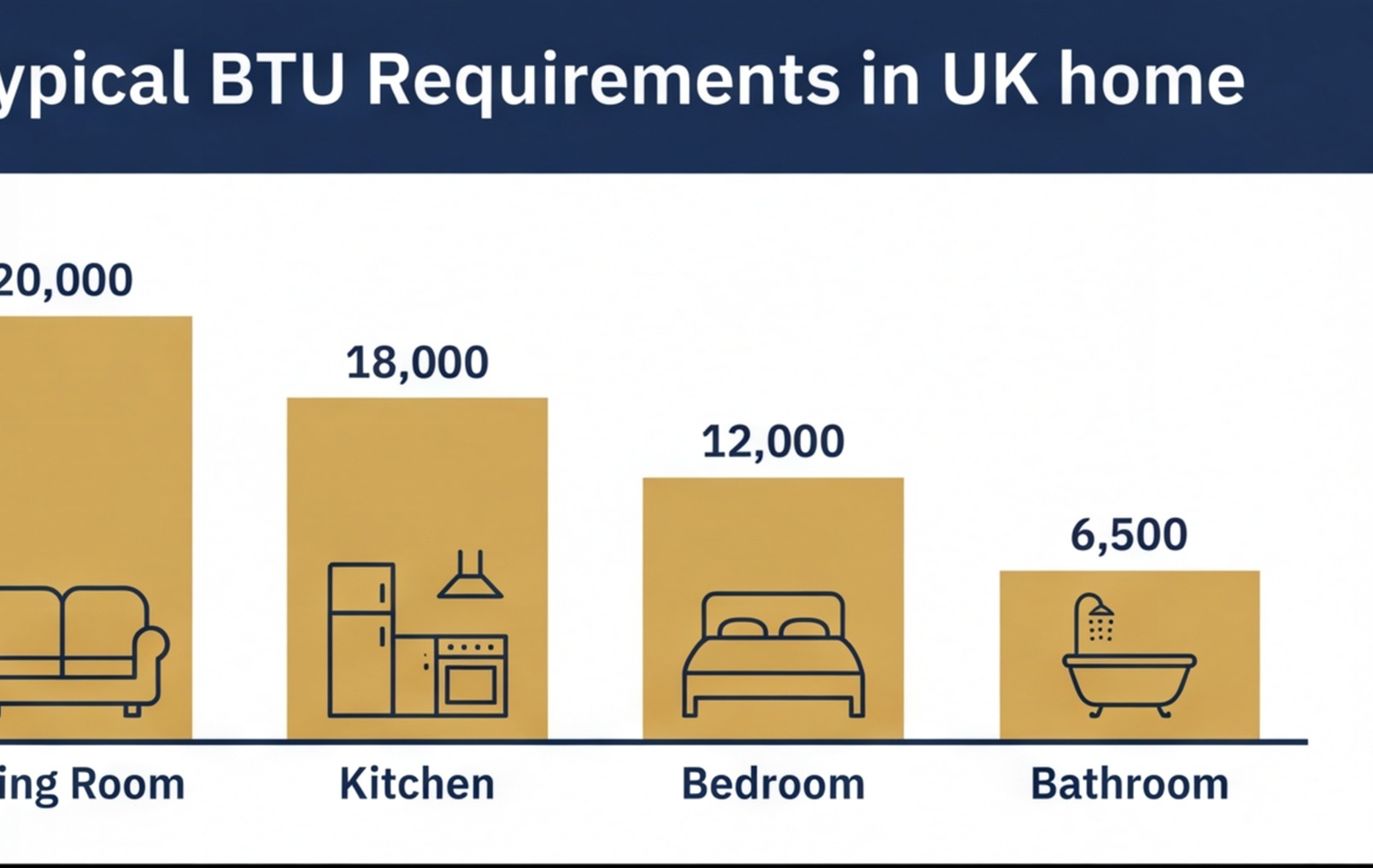
BTU Requirements by Room Type
Different room types have different heat demands even at the same volume. A bathroom loses heat rapidly through tiles, ventilation and the wet environment. A kitchen generates significant heat from cooking appliances. A bedroom sits somewhere in between.
The table below gives rough BTU per m² guidelines for a modern, well-insulated UK home with double glazing and 2.4m ceilings. These are starting estimates only, not certified sizing figures.
| Room type | Approximate BTU per m² | Notes |
|---|---|---|
| Living room | 160–180 | Increase for large glazed areas or north-facing rooms |
| Bedroom | 130–150 | Lower set-point than living areas |
| Kitchen | 100–130 | Internal heat gains from appliances reduce demand |
| Bathroom | 200–225 | High heat loss through tiles, ventilation and wet environment |
| Hallway | 140–160 | Often has external door — significant cold air infiltration |
| Utility room | 130–150 | Often has external door and appliance heat gain |
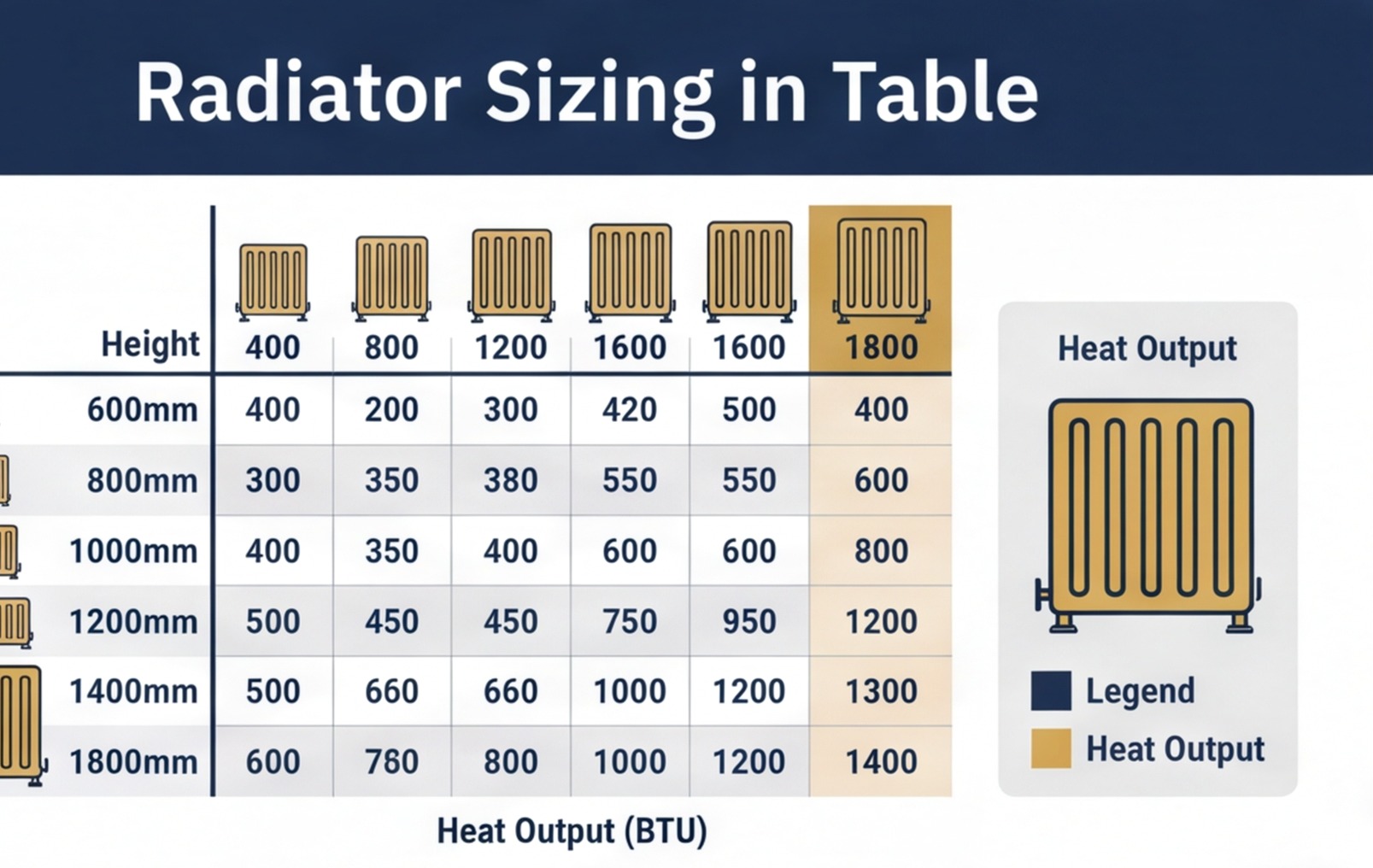
Example: a 5m × 4m (20m²) living room in a modern home: 20 × 170 = 3,400 BTU. But if this living room has a large bi-fold door and is north-facing, increase by 15–20%, giving 3,900–4,100 BTU. Round up to the nearest radiator size above that figure.
Choosing the Right Radiator
Once you have a BTU target, you need to match it to a radiator. The key variables are panel type, height and width.
Panel types
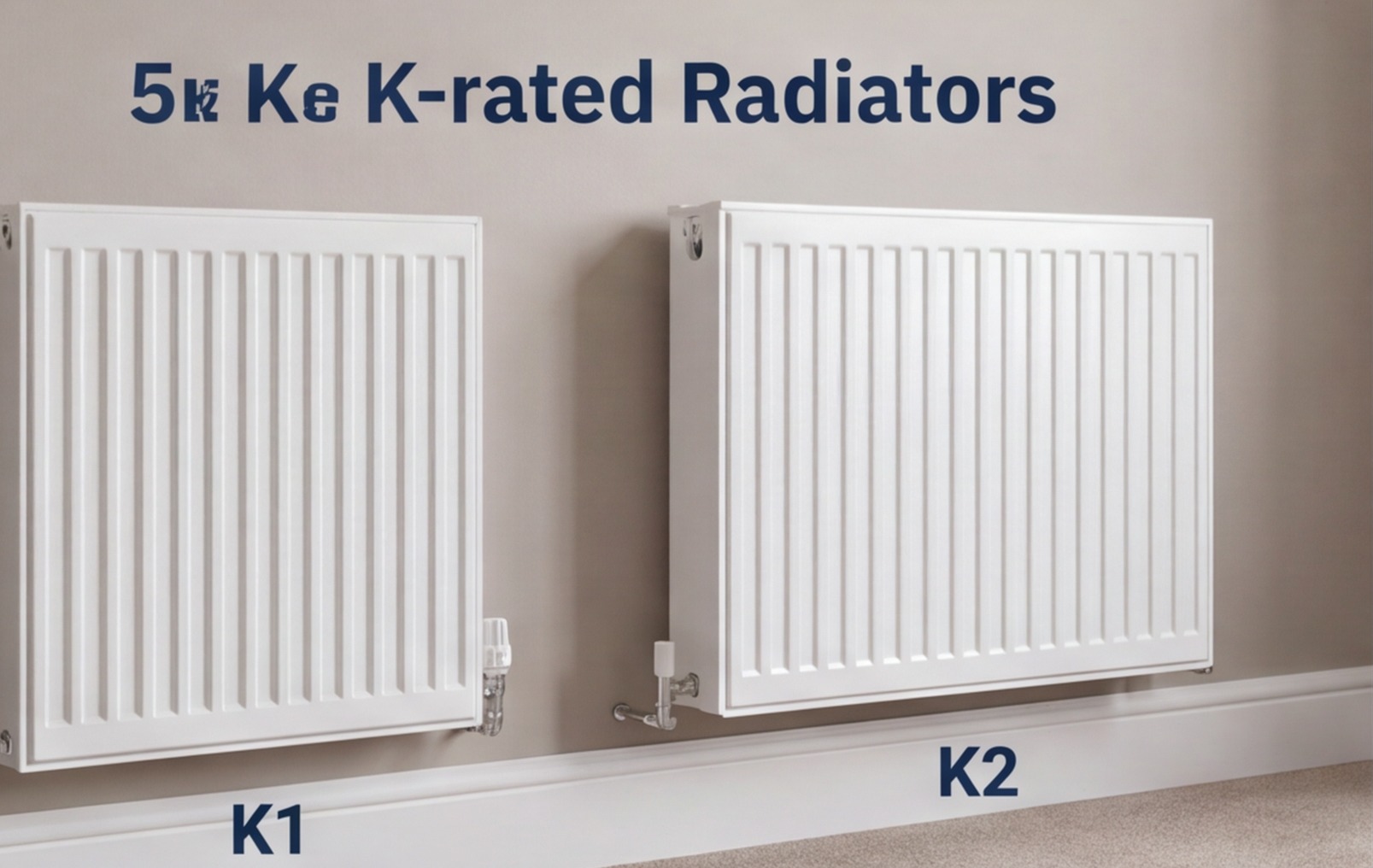
- Type 11 — single panel, single convector: one water-filled panel with a single row of fins. The lowest output per width. Suited to small rooms, hallways or low BTU requirements.
- Type 21 — double panel, single convector: two panels with one row of fins. Mid-range output.
- Type 22 — double panel, double convector: two panels with two rows of fins. The most common choice for living rooms and larger bedrooms. Highest output per footprint of the standard range.
Common radiator sizes and approximate outputs at Delta T50
Radiator BTU figures are usually published at Delta T50 — a temperature difference of 50°C between the mean water temperature and the room. This was the historic standard for traditional gas boiler systems. Heat pump systems run at much lower temperatures (Delta T30 or lower), which significantly reduces output. Always confirm with the manufacturer's data for your system's flow temperature.
| Size (H×W) | Type 11 (BTU) | Type 22 (BTU) |
|---|---|---|
| 600mm × 600mm | ~1,700 | ~3,400 |
| 600mm × 800mm | ~2,250 | ~4,500 |
| 600mm × 1000mm | ~2,800 | ~5,600 |
| 600mm × 1200mm | ~3,350 | ~6,700 |
| 600mm × 1600mm | ~4,450 | ~8,900 |
Always size up to the next available model above your calculated requirement. A slightly oversized radiator running at lower settings is more efficient than an undersized one running flat out. Never deliberately undersize.
UFH, Towel Rails and Special Cases
Underfloor heating
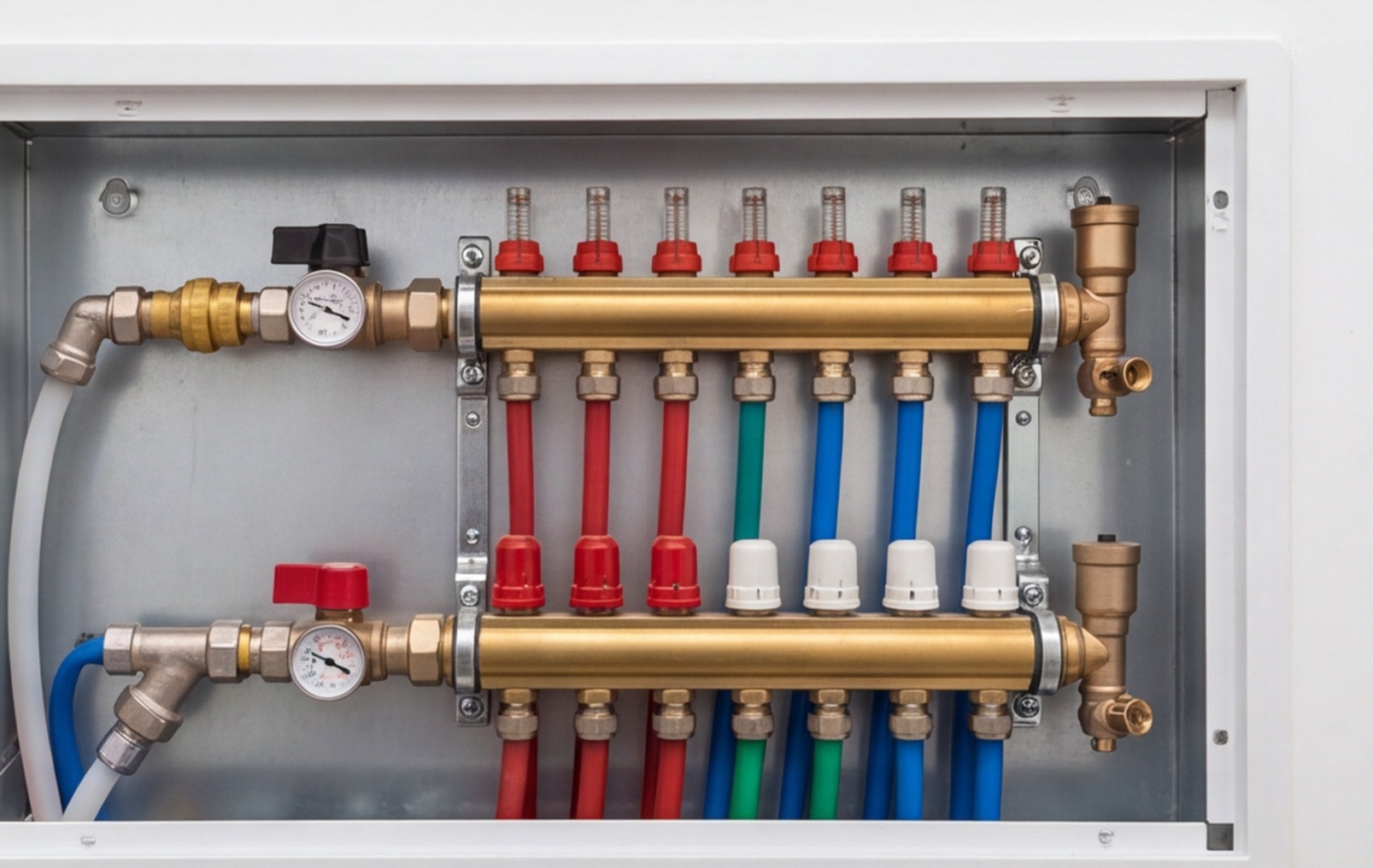
Wet underfloor heating (UFH) is an alternative to radiators — or a complement to them on ground floors while radiators serve upper floors. UFH runs at a low water temperature (typically 35–45°C), making it highly compatible with heat pumps and condensing boilers. It heats rooms from the floor up, which is efficient and comfortable, but it responds slowly — a UFH room takes longer to warm up than a room with a high-output radiator.
UFH output is typically 60–100W per m² at standard flow temperatures, depending on floor construction and floor covering. A heating engineer must design the circuit layout, manifold sizing and pump requirements — UFH cannot simply be laid and connected without proper design. Retrofit UFH into existing floors is disruptive and expensive; new builds and ground-up renovations are the natural applications.
Towel radiators in bathrooms
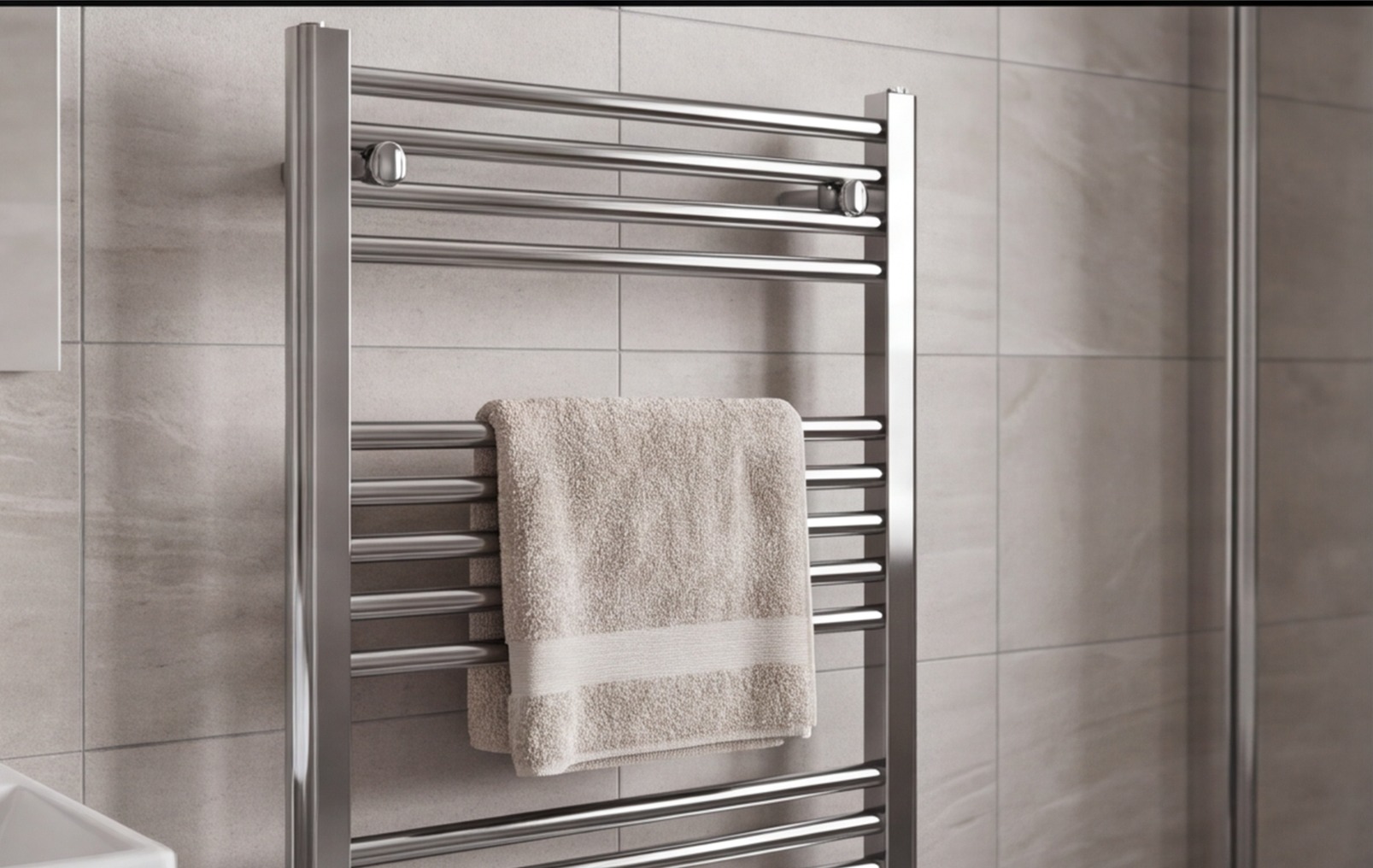
Bathroom towel radiators are typically specified for their visual appeal and towel-drying function, not for their BTU output. The problem is that most towel rails produce relatively low heat output compared with their physical size — often only 800–1,800 BTU for a standard 600×1200mm heated towel rail. That may not be enough to heat the bathroom on its own.
In a bathroom with 200–225 BTU/m² requirement — say, a 5m² bathroom needing ~1,100 BTU minimum — a towel rail might just scrape it. But a 7m² bathroom needing ~1,500 BTU may need either a larger towel rail or a supplementary panel radiator.
For bathroom renovations, always check the towel rail's BTU output and compare it to the room's requirement before finalising the specification. The bathroom renovation cost guide covers the full scope of what goes into a bathroom project, including heating.
When to Use This Guide and When to Call a Heating Engineer
The estimates in this guide are useful at the planning, budgeting and preliminary specification stage. They'll tell you whether you need a 3,500 BTU or a 7,000 BTU radiator before anyone picks up a spanner. They will not tell you whether your existing boiler can support the total system load, whether your pipework is correctly sized for the flow rates involved, or whether the system will balance correctly across all zones.
You need a Gas Safe registered heating engineer or qualified heating designer for:
- Any new boiler installation or replacement
- Heat pump system design and sizing (air source or ground source)
- Full heating system design for new extensions or new builds
- Any work requiring a Building Regulations certificate (Part L)
- Formal heat loss calculations to BS EN 12831
This guide is for estimating and planning only. Use it to get in the right ballpark — then put a certified professional on the job for anything that goes into a building.
If you're pricing a renovation that includes a new heating system and want to estimate costs before the heating engineer comes on board, RenoCalc can generate a full cost estimate from your floor plan — covering the whole project scope, not just heating. For extensions and new builds where heating system costs are part of a larger budget, the extension cost per square metre guide covers heating as part of the full build cost breakdown.
Frequently Asked Questions
- How many BTU per square metre do I need in a UK home?
-
As a general estimate for a modern well-insulated UK home with double glazing, allow 130–175 BTU per square metre for living areas and 130–150 BTU/m² for bedrooms. Bathrooms typically need more — around 200–225 BTU/m² — due to higher heat loss through tiles and ventilation. These are rough guidelines. Actual BTU requirements depend on ceiling height, insulation quality, window size and orientation. For a certified calculation, use a Gas Safe registered heating engineer.
- What size radiator do I need for a 15m² bedroom?
-
For a 15m² bedroom in a typical modern UK home with 2.4m ceilings, double glazing and reasonable insulation, you'd be looking at roughly 1,950–2,250 BTU (570–660W). A double panel radiator at around 600mm high × 800–900mm wide would comfortably cover this. Always check the manufacturer's BTU output at Delta T50 — and note that if you're installing a heat pump system, output figures are significantly lower at Delta T30. A heating engineer should confirm the final specification.
- Does ceiling height affect the BTU calculation?
-
Yes, significantly. BTU requirements are based on room volume, not floor area. A room with 3m ceilings needs 25% more heat than the same floor area with 2.4m ceilings. Period properties — Victorian, Edwardian terraces — often have substantially undersized radiators from previous installations because they were sized on floor area alone. If you're sizing radiators in a period renovation, always calculate from volume.
- What's the difference between a single and double panel radiator?
-
A single panel radiator (Type 11) has one water-filled panel. A double panel double convector (Type 22) has two panels with two sets of convector fins and produces roughly twice the heat output for the same height and width. For most living rooms and larger bedrooms, a Type 22 is the standard choice. Single panels suit hallways, small rooms or low BTU requirements where wall depth is a concern.
- Can underfloor heating replace radiators?
-
Yes, in new builds and full renovations, wet underfloor heating can replace radiators entirely. UFH runs at lower water temperatures, making it efficient with condensing boilers and ideal for heat pumps. It responds more slowly to thermostat changes and is difficult to retrofit without disruption. Many renovations use UFH on ground floors and radiators upstairs. A heating engineer must design the system to ensure correct output per zone.
- Do I need a heating engineer to size my radiators?
-
For a rough estimate or budget figure, the guidelines in this article will get you in the right ballpark. For any installation subject to Building Regulations — new boilers, heat pump systems, work in a new extension — you need a Gas Safe registered engineer or qualified heating designer. They'll carry out a full heat loss calculation to BS EN 12831. This article is for estimating and planning purposes only, not certified heating design.