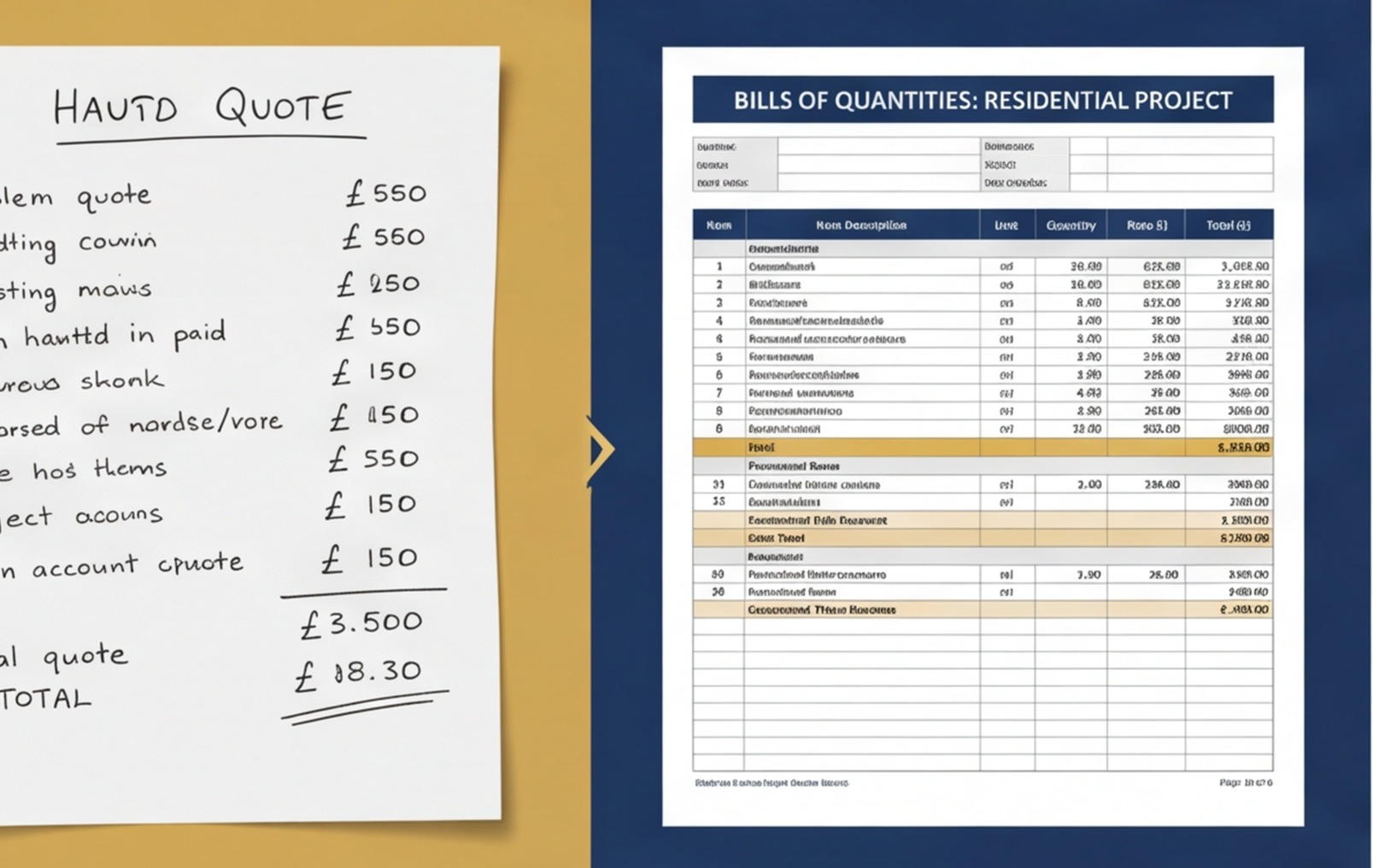
Most builders I know have heard of a bill of quantities but wouldn't necessarily know where to start building one. If a client or architect has asked you for a bill of quantities example — or if you've landed a tender that requires a formal BOQ — this guide explains what one is, why it matters, and how to build one in plain English, with a real worked example you can adapt.
A BOQ isn't just for big commercial contracts. Once you understand the format, it's genuinely useful on any renovation where multiple trades are involved, or where the client needs a clear, auditable breakdown of what they're paying for. Done right, it protects both parties — the client knows exactly what's included, and you have a document to fall back on if the scope changes.
What Is a Bill of Quantities?
A bill of quantities (BOQ) is a structured document that lists every item of work required to complete a construction or renovation project. For each item it records:
- A reference number — so items can be uniquely identified
- A description — what the work is, in enough detail that there's no ambiguity
- A quantity — how much of it (area, length, number of items, etc.)
- A unit — the measurement unit (m², m, No., Item, Sum, etc.)
- A rate — the cost per unit
- A total — quantity × rate
The total of all items gives you the contract sum. Changes in scope are then clearly visible as additions or omissions to specific line items, with no argument about what was or wasn't originally included.
BOQs originated in quantity surveying and are standard practice on commercial and large public sector contracts. On domestic renovation work they're less common, but they're gaining ground as clients become more commercially aware and as builders use them to protect their own margins.
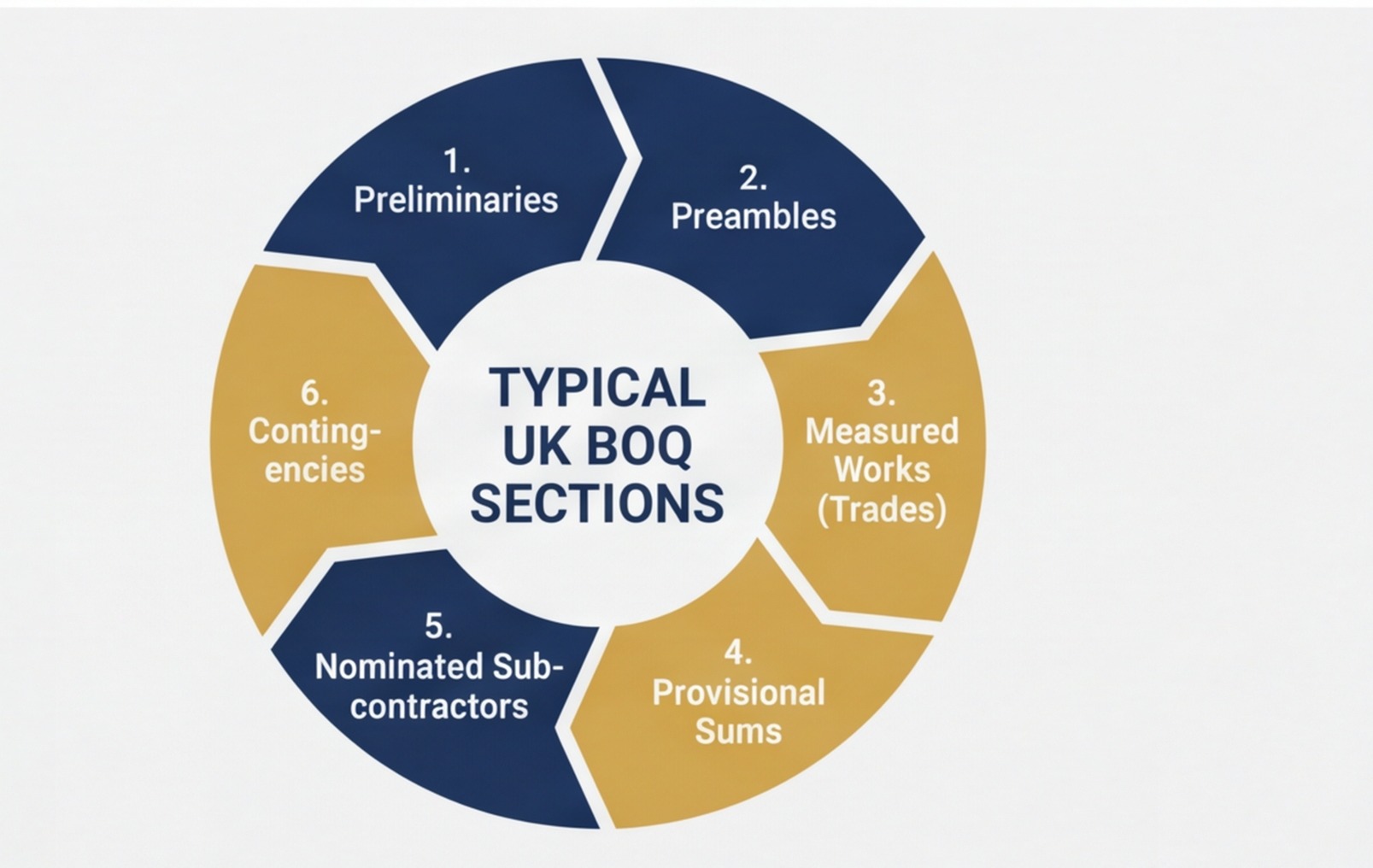
The Structure of a BOQ — Sections, Units and Rates
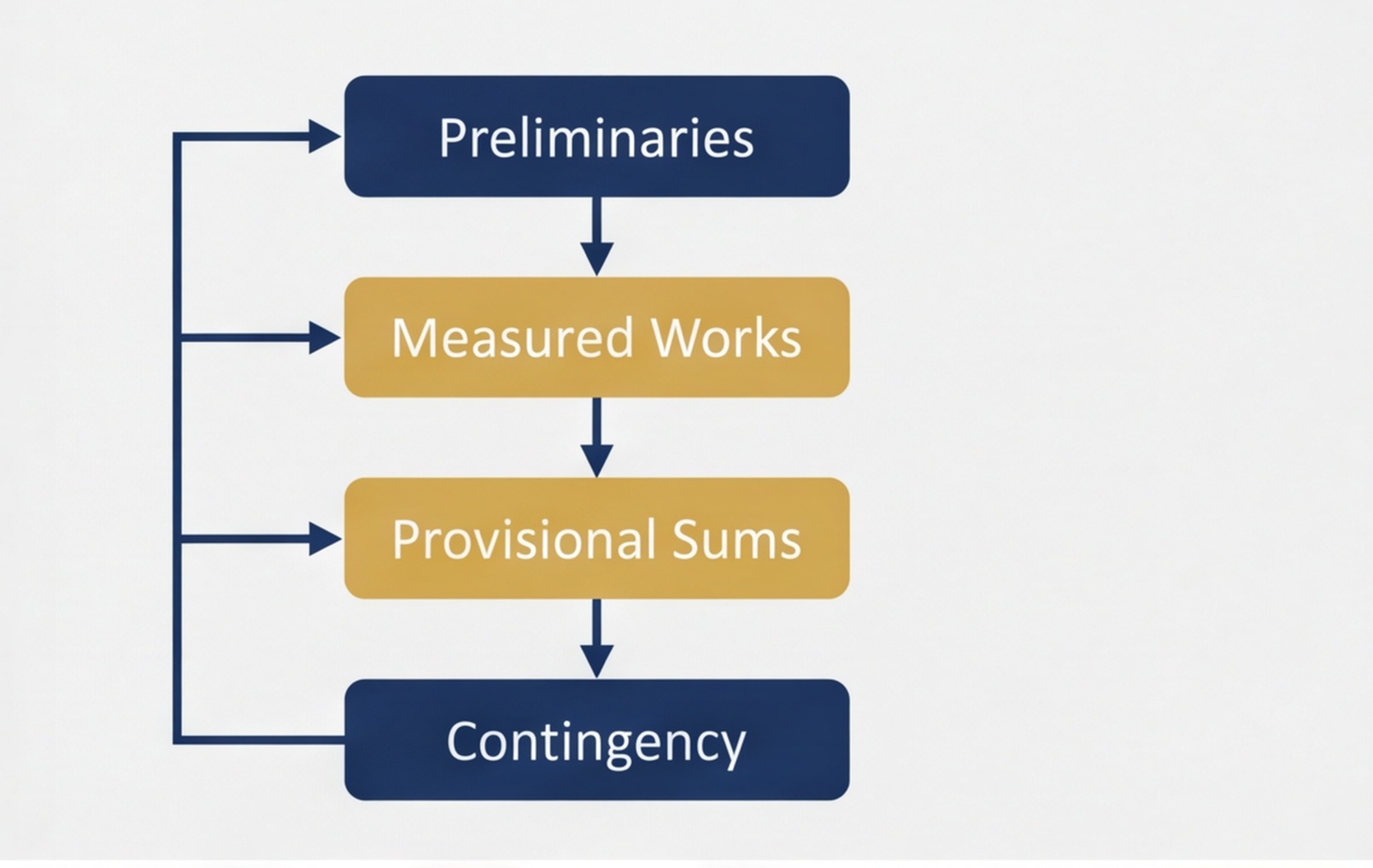
A well-structured BOQ divides the works into logical sections that follow the building process. There's no single mandatory format for domestic works, but a clear and practical approach groups items by trade or work stage:
- Section 1 — Preliminaries: site setup, contractor's plant, skip hire, insurances, access, protection, contingency allowances
- Section 2 — Demolition and Alteration: strip out, removal of finishes, opening up, breaking out structural elements
- Section 3 — Structural Works: groundworks, concrete, blockwork, brickwork, steels, structural timbers
- Section 4 — First Fix: framing, insulation, first-fix plumbing, first-fix electrics, ductwork
- Section 5 — Second Fix: joinery, doors, skirting, architraves, second-fix plumbing and electrical, kitchen and bathroom fitting
- Section 6 — Finishes: plastering, tiling, floor finishes, painting and decorating
Within each section, items are numbered sequentially (1.01, 1.02, 2.01, 2.02, etc.). This makes it straightforward to reference specific items in correspondence, variation orders and final accounts.
Units of measurement
The unit tells you how the quantity is measured. Common units in UK construction:
| Unit | Meaning | Typical use |
|---|---|---|
| m² | Square metres | Flooring, tiling, plastering, painting, insulation, decking |
| m | Linear metres | Skirting, pipes, cables, guttering, ridge, soffits |
| m³ | Cubic metres | Concrete, excavation, fill, masonry |
| No. | Number of items | Doors, windows, light fittings, sockets, radiators |
| Item | A defined scope, one-off | Works that are difficult to measure precisely — e.g. "Remove and dispose of bathroom suite" |
| Sum | Lump sum allowance | Preliminaries, contingencies, provisional allowances |
| hr | Hours | Labour-only rates, daywork provisions |
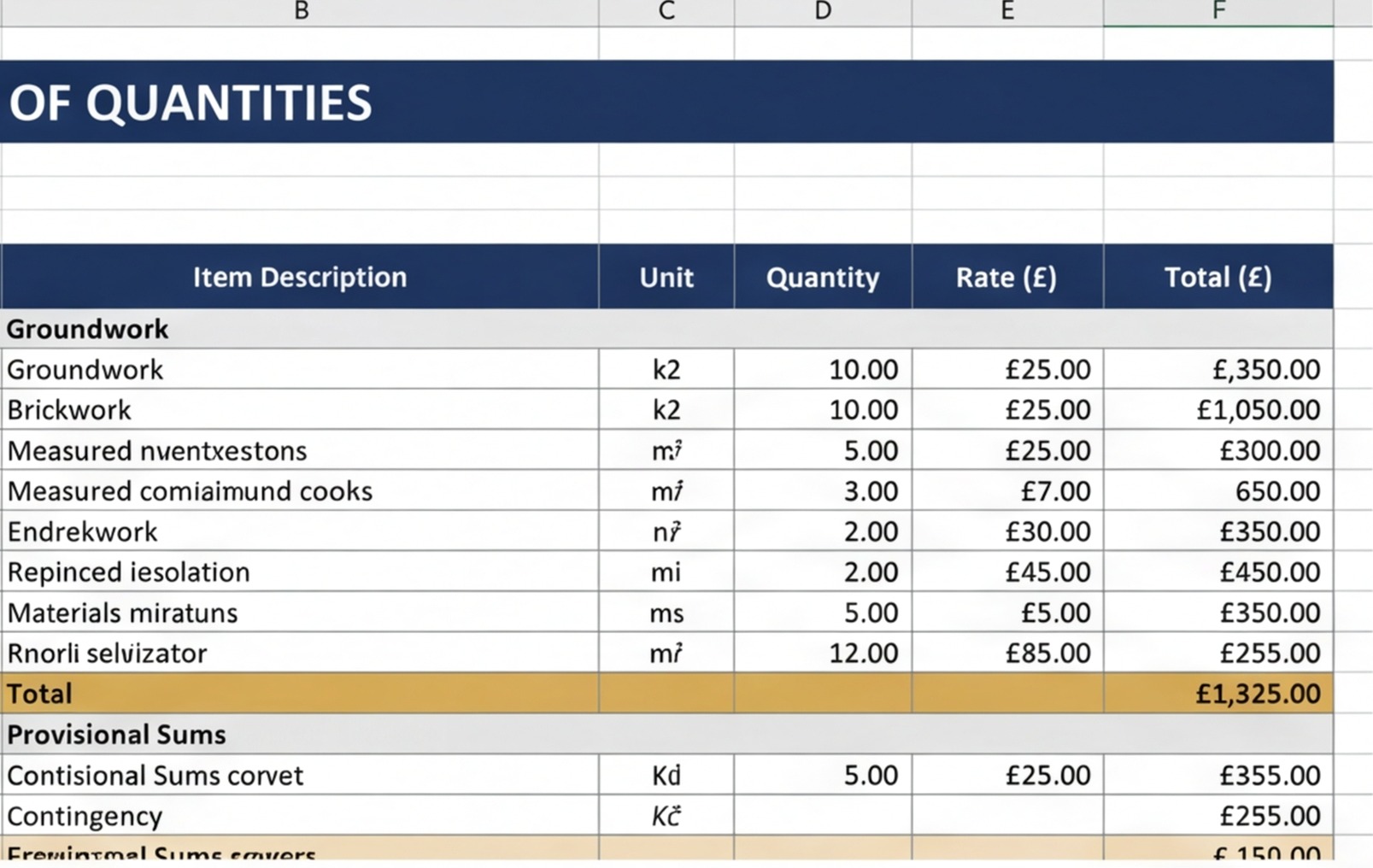
A Bill of Quantities Example — Bathroom Renovation
Here's a practical bill of quantities example for a standard UK bathroom renovation — strip out, new sanitaryware, full tiling, new electrics and decoration. This is an abbreviated version showing the format; a full BOQ for this job would have 40–60 line items.
| Ref | Description | Qty | Unit | Rate (£) | Total (£) |
|---|---|---|---|---|---|
| Section 1 — Preliminaries | |||||
| 1.01 | Contractor's site setup, protection of adjoining areas | 1 | Item | 250 | 250 |
| 1.02 | Mini skip hire × 2 (strip out debris) | 2 | No. | 195 | 390 |
| 1.03 | Contingency allowance (5%) | 1 | Sum | 315 | 315 |
| Section 1 Total | 955 | ||||
| Section 2 — Demolition and Strip Out | |||||
| 2.01 | Remove and dispose of existing bath, basin, WC and radiator | 1 | Item | 220 | 220 |
| 2.02 | Remove existing wall tiles and make good substrate (22m²) | 22 | m² | 14 | 308 |
| 2.03 | Remove existing floor tiles and make good (4.5m²) | 4.5 | m² | 14 | 63 |
| 2.04 | Remove existing bathroom door (reuse lining) | 1 | No. | 60 | 60 |
| Section 2 Total | 651 | ||||
| Section 3 — Substrate and Waterproofing | |||||
| 3.01 | Waterproofing tanking membrane to shower area (3m²) | 3 | m² | 38 | 114 |
| 3.02 | Floor levelling compound, screed and prime | 1 | Item | 120 | 120 |
| Section 3 Total | 234 | ||||
| Section 4 — Mechanical and Electrical | |||||
| 4.01 | New bath, basin and WC supply, waste and overflow connections | 1 | Item | 680 | 680 |
| 4.02 | Shower valve and enclosure supply and installation | 1 | No. | 420 | 420 |
| 4.03 | Heated towel rail supply and connection | 1 | No. | 230 | 230 |
| 4.04 | Extract fan supply and fit (IP-rated) | 1 | No. | 130 | 130 |
| 4.05 | LED downlights × 4, shaver socket, circuit alterations | 1 | Item | 390 | 390 |
| Section 4 Total | 1,850 | ||||
| Section 5 — Tiling | |||||
| 5.01 | Floor tiling — 600×600 porcelain, supply and fix (4.5m²) | 4.5 | m² | 65 | 293 |
| 5.02 | Wall tiling — 300×600 ceramic, supply and fix (22m²) | 22 | m² | 58 | 1,276 |
| 5.03 | Grout, silicone sealant and trim throughout | 1 | Item | 120 | 120 |
| Section 5 Total | 1,689 | ||||
| Section 6 — Sanitaryware and Fixtures | |||||
| 6.01 | Bath (client supply — builder to fix) | 1 | No. | 120 | 120 |
| 6.02 | Vanity unit and inset basin — supply and fit | 1 | No. | 480 | 480 |
| 6.03 | Close-coupled WC — supply and fit | 1 | No. | 320 | 320 |
| 6.04 | Bathroom accessories — towel rings, robe hooks, toilet roll holder | 1 | Item | 160 | 160 |
| Section 6 Total | 1,080 | ||||
| Section 7 — Decoration | |||||
| 7.01 | Mist coat and 2 coats emulsion to ceiling (5m²) | 5 | m² | 9 | 45 |
| 7.02 | Gloss finish to window board, door and door lining | 1 | Item | 95 | 95 |
| Section 7 Total | 140 | ||||
| PROJECT TOTAL (ex. VAT) | £6,599 | ||||
This is the format in miniature. A real BOQ for this job would have sub-items within each section, more detailed descriptions and provisional sums for any client-supplied items where the cost isn't confirmed. But the structure — reference, description, quantity, unit, rate, total — stays the same regardless of project size.
How to Build a BOQ — Step by Step
Building a BOQ from scratch looks daunting the first time. In practice it follows a logical sequence:
- Read all the project information — drawings, specification, schedule of works. You can't measure what you haven't understood. If there's no specification, write one before you start measuring.
- Set up your sections — divide the works into logical trades or work stages (see structure above). Give each section a number.
- Take off quantities section by section — work through the drawings and specification systematically. Measure every item: areas, lengths, volumes, counts. Note the unit as you go.
- Write descriptions — each item description should be clear enough that someone who hasn't seen the project could understand what's being priced. Include material specification where relevant (e.g. "porcelain floor tiles 600×600mm" not just "floor tiles").
- Enter rates — apply your rates for each item, whether from your price book, supplier quotes or known day rates. For items where cost is unknown (e.g. client-supplied items), use a provisional sum.
- Check and total — review every section total and the overall project total. Cross-check labour hours implied by the rates against your programme. If the numbers don't feel right, find out why before you submit.
Once you've built one BOQ you'll find the structure becomes second nature. The initial investment in time pays off in clearer quotes, fewer disputes and a document you can use to track costs as the job progresses.

BOQ vs a Standard Quote — What's the Difference?
A standard builder's quote typically gives the client a total price, sometimes broken down by trade, with a brief description of what's included. A BOQ goes much further:
| Feature | Standard quote | Bill of Quantities |
|---|---|---|
| Level of detail | Section totals or trade totals | Line item for every element of work |
| Quantities shown | Rarely | Always — with units |
| Rates shown | Rarely | Always — per item |
| Scope clarity | Often ambiguous | Clear — what's in and what's out is explicit |
| Managing scope changes | Often disputed | Additions/omissions clearly priced from agreed rates |
| Tendering | Contractors quote differently, hard to compare | All contractors price the same items — fair comparison |
| Final account | Difficult to reconcile changes | Tracked against agreed BOQ |
The BOQ is particularly valuable where multiple contractors are tendering and the client wants to compare like for like. Without it, contractor A includes carpentry and contractor B doesn't — and the client picks contractor B thinking they're cheaper, then gets hit with a variation when the carpentry invoice arrives.
Who Prepares a BOQ?
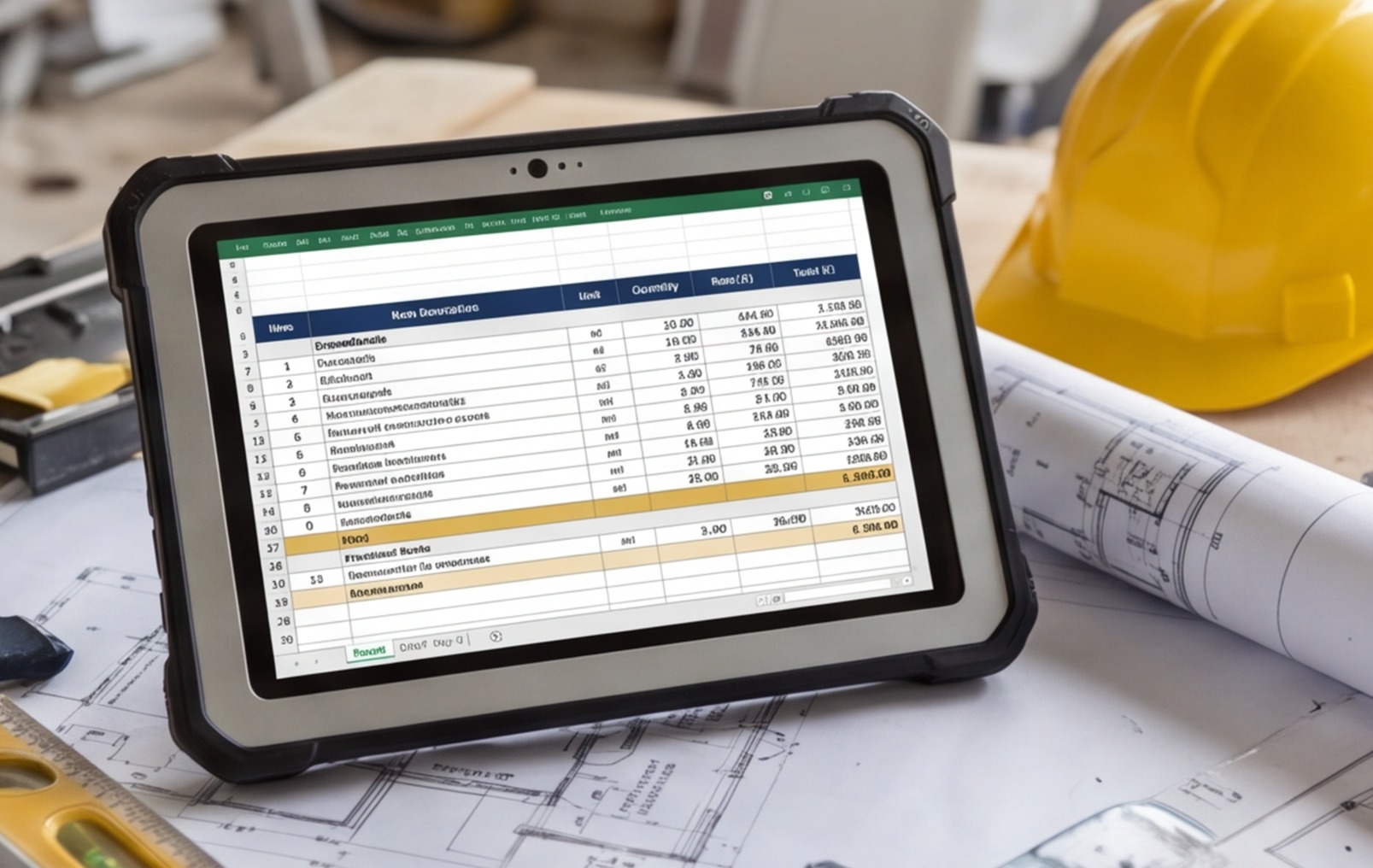
On large commercial and public sector projects, a BOQ is prepared by a quantity surveyor (QS). The QS measures the drawings, writes the specification descriptions and produces the BOQ as a formal tender document. This is skilled work that takes time and professional experience. The RICS (Royal Institution of Chartered Surveyors) sets the professional standards, and the GOV.UK planning guidance outlines what documentation is expected on notifiable projects.
On domestic renovation work, the BOQ is usually prepared by the main contractor or project manager. There's no strict requirement for a QS on domestic jobs, but the same principles apply: measure everything, describe it clearly, price it by item, total by section.
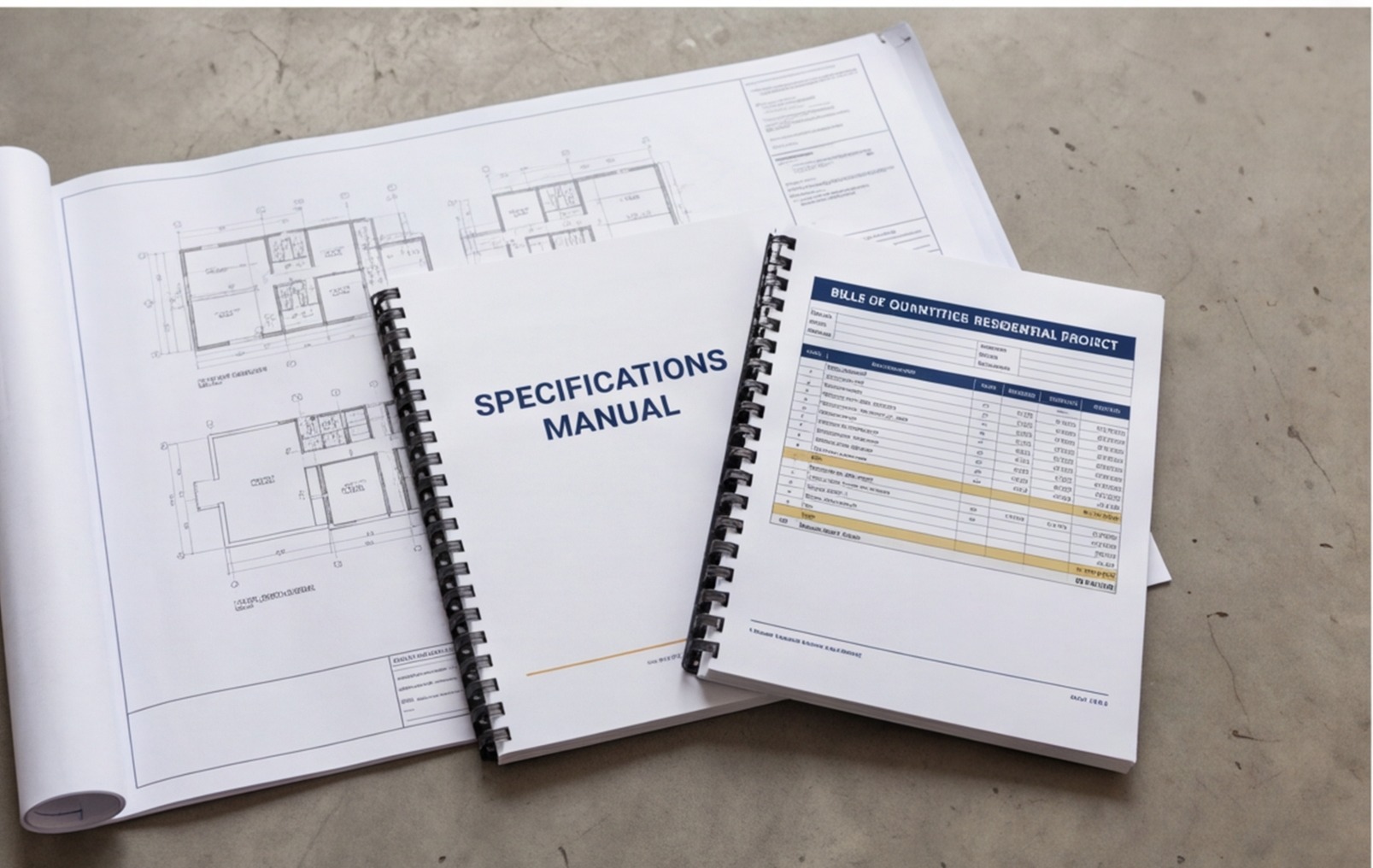
If you're new to preparing BOQs, the schedule of works is a useful companion document — it lists what will happen and in what sequence, while the BOQ lists the items and their cost. The two documents together give you a comprehensive picture of a project.
For clients who want a contract that references the BOQ as a schedule, the domestic building contract template covers how the BOQ and schedule of works sit within a properly formed building agreement.
When You Need a BOQ and When You Don't
A BOQ takes more time to prepare than a simple quote. For a £500 fence job, it's overkill. For a £60,000 full-house renovation, it's essential. Here's a rough guide:
| Scenario | BOQ appropriate? |
|---|---|
| Single trade, single room (e.g. bathroom tiling only) | No — a clear quote with line items is enough |
| Full bathroom renovation (multiple trades) | Useful — a simplified BOQ protects both parties |
| Full house refurbishment or multiple room renovation | Yes — a BOQ is appropriate and valuable |
| Extension or structural alteration with architect drawings | Yes — the drawings require formal measurement and a BOQ |
| Competitive tender with multiple contractors bidding | Yes — essential for fair comparison |
| Housing association or commercial client | Almost certainly required — check the tender documents |
The time you spend preparing a BOQ comes back to you in fewer variations, fewer disputes about scope and a cleaner final account. I've had jobs where the BOQ saved a significant amount of argument about what was and wasn't included in the original price. That's worth the extra time on the front end.
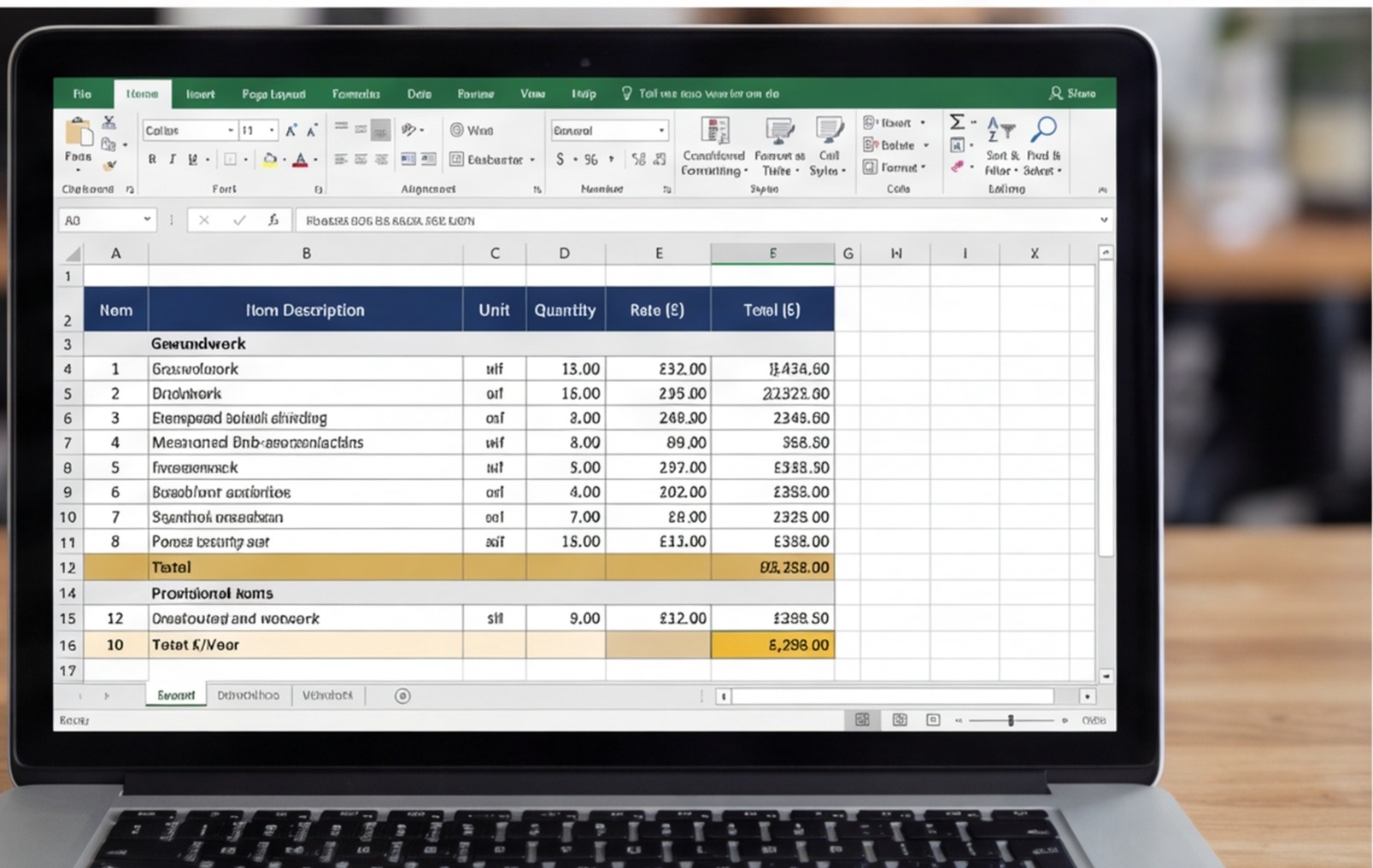
If you're using RenoCalc to generate your renovation estimates, the platform can produce structured cost breakdowns from your floor plan in minutes — which gives you the foundation for building a BOQ without starting from a blank spreadsheet. For larger or more complex projects where you want to explore your options for estimating software, the construction estimating software comparison covers what's available for UK builders.
A bill of quantities isn't the most glamorous part of running a building business. But getting it right separates the builders who chase variations and dispute every change from the ones who run clean jobs with clear documentation from start to finish. The RenoCalc app gives you a quick way to generate the cost data — how you structure the document around it is down to the method in this guide.